
Years Of Continuous OA Shaft Supply To A Japanese Customer
The lathe department has produced OA shafts for a Japanese financial-equipment manufacturer over many years of continuous supply.
A Japanese Financial Equipment Manufacturer
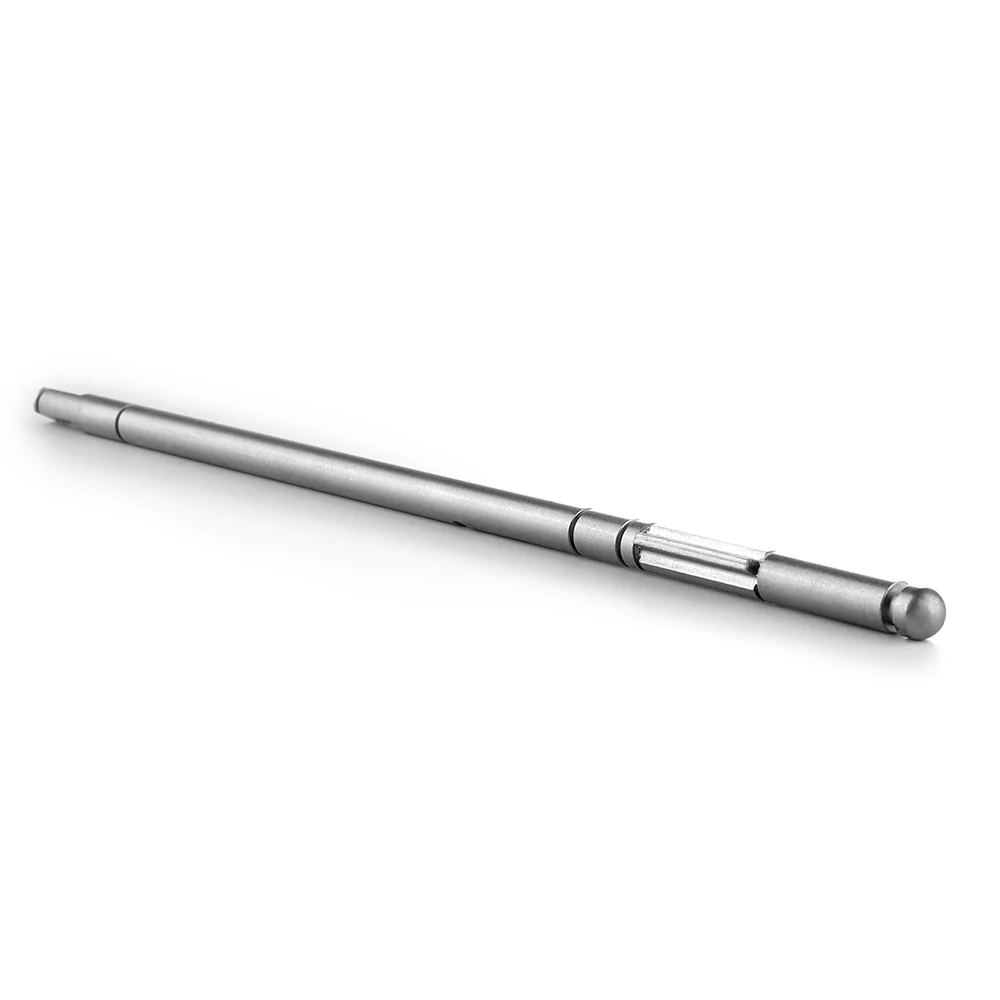
The customer builds financial machines in which media has to move quickly and reliably. Their OA shafts are the parts that carry that media, and a shaft that runs out becomes a jam in a machine standing in a public place.
Long Slender Shafts Held Year After Year
The difficulty was never machining one shaft. It was producing the same geometry consistently across years of scheduled deliveries, on parts slender enough that an unsupported bar would simply push away from the tool.
- Long length-to-diameter ratios on every part in the family
- Secondary features required square to the turned datum
- A Japanese customer quality expectation applied to every lot
- Delivery dates tied to the customer's own assembly schedule
What The Customer Could Not Accept
Financial equipment is serviced in the field at high cost, so variation that would be tolerable elsewhere is not tolerable here.
- Dimensional drift between production lots
- Late deliveries against a fixed assembly schedule
- Process changes made without notification
- Inspection records that could not be produced later
Japanese Machines And A Locked Process
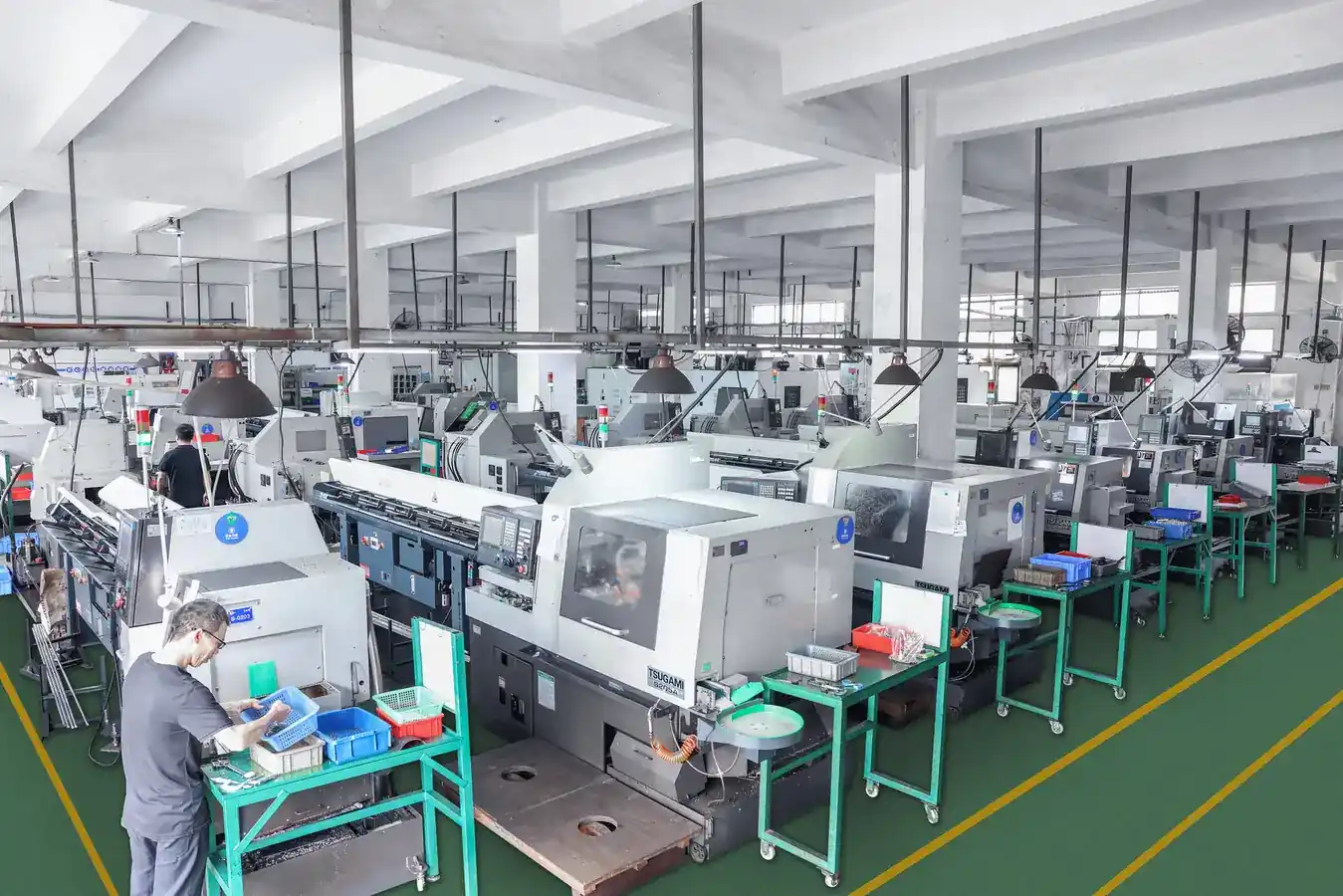
The plant is equipped with Citizen, Tsugami and Nomura sliding-head lathes, which support the bar within millimetres of the cutting tool. Around that equipment the shaft family runs to a fixed process: archived programs, defined tooling, and a control plan that does not change without the customer being told.
How Each Shaft Is Produced
Bar is fed automatically, the steps are turned with guide-bushing support, and slots and cross holes are cut with driven tooling before the part is parted off. Nothing that has to stay true to the axis is left to a second operation.
- Automatic bar feed for continuous running
- Guide-bushing turning for every diameter
- Driven-tool slotting and cross drilling in-cycle
- Deburring and cleaning before packing
Measured Against The Same Characteristics Every Lot
First articles and running samples are measured on profile projectors and 2D height gauges, the plant's standard instruments for turned work, under the ISO 9001 system the company has held since 2009.
Stable Quality And On-Time Delivery
The programme has run for many years with stable product quality and deliveries made on time, which is the record the company points to when a new customer asks whether it can hold a Japanese-level drawing.
What The Customer Gets Out Of It
A shaft supply they do not have to manage weekly, a process that does not move underneath them, and a plant they can audit in person when they want to.
Related Products
Questions About This Program
Can you share the customer's name?
The company records long-standing relationships with Japanese manufacturers, but we describe programme work generically here rather than publishing customer names and contract details without their written agreement.
Could you run a similar programme for us?
Yes, and the route is the same: drawing review, samples within 30 days, a written approval that freezes the process, then scheduled supply against your forecast.
What made this programme work?
Equipment suited to slender work, a process that was locked after approval, and the discipline to tell the customer before changing anything.
Ask About A Shaft Supply Programme
If you are buying long slender shafts today and managing the supplier weekly, send us a drawing and let us tell you what a scheduled programme would look like.