
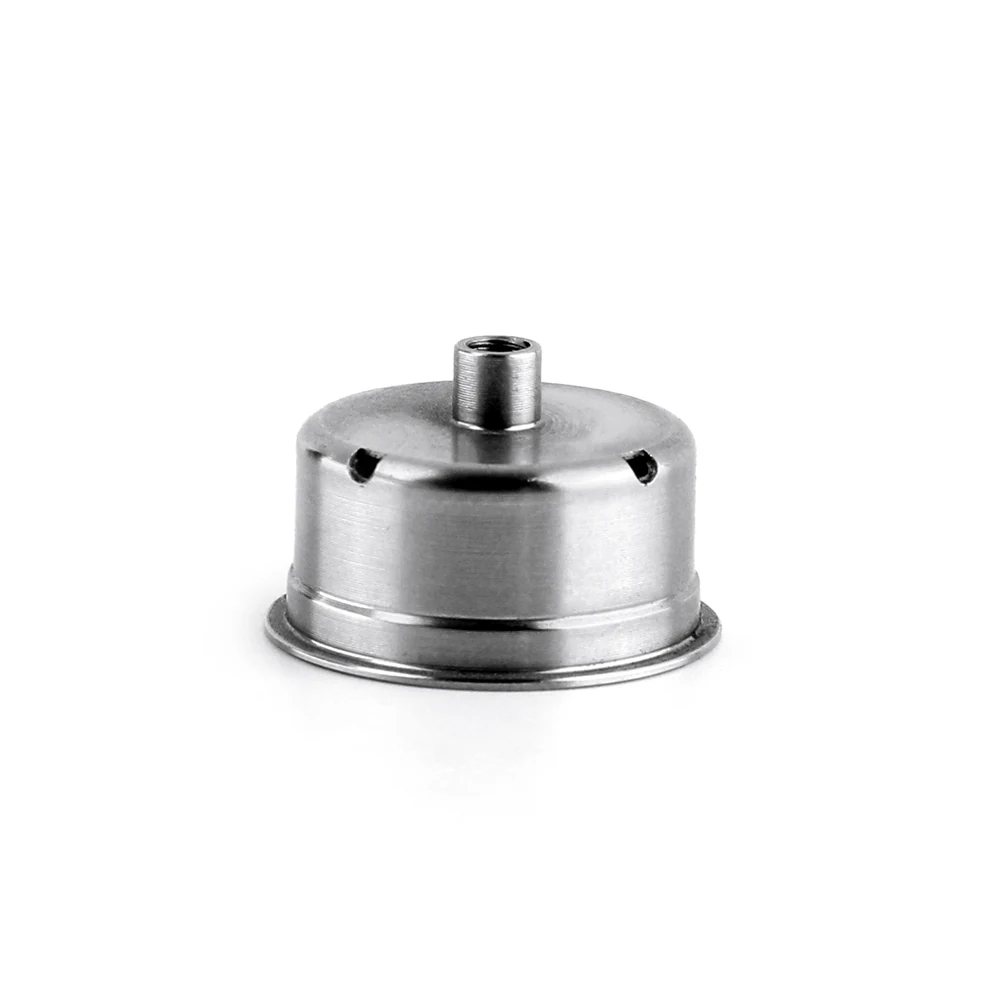
Turned Stainless Steel Cap Housing
A closed-end housing turned in one setup so the skirt, the bore and the central boss all share the same axis
One Housing Turned Complete Instead Of Three Operations
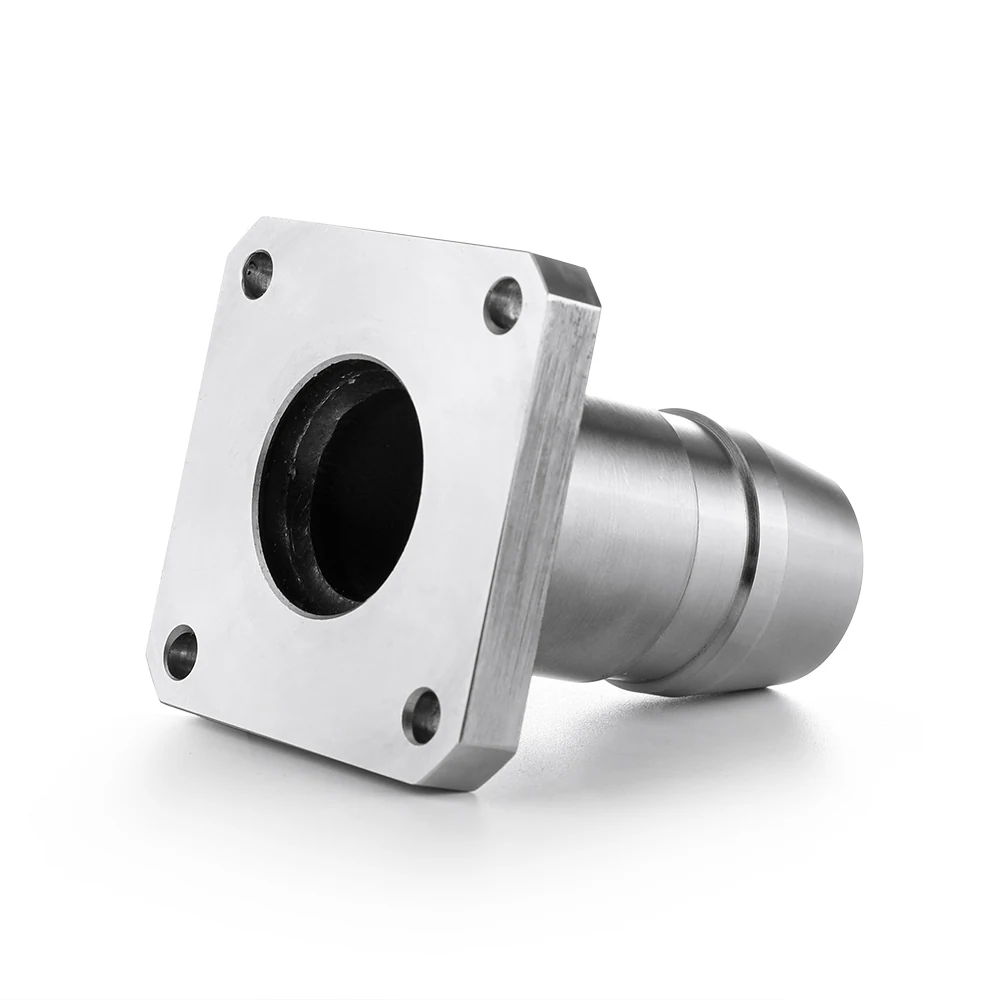
This cap housing closes one end of an assembly and carries a small central boss that a shaft or spring seats against. It is machined complete on a sliding-head lathe: the outer skirt, the seat face, the internal bore and the boss are cut without the part leaving the collet, which is what keeps the boss concentric to the bore.
Shipu has run parts of this shape since the workshop opened in 2009, mostly for office automation and financial machine builders who buy the housing as a finished item rather than as a turning that still needs a second operation.
Why Buyers Move This Part To A Sliding-Head Lathe
Concentric By Construction
Skirt, bore and boss are cut in the same clamping, so runout between them is a machine characteristic rather than something an operator has to chase.
No Second Op To Schedule
The part leaves the machine finished and deburred, which removes a milling operation and the queue time that goes with it.
Repeatable Across Reorders
The program, tooling and bar material are archived by drawing number, so the fifth order runs the same way as the first.
Application Scenarios
- End caps in office automation drive modules
- Closed housings for small gear and spring assemblies
- Cover parts in financial machine mechanisms
- Sealing caps on communication equipment enclosures
Who It Is For
- OEMs who currently buy a deep-drawn shell and machine it themselves
- Buyers consolidating two suppliers into one finished part
- Engineers who need the boss concentric to the bore without a fixture
- Teams moving a Japanese-sourced part to a China supplier
The Failures This Part Is Designed Out Of
- Runout between a drawn shell and a separately machined boss
- Burrs left inside the bore after a second milling operation
- Two purchase orders and two inspection reports for one component
- Lead time that grows every time an operation is subcontracted
Single Clamping
Every feature that has to be true to the bore is cut before the part is released.
In-Process Gauging
First article and running samples are checked on a profile projector and a 2D height gauge.
One Supplier
Turning, deburring, cleaning and packing happen inside the same Shenzhen plant.
Technical Features
- Closed-end body with rolled outer skirt
- Central boss turned from the solid, not pressed in
- Through drilling for side ports where the drawing calls for them
- Face and bore finished in the same cycle
- Bar-fed production from stainless or free-cutting steel
Specifications
| Part Type | Closed-end turned cap housing |
|---|---|
| Typical Material | Stainless steel; free-cutting steel on request |
| Primary Process | Swiss-type CNC turning |
| Secondary Processes | Cross drilling, deburring |
| Tolerance | To customer drawing, confirmed in writing at quotation |
| Surface Finish | As machined; plating to customer specification |
| Inspection | Profile projector and 2D height gauge |
| Sample Lead Time | Within 30 days of drawing approval |
Figures describe the process and the materials we run. Dimensional tolerances are taken from your drawing and confirmed at quotation.
Materials We Run
- Stainless steel grades including SUS304 and SUS316L
- Free-cutting carbon steel where corrosion is not a factor
- Brass for non-magnetic variants
- Customer-nominated bar stock with mill certificates on request
Manufacturing Process
Bar Feed
Material is loaded as bar stock so the cycle runs unattended.
Sliding-Head Turning
Skirt, face, bore and boss are cut in one clamping.
Cross Drilling
Side ports are drilled on the same machine using driven tooling.
Deburr And Clean
Edges are broken and the bore is washed before packing.
Quality Control
- First article checked against the drawing before the run starts
- Running samples measured on a profile projector
- Height and depth features checked on a 2D height gauge
- Visual check for burrs inside the bore on every packing lot
- Quality system certified to ISO 9001 since 2009
Customization Options
- Skirt diameter and height to drawing
- Boss height, thread or plain
- Side port count and position
- Plating or passivation nominated by the customer
- Bagging, tray or bulk packing
Compared With The Alternatives Buyers Consider
| Deep-drawn shell plus machining | Removes the second supplier and the runout stack-up between two processes, at the cost of more material removed per piece. |
|---|---|
| Investment casting | Better surface and tighter bore straight off the machine, and no tooling charge before the first sample. |
| Fixed-head CNC turning | A sliding-head lathe supports the bar close to the tool, which matters once the body gets long relative to its diameter. |
How To Get This Part Quoted And Into Production
Send The Print
A 2D drawing with tolerances, or a 3D file plus a tolerance note.
Confirm Material
Tell us the grade, or describe the environment and we will propose one.
Approve The Sample
Samples ship within 30 days of drawing approval with a dimensional report.
Release The Series
The approved program and tooling are archived against your part number.
Turned Stainless Steel Cap Housing — FAQ
Can you hold the boss concentric to the bore without a second operation?
Yes. Both features are cut in the same clamping on a sliding-head lathe, which is exactly why this part is machined rather than drawn and then milled. The achievable figure depends on your drawing and is confirmed in writing before we quote.
What material do you normally run for this housing?
Stainless steel is the usual choice, in the SUS304 and SUS316L grades we stock for other customers. Free-cutting steel is cheaper where corrosion is not an issue, and brass is available where the part must be non-magnetic.
How long before I see a first sample?
Samples ship within 30 days of drawing approval. That covers programming, tooling, the sample run and the dimensional report.
Do you supply a measurement report with the samples?
Yes. Sample shipments include a dimensional report against the drawing, measured on our profile projector and 2D height gauge.
Is there a tooling charge?
Turned parts normally need only standard tooling, so there is no hard tooling charge. If the drawing calls for a form tool we tell you the amount before you place the order.
Related Guides
Send The Drawing For This Housing
Attach the print and the annual quantity. We reply with price, sample lead time and any note on features that would be cheaper to reshape slightly.