
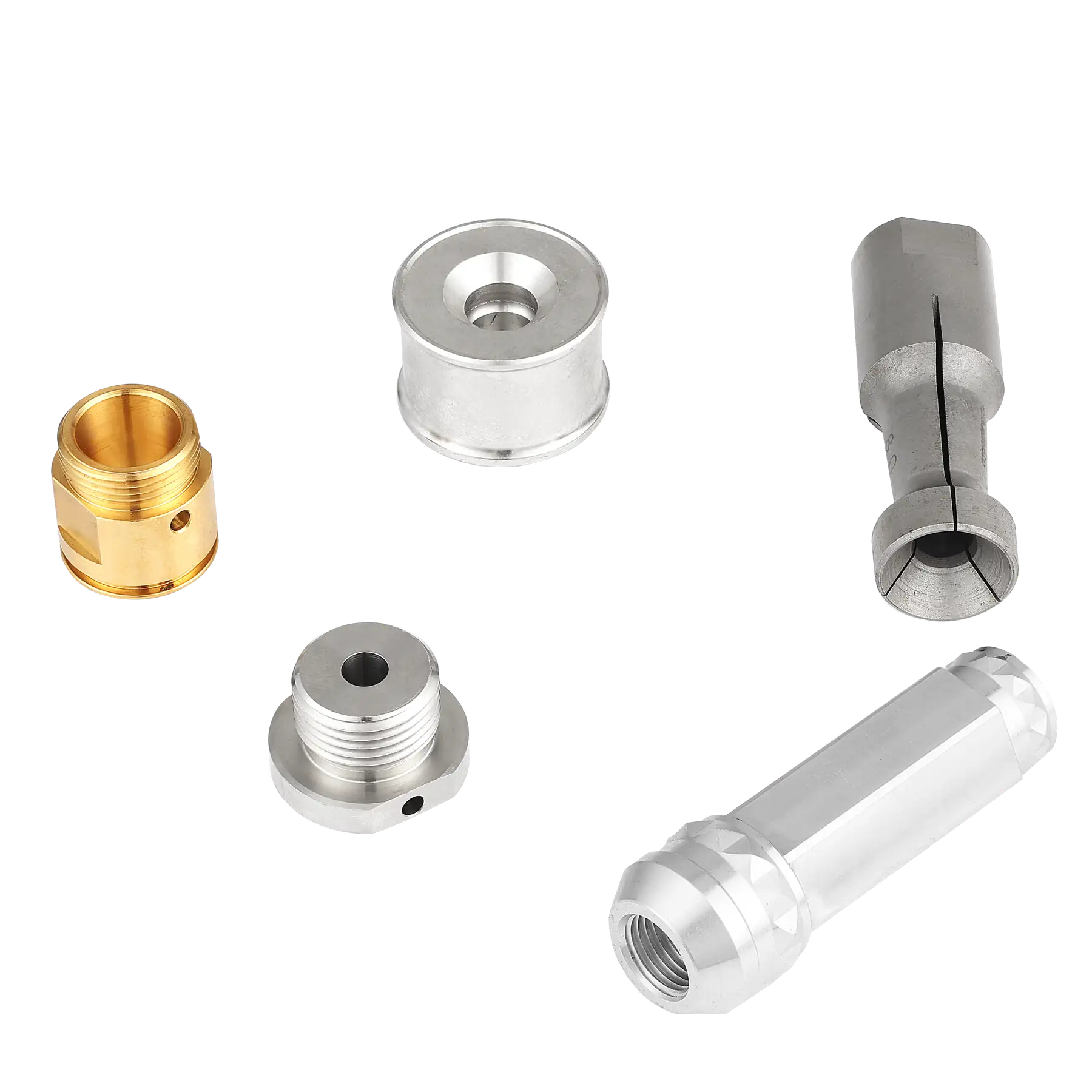
Brass And Steel Component Set
A mixed-material set where the brass parts run against the steel parts, machined and matched in the same plant
Mixed Materials That Have To Work Together
When a bush is brass and the shaft it carries is steel, the fit matters more than either drawing does alone. Making both in one plant means the pair can be measured together and adjusted before the batch is released, instead of discovering the interference at your assembly bench.
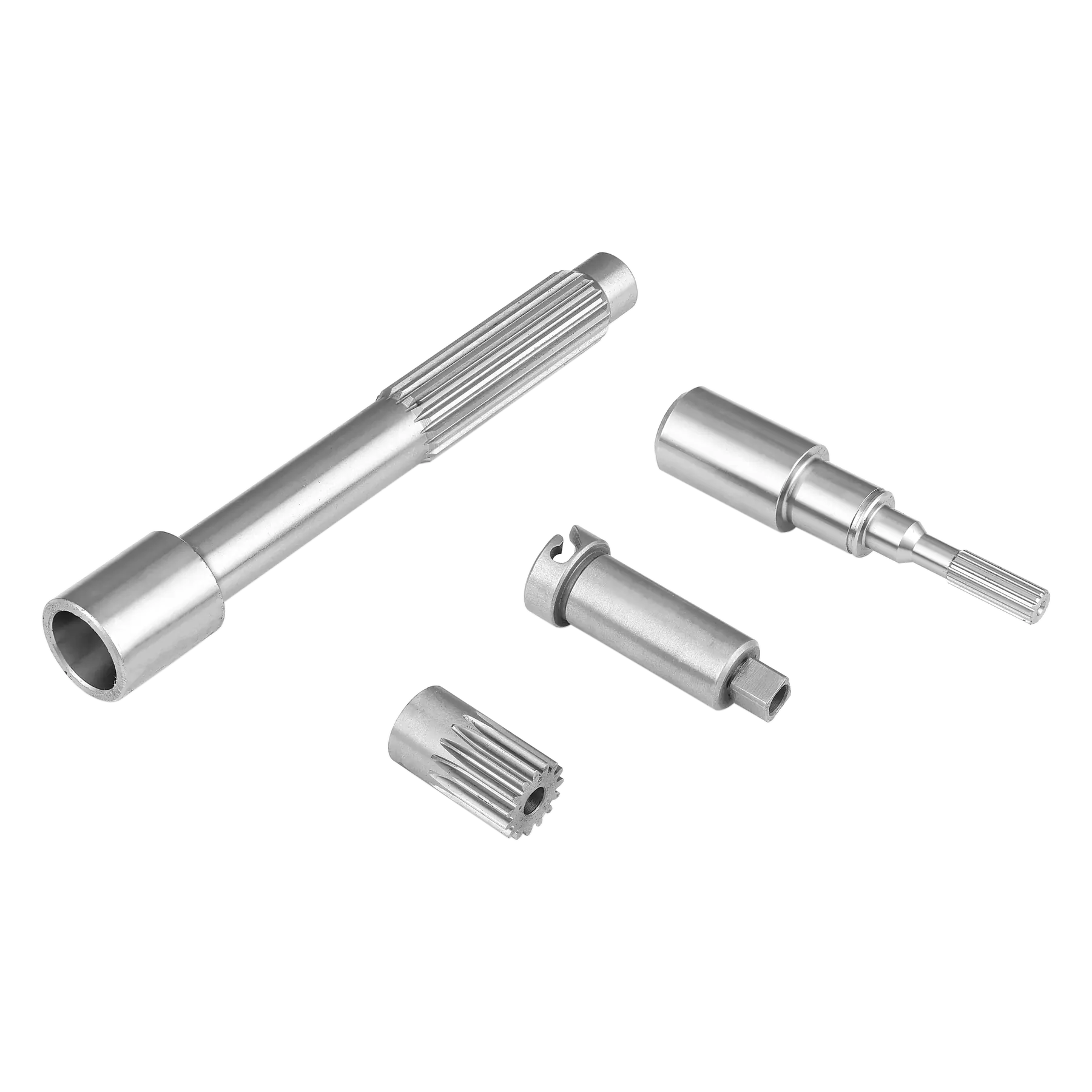
The set shown covers the sort of hardware family we produce repeatedly: a brass bushing, a small pulley, a collet and a threaded adapter, all belonging to one customer assembly.
What Matched Supply Gives You
Fits Verified As A Pair
Running clearances are checked between the actual parts, not between two drawings.
Material Chosen Per Function
Brass where you want a bearing surface, steel where you want strength.
One Supplier For The Family
One quotation, one lot record and one contact for the whole set.
Application Scenarios
- Small drive assemblies with brass bushings on steel shafts
- Clamping collets and their mating adapters
- Belt and cable pulleys running on plain bearings
- Instrument mechanisms where wear must stay in the cheap part
Who It Is For
- Designers using brass bushes instead of rolling bearings
- Buyers sourcing a whole hardware family in one place
- Engineers troubleshooting clearance problems at assembly
- Service teams stocking matched replacement sets
Problems With Splitting The Family
- Clearances that only fail when two suppliers' parts meet
- Brass bushes bought to a nominal size that does not suit the shaft
- Wear appearing in the expensive part instead of the sacrificial one
- Four quotations and four lead times for one assembly
Pair Measurement
Bushes and shafts are gauged against each other before release.
Designed Wear
Material choice puts the wear where you want it.
One Lot Record
The whole family is traceable to a single production window.
Technical Features
- Brass bushings with machined running bores
- Steel collets and adapters from the same family
- Small pulleys with turned groove profiles
- Mating clearances verified between real parts
- Common packing and labelling for the set
Specifications
| Supply Format | Matched multi-item family |
|---|---|
| Materials | Brass and stainless or free-cutting steel |
| Primary Process | CNC turning with driven tooling |
| Fit Verification | Mating pairs gauged together before release |
| Tolerance | Each item to its drawing, plus an assembly clearance check |
| Finish | As machined; plating or passivation on request |
| Sample Lead Time | Within 30 days of drawing approval |
Every item follows its own drawing. Clearances are agreed from the duty you describe, not taken from a table.
Materials We Run
- Free-cutting brass for plain bearing surfaces
- SUS304 stainless for shafts and adapters
- Free-cutting steel where cost dominates
- Bronze where loads are higher than brass will take
Manufacturing Process
Machine Both Halves
Bush and shaft are produced in the same production window.
Gauge The Pair
Running clearance is measured between the actual parts.
Adjust If Needed
Where the pair sits at the edge of tolerance, the program is corrected.
Pack As A Family
Items are bagged and labelled so the set stays together.
Quality Control
- Bore and shaft diameters measured on every lot
- Running clearance verified between mating parts
- Groove profiles checked on a profile projector
- Burr inspection on brass parts, which mark easily
- ISO 9001 quality system since 2009
Customization Options
- Material pairing for the wear interface
- Clearance class for running fits
- Pulley groove profile and diameter
- Collet slot count and clamping range
- Plating, passivation or bare finish
Matched Family Against Separate Sourcing
| Buying bushes as standard catalogue parts | A machined bush can be sized to your shaft instead of forcing the shaft to a stock bore. |
|---|---|
| Rolling bearings | Plain brass bushes are cheaper, quieter at low speed and tolerant of dirt, but they do wear. |
| Separate suppliers per item | Clearances get verified before shipping rather than at your assembly bench. |
Getting The Fits Right
State The Duty
Speed, load and lubrication decide the running clearance.
Nominate The Wear Part
Tell us which component you want to sacrifice in service.
Send Both Drawings
We need the shaft and the bush to check the pair.
Confirm The Lubricant
Dry, greased or oil-fed changes the clearance we aim for.
Brass And Steel Component Set — FAQ
Can you size the brass bush to a shaft I already have?
Yes. Send the shaft or its drawing with the clearance you want and we will machine the bore to suit. This is the usual way these are ordered.
What clearance should a plain brass bush have?
It depends on speed, load and lubrication, so we ask for the duty rather than quoting a fixed figure. Tell us those three and we will propose a clearance and confirm it on the sample.
Is bronze better than brass?
Bronze takes higher loads and is more tolerant of marginal lubrication; brass machines faster and costs less. For light, intermittent duty brass is usually enough.
Can you supply the pulley with a specific belt profile?
Yes, the groove is turned to the profile on your drawing. Send the belt specification if you do not have a profile dimensioned.
Will the brass parts arrive marked or scratched?
Brass marks easily, so these parts are bagged individually where the drawing calls for a cosmetic surface. Tell us which faces matter.
Related Products
Related Guides
The Drawing Checklist That Gets You A Firm Machining Quote
What to put on the print so the quotation comes back firm instead of hedged.
What To Check Before Importing Machined Parts From China
How to separate a machine shop from a trading company, and how to structure a first order so it proves something.
Quote The Whole Family
Send every drawing in the set and tell us the running duty. We come back with prices per item and the clearances we intend to hold.