
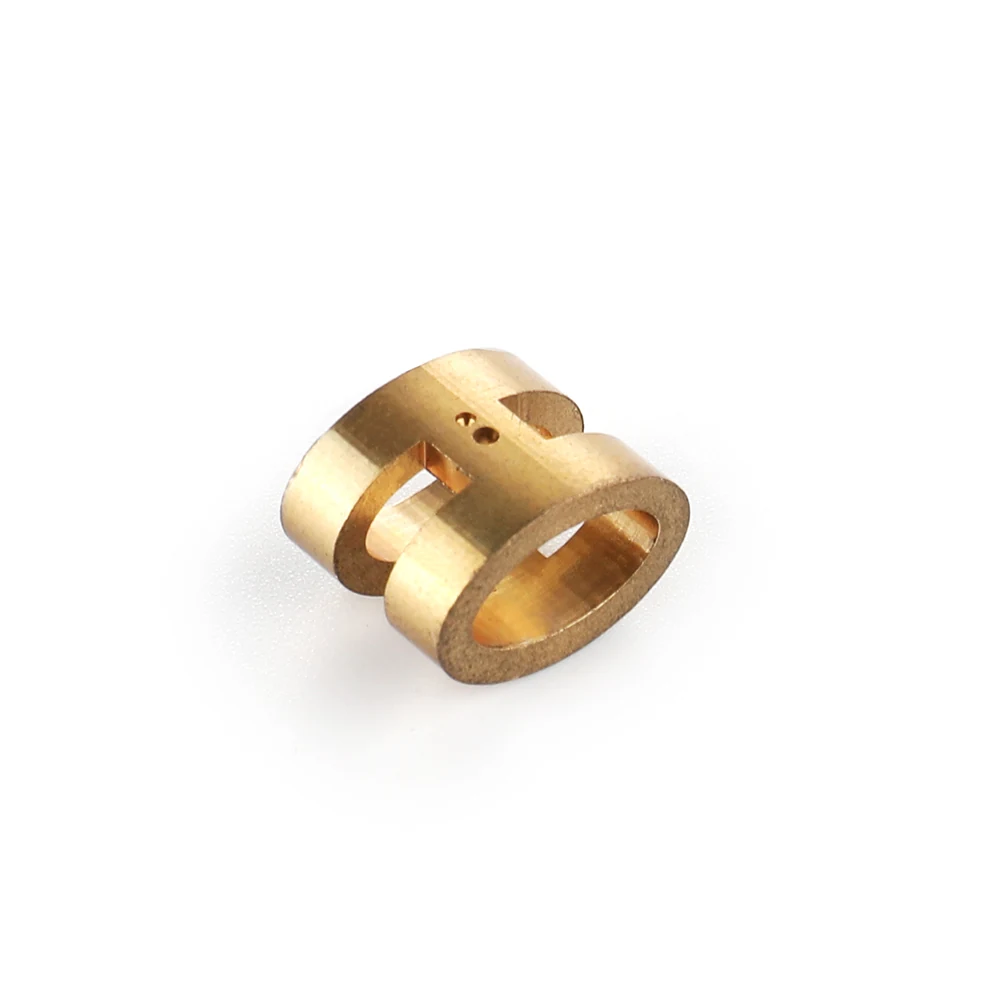
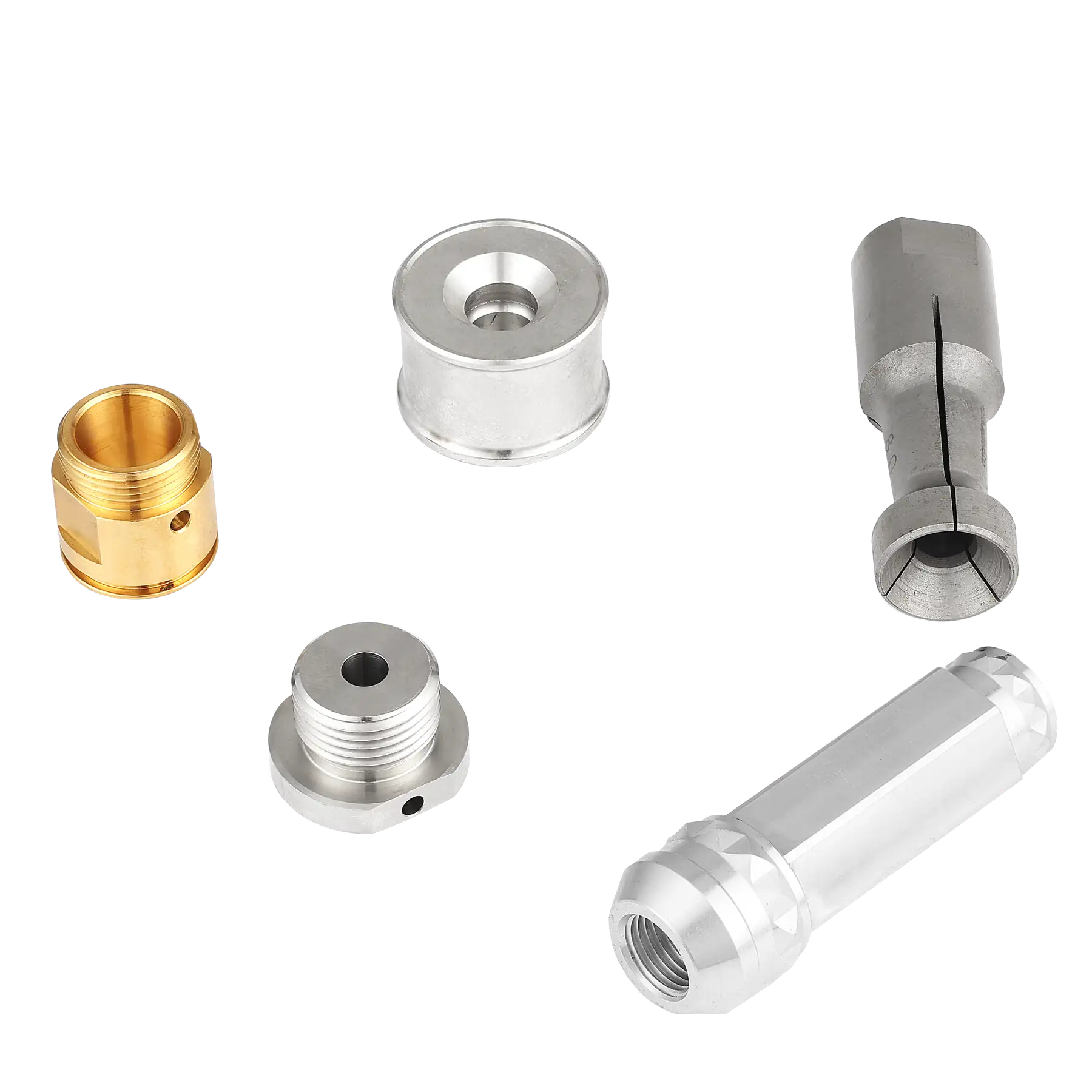
Brass Machined Coupling Block
A small brass block, bored through and slotted on two sides, that clamps onto a shaft without a key
A Clamp That Does Not Need A Keyway
The block is bored through and then slotted, so tightening a screw across the slot closes the bore onto the shaft. There is no keyway to cut in the shaft, no set screw to dent it and no angular position to get right during assembly.
Brass is the usual material here: it clamps without scoring a steel shaft, machines cleanly at this size, and does not corrode in the humid conditions much of this equipment lives in.
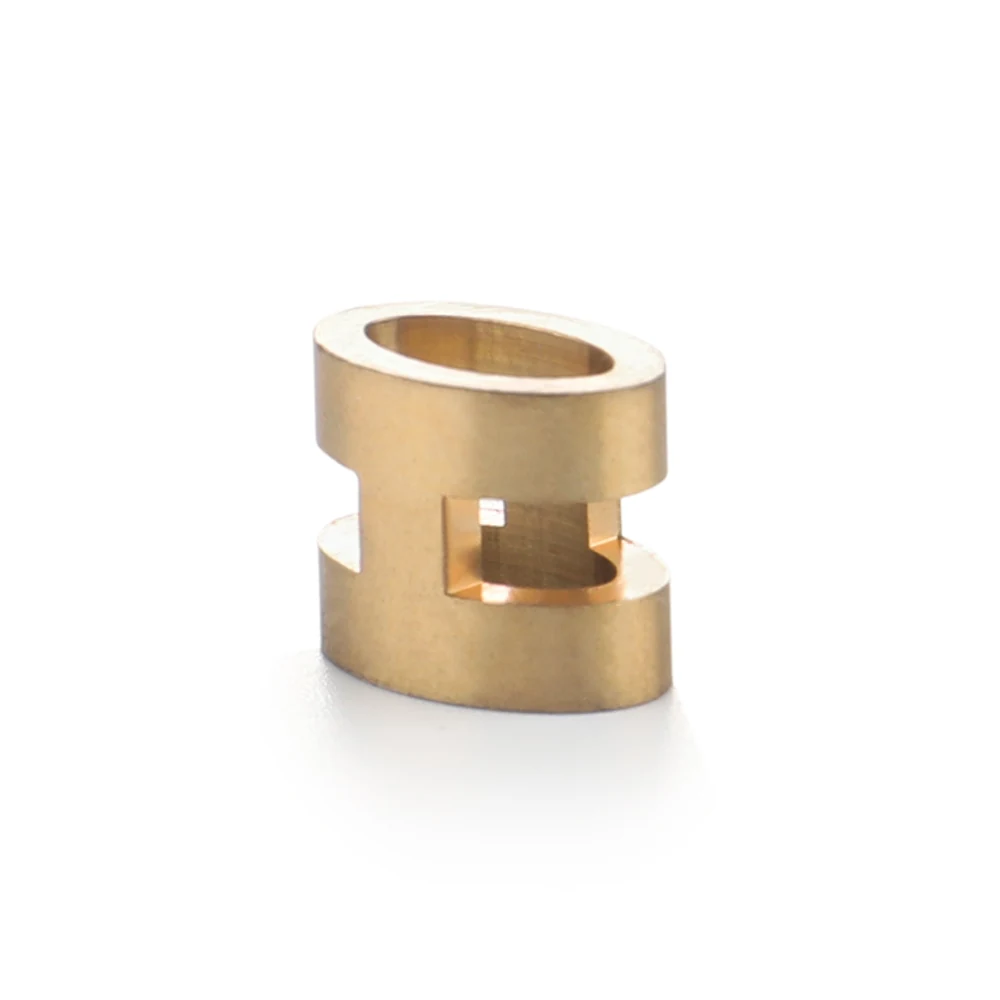
Why Designers Use A Clamping Block
No Shaft Modification
The shaft stays plain, so it can be repositioned or replaced without rework.
Even Grip
A closing bore grips all the way round instead of denting one spot.
Adjustable In Service
Position can be reset during maintenance without damaging anything.
Application Scenarios
- Shaft collars and stops in light mechanisms
- Coupling two small shafts end to end
- Mounting levers and arms onto plain shafts
- Adjustable stops on laboratory and test equipment
Who It Is For
- Designers who want to avoid cutting keyways
- Service teams repositioning components in the field
- Engineers whose set screws are marking shafts
- Buyers needing non-magnetic or corrosion-resistant clamps
What Set Screws And Keyways Cost You
- Set screws denting shafts so components cannot be moved again
- Keyways that weaken a small-diameter shaft
- Angular position lost every time a part is removed
- Steel collars corroding onto stainless shafts
Bore Then Slot
The bore is finished before the slot, so it closes evenly.
Brass On Steel
A softer clamp protects the shaft surface.
Repeatable Clamp
Slot width and screw size are matched to the grip you need.
Technical Features
- Through bore sized to the shaft
- Milled clamping slot with a defined width
- Cross-drilled and counterbored screw hole
- Second slot or pocket where the drawing requires
- Edges broken on all handled faces
Specifications
| Part Type | Slotted clamping block |
|---|---|
| Typical Material | Free-cutting brass |
| Primary Processes | CNC turning and milling |
| Bore | Sized to the shaft, clearance or line fit |
| Clamp Screw | Customer specified, cross drilled and counterbored |
| Tolerance | To customer drawing, confirmed at quotation |
| Finish | As machined; plated on request |
| Sample Lead Time | Within 30 days of drawing approval |
Bore, slot and screw size are taken from your drawing and the torque you state. No stock sizes are listed.
Materials We Run
- Free-cutting brass, the default for small clamping blocks
- Aluminium alloy where mass matters
- SUS304 stainless for washdown environments
- Bronze where clamping loads are high
Manufacturing Process
Turn Or Mill The Blank
The block is squared and the bore is drilled and reamed.
Cut The Slot
The clamping slot is milled to the width on the drawing.
Drill The Screw Hole
The cross hole is drilled, counterbored and tapped as required.
Deburr
The bore and slot edges are cleaned so the block slides onto the shaft.
Quality Control
- Bore diameter measured before slotting
- Slot width checked on a profile projector
- Clamping trial on a shaft sample where one is supplied
- Thread gauged where the block is tapped
- Under the ISO 9001 system certified in 2009
Customization Options
- Bore size and fit
- Block envelope and mounting features
- Slot width and depth
- Clamp screw size and head type
- Additional tapped holes for levers or arms
Clamping Block Against Other Shaft Fixings
| Set screw collar | Grips without denting the shaft, so position can be changed repeatedly. |
|---|---|
| Keyed hub | No keyway to weaken a small shaft and no angular position to maintain. |
| Adhesive joint | Removable for service, where a bonded joint is a one-time assembly. |
Specifying The Block
Give The Shaft Size
Actual shaft diameter and tolerance, not the nominal.
State The Torque
Holding torque decides the slot and the screw size.
Describe The Mounting
Tapped holes for levers or arms are added in the same operation.
Name The Screw
Tell us the screw you will use so the counterbore suits its head.
Brass Machined Coupling Block — FAQ
Will a brass block hold on a stainless shaft?
Yes, for light and moderate torque. Brass conforms slightly as it clamps, which spreads the grip. For high torque we would suggest a steel or bronze block instead and say so at quotation.
Do you supply the clamping screw?
We can include a standard screw sourced locally, listed as a separate line on the quotation, or leave the hole ready for your own fastener.
How do I stop the block marking the shaft?
That is the point of using brass rather than a steel set-screw collar. The clamp grips around the full bore rather than at one point, so the shaft surface stays intact.
Can you add a lever mount to the block?
Tapped holes, flats and pockets are all milled in the same operation. Put them on the drawing and there is usually no extra setup cost.
What bore fit should I ask for?
A light clearance fit is normal, because the slot has to be able to close onto the shaft. If the bore is too tight the block bottoms out before it grips.
Related Products
Send The Shaft Size And Torque
Tell us the shaft diameter, the holding torque and any lever or arm the block has to carry. We come back with a design note and a price.