
- Home
- Knowledge Center
- Specifying Ball Joint Handrail
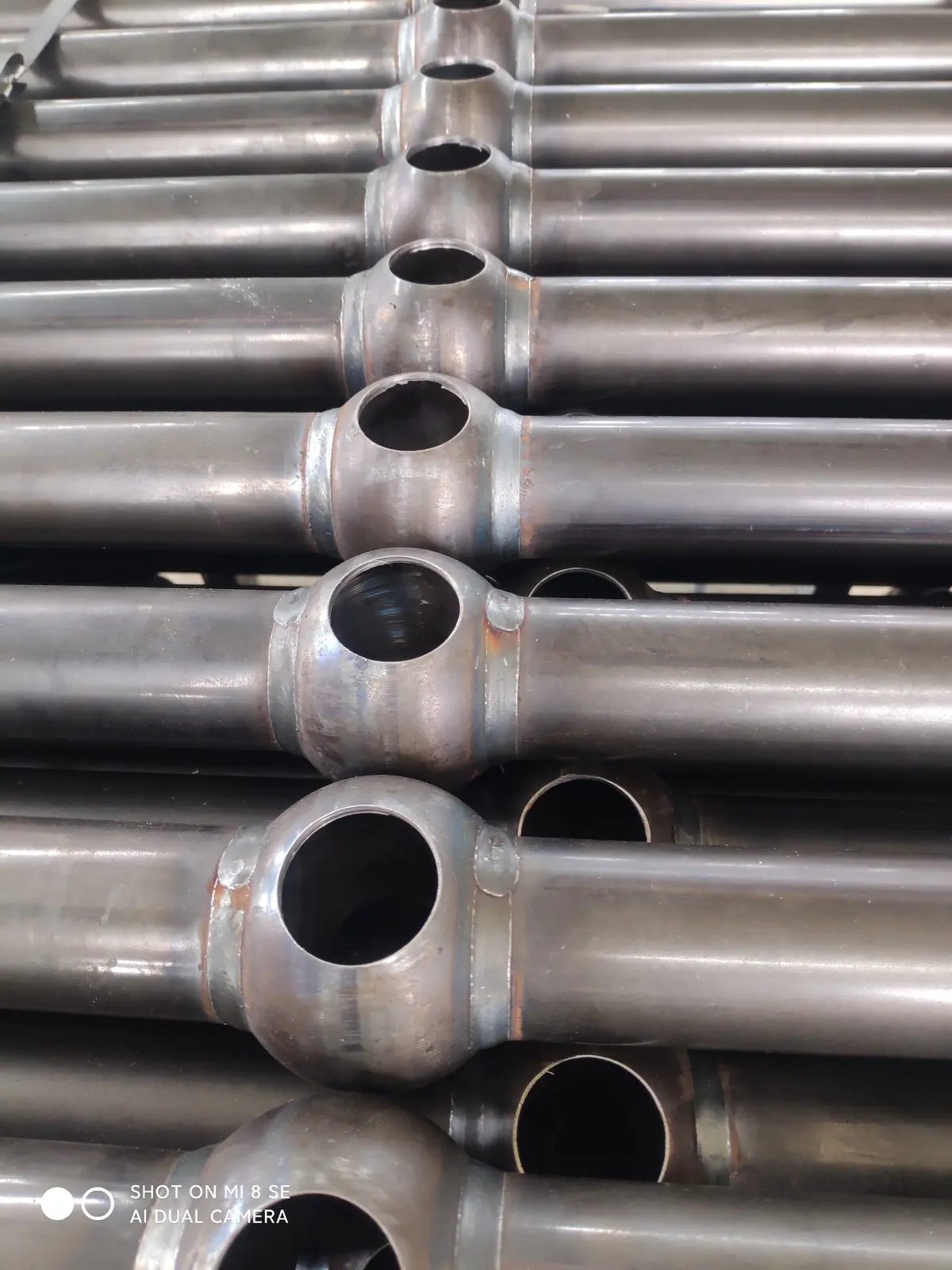
Specifying Ball Joint Handrail
Why the drilled ball exists, what to measure before ordering, and how to match a run that is already installed.
What The Ball Is For
The rail passes through a drilled ball welded to the post. That lets a run change level and direction without a fabricated corner at every post, which is where site handrail time and site welding costs go.
The Four Dimensions That Matter
Post tube diameter and wall, rail tube diameter and wall, ball diameter, and base plate thickness with its hole pattern. The system produced here is a 48 x 3.25 mm post, a 42.3 x 3.25 mm rail, a 76 x 3 mm ball and a 6 mm base plate.
Matching An Existing Run
Measure the ball height above the base plate and the outside diameter of the existing rail. Those two numbers decide whether new posts will line up and whether your rail will pass through the ball.
Base Plates Are Drilled Before Coating
Drilling after galvanizing leaves bare steel in every hole. Send the hole pattern and edge distances from the steelwork drawing so the plates are finished before the bath.
Order It With The Grating
The handrail and the deck are the same platform. Ordered together they are galvanized in the same batch and arrive in the same shipment, in the same finish.
Products Referenced In This Guide
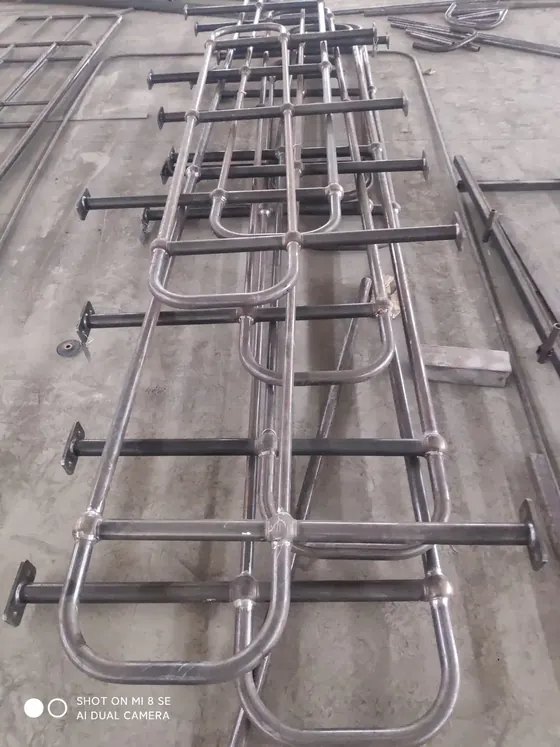
Ball Joint Stanchion With Handrail
Hot-dip galvanized ball joint stanchion system: 48 x 3.25 mm post, 76 x 3 mm drilled ball and 42.3 x 3.25 mm handrail tube, with a 6 mm base plate.
See the specification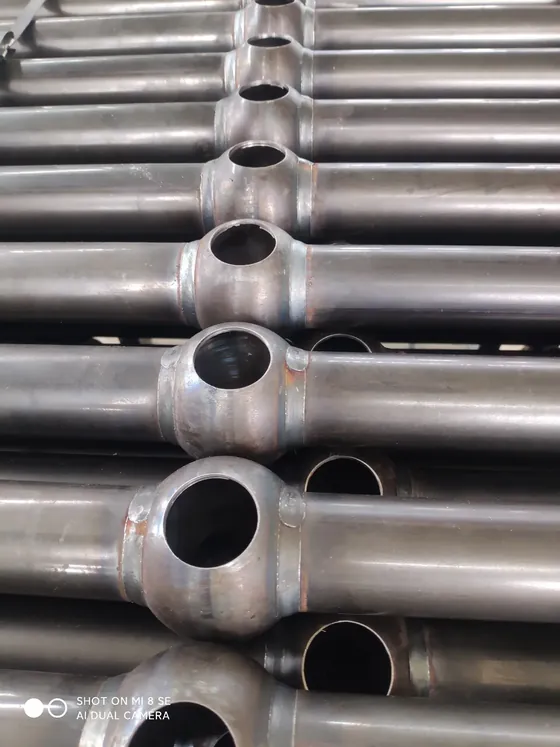
Ball Joint Stanchion Post
The stanchion post on its own: 48 x 3.25 mm tube with a 76 x 3 mm drilled ball and a 6 mm base plate, hot-dip galvanized, supplied without rail.
See the specification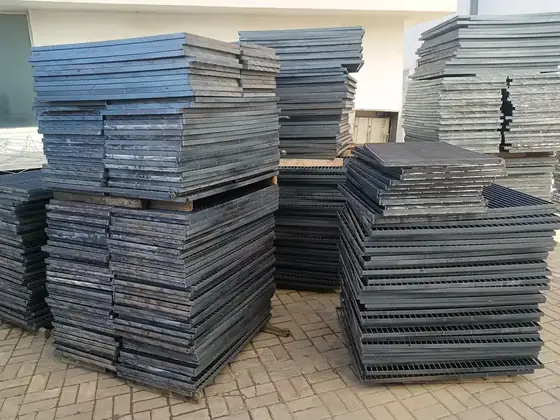
Welded Steel Grating 30x2.5 With Flat Cross Bar
Pressure-welded carbon steel panel on 30x2.5 bearing bar with an 8x2 flat cross bar, hot-dip galvanized, for general platform, walkway and trench duty.
See the specification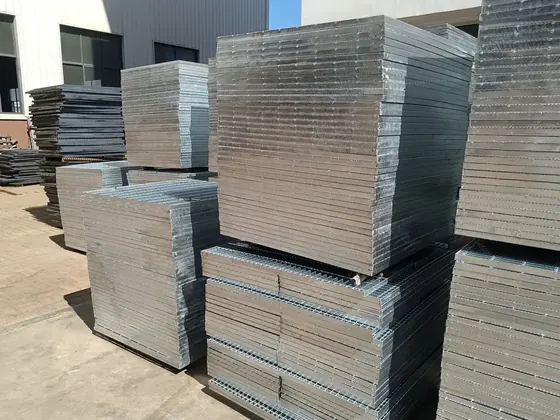
Welded Steel Grating 32x3 With Round Cross Bar
Pressure-welded carbon steel panel on 32x3 bearing bar with a 6 mm round cross bar, hot-dip galvanized, a step up in section from the 30x2.5 panel.
See the specificationProduct Families Covered
Questions About This Guide
What post height do you supply?
Can I buy posts without rail?
Put This Into Practice
Send the opening you are covering and a recommendation with the matching bar sections comes back by email.