
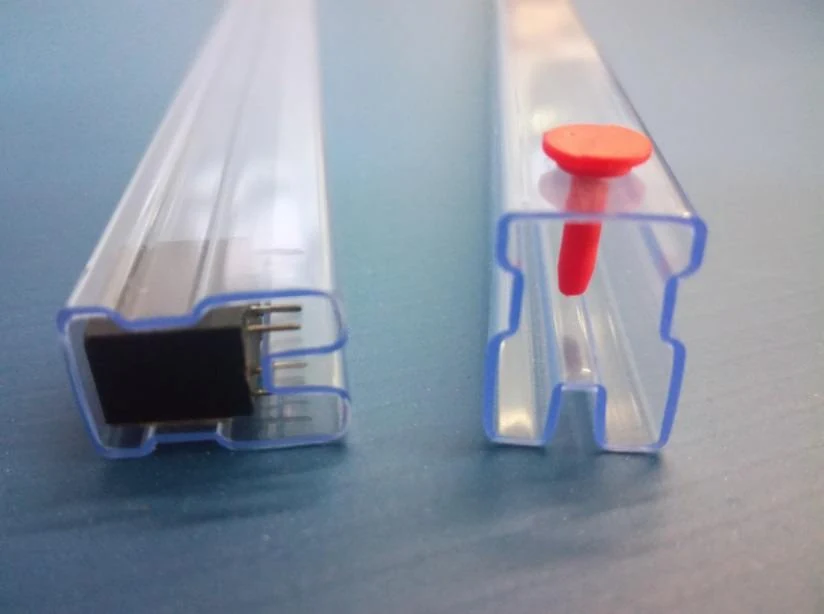
Packaging Forms For Electronic Components
Surface mount components are packaged in four primary forms: tape, tube, tray, and bulk.
- Home
- Knowledge Center
- Packaging Forms For Electronic Components
On this page
- Four Main Packaging Forms For Surface Mount Components
- When To Use Anti Static IC Tube Packaging
- How Tube Packaging Works In SMT Assembly
- Material And Design Considerations For IC Tubes
- Limitations Of Tube Packaging
- Why Tube Packaging Is Preferred Over Trays For Small Batches
- Packaging Materials And Their Use Cases
Four Main Packaging Forms For Surface Mount Components
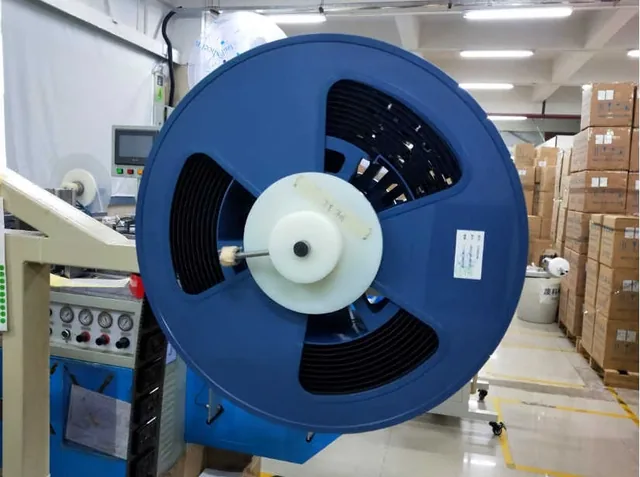
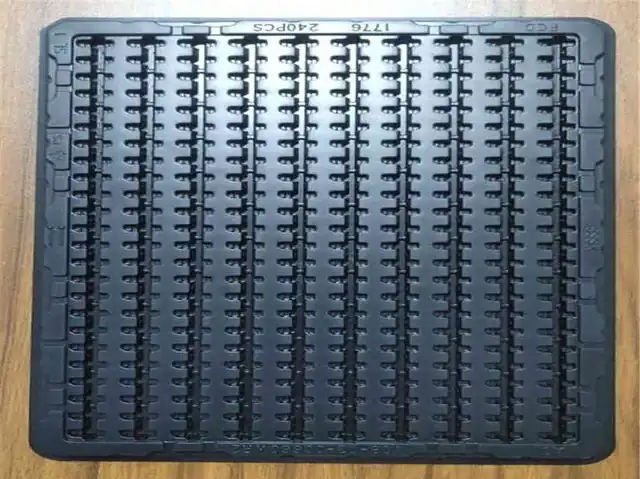
Surface mount components are packaged in four primary forms: tape, tube, tray, and bulk. Each form is selected based on production volume, feeder type, component size and shape, and assembly line efficiency. Tape packaging is standard for high-volume production and covers most ICs except QFP, PLCC and LCCC. Tube packaging suits small batches and mixed component types. Tray packaging is used for larger or more fragile devices. Bulk packaging is rarely used due to the need for manual pick-up or re-packaging.
When To Use Anti Static IC Tube Packaging
Anti-static IC tube packaging is recommended for low-volume or prototype production, especially when multiple component types are handled in small quantities. It is suitable for rectangular chip resistors, capacitors, small special-shaped devices, and components that do not fit well in standard carrier tape. The tube maintains component orientation and protects against electrostatic discharge during handling and transport.
How Tube Packaging Works In SMT Assembly
Components are arranged in a single direction inside a plastic tube. Plastic pins, nails, rubber end plugs, or other stoppers are inserted at both ends to secure the tube in the SMT feeder. When the tube is pressed, one component is released at a time. The tube is removed from the SMT machine after the component is placed, and the process repeats. This method ensures consistent feed and alignment for small batch runs.
Material And Design Considerations For IC Tubes
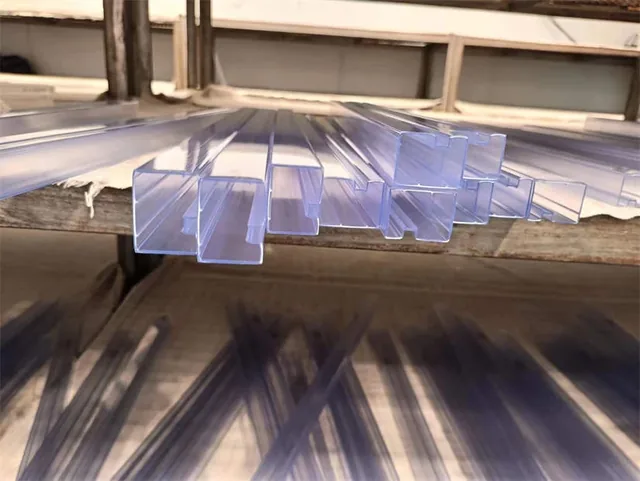
IC tubes are made from plastic materials such as PVC, PS/HIPS, PC, PETG, or ABS. The tube profile is extruded to match the device dimensions. Critical dimensions are controlled within 5 mils on PVC tubes. The anti-static property is achieved through surface treatment or built-in additives. The tube must be compatible with the feeder’s pressure and the component’s size to prevent jamming.
Limitations Of Tube Packaging
Tube packaging has a lower component capacity compared to tape and reel. The cost per unit is higher, and the mounting speed is slower than tape-based systems. If the feeding pressure is uneven, components may stick in the narrow tube. The tube must be handled carefully to avoid deformation, which can cause feed issues or damage to the device.
Why Tube Packaging Is Preferred Over Trays For Small Batches
For surface mount integrated circuits, tube packaging is less expensive than tray packaging. Trays require more material and space, and are harder to reconfigure for different component types. Tubes allow quick changeover between devices, making them ideal for mixed or low-volume production where tooling flexibility is essential.
Packaging Materials And Their Use Cases
Plastic tubes are used for chip resistors, capacitors, diodes, transistors, crystal oscillators, small ICs, and other surface mount components. The tube is sealed at both ends with plastic pins, rubber end plugs, or nails. The choice of closure depends on the tube profile and feeder design. The packaging must be compatible with the SMT machine’s feeding mechanism.
Products In This Guide
The products this guide applies to.
Anti Static Shipping Tubes
Anti Static Shipping Tubes are extruded plastic channels designed to protect electronic components from electrostatic discharge, mechanical shock, and environmental damage during transport and storage.
View Details
Anti-Static IC Tubes
Anti-Static IC Tubes are extruded plastic channels designed to protect electronic components from electrostatic discharge, mechanical shock, and environmental damage during transport and storage.
View Details
Color Anti-static Tubes
Color anti-static tubes are extruded plastic channels designed to hold electronic components in a fixed orientation from the component vendor to the pick and place machine.
View DetailsKeep Reading
Guides that cover the next question.
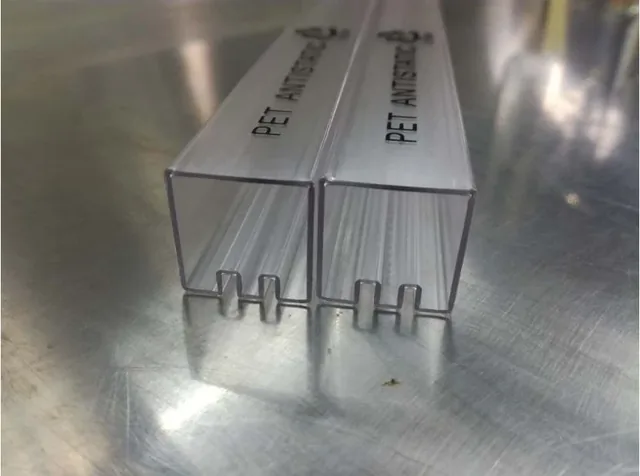
Custom IC Tubes For Specific Device Profiles
Each IC tube is extruded to match a unique device profile—shape, width, cavity depth and end plug type.
Read Guide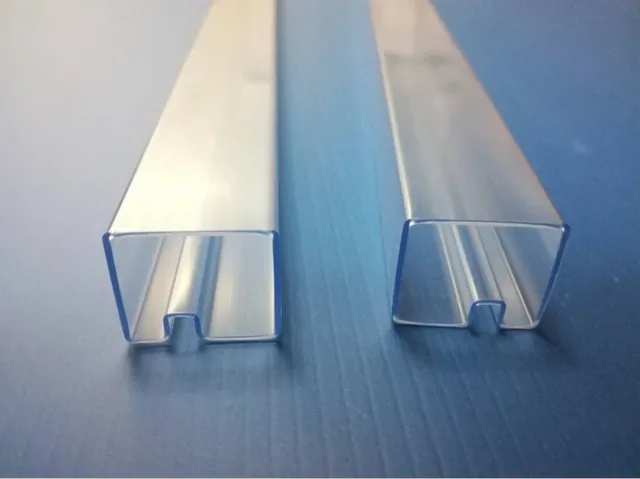
Four Points To Check When Buying IC Tubes
A supplier with independent R D and design capabilities can produce an anti-static IC tube from a part drawing without requiring a physical sample.
Read Guide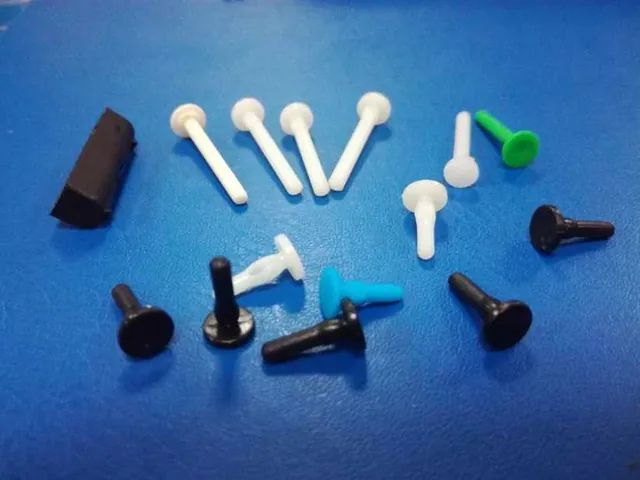
How To Choose IC Tube Stoppers
An anti-static IC tube is a precision profile designed to hold components during transport and feeding.
Read GuideQuestions From This Guide
What types of components are best packaged in IC tubes?
Rectangular chip resistors, capacitors, small special-shaped devices, and surface mount ICs that are not suited for standard carrier tape are best packaged in IC tubes.
How does tube packaging compare to tape and reel in SMT speed?
Tape and reel systems are faster for high-volume production. Tube packaging is slower because each component is released one at a time under manual pressure, making it better suited for low-volume or prototype runs.
Can IC tubes be used for QFP or PLCC components?
No. The source text states that QFP, PLCC, and LCCC components do not use tape packaging. These are typically packaged in trays or specialized carrier tapes. IC tubes are not recommended for these types due to size and lead configuration.
What materials are used to make IC tubes?
IC tubes are made from PVC, PS/HIPS, PC, PETG, or ABS. The material choice depends on the required mechanical strength, anti-static properties, and environmental conditions during storage and transport.
What is the typical component capacity of an IC tube?
The source text does not specify the number of components per tube. It only states that the number is limited and that tube packaging has lower capacity compared to tape and reel.
Are anti-static IC tubes reusable?
The source text does not mention reusability. Tubes are typically used once and discarded after the component is placed. Reuse is possible only if the tube remains undamaged and the anti-static property is intact.
How are IC tubes sealed at the ends?
IC tubes are sealed at both ends with plastic pins, nails, rubber end plugs, or other stoppers. These closures are matched to the tube profile and are required to secure the tube in the SMT feeder.
Apply This to Your Own Parts
Send the device and the current packaging. The recommendation comes back with a material, a profile and a lead time.