Knowledge Center
PP vs PVC vs Paperboard For Filing Products
Almost every decision on a filing product starts with the material. It sets the feel in the hand, how the item survives daily use, which printing method will hold, and a large part of the unit price. Here is how the three materials we work with actually behave.
Polypropylene
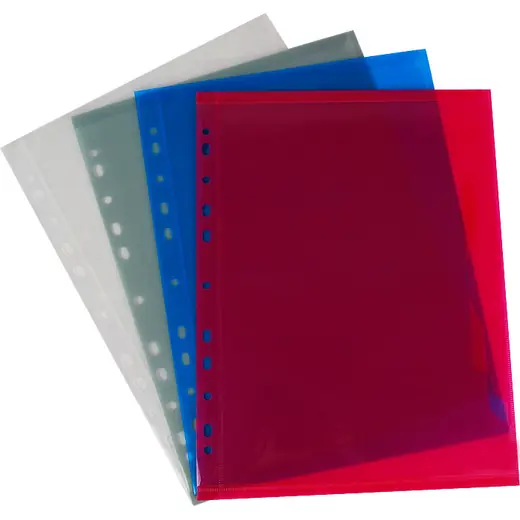
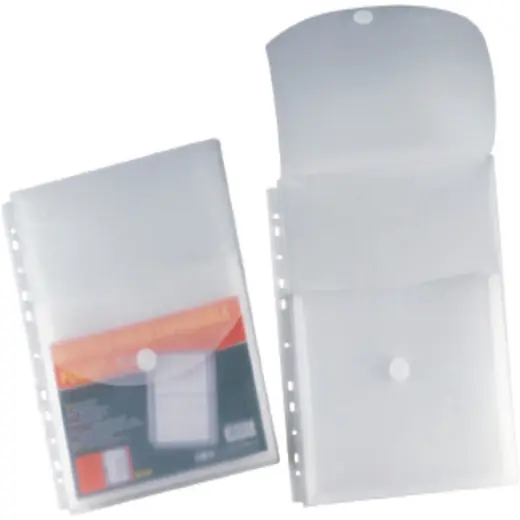
Polypropylene is the workhorse of the filing range and the material behind most of our folders, expanding files, file bags, display books, sheet protectors and dividers.
It is flexible rather than rigid, which is why a PP folder survives being pushed into a full bag while a board wallet creases. It does not absorb moisture, so it wipes clean and does not soften in a humid warehouse. It can be produced clear, frosted or in solid colour, and it can be welded, which is how pockets and gussets are closed without glue.
Its limits are worth knowing. Printing sits on the surface rather than in it, so ink choice and surface treatment matter. It flexes, so it is the wrong choice where an item has to hold a square shape when full.
PVC
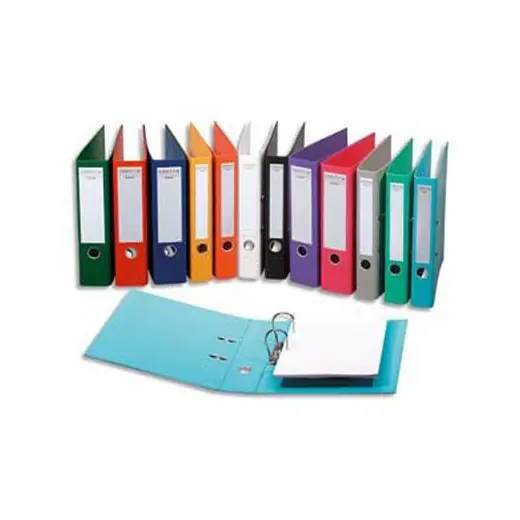
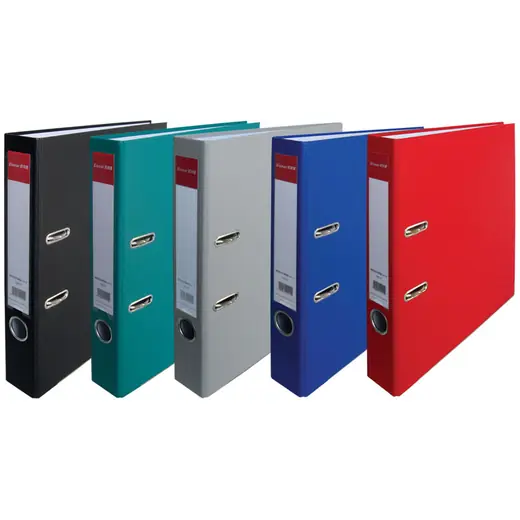
PVC appears where a heavier, higher gloss surface is wanted, most often as the covering on a lever arch file or ring binder, and as the body on some welded pockets and bags.
It takes a deeper gloss and a wider range of embossed finishes than PP, and it accepts hot stamping and debossing cleanly, which is why it is the usual choice for a branded binder or notebook cover. Wrapped over a board core it gives a file that wipes clean but still stands square on the shelf.
It is heavier than PP for the same visual thickness, which matters on air freight, and it costs more per square metre.
Paper Board
Paper board and grey board form the core of lever arch files, box files, hard cover notebooks and the lower cost archive range.
Board is rigid, so a file keeps its shape when full and stacks on a shelf without bowing. It takes offset printing directly and at high quality, which is why patterned covers such as marble finishes are produced on board rather than on plastic. Board is also the cheapest route to a high volume archive file.
Board absorbs moisture, so it is the wrong choice for an item that will live in a damp environment, and it marks more easily than a covered file. Board thickness is the single biggest driver of whether a file bows when loaded.
Choosing Between Them
Ask three questions in this order. First, does the item have to hold a rigid shape when full? If yes, board or board with a covering. If no, polypropylene.
Second, how will the brand be applied? Full colour artwork across the whole cover points to offset printed board or printed film. A solid logo points to screen printing on PP. A debossed or foil logo points to PVC or PU over board.
Third, what environment does the item live in? Anything handled wet, wiped down or stored in humidity points to PP or a PVC covered board rather than bare board.
Where Cost Actually Sits
For the same finished item, bare board is usually the cheapest, polypropylene sits in the middle and PVC covered board is the most expensive. But material is not the whole unit price. A welded PP pocket costs less to assemble than a riveted mechanism on a board file, and a printed board cover costs less than screen printing the same artwork onto plastic in several passes.
The practical answer is to quote the same item in two materials before deciding. We do this routinely and the comparison usually settles the argument in one round.