Knowledge Center
Display Book Pocket Counts And Binding
A display book is judged on one thing: whether the pages stay clean and readable after a year of being handed across a table. Pocket construction and film choice decide it.
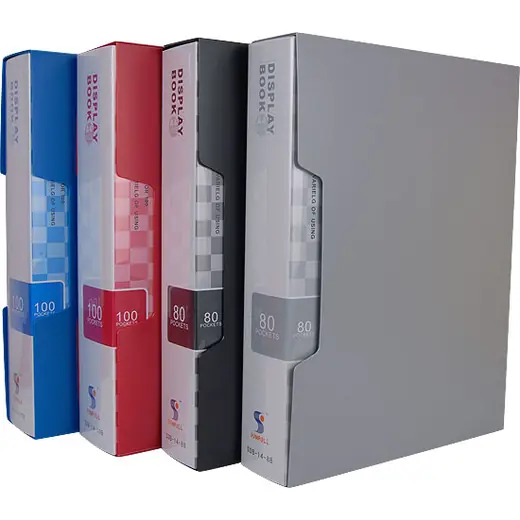
Pocket Count
Pocket counts are set by the order rather than by a fixed catalogue list. Send the number of pages the book has to display and the book is built to it.
In practice, count the pages the user actually shows and add a small margin. A book with far more pockets than pages looks slack and the empty pockets collect dust.
Welded Versus Glued Pockets
Open top pockets on our display books are welded into place. A glued pocket separates at the edge after repeated use and the page slides out sideways, which is the most common failure on a cheap display book.
This is difficult to judge from a photograph, so it is worth checking on the physical sample: pull gently at the pocket edge and see whether it is a weld line or an adhesive seam.
Film Clarity And Thickness
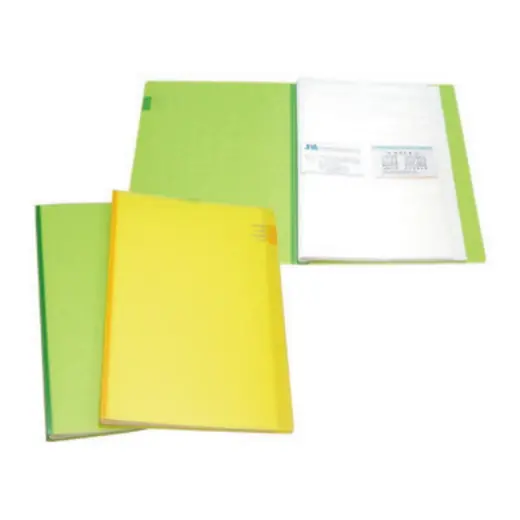
Glass clear film keeps contents readable so a page can be identified without removing it. Thicker film handles more page turns before it creases at the fold.
For a sales presentation handled daily, specify a heavier film than for a menu that sits on a table.
Fixed Or Refillable
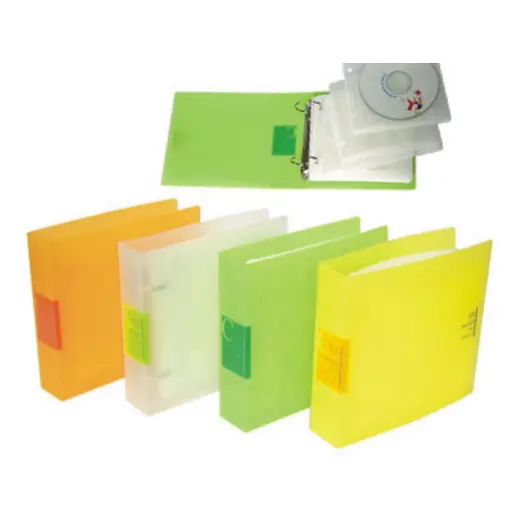
A fixed book is cheaper and slimmer. A refill book lets the customer change one page instead of replacing the whole book, which matters where prices or specifications change.
Refill constructions are built around a ring or post binding, so decide this before the sample rather than after.
Cover Finish
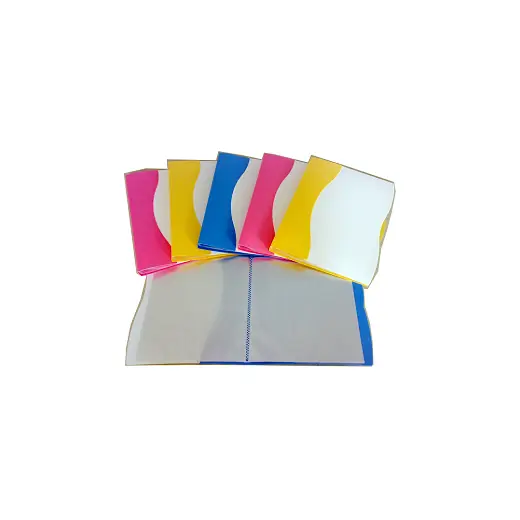
Covers are produced in twin colour, printed and soft finishes on the same body. Printed covers carry full colour artwork, which is the usual route for a branded presentation book.
Approve the sample with your own pages inserted. A pocket that fits a test sheet may not fit a page in a heavier stock.