
Additives Your Formulation Already Knows How To Use
QK wetting agents, dispersants, rheology controls and levelling agents, each published with the commercial grade it is positioned against and the dosage range by pigment type.

Solids Viscosity Density And Dosage On Every Grade
Active content, density, pH, solvent, storage window, shelf life, packing and the dosage ladder by pigment class are on the product page, not behind a form.
One Supplier Across The Whole Additive Package
Dispersion, wetting, defoaming, levelling, rheology and sag control from a single source in Tianjin, with pigments, surfactants and molecular sieves alongside.
Five Product Families For Coating And Ink Plants
Coating and ink raw materials: wetting and dispersing agents, rheology control agents, levelling and defoaming additives, sag control resins, titanium colour pigments, non-ionic surfactants and molecular sieve adsorbents.
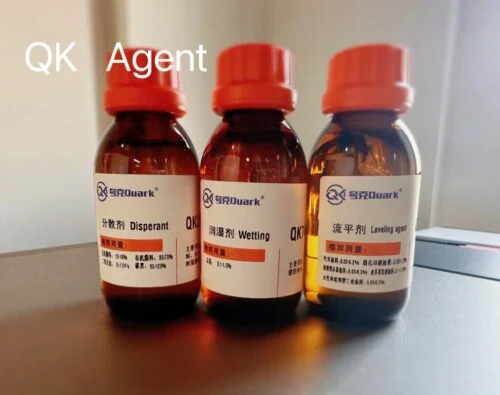
Coating Additives
The QK additive range covers dispersion, wetting, defoaming, levelling and rheology control for waterborne, solventborne, UV and plastisol systems.
Explore the rangeSag Control Resins
Three polyurea and urethane sag control agents for automotive and industrial coatings, each with a different structure size and a different job.
Explore the range
Titanium Color Pigments
STENICMIX red, yellow and orange pigments built on a titanium yellow base, for shades that have to survive outdoors.
Explore the range
Non-Ionic Surfactants
Alkyl phenyl and fatty alcohol ethoxylate ladders plus methyl ester ethoxylate, covering HLB 7.6 to 18.
Explore the range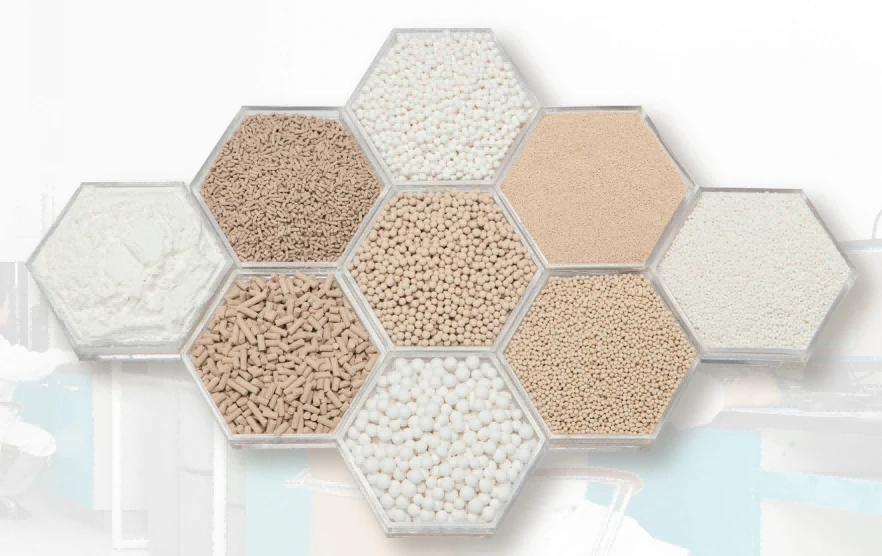
Molecular Sieves And Adsorbents
Over 110 adsorbent products covering molecular sieve, synthetic zeolite powder and activated alumina.
Explore the rangePublished With The Data You Need To Start A Trial
Every grade below lists its chemistry, typical data, dosage by pigment class and the commercial grade it is positioned against. All twenty-two products are on one page.
QK4200 Liquid Rheological Agent
Liquid polyurea rheology additive for waterborne and water/glycol-ether systems, dosed for anti-settling or anti-sag.
View technical data
QK4100 Liquid Rheological Agent
Liquid polyurea thixotrope for solventborne and solvent-free coatings, PVC plastisol and air-drying resin systems.
View technical data
QK8330 Waterborne Rheology Control Agent
Modified polyamide salt that orients effect pigments and stops settling in waterborne automotive and industrial coatings.
View technical data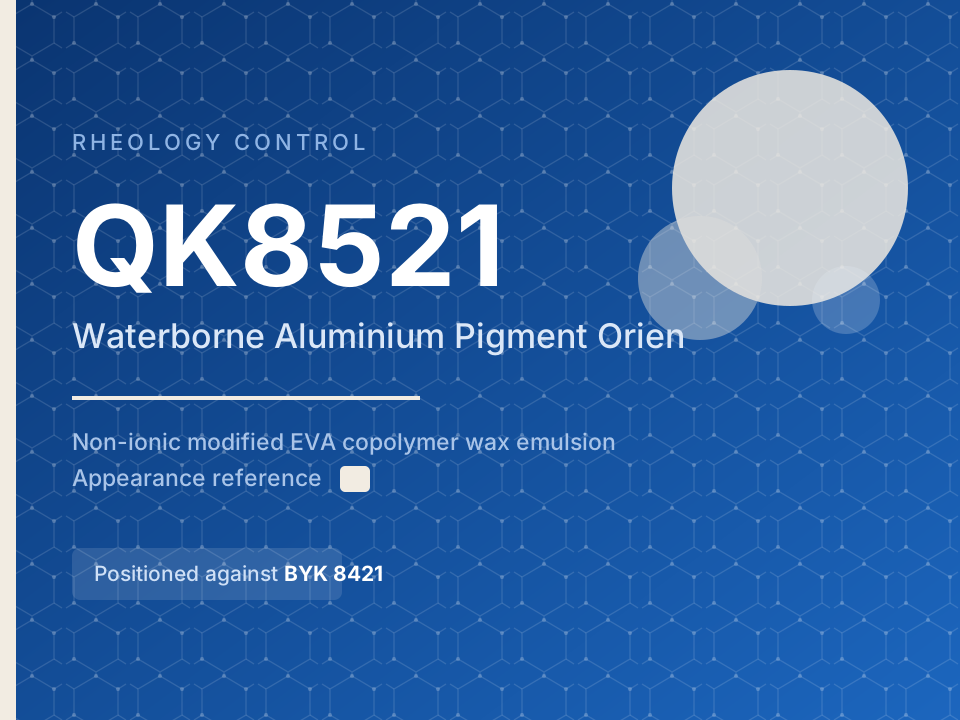
QK8521 Waterborne Aluminium Pigment Orientation Agent
VOC-free EVA wax emulsion that lays aluminium and pearl pigment flat in waterborne basecoats.
View technical data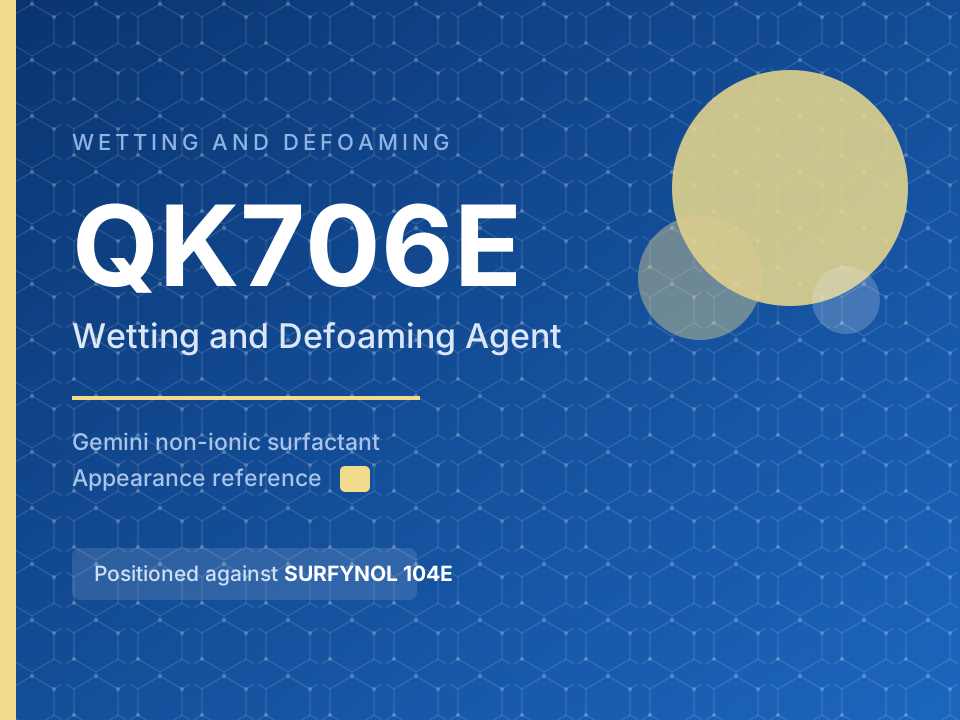
QK706E Wetting and Defoaming Agent
Gemini non-ionic surfactant that cuts dynamic surface tension and suppresses foam in waterborne coatings, inks and adhesives.
View technical data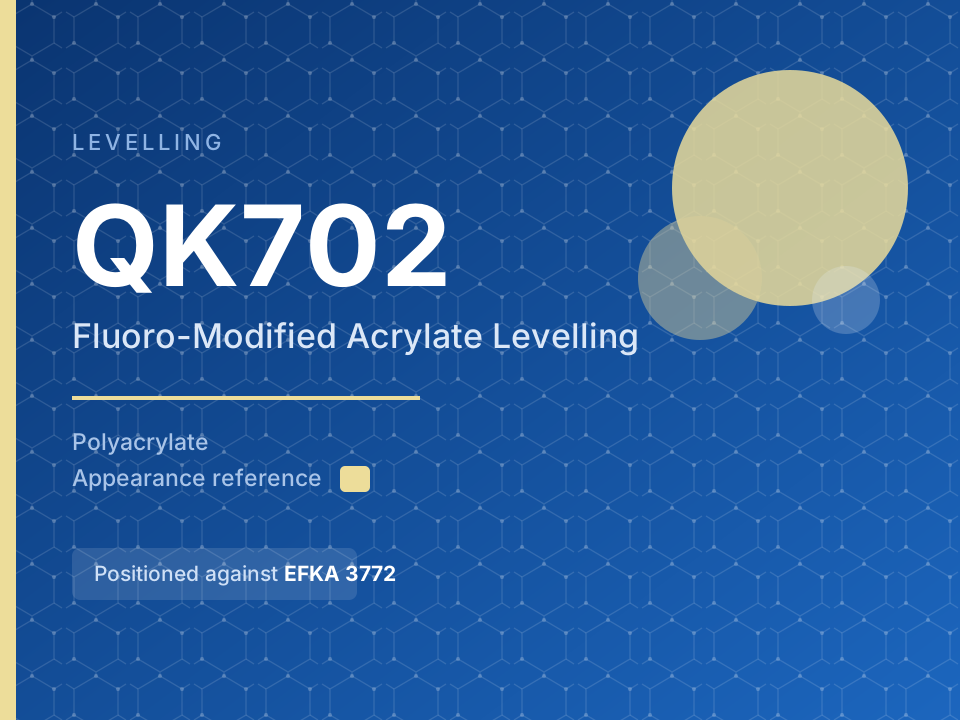
QK702 Fluoro-Modified Acrylate Levelling Agent
Polyacrylate levelling agent for waterborne, solventborne and UV systems that lifts gloss without hurting recoatability.
View technical data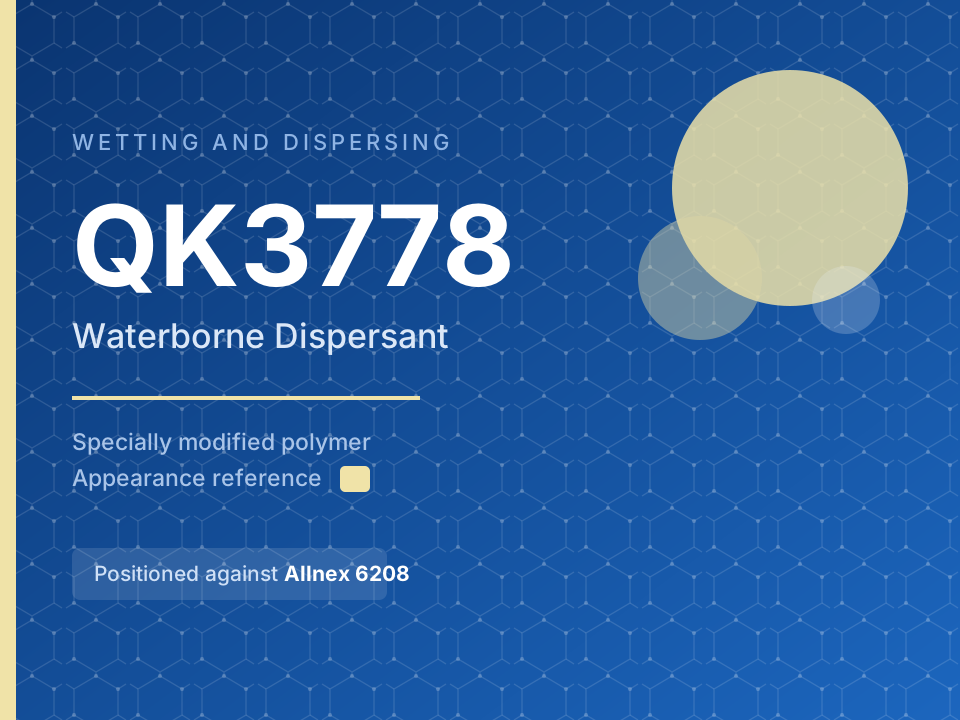
QK3778 Waterborne Dispersant
Universal waterborne dispersant at 60% active that handles every pigment class including anti-corrosive fillers.
View technical data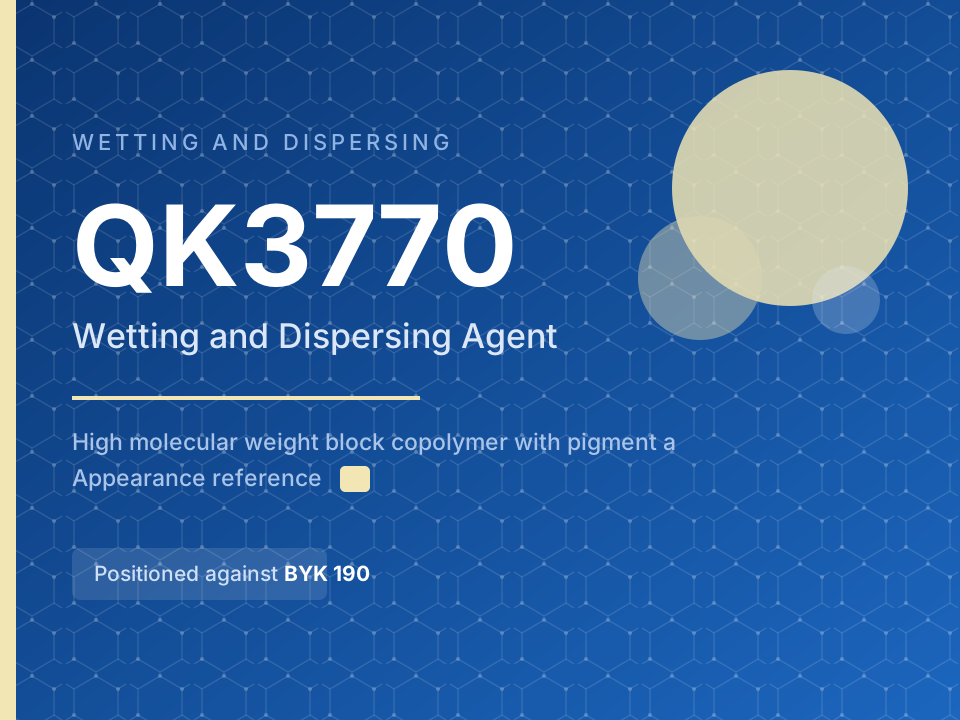
QK3770 Wetting and Dispersing Agent
VOC-free block copolymer dispersant for waterborne wood and industrial coatings and resin-free concentrates.
View technical dataIndustries We Supply
Paint, ink and coating manufacturers, pigment concentrate producers, textile and metal cleaning formulators, and industrial gas and adsorbent users.

Automotive Coatings
Basecoat orientation, clearcoat gloss and sag control on vertical panels, in both water and solvent.
See the additive package
Industrial And Protective Coatings
Anti-corrosive primers, marine and coil systems, where settling, sagging and colour drift decide whether a batch ships.
See the additive package
Wood And Furniture Coatings
Waterborne wood finishes where grind quality, clarity and low VOC all have to hold at once.
See the additive package
Printing Inks And Overprint Varnish
Waterborne and UV inks, inkjet and overprint varnish, where dynamic surface tension and carbon black behaviour set the limits.
See the additive package
Textile And Industrial Cleaning
Emulsifiers, levellers and low-foam cleaning surfactants selected on HLB and cloud point.
See the additive packageThe Data Should Not Arrive After The Purchase Order
You know which commercial additive grade your formulation is built around. What you need is a China-based source for the same function, with the typical data and the dosage guidance written down, so a trial can start without a month of emails.
What Usually Goes Wrong
- A commercial grade goes on allocation and there is no documented alternative
- Supplier pages publish a marketing paragraph and hold back the dosage figures
- A single recommended percentage hides the fact that dosage depends on pigment class
- The handling constraint that decides the trial is buried or missing
What We Publish Instead
- Every QK grade on this site is published with its chemistry, its typical data, its dosage range by pigment type and its addition instructions, plus the commercial grade it is positioned against. Nothing is held back until after you order.
- Dosage as a ladder across inorganic pigment, organic pigment, titanium dioxide and carbon black
- Addition point, shear level and any pH adjustment needed before the additive goes in
- Storage window, shelf life and packing on every grade
Four Problems We Get Asked About Most
Equivalent Grade Sourcing
You already know which commercial grade your formulation is built around. This is how a QK alternative gets qualified without guesswork.
Read the stage by stage guideWaterborne Coating Conversion
Moving a solventborne formulation to water breaks the additive package first. This is the order the pieces usually have to be replaced in.
Read the stage by stage guidePigment Dispersion And Colour Development
Grind time, mill base viscosity, jetness and storage stability are one problem, not four. They are all set by the dispersant.
Read the stage by stage guideSag Control And Metallic Orientation
Two problems that share one cause: what the coating does in the sixty seconds after it leaves the gun.
Read the stage by stage guideTechnical Guides Written From The Published Data
No case studies are published here, because no verified project data exists to publish. What does exist is the technical data, so that is what the guides are built from.
QK Additive Cross-Reference List
Sixty-nine QK additive grades and the commercial grades they are positioned against, as published by the manufacturer.
Read the guideHow To Choose A Wetting And Dispersing Agent
Eight dispersants, four decisions. Binder system first, then active content, then pigment class, then the grinding procedure.
Read the guideDispersant Dosage By Pigment Type
Published dosage bands for eight QK dispersants, side by side, with the arithmetic that makes them comparable.
Read the guideRheology Control In Waterborne And Solventborne Coatings
Two polyurea rheology additives, one for each continuous phase, and the dosage split between anti-settling and anti-sag.
Read the guidePreventing Sagging In High Build Coatings
Sagging is a viscosity recovery problem. Three sag control resins and two rheology additives attack it from different directions.
Read the guideAluminium Pigment Orientation In Waterborne Basecoats
Cloud patches and mottling come from flakes that did not lie flat. Two chemistries fix it in water, and both have a pH condition attached.
Read the guideFrequently Asked Questions
Are QK grades drop-in replacements for the commercial grades listed?
Do you publish technical data before we enquire?
How many products do you supply?
Where do you ship from?
How do we start an enquiry?
Tell Us What The Formulation Is Fighting
Send the system type, the pigment classes involved and the property that is failing. A grade recommendation with the matching data comes back by email.