
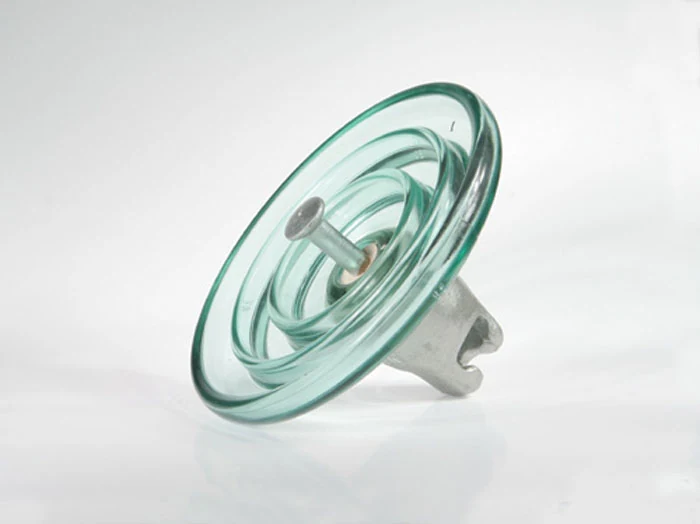
Standard Profile
Standard Profile Toughened Glass Insulators
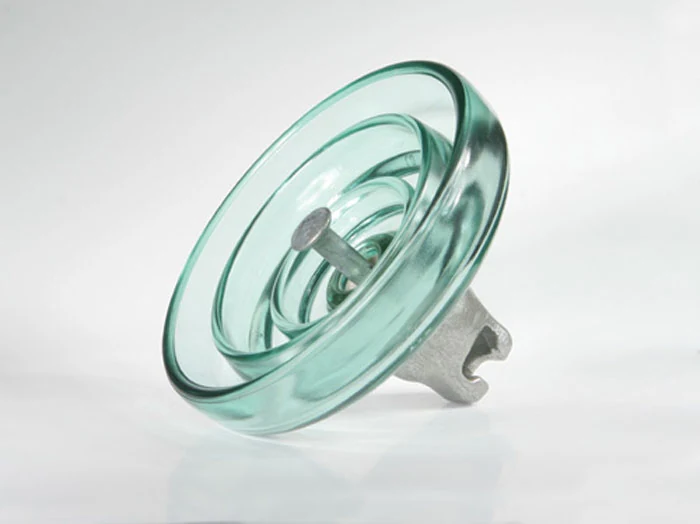
The baseline disc for clean and lightly polluted lines where creepage does not have to be bought at the price of weight and diameter.
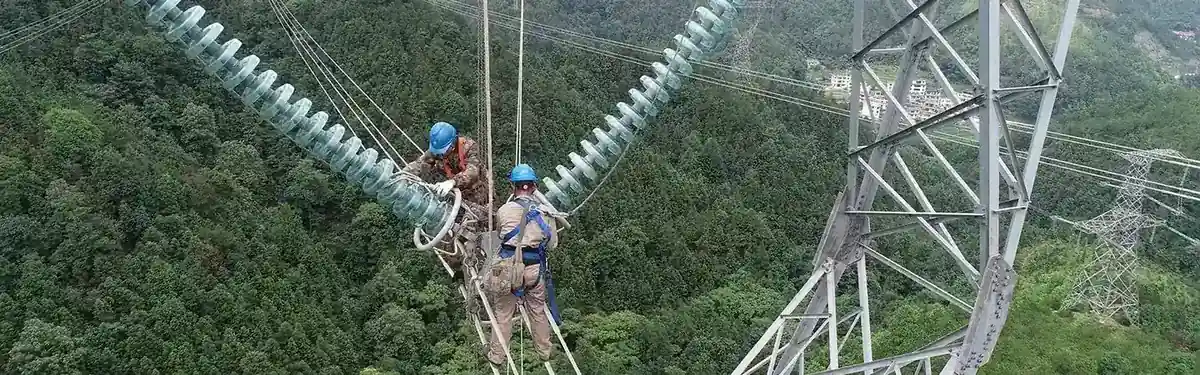
We manufacture cap and pin toughened glass insulators from 40 kN to 550 kN for utilities and EPC contractors building 10 kV to 800 kV AC and DC lines. Every unit is thermal shock screened before it ships, so failures show up in our furnace and not on your tower.
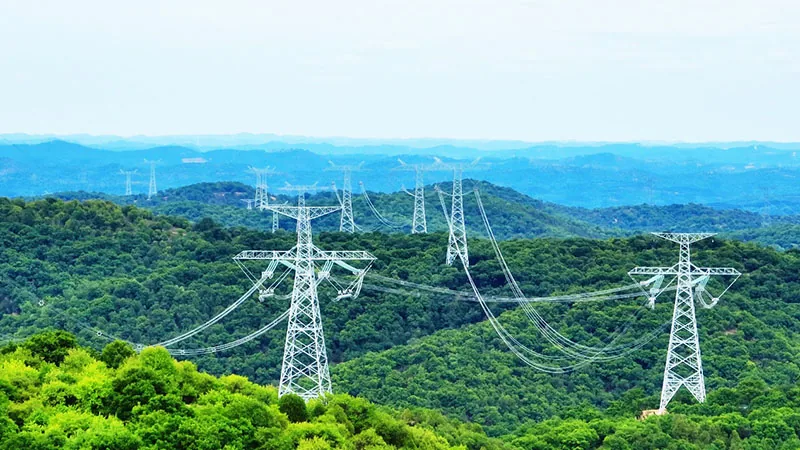
Standard, anti-fog, aerodynamic, two-alternating and three-alternating profiles, with creepage from 190 mm to 550 mm. Tell us the site conditions and we will size the string instead of selling you a catalogue number.
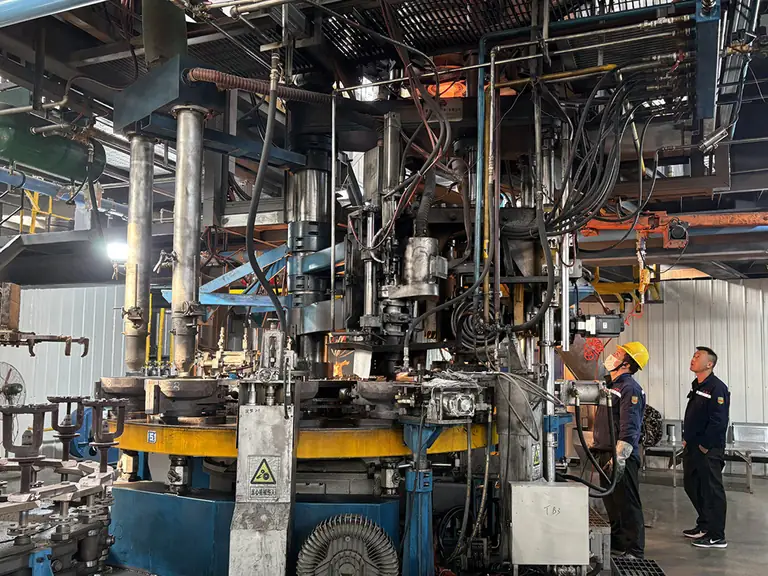
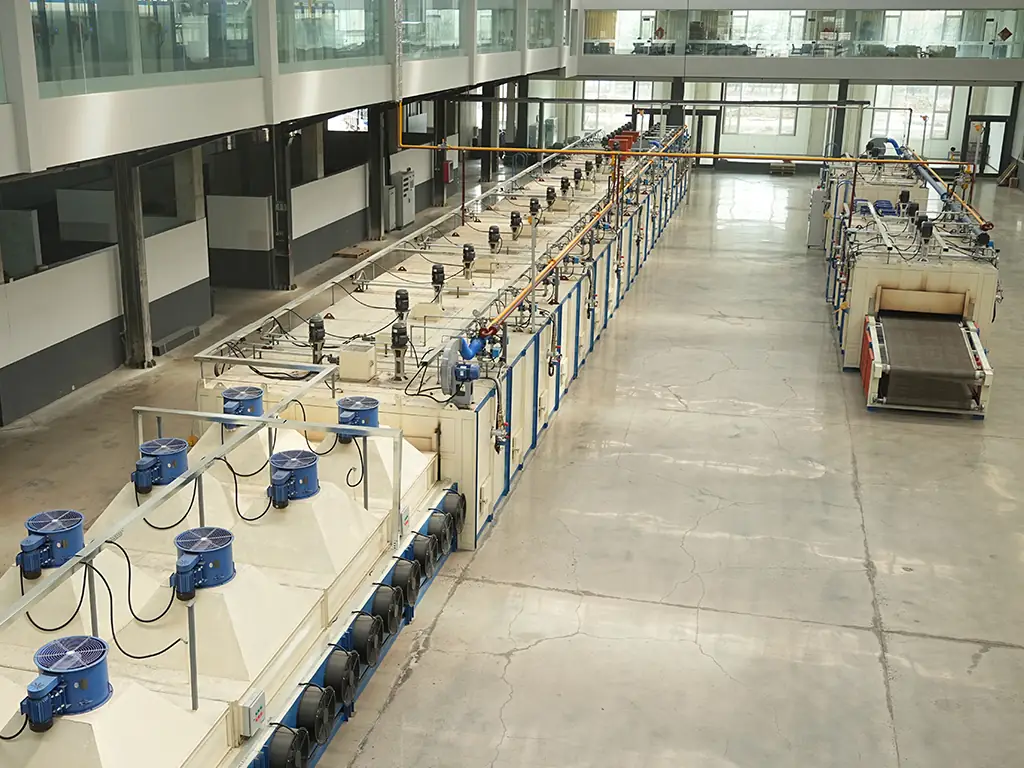
A 30-acre base with automated glass shell forming, tempering and cementing lines plus chemical and electrical test laboratories. No trading house between you and the furnace.
Four things decide whether a string survives its design life: voltage, mechanical load, deposit type and profile. We build all five profiles in-house so the answer is never limited by what we happen to stock.
Cap and pin toughened glass disc suspension insulators and the precision power fittings that go with them, in standard, anti-fog, aerodynamic, two-alternating and three-alternating profiles.
Transmission and distribution utilities, grid EPC contractors, substation builders, railway electrification projects and insulator distributors supplying those markets.
Pollution flashover, hidden insulator defects that only appear after energisation, and long replacement outages. Toughened glass fails visibly and self-destructs, so a line patrol finds the bad unit instead of a fault recorder.
We run the glass furnace, the tempering line and the cementing line ourselves, screen every shell with a thermal shock test, and hold ISO 9001, ISO 14001, ISO 45001 certification plus one national invention patent and four utility model patents.
Standard, anti-fog, aerodynamic, two-alternating and three-alternating discs from 40 kN to 160 kN in our listed range, with ratings to 550 kN developed for project supply.
The baseline disc for clean and lightly polluted lines where creepage does not have to be bought at the price of weight and diameter.
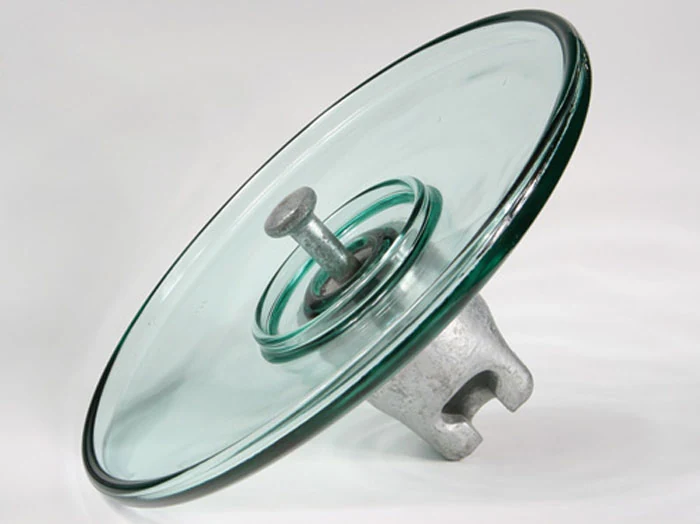
Deep-ribbed discs that push creepage up without a matching jump in diameter, for coastal, chemical and urban air.
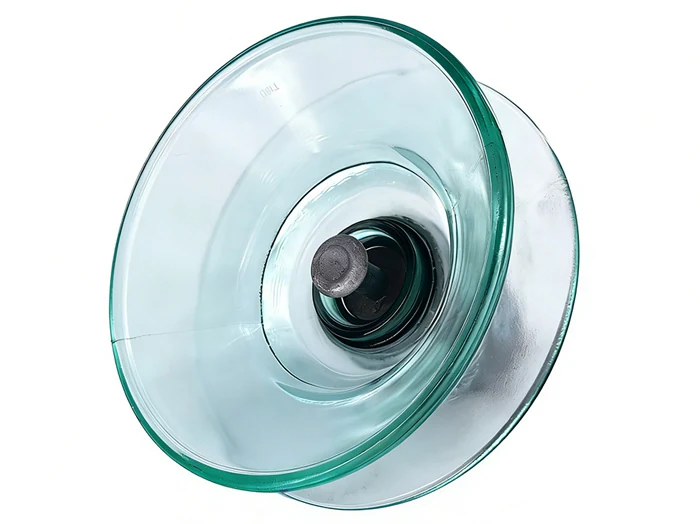
Wide open sheds with no deep ribs, shaped so wind takes the dust off instead of packing it in.
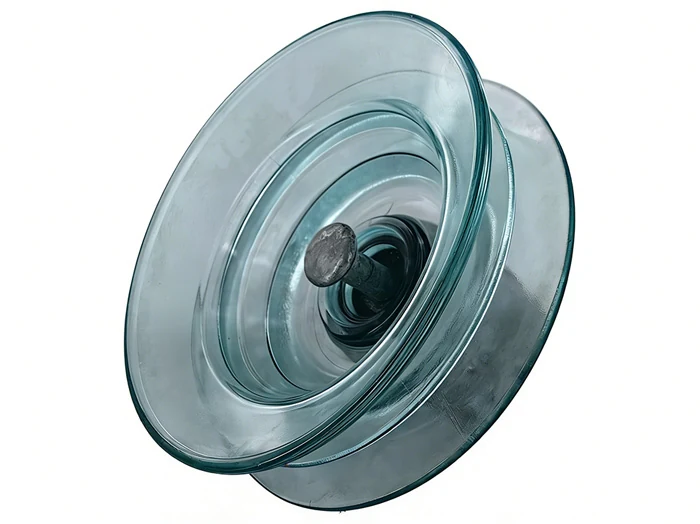
Alternating large and small sheds that break up a continuous solid deposit layer at 160 kN.
The longest creepage in our range at 550 mm, for the worst solid particle pollution a line has to live in.
Each disc below is listed with its full mechanical, electrical and dimensional data taken from our test records.
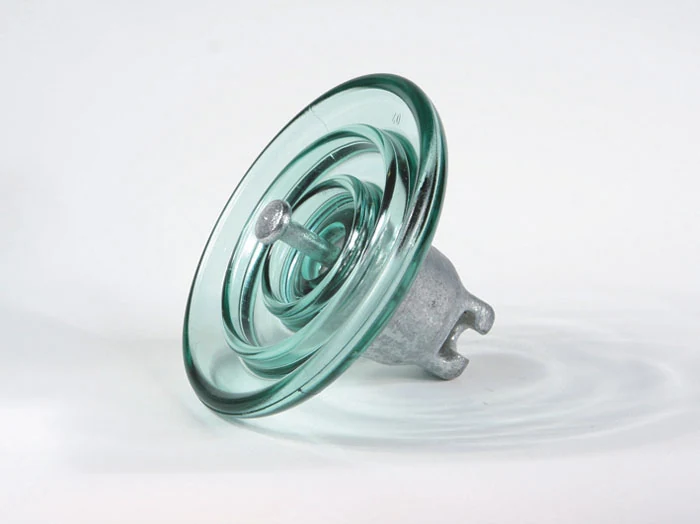
A 40 kN standard profile disc with 110 mm spacing, 175 mm diameter and 190 mm creepage, weighing 1.8 kg. The lightest unit in our…
A 70 kN standard profile disc with 127 mm spacing, 255 mm diameter and 320 mm creepage, weighing 3.6 kg. The volume workhorse for…
A 70 kN anti-fog disc with 146 mm spacing, 280 mm diameter and 450 mm creepage, weighing 5.3 kg. Deep under-ribs hold a dry band…
A 160 kN aerodynamic disc with 155 mm spacing, 420 mm diameter and 380 mm creepage, weighing 8.5 kg. The widest disc in our range…
A 160 kN two-alternating disc with 155 mm spacing, 300 mm diameter and 450 mm creepage, weighing 8.4 kg. Alternating shed diameters…
A 160 kN three-alternating disc with 155 mm spacing, 330 mm diameter and 550 mm creepage, weighing 8.9 kg. The longest creepage…
Two sites at the same IEC class can need opposite geometry. Deep ribs hold a dry band in salt fog and trap dust in a desert. Start from what is landing on the shed.
From 10 kV distribution feeders to ±800 kV UHVDC corridors, plus substation yards and railway electrification.
Lines at 330 kV and above carry the load of an entire region. A single insulator failure on a UHV circuit is not a local outage, it is a system…
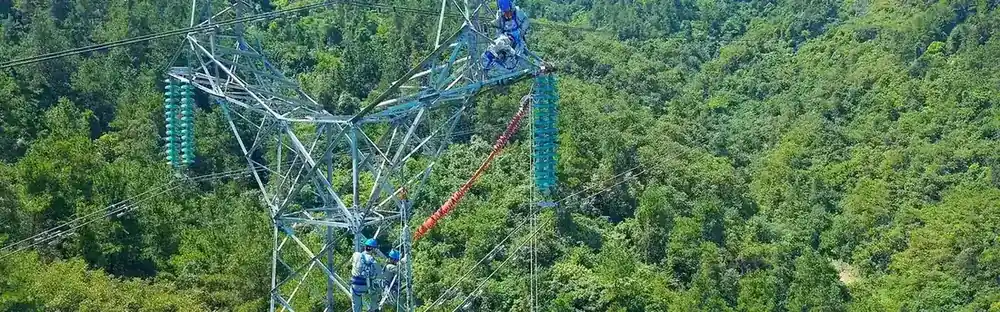
Distribution networks buy insulators by the tens of thousands and maintain them with small crews over long routes. What matters is unit cost…
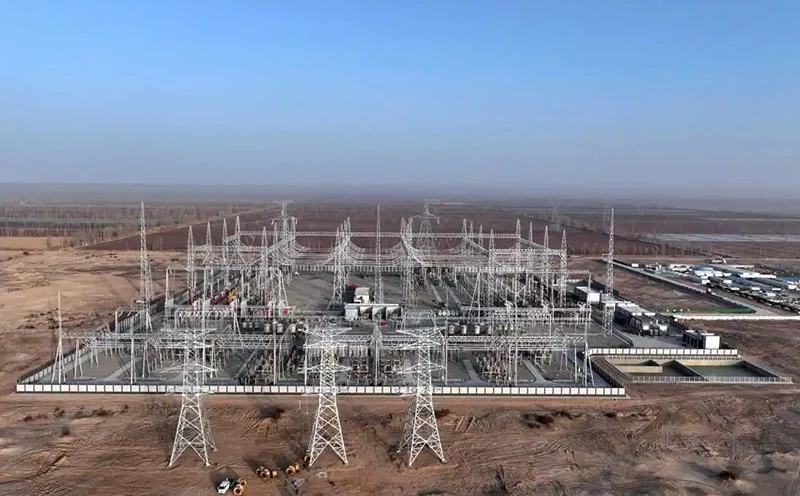
Substation yards concentrate equipment, heat and pollution in a small footprint. Strings here are short, heavily loaded and surrounded by structures…
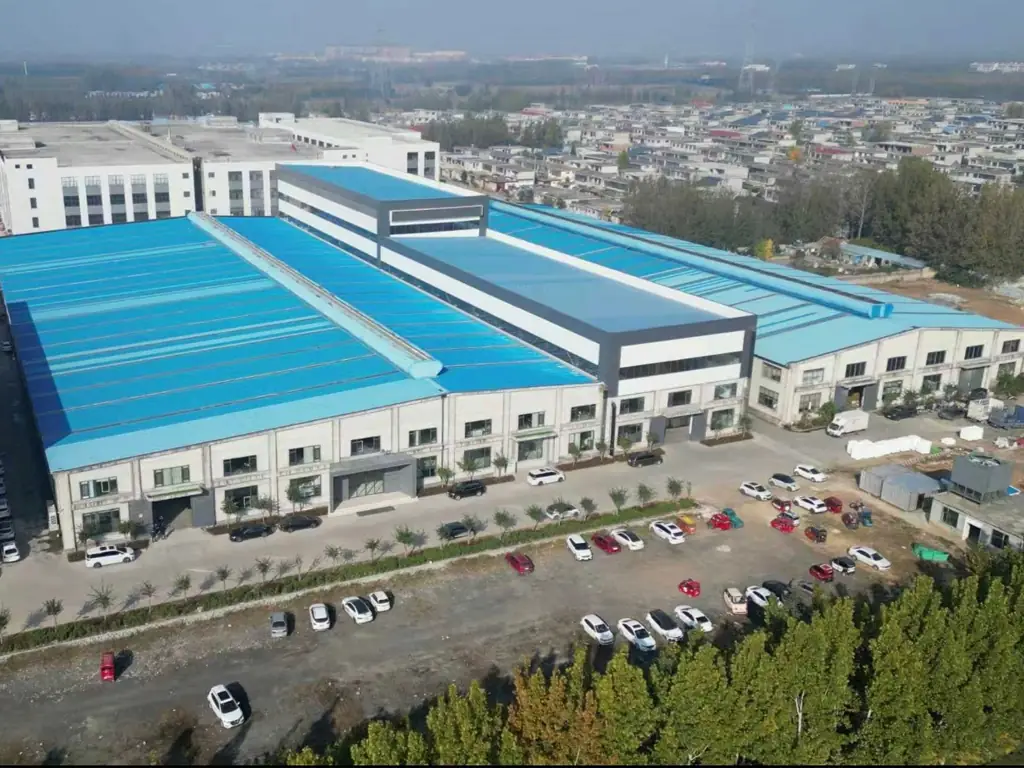
Railway catenary and infrastructure power feeds run alongside traffic, tunnels and industrial sites. Deposits come from brake dust, diesel exhaust…
Nine controlled stages on a 30-acre base in Linyi. The first four are below and the full sequence continues on our company page.
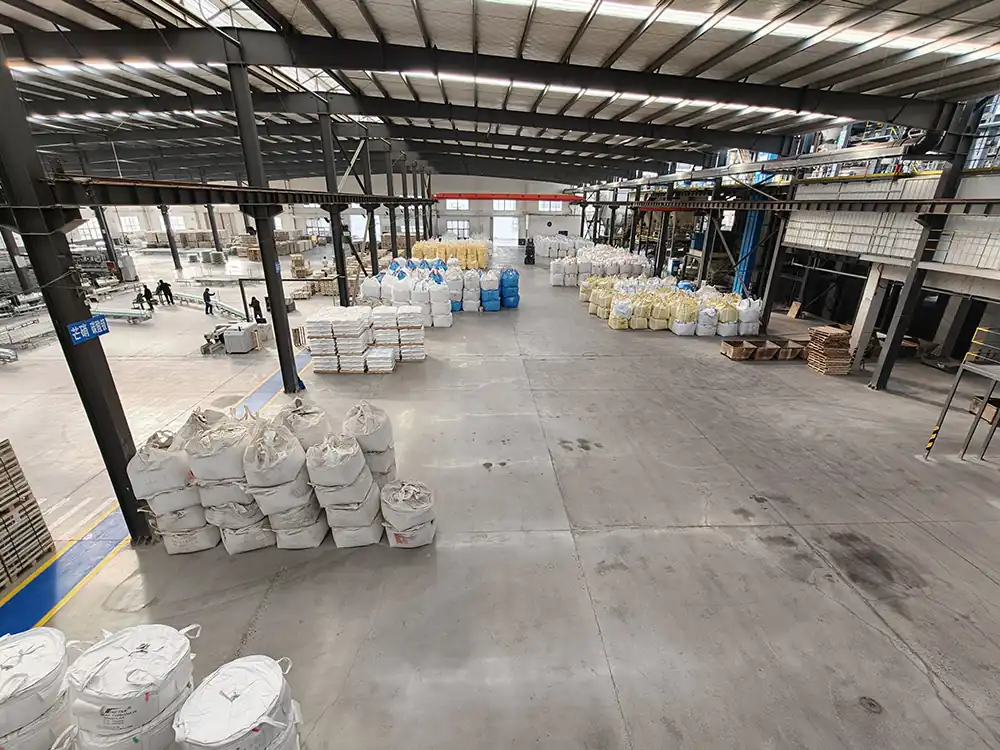
High-purity quartz sand, feldspar, limestone, dolomite, soda ash and potassium carbonate are tested for chemical composition, particle size and moisture on arrival. Only qualified lots are released. Quartz sand is dried to avoid moisture-induced defects, then weighed and blended in a forced vertical-axis mixer to a fixed ratio.
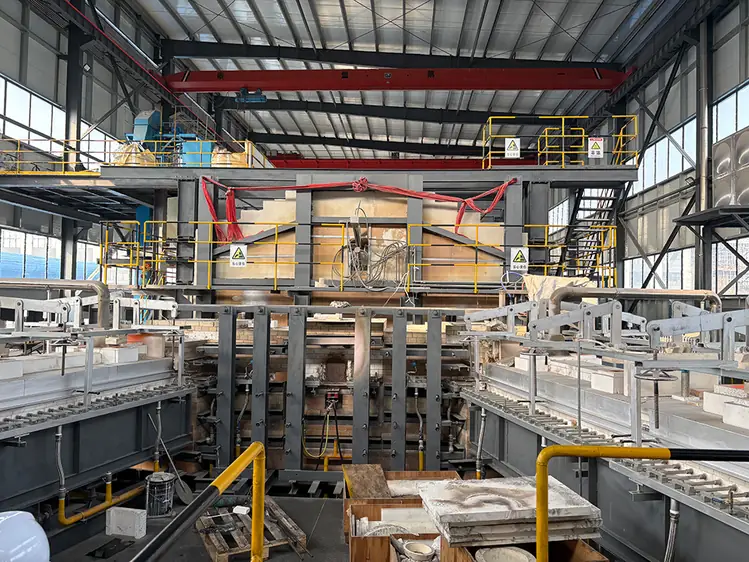
The batch is fed into a continuous glass furnace. Raw materials react to form silicates, the silicates melt into a glassy state, fining agents clear the bubbles that would otherwise become internal defects, stirring homogenises the composition, and the melt is cooled to a moulding viscosity of around 1000 degrees C.
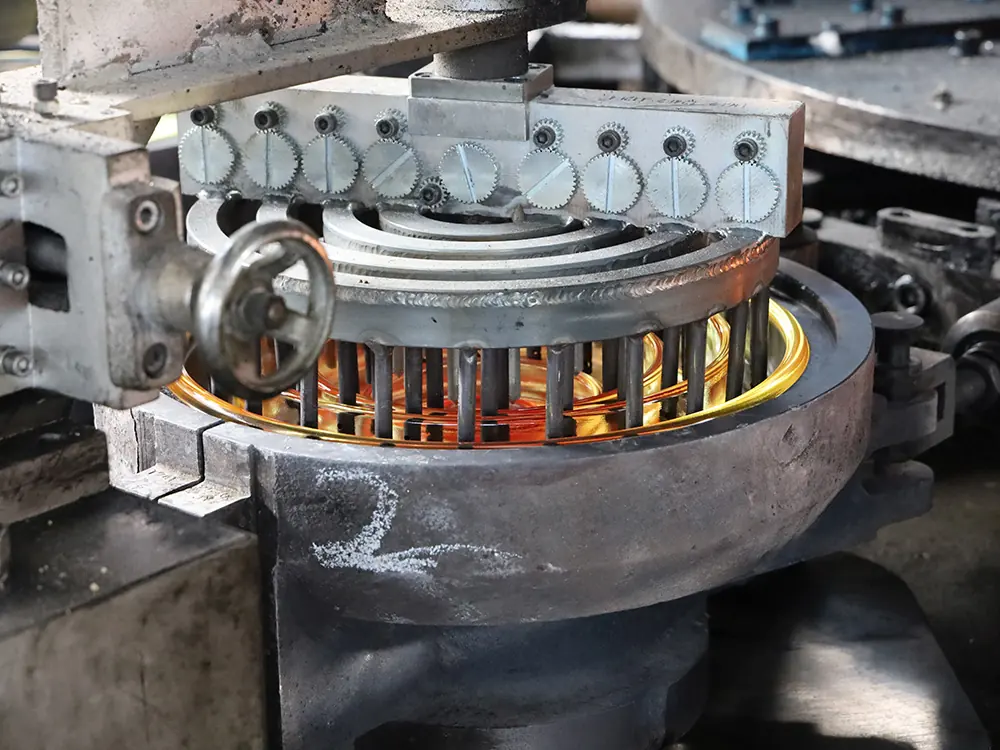
A molten gob is dropped into a precision mould on a rotating press at around 1000 degrees C. A stamp forms the internal cavity while the mould defines the disc profile. Glass volume and pressing pressure are controlled to hold uniform wall thickness, which is what keeps breakage low during toughening.
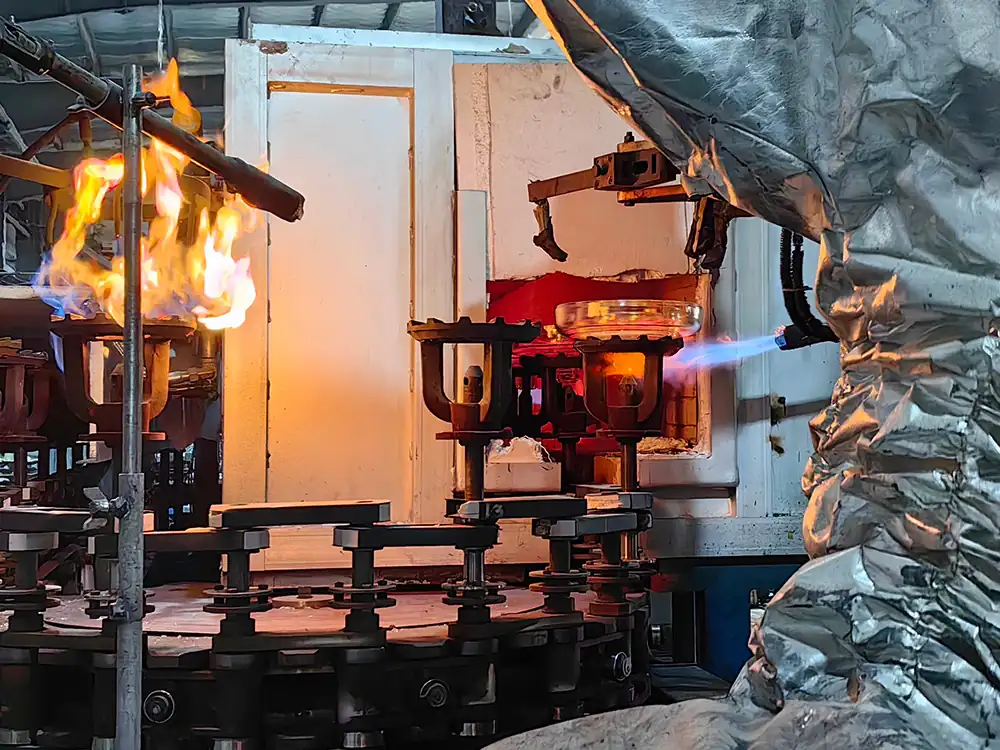
Freshly pressed shells pass through a homogenization furnace held at uniform high temperature. This removes residual stress left by moulding and puts every shell into the same thermal state before toughening, so the quench acts evenly.
Testing is carried out to IEC 60383 and GB/T 1001.1, with routine electrical and mechanical checks on 100 percent of finished units before delivery.
Including a 420 kN disc developed for the 750 kV Kuqa to Aral and Bachu project and a 550 kN disc for the ±800 kV Longdong to Shandong project.
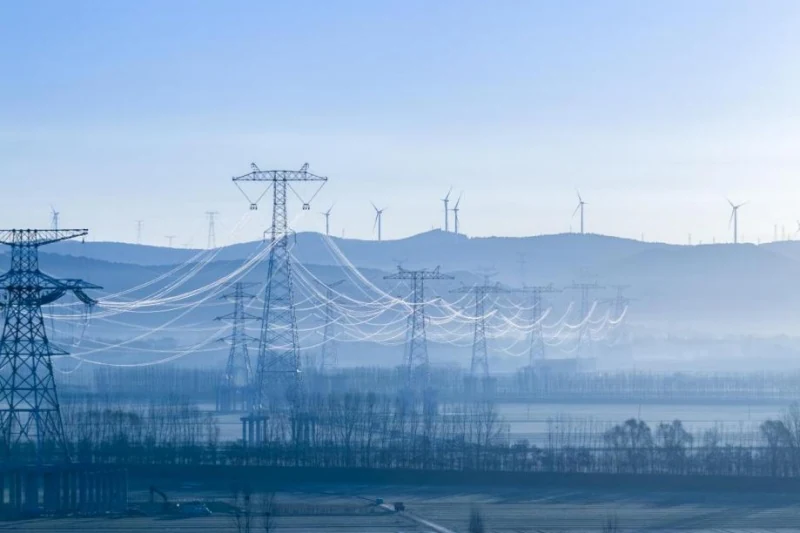
Jinhao developed an extra high mechanical strength insulator of 550 kN to meet the specific needs of SGCC for this project.
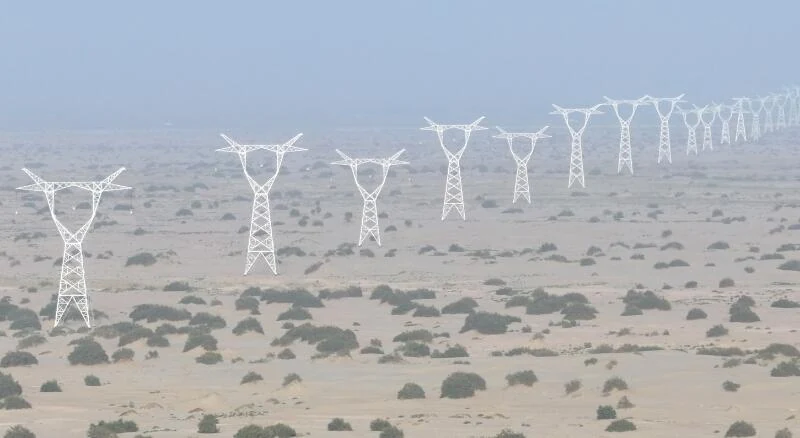
Jinhao developed an extra high mechanical strength insulator of 420 kN to meet the specific needs of SGCC for this project.
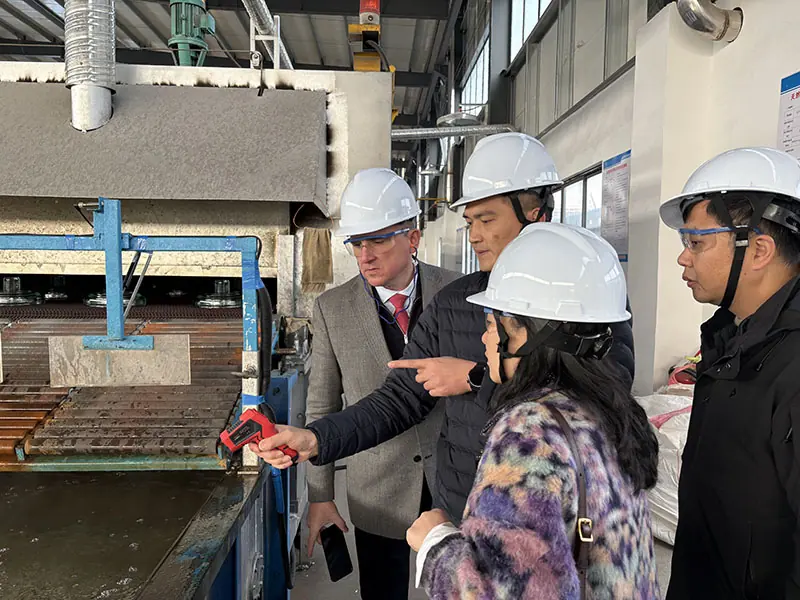
Mr Andrey from Pradex visited the Jinhao plant in Linyi for a technical review covering the glass shell forming line, the toughening and thermal shock stations, the cementing line and the finished goods inspection area.
Feedback carried over from our previous site, attributed as originally published.
“Working with your company has been a reliable and efficient experience. Your glass insulators meet strict international standards and perform consistently well in our power transmission projects. We highly appreciate your professional service and on-time delivery.”
CEB
“We have cooperated for many years, and your team always provides excellent technical support and customized solutions. The quality and stability of your glass insulators have helped us improve project safety and reduce maintenance costs.”
NTDC
“We have been importing their glass insulators for over three years for projects in Southeast Asia. What impresses us most is their quality consistency and the reliability of their supply chain. Despite peak season demands, they always meet our tight delivery schedules.”
EDC
“We required a special design of glass insulators to withstand high pollution levels in coastal areas. Their R&D team worked closely with us to develop a customized anti-fouling solution, and their rapid prototyping ability took the product from concept to approval quickly.”
EGAT
Selection, comparison and failure-mode guides written for procurement and line engineers.
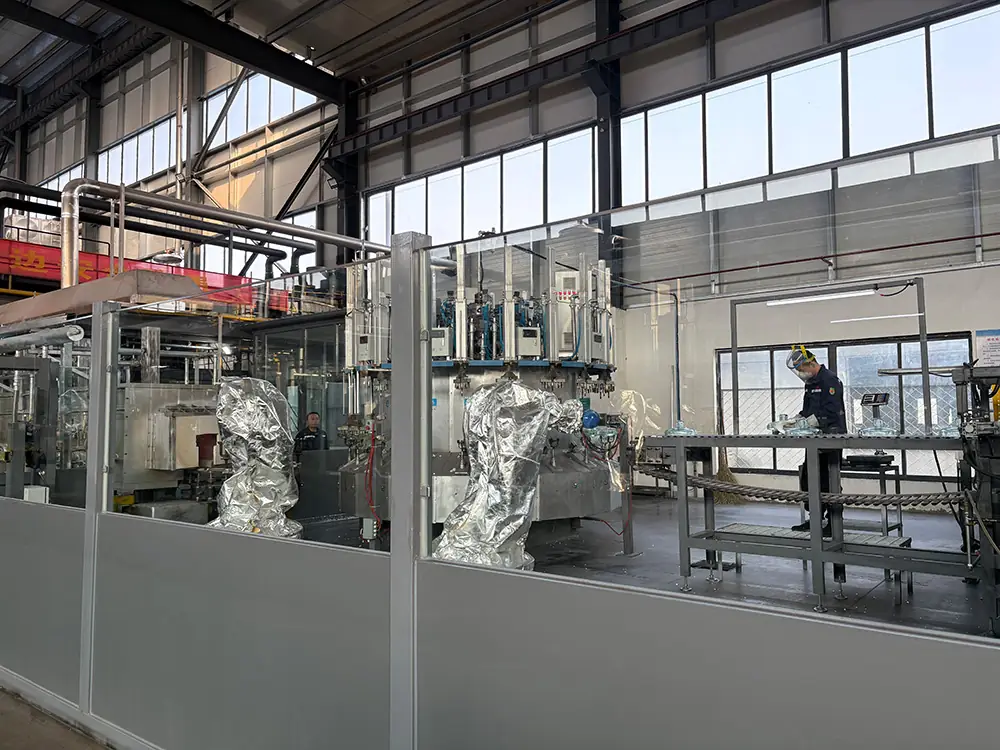
Nine production stages turn quartz sand into a disc that carries 160 kN and shatters visibly when it fails. Here is what happens at each one and why it matters to the buyer.
Standard, anti-fog, aerodynamic or alternating. The right answer depends on whether your deposit is a wet conductive film or a dry adherent powder.
The case for toughened glass comes down to one operational fact. A failed glass disc is visible from the ground and a failed porcelain disc is not.
We are a manufacturer of toughened glass insulators with our own factory, R&D team and production lines in Bancheng Town, Lanshan District, Linyi City, Shandong Province, established on 22 July 2015.
Our product specifications cover 10 kV to 800 kV, for AC, DC and all lower voltage systems used on transmission lines and in power stations.
Common ratings include 40 kN, 70 kN, 100 kN, 120 kN, 160 kN, 210 kN, 240 kN, 300 kN, 420 kN and 550 kN. Custom loads are available for special projects.
Normally 15 to 35 days after order confirmation and deposit, depending on quantity and production schedule.
Yes. We provide sample support for pre-delivery testing and verification, and we accept both small trial orders and large bulk orders.
All our glass insulators comply with IEC 60383 and GB/T standards under an ISO 9001 quality management system. Some models also hold ANSI, BS, AS or DIN certification.
Voltage level, mechanical load, pollution environment and quantity. With those four we quote a specific model with its test data instead of sending a catalogue.