
A Glass Furnace A Tempering Line And A Cementing Line Under One Roof
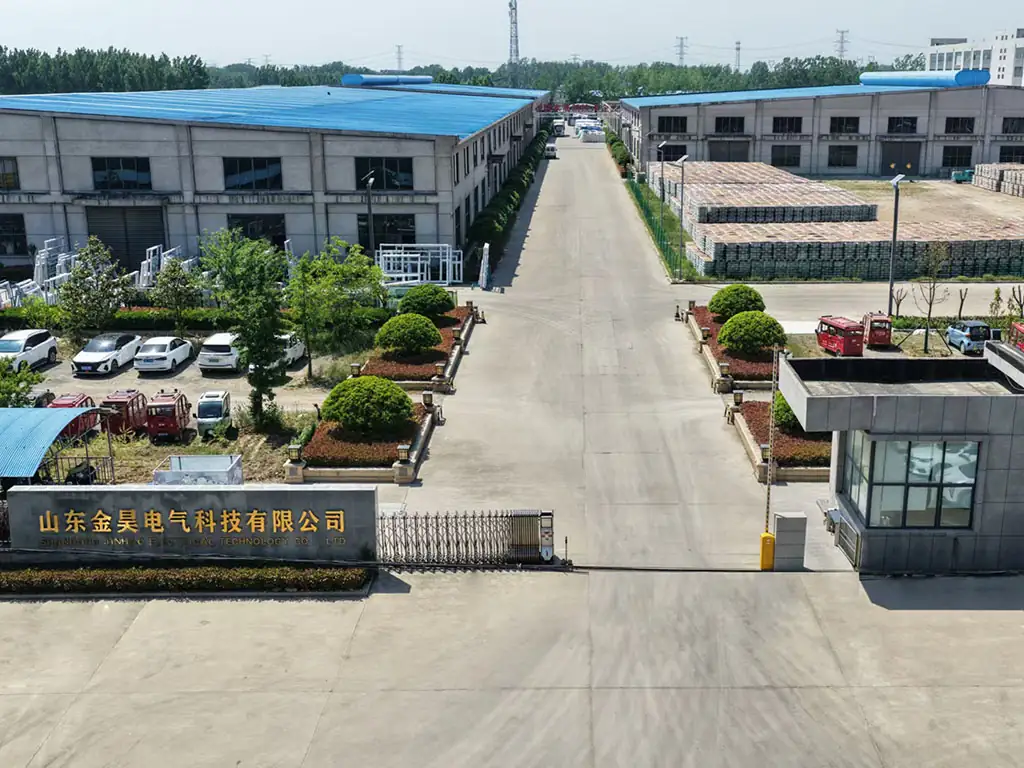
Established on 22 July 2015 and headquartered in Bancheng Town, Lanshan District, Linyi City, Shandong Province, focused on the ultra-high voltage power transmission industry.
What The Base Actually Contains
The company occupies a 30-acre production base with a workforce of over 200 employees, including 50 dedicated management and technical professionals.
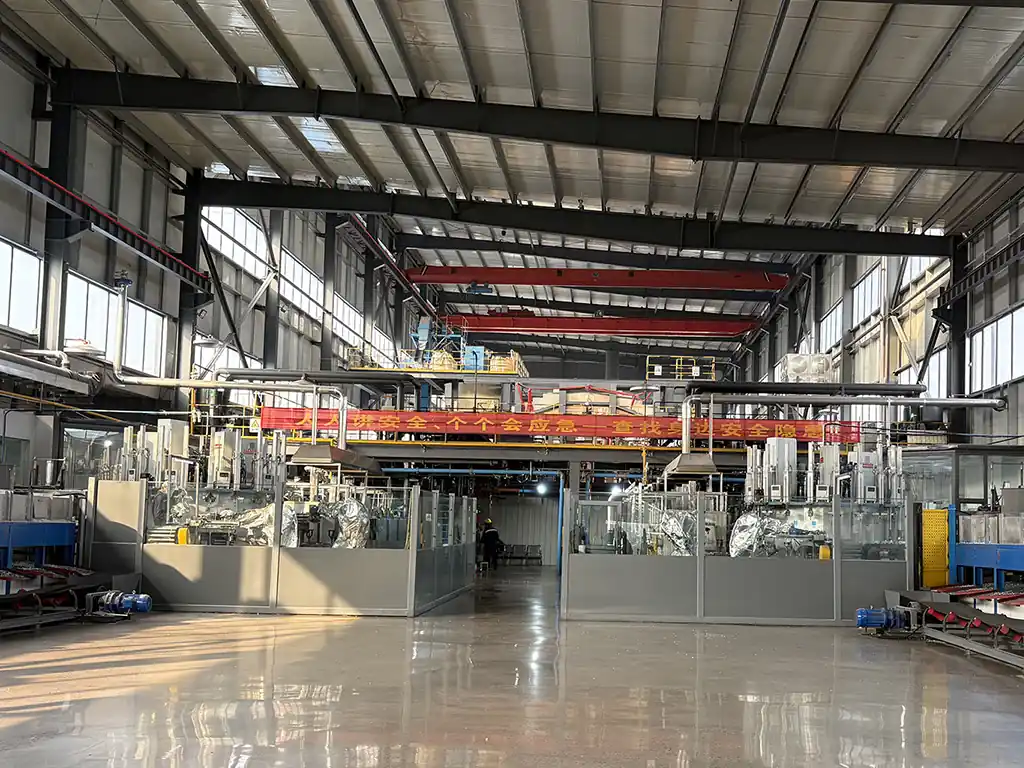
We operate highly intelligent production lines and fully automated cementing assembly lines, supported by comprehensive chemical and electrical testing laboratories. Finished goods and semi-finished goods warehouses keep the production process stable and quality control consistent.
Jinhao Electrical specialises in the R&D and manufacturing of power system glass insulators. Flagship products are toughened glass disc suspension insulators and precision power fittings, applied in UHV transmission and distribution projects. Product specifications cover 10 kV to 800 kV for AC, DC and all lower voltage systems.
The Lines Behind The Product
Five systems carry the process from raw material feeding to finished product output.
Fully Automatic Glass Shell Manufacturing Line
Mechanical design, precision control and intelligent monitoring run the whole sequence from raw material feeding to finished product output with full automation, reducing manual intervention and holding product quality consistent.
Advanced Glass Hardening And Tempering Equipment
Developed to raise the mechanical strength, thermal stability and impact resistance of glass shells so they withstand harsh working environments over a long service life.
High-Precision Automatic Forming Press
Monitors pressing pressure, temperature and stroke in real time during forming. On an abnormal reading such as uneven pressure or excessive temperature the system alarms and stops automatically.
Intelligent Glass Melting And Feeding System
Integrates melting control with precise feeding management to supply stable, high-quality glass melt to the forming process.
Precision Electric Gas Feeding System
Automatic start-stop, parameter adjustment and real-time monitoring of gas supply, linked to the melting system so gas parameters track melting temperature and raw material feeding speed.
High-Precision Automated Processing Technology
Adapts automatically to glass shells of different specifications. Against traditional manual and semi-automatic processing it improves processing efficiency by 40 percent or more and reduces the product defect rate by 90 percent.
Nine Stages From Quartz Sand To Packed Pallet
The production of toughened glass insulators is a precise high-temperature process that creates a surface-compressive stress layer. That layer carries the mechanical strength, the electrical insulation and the thermal stability.
Raw Material Preparation And Batching
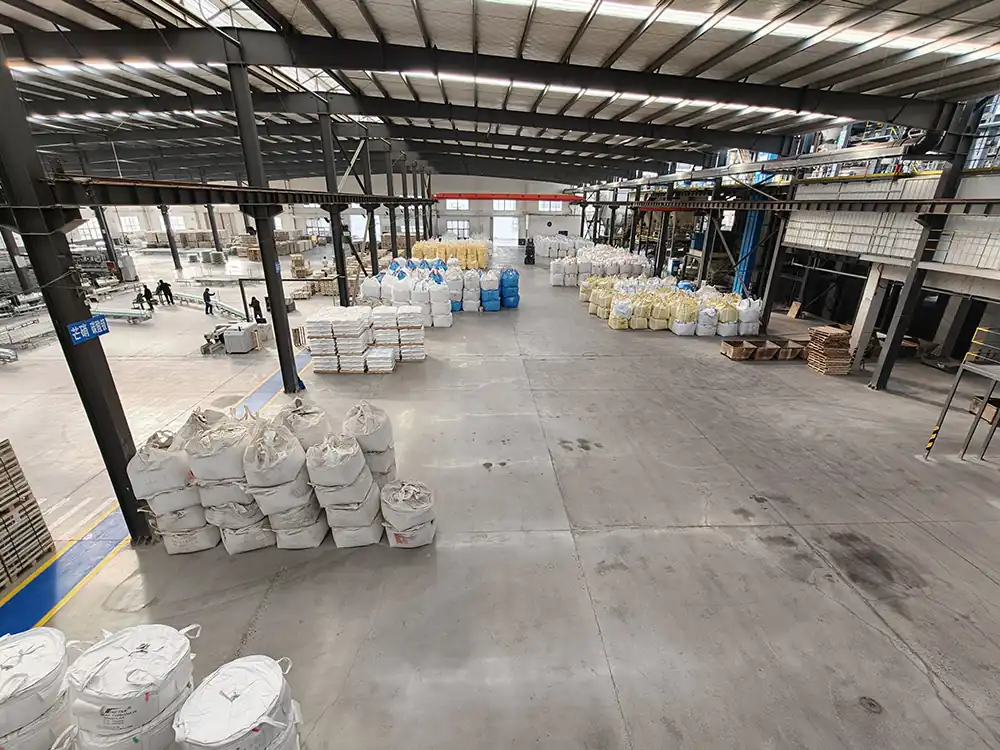
High-purity quartz sand, feldspar, limestone, dolomite, soda ash and potassium carbonate are tested for chemical composition, particle size and moisture on arrival. Only qualified lots are released. Quartz sand is dried to avoid moisture-induced defects, then weighed and blended in a forced vertical-axis mixer to a fixed ratio.
Melting And Refining At 1500 To 1600 Degrees C
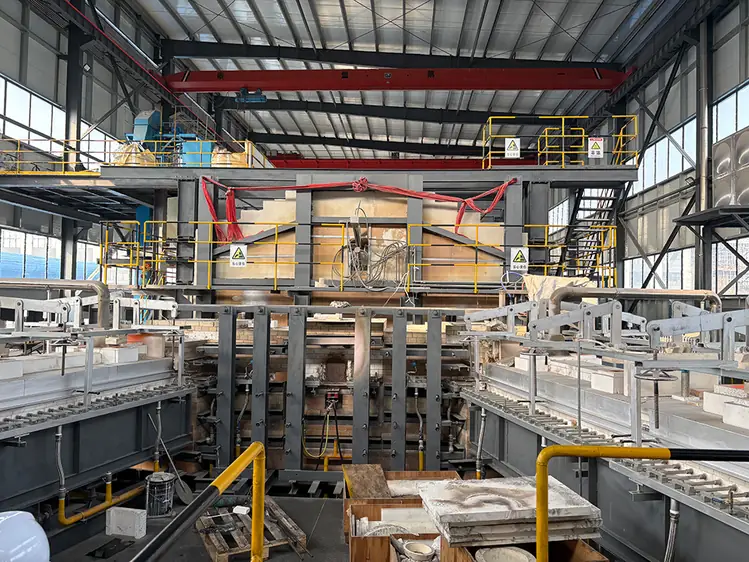
The batch is fed into a continuous glass furnace. Raw materials react to form silicates, the silicates melt into a glassy state, fining agents clear the bubbles that would otherwise become internal defects, stirring homogenises the composition, and the melt is cooled to a moulding viscosity of around 1000 degrees C.
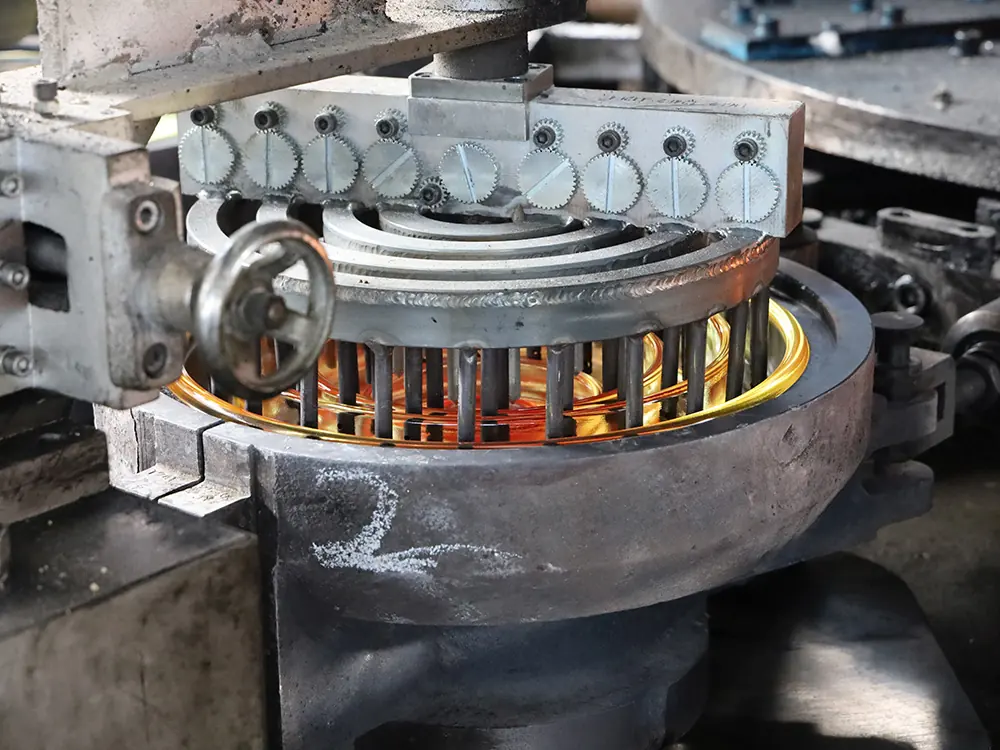
Press Molding
A molten gob is dropped into a precision mould on a rotating press at around 1000 degrees C. A stamp forms the internal cavity while the mould defines the disc profile. Glass volume and pressing pressure are controlled to hold uniform wall thickness, which is what keeps breakage low during toughening.
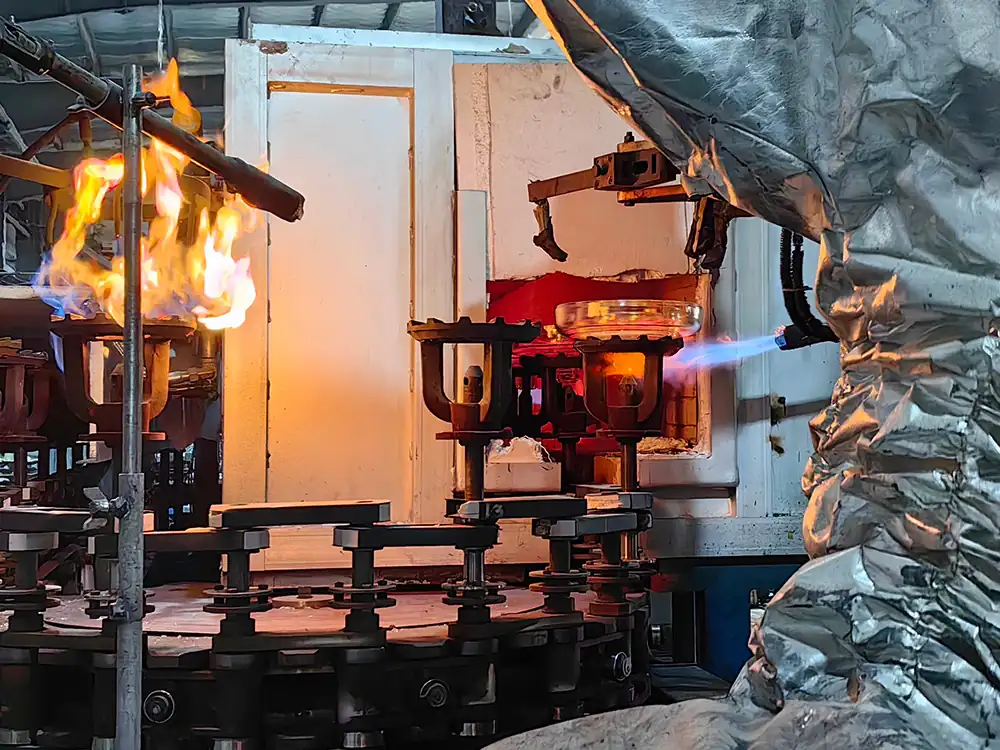
Homogenization Soaking
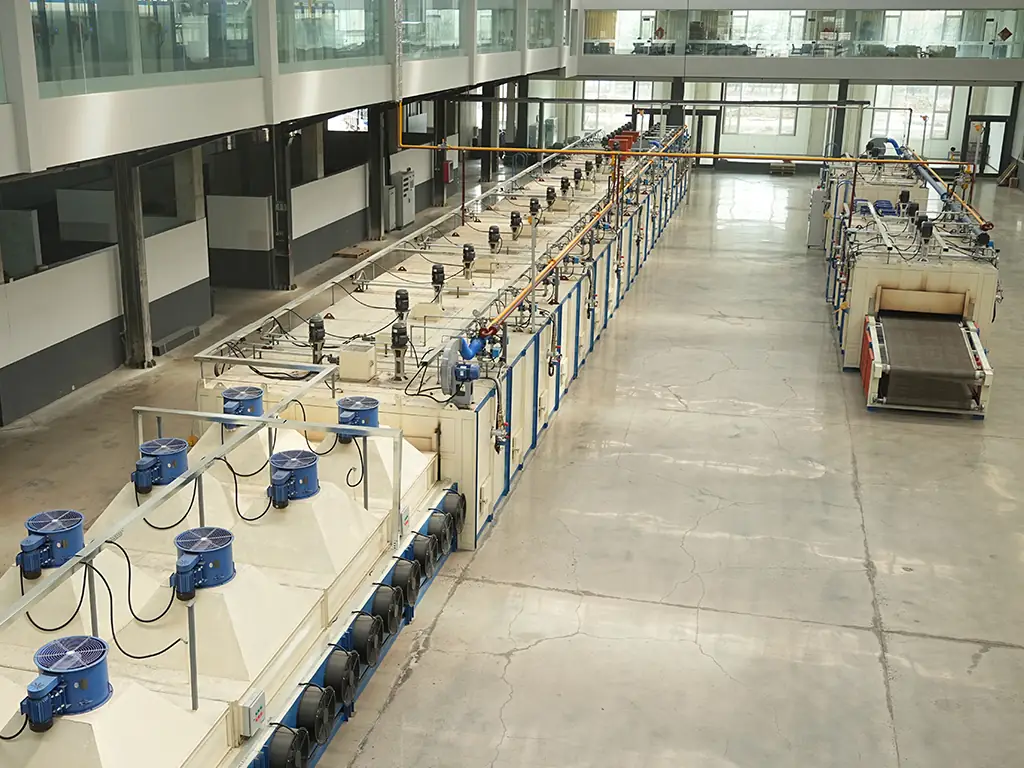
Freshly pressed shells pass through a homogenization furnace held at uniform high temperature. This removes residual stress left by moulding and puts every shell into the same thermal state before toughening, so the quench acts evenly.
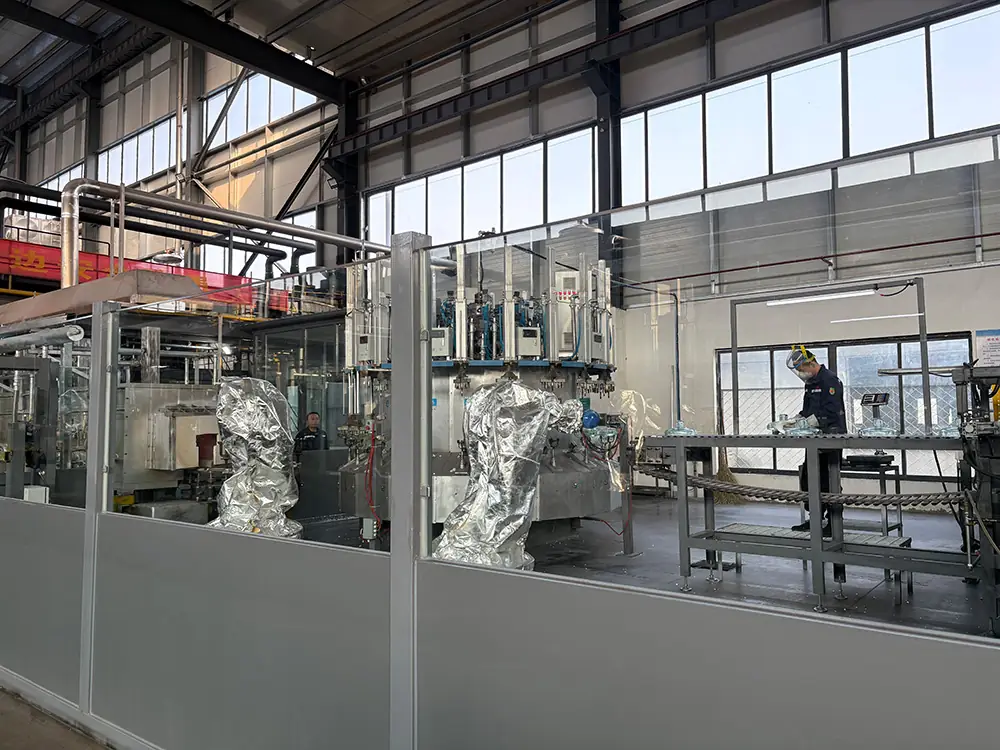
Toughening And Tempering
Shells are heated close to the softening point, then high-pressure air jets cool the surface rapidly while the core cools slowly. The surface ends in compression at roughly 100 to 200 MPa with the core in tension, giving four to five times the mechanical strength of ordinary glass.
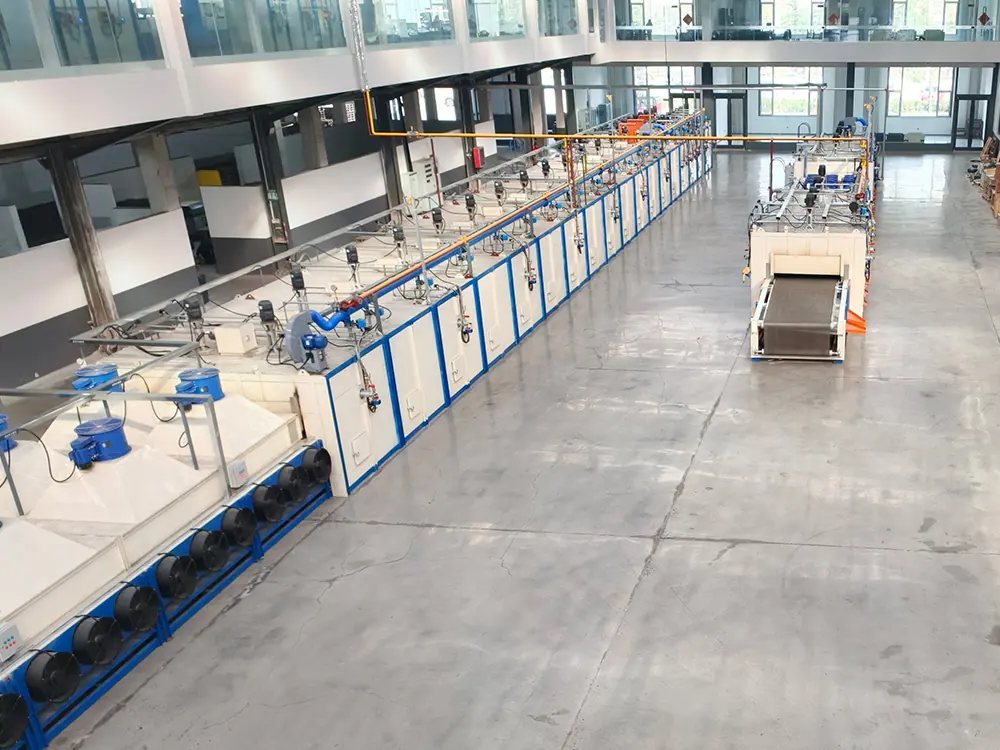
Thermal Shock Test
Shells are heated to about 300 degrees C and plunged into cold water, a drop of roughly 420 degrees C. Any unit carrying internal stress or an inclusion shatters here rather than in service. Survivors move on and the broken glass is recycled as cullet. A second thermal shock test follows to IEC 60383-1 and GB/T 1001.1.
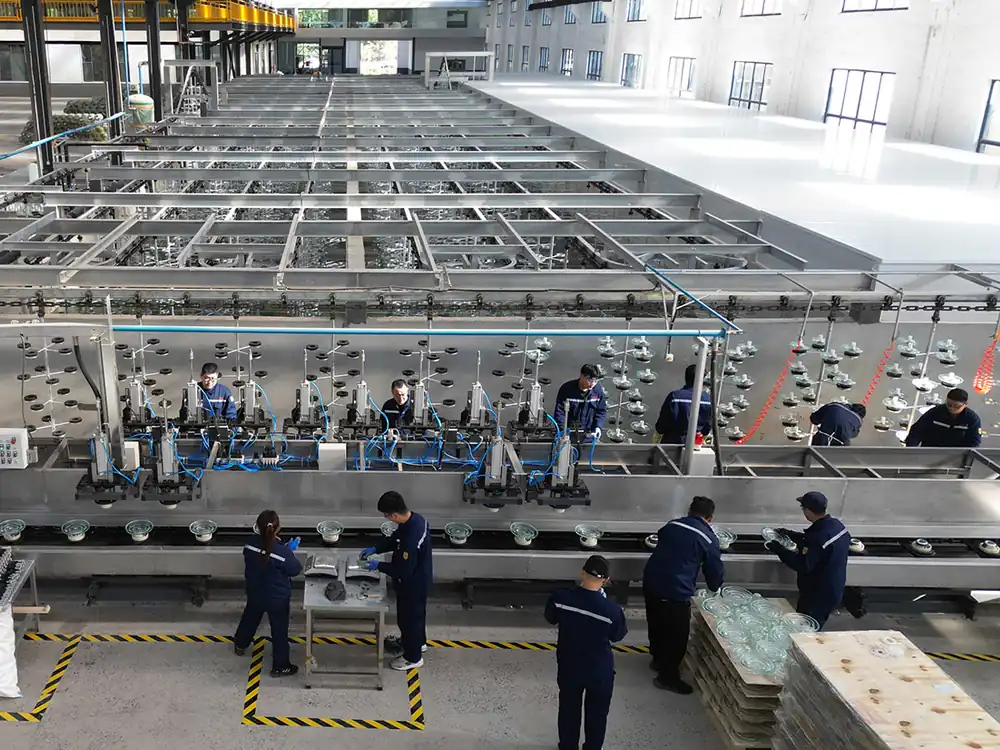
Metal Fitting Assembly And Cementing
A hot-dip galvanized steel cap, steel pin and zinc sleeve are bonded to the toughened disc with high-strength alumina cement, then cured in a 70 degrees C water bath for about an hour so the cement develops full strength before handling.
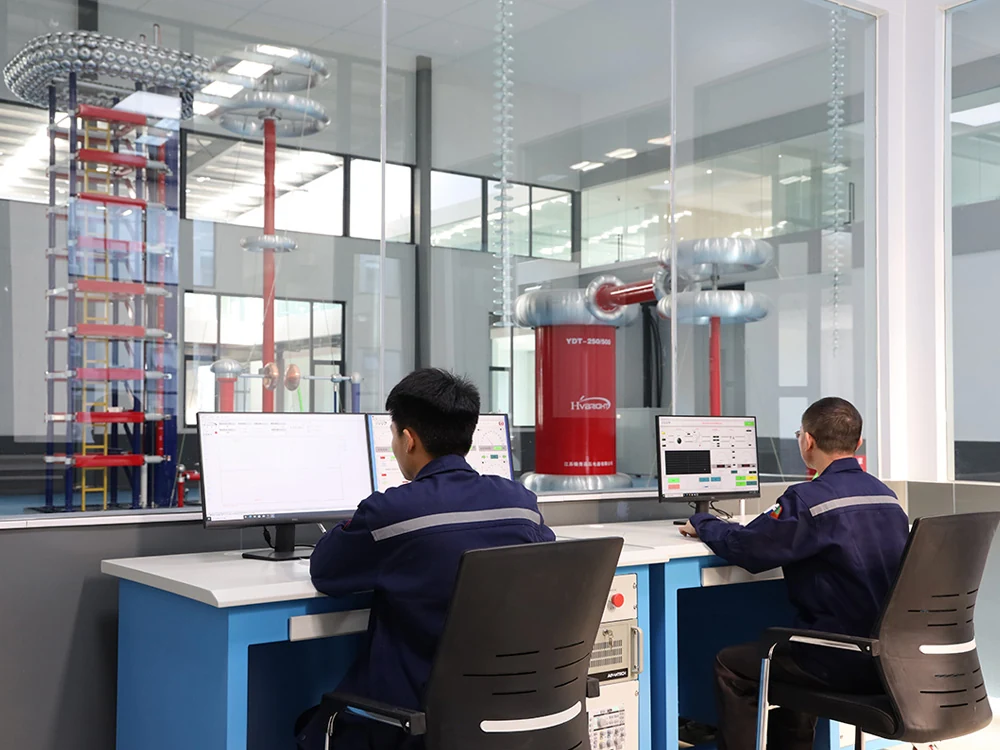
Final Inspection And Testing
Every finished insulator is checked visually for cracks, bubbles, chips and bonding defects, then tested electrically for high-voltage withstand, insulation resistance and partial discharge, mechanically for tensile, bending and torsion strength, and environmentally for thermal cycling, pollution resistance and UV ageing.
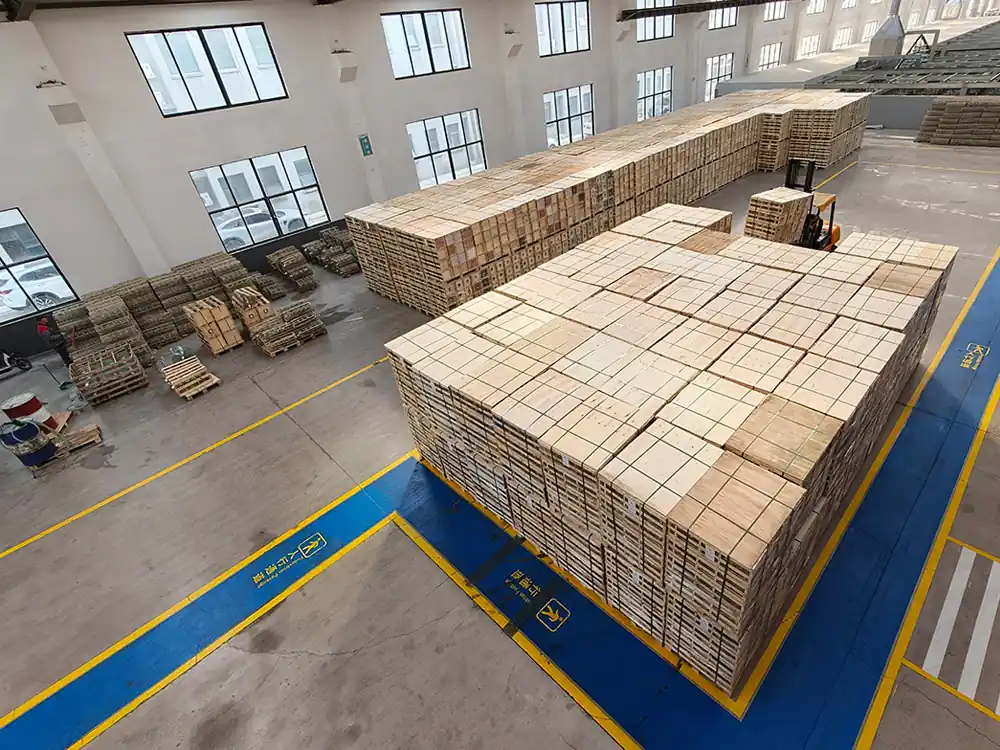
Packaging And Storage
Qualified units are packed with shockproof material into export plywood crates or cartons with moisture protection and held in dry storage until shipment, together with the CO, PI, PL and CI documentation set.
Where The Innovation Budget Goes
No less than 5 percent of annual sales revenue is allocated to research and development. The company holds one national invention patent and four utility model patents, and has been awarded National High-tech Enterprise and Science and Technology Small & Medium-sized Enterprise status.
- ISO 9001 Quality Management System
- ISO 14001 Environmental Management System
- ISO 45001 Occupational Health and Safety Management System
- ISO 20001:2018 Energy Management System
- SR10:2015 / ISO 26000-2011 Social Responsibility Management System
- CMA and CNAS recognition on selected products
- National High-tech Enterprise
- Science and Technology Small & Medium-sized Enterprise
Five Functional Centers
A standardised group management system structured for efficient operations and strategic coordination.
R&D Center
Manufacturing Center
Marketing Center
Quality Management Center
Administrative & Financial Center
Where The Company Is Going
Since its establishment Jinhao Electrical has taken technological innovation as the core driving force. With strict quality control and reliable product performance we continue to extend towards the high end of the industrial chain.
Our commitment is to become a technological and market leader in the global power insulator industry, providing technical guarantees for building a clean, safe and intelligent global energy system.
Arrange A Factory AuditWhat Utility Buyers Have Told Us
Feedback carried over from our previous site, attributed as originally published.
“Working with your company has been a reliable and efficient experience. Your glass insulators meet strict international standards and perform consistently well in our power transmission projects. We highly appreciate your professional service and on-time delivery.”
CEB
“We have cooperated for many years, and your team always provides excellent technical support and customized solutions. The quality and stability of your glass insulators have helped us improve project safety and reduce maintenance costs.”
NTDC
“We have been importing their glass insulators for over three years for projects in Southeast Asia. What impresses us most is their quality consistency and the reliability of their supply chain. Despite peak season demands, they always meet our tight delivery schedules.”
EDC
“We required a special design of glass insulators to withstand high pollution levels in coastal areas. Their R&D team worked closely with us to develop a customized anti-fouling solution, and their rapid prototyping ability took the product from concept to approval quickly.”
EGAT
About The Company
When was Jinhao Electrical established and where is the factory?
Shandong Jinhao Electrical Technology Co., Ltd. was established on 22 July 2015 and is headquartered in Bancheng Town, Lanshan District, Linyi City, Shandong Province, with the plant at Xiaohu Village in the same town.
How large is the production base?
The company occupies a 30-acre production base with a workforce of over 200 employees, including 50 dedicated management and technical professionals.
What management system certifications do you hold?
ISO 9001 for quality, ISO 14001 for environment, ISO 45001 for occupational health and safety, ISO 20001:2018 for energy management, and SR10:2015 / ISO 26000-2011 for social responsibility. Selected products have obtained CMA and CNAS recognition.
How much do you invest in research and development?
No less than 5 percent of annual sales revenue is allocated to research and development. The company holds one national invention patent and four utility model patents and has been awarded National High-tech Enterprise status.
How is the company organised?
Around five core functional departments: R&D Center, Manufacturing Center, Marketing Center, Quality Management Center, and Administrative & Financial Center.
Come And See The Line
We host customer factory audits covering forming, toughening, thermal shock, cementing and finished goods inspection.