
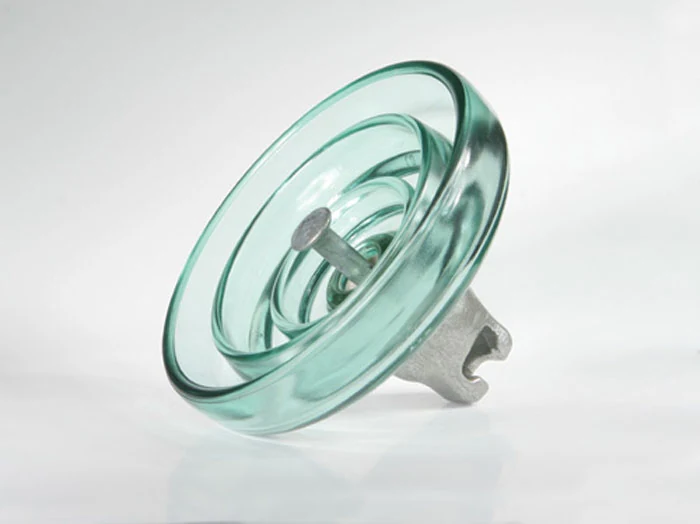
Anti-Fog Profile
U70BLP · 70 kN
A 70 kN anti-fog disc with 146 mm spacing, 280 mm diameter and 450 mm creepage, weighing 5.3 kg. Deep under-ribs hold a dry band…
Creepage 450 mm
Ø 280 mm
Coupling 16
Pollution class alone does not choose a profile. Two sites at the same IEC class can need opposite geometry, because the deposit behaves differently. Start from what is actually landing on the shed.
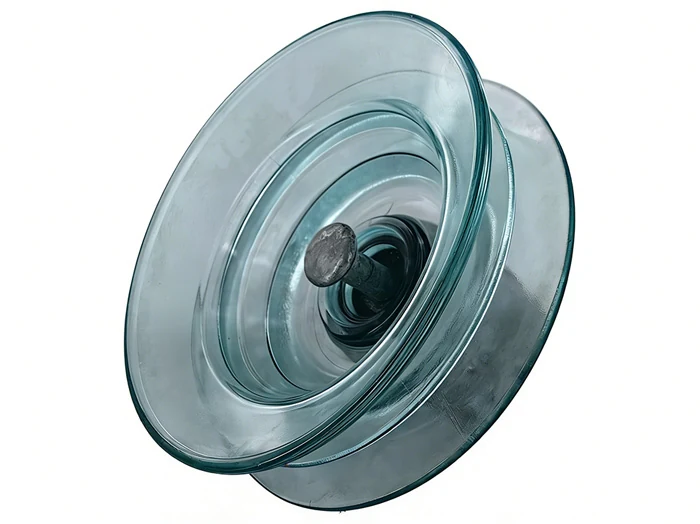
Light atmospheric contamination, low dust concentration, minimal industrial saline or chemical deposits, in rural, suburban and non-industrial regions with moderate climate and stable humidity. A standard profile is correct here, and anything heavier adds weight and diameter to every tower for no benefit.
High levels of chemical fumes, industrial emissions and conductive pollutants, with frequent formation of conductive or corrosive surface deposits in industrial zones, chemical plants, power plants and high-density urban areas. This is wet-film pollution and calls for an anti-fog profile with deep under-ribs that hold a dry band.
Arid climate, strong winds, frequent sand and dust storms, large temperature variations and intense ultraviolet radiation. The deposit has low conductivity but high mechanical abrasion and accumulation risk. Deep ribs become dust traps here, so an aerodynamic open-shed profile is the right answer.
Extreme concentrations of coal dust, cement dust, ore powder and metal particles forming dry, dense, strongly adherent deposits in mining areas, cement plants, steel mills and coal-fired industrial zones. Alternating shed diameters break the continuity of that layer, which is why two-alternating and three-alternating profiles exist.
System voltage level, application whether suspension tension dead-end or substation, environment covering pollution level altitude humidity and coastal or industrial exposure, and required mechanical load. Give us those four and we will size the string.
A 70 kN anti-fog disc with 146 mm spacing, 280 mm diameter and 450 mm creepage, weighing 5.3 kg. Deep under-ribs hold a dry band…
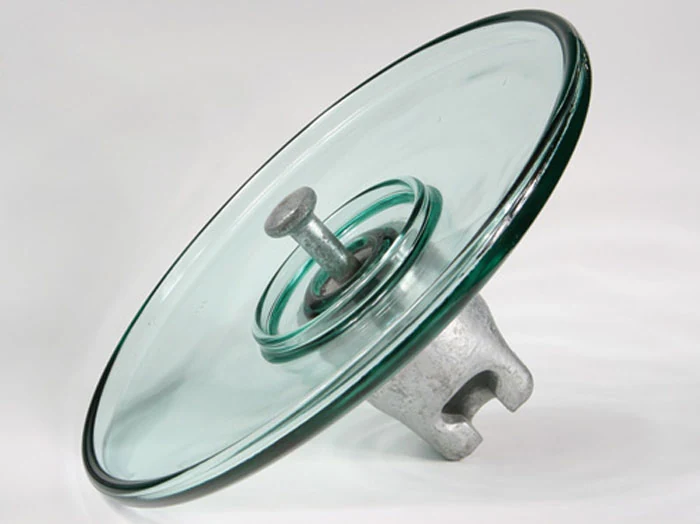
A 160 kN aerodynamic disc with 155 mm spacing, 420 mm diameter and 380 mm creepage, weighing 8.5 kg. The widest disc in our range…
Nine production stages turn quartz sand into a disc that carries 160 kN and shatters visibly when it fails. Here is what happens at each one and why it matters to the buyer.
The case for toughened glass comes down to one operational fact. A failed glass disc is visible from the ground and a failed porcelain disc is not.
Self-destruction is not a defect in the product, it is the product telling you something. Here is what causes it, what rate is normal, and why it is an advantage.
Under normal operating and maintenance conditions the service life is generally 30 to 50 years.
Regular visual inspection, cleaning in heavily polluted areas, and timely replacement of broken insulators. No complicated preventive tests are required.
Yes. We recommend anti-pollution or anti-fog glass insulators with increased creepage distance, specially designed for coastal, industrial and high-pollution environments.
Yes. We can provide customized products optimized for high-altitude conditions with enhanced insulation performance.
Send us the route conditions and we will translate this into a specific model, creepage figure and string configuration.