
Beam Angle Guide For Retail And Display Spotlighting
Choosing between 24, 36, 45 and 60 degree beams, and calculating the pool of light you will get.
In This Guide
What Beam Angle Describes
Beam angle is the cone within which the lamp delivers at least half its peak intensity. Outside that cone there is still light, but it falls away quickly.
A narrow beam concentrates the same lumens into a smaller area, so it produces a brighter, tighter pool. It is not more light; it is the same light placed more deliberately.
Calculating The Pool Of Light
A workable approximation: the diameter of the beam at a given distance is roughly the distance multiplied by a factor that depends on the angle. For a 24 degree beam the factor is about 0.42, for 36 degrees about 0.65, for 45 degrees about 0.83 and for 60 degrees about 1.15.
So a 24 degree lamp three metres above a table produces a pool of roughly 1.3 metres across, while a 60 degree lamp at the same height produces roughly 3.5 metres. That difference is the entire design.
Matching Angle To Task
Narrow beams of around 24 to 36 degrees are for accenting individual objects - a mannequin, a display case, a single product on a plinth.
Around 45 degrees is a general display angle, suited to a shelf run or a table of goods.
Around 60 degrees washes a wall or covers a broad area, and is closer to general lighting than to accenting.
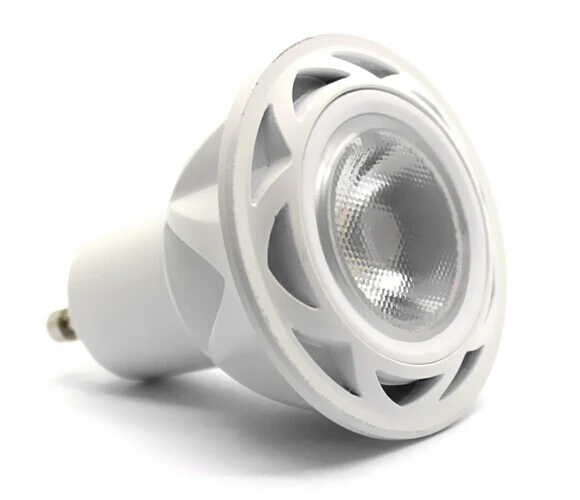
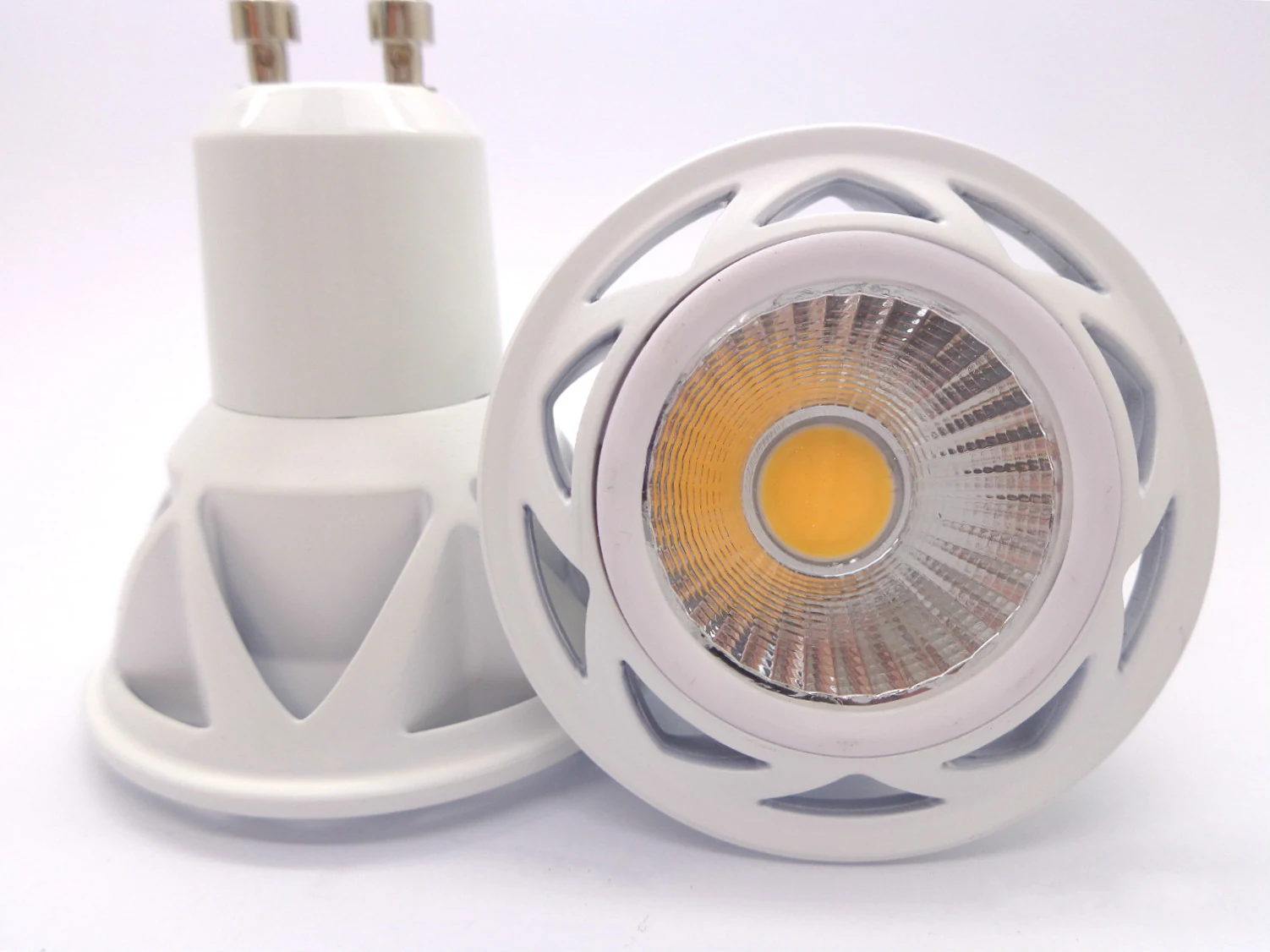
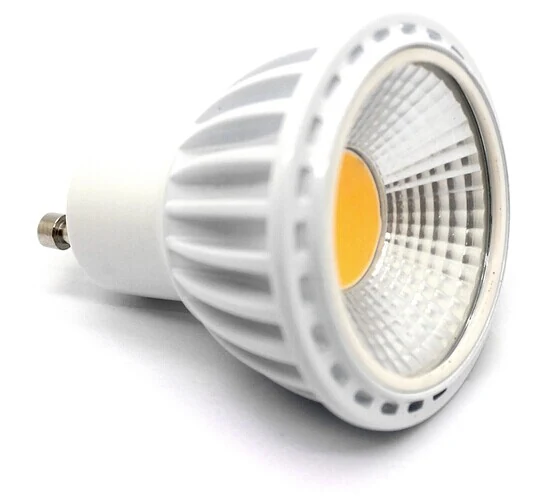
We hold 24 to 36, 45 and 60 degree versions of the GU10 5W lamp as separate part numbers, which is the only way to make sure the right angle arrives on site.
Contrast Ratio Is The Point
Accent lighting works by contrast. A display lit at roughly three times the surrounding level reads as highlighted; at ten times it reads as dramatic.
If the general lighting in the space is already bright, accent lighting has to be brighter still or it disappears. Sometimes the correct answer is to reduce the ambient level rather than increase the accent.
Common Mistakes
Using one beam angle across a whole store, which produces either scalloped walls or a flat, undifferentiated floor.
Mounting narrow beams too high, so the pool spreads and the effect is lost.
Mixing beam angles within one run of track without intent, which reads as an error rather than as a design.
Product ranges covered in this guide
Products Discussed In This Guide
Questions About This Topic
What beam angle do I need for a shelf display?
Around 45 degrees is a sensible starting point for a shelf run. Tell us the mounting height and the shelf depth and we will recommend one.
Can I change the beam angle after installation?
No - the angle is fixed by the optic. That is why we hold the angles as separate part numbers, so the right one is ordered.
Is a narrow beam brighter?
It concentrates the same total output into a smaller area, so the pool is brighter. The lamp is not emitting more light.
Other Guides In The Knowledge Centre
How To Choose The Right LED Lamp Base For Your Market
E27, E26, B22, E14, GU10 and MR16 explained, with the export mistakes that cost importers money.
Buying GuideLumens Not Watts How To Compare LED Bulbs Properly
Why wattage stopped being a measure of brightness, and what to ask a supplier instead.
Buying GuideLED Colour Temperature Explained From 2400K To 6500K
What kelvin values actually mean, where each band belongs, and how to avoid a room full of returns.
Design GuideHave A Specification Question
Send it by email with the application and the quantity. A written answer from someone who knows the range beats an hour of searching.