
Lumens Not Watts How To Compare LED Bulbs Properly
Why wattage stopped being a measure of brightness, and what to ask a supplier instead.
In This Guide
Wattage Measures Cost Not Light
Watts measure how much electricity a lamp consumes. In the incandescent era that was a useful proxy for brightness because every lamp converted power to light with roughly the same inefficiency. A 60W bulb was brighter than a 40W bulb because it burned more.
LEDs broke that relationship. Two lamps of the same wattage from different factories can differ in output by thirty per cent or more, which is precisely why some suppliers still prefer to talk about watts.
Lumens Measure Light
The lumen is the unit of luminous flux - the total quantity of visible light the lamp emits. It is the number that answers the question a buyer is actually asking.
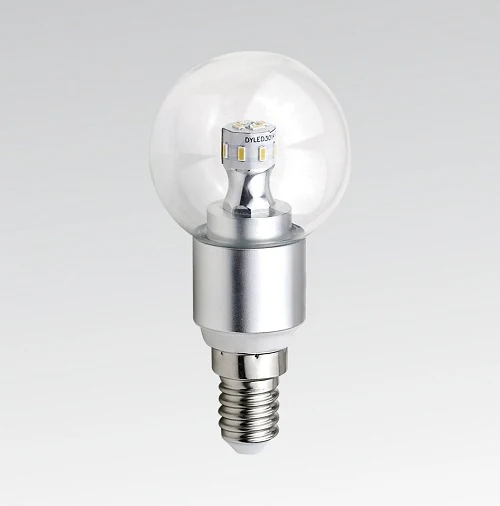
Across our standard globe range the published figures run from roughly 210 lumens at 3W to over 1000 lumens at 12W. The point is not the individual figures; it is that they are published with a tolerance so they can be checked.
Efficacy Is The Number Behind Both
Divide lumens by watts and you get efficacy, in lumens per watt. That single figure tells you how hard the lamp works for its electricity, and it is the fairest way to compare two lamps of different wattages.
When a supplier will quote wattage but not lumens, efficacy is usually the reason.
What To Ask A Supplier
Ask for luminous flux with a tolerance. A figure quoted as '550lm plus or minus 8 per cent' is a commitment. A figure quoted as 'about 600 lumens' is a hope.
Ask whether the figure is initial or maintained. Initial output is measured when the lamp is new; maintained output accounts for depreciation over life.
Ask for the colour temperature alongside it, because output and colour temperature are related - cooler versions of the same lamp usually measure slightly higher.

A Practical Replacement Table
As a rough working guide for retrofit, an incandescent 40W is replaced by roughly 450 lumens, a 60W by roughly 800 lumens, and a 75W by roughly 1100 lumens. Those are industry conventions rather than precise equivalences.
Use them to narrow the choice, then check the published lumen figure of the specific lamp you are quoting rather than trusting the equivalence.
Product ranges covered in this guide
Products Discussed In This Guide
Questions About This Topic
Why do two 9W bulbs give different light?
Because wattage measures consumption, not output. Compare the published luminous flux figures instead, and ask for the tolerance on each.
What does the plus or minus 8 per cent mean?
It is the manufacturing tolerance on the lumen figure. It tells you the range within which production units will measure.
Do you publish lumens for every bulb?
For every model where the source specification provides it, yes - it is in the product's specification table. Where it is not published, ask us and we will confirm it against current production.
Other Guides In The Knowledge Centre
How To Choose The Right LED Lamp Base For Your Market
E27, E26, B22, E14, GU10 and MR16 explained, with the export mistakes that cost importers money.
Buying GuideLED Colour Temperature Explained From 2400K To 6500K
What kelvin values actually mean, where each band belongs, and how to avoid a room full of returns.
Design GuideCRI And Why Colour Rendering Decides Retail Lighting
What Ra means, which numbers matter in shops and hotels, and where a low CRI lamp costs you sales.
Design GuideHave A Specification Question
Send it by email with the application and the quantity. A written answer from someone who knows the range beats an hour of searching.