Unit Price Is The Smaller Half Of The Decision
On high volume household products, freight and duty can move the landed cost by a wide margin between two apparently similar quotations. The numbers that settle it are carton dimensions, gross weight and how many pieces fit in a container, and they should be available before you order rather than at shipment.
Read The Packing Data
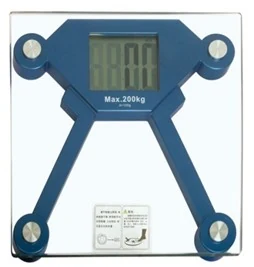
Where the factory has confirmed them, product pages publish master carton dimensions, net and gross weight and loading quantities for 20 ft, 40 ft and 40 ft HQ containers. The 2011A body scale for example packs one piece per gift box with foam, ten per carton at 59 x 37 x 37 cm, net 22 kg and gross 24 kg, loading 3220 pieces in a 20 ft, 6680 in a 40 ft and 8410 in a 40 ft HQ.
2011A tempered glass body scale →
Industrial Items Load Differently
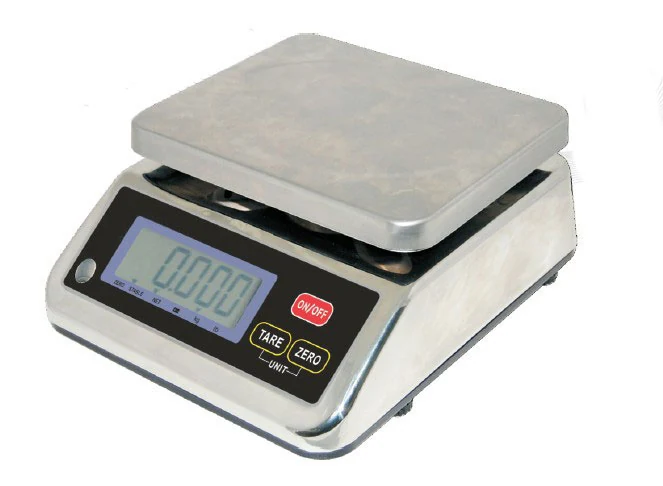
Bench scales are bulky rather than heavy. The S29 packs four to a master carton at 0.115 cubic metres, giving 940 machines in a 20 ft and 1880 in a 40 ft container. A mixed container of household and industrial product usually cubes out before it weighs out, so plan the load around volume.
S29 stainless steel platform scale →
Lead Time And Mode
Delivery time is normally under 15 days. Goods move by sea transportation, airway or courier with DHL, FedEx, UPS and TNT, which means a full container programme and an urgent spare part can run on entirely different clocks without splitting the supplier.
Mix The Container Deliberately
Most first orders are mixed: load cells and indicators for the service side, bench and floor scales for the industrial side, body and kitchen scales for retail. Mixing models on one order keeps one set of documents and one arrival date for the whole range.
Ask For The Data In Writing
Whatever supplier you use, ask for carton size, gross weight and container quantity in the quotation, not after the proforma. A supplier who cannot supply those figures cannot help you cost the programme.