
Hollow Cone Nozzle
Tangential Hollow Cone Nozzle
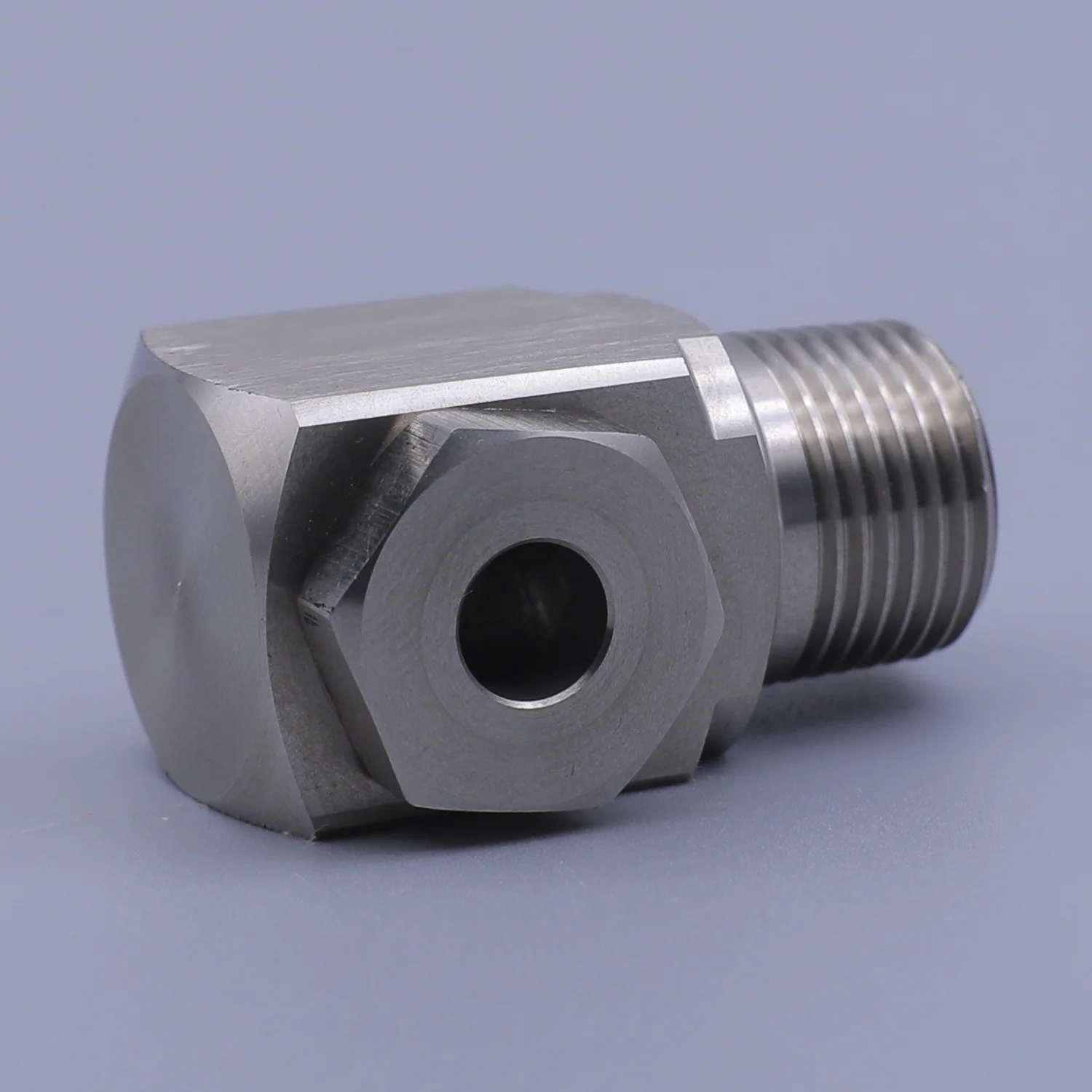
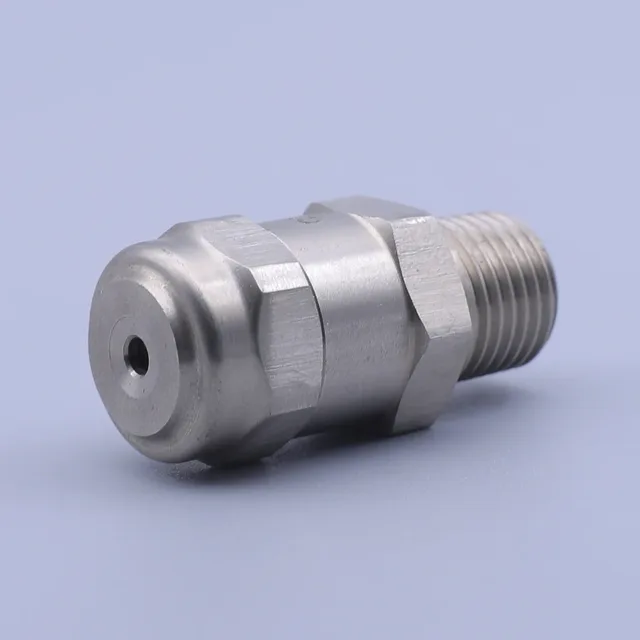
A tangential hollow cone nozzle delivers a ring-shaped spray pattern that covers a circular footprint evenly, which is essential when cooling or scrubbing gas streams in ducts, towers, or scrubbers where uniform droplet distribution across the full cross-section is required. This CNSS hollow cone range operates at 60° to 120° spray angles and 0.125 to 145 L/min at 3 bar, making it suitable for gas washing, evaporative cooling, and chemical processing where consistent droplet coverage prevents hot spots and ensures efficient contact. The design features large unobstructed flow passages to reduce clogging risk in dirty or particulate-laden streams.
| Spray Pattern | Hollow Cone. Wide angle pattern available |
|---|---|
| Spray Angles | 60° – 120° standard |
| Flow Rates | 0.125 to 145 L/min at 3 bar |
| Standard Materials | Brass, 303SS, 316SS, PVC, PP, PVDF, PTFE |
Dimensions and materials outside this table are confirmed against your duty sheet before quotation.
Key Benefits
What This Nozzle Gives You
- Ring-shaped spray pattern ensures even droplet coverage across the full cross-section of a gas stream
- Wide spray angle range from 60° to 120° allows coverage in tight or variable duct geometries
- Large unobstructed flow passages minimize clogging in dirty or recirculated water systems
- Uniform distribution of small to medium droplets improves heat transfer and gas absorption efficiency
- Available in multiple materials to match chemical and thermal duty in scrubbing and cooling service
- Free trial samples and 10 day sample lead time for testing in actual process conditions
Application Scenarios
Where It Is Installed
- Gas scrubbing systems where fly ash and particulates must be captured in a uniform spray curtain
- Cooling towers and spray ponds requiring evaporative cooling with even droplet distribution
- Metal treating lines using water or chemical sprays for surface conditioning in enclosed chambers
- Chemical processing units where gas streams need consistent contact with liquid reagents
- Brine spraying applications where salt-laden water must be atomized without clogging
Who It Is For
Buyers Who Specify It
- Plant engineers maintaining or upgrading gas scrubbing and cooling systems
- Scrubber system integrators specifying nozzles for gas cleaning and emission control
- Cooling tower operators dealing with uneven cooling or clogging issues
- OEM machine builders integrating nozzles into chemical or metal treating equipment
- Maintenance teams replacing clogged or worn nozzles in high-particulate environments
Problems It Solves
What It Fixes on the Line
- Uneven droplet distribution that leaves dry zones in gas streams, reducing scrubbing efficiency
- Clogging in narrow orifice nozzles due to particulates in recirculated or dirty water
- Inadequate coverage in ducts with irregular or narrow cross-sections
- Hot spots in cooling towers caused by poor spray pattern uniformity
- Frequent nozzle replacement due to internal blockage in abrasive or high-solids streams
Technical Features
How It Is Built
- Tangential inlet design directs liquid into a swirling motion to form a hollow cone pattern
- Large flow passages reduce the risk of blockage from suspended solids or debris
- No internal parts or screens that can wear or become obstructed over time
- One-piece construction ensures structural integrity under pressure and thermal cycling
- Available in multiple materials to match chemical and thermal service conditions
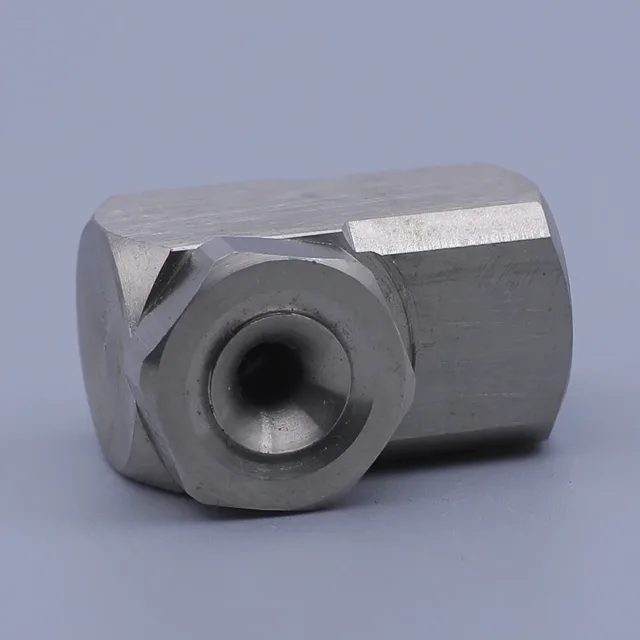
- Right angle hex fitting with male thread allows secure mounting in standard piping
Materials
Body Materials and Where Each One Suits
- Brass for general water service at moderate temperature and pressure
- 303 stainless steel for general industrial washing and cooling duty
- 316 stainless steel where chlorides or corrosive chemicals are present
- PVC PP PVDF and PTFE for acid, alkali, or solvent service
Manufacturing Process
How the Part Is Made
- Material selection based on the customer's process conditions
- Machining of the body and tangential inlet channel
- Inspection of orifice and spray pattern
- Packaging in protective containers
- Transportation with handling controls to prevent damage
Quality Control
What Is Checked Before It Ships
- Raw material is restricted to selected brass, 303 stainless steel, 304 stainless steel, and 316 stainless steel
- Every process from material selection to transportation is controlled
- Every product is tested before it ships
- A 3 month quality guarantee is stated on the product listing
Customization
What Can Be Changed to Suit You
- Standard and non-standard nozzles can be made to drawing
- OEM orders accepted including customer marking
- Small volume orders accepted for trial installations
- Samples can be ready within 10 days
- Trial samples can be sent free of charge
Comparison
How It Compares With the Alternatives
| Flat fan nozzle | A flat fan delivers a linear spray, suitable for moving surfaces like belts or strips, but cannot cover the circular cross-section of a duct or tower |
|---|---|
| Full cone nozzle | A full cone covers a circular area with solid impact, but may not provide the same uniform ring distribution for gas scrubbing or cooling |
| Spiral nozzle | A spiral nozzle handles solids better due to external vanes, but its cone pattern is not optimized for uniform ring coverage in gas streams |
| Hollow cone nozzle with filter | The filtered version protects against clogging but adds a strainer that may require cleaning; the standard version is better for dirty or high-solids streams |
Use Guide
Fitting and Running It
- Confirm the target duct or tower diameter and standoff distance before selecting a spray angle
- Choose a spray angle between 60° and 120° based on the available space and required coverage width
- Ensure the flow rate matches the system’s pump capacity and pressure at the nozzle
- Match the body material to the chemical and thermal conditions of the process fluid
- Install the nozzle with the tangential inlet aligned to the flow direction to maintain swirl
- Inspect the orifice for wear or blockage if spray pattern becomes uneven or flow drops
Questions Buyers Ask
Tangential Hollow Cone Nozzle Questions
What spray angles and flow rates are available?
The tangential hollow cone nozzle offers standard spray angles from 60° to 120° and flow rates from 0.125 to 145 L/min at 3 bar. Confirm your process pressure and target coverage to select the correct size.
Which body materials are available?
Available materials include brass, 303 stainless steel, 316 stainless steel, PVC, PP, PVDF, and PTFE. Choose based on the chemical and thermal conditions of your process.
Can I get a sample before placing a production order?
Yes. Trial samples can be sent free of charge and are ready within 10 days. This allows testing in your actual process conditions.
Do you accept small orders and OEM marking?
Yes. Small volume orders are accepted, and standard or non-standard nozzles can be made to your drawing under an OEM order with customer marking.
What happens if a nozzle fails in service?
A 3 month quality guarantee is provided. Send a photo of the failed nozzle and details of the service conditions by email for assessment.
What are your payment terms?
The product listing states T/T 100% in advance. Send the model, quantity, and destination port by email to confirm the terms for your order.
Do you offer spiral hollow cone nozzles?
Yes. We offer spiral hollow cone nozzles for applications requiring better solids handling. Contact us for more information on specifications and availability.
Ask About Tangential Hollow Cone Nozzle
Send the liquid, the pressure at the nozzle and the thread on your header. Trial samples can be sent free of charge and samples can be ready within 10 days.