
Process Guide
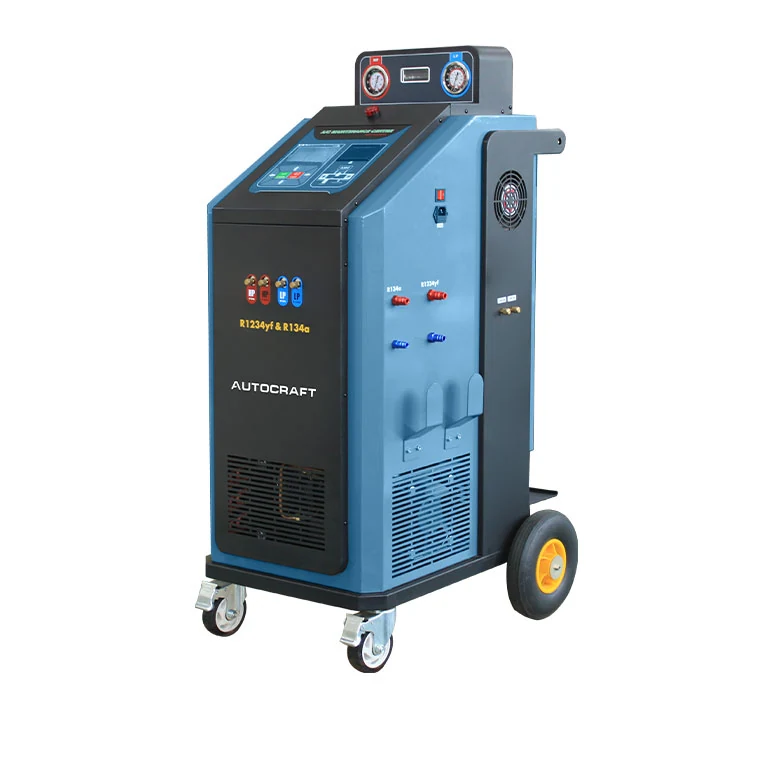
R134a and R1234yf What Changes in the Service Bay
Two refrigerants now share the road, and one machine cannot always serve both. Here is what actually differs and how to decide between separate stations and a dual system machine.
Why the Workshop Cannot Ignore It
Newer vehicles use R1234yf, older ones use R134a, and a station built for one cannot service the other. As newer vehicles come off warranty and arrive at independent workshops, a shop with only an R134a machine starts turning work away.
Recovery Speed Costs Real Money on R1234yf
R1234yf is the more expensive refrigerant, so what is lost during a slow or incomplete recovery matters more. The AC720 and AC720S both use a more powerful compressor for faster recovery, and both include an oil separator that divides gas and oil so recovered refrigerant can be reused rather than discarded.
Flushing Is the Step Most Bays Skip
Recharging a system without cleaning it leaves whatever caused the original complaint in place. It matters most after a compressor failure, where debris left in the lines will destroy the replacement compressor. Every AC700 and AC720 machine includes a flushing function, and on-vehicle cleaning of the pipeline means the system does not have to come off the car.
- Flush after any compressor failure before fitting a new unit
- Flush when a recharge has not fixed a poor cooling complaint
- On-vehicle pipeline cleaning keeps the job inside normal bay time
Oil Type Is Not Interchangeable
Conventional compressors use PAG oil while electrified compressors in hybrid and electric vehicles use POE. Putting the wrong one in is an expensive mistake. The AC750 dual system station injects both automatically, which is one reason workshops taking on hybrids choose it.
One Machine or Two
Two single-gas stations cost more and take two footprints in the bay. One dual system machine covers both refrigerants with quantitative recharging for each. The decision usually comes down to daily volume.
- Mostly older vehicles and low R1234yf volume: AC700 or AC700S, add an AC720 later
- Mixed parc with steady volume on both: AC750 dual system
- High volume on both with two technicians: separate stations so two bays run at once
Equipment Referenced in This Guide
AC Service Machine
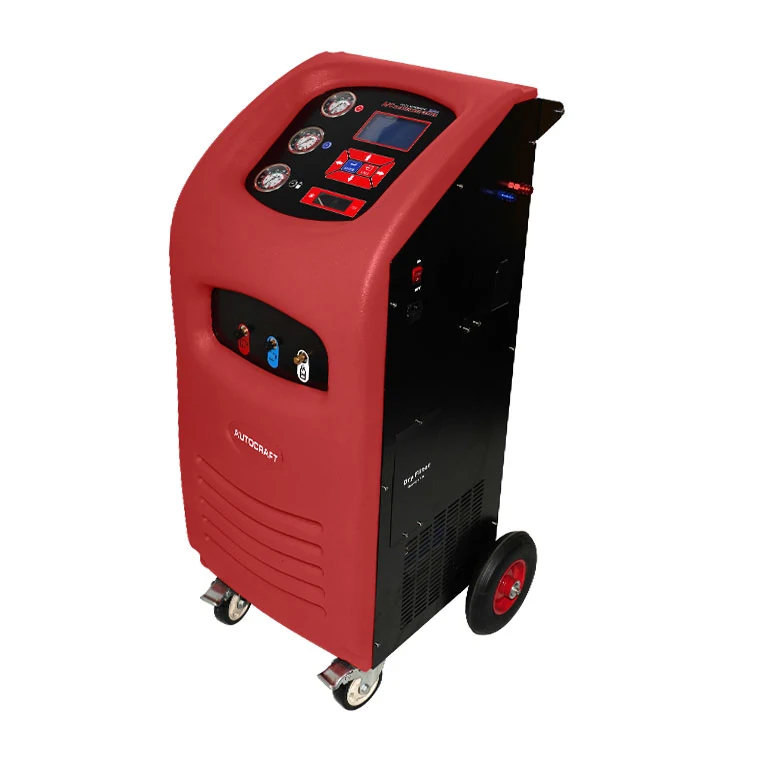
AC700S Automatic AC Service Machine With Flushing Function
Fully automatic R134a station with flushing
R1234YF
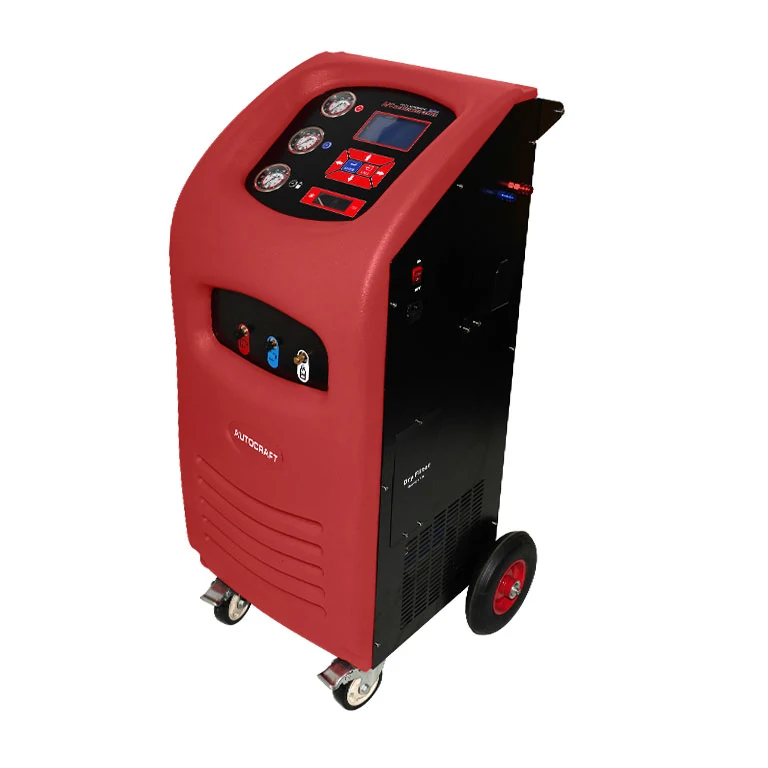
AC720S Automatic AC Service Machine For R1234YF
Fully automatic R1234yf station with flushing
AC Service Machine
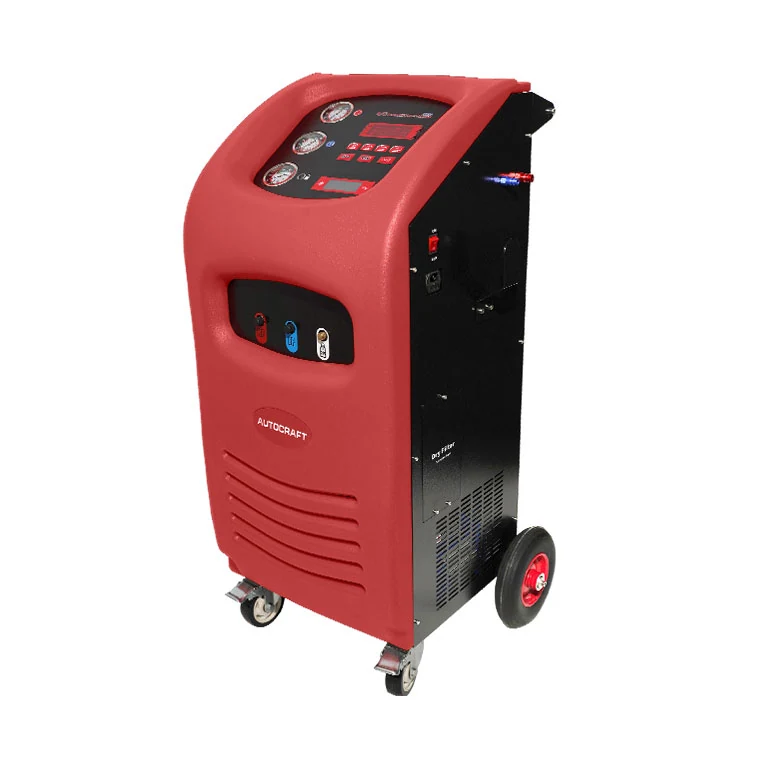
AC720 Semi-Automatic AC Service Station for R1234YF
Semi-automatic R1234yf station with flushing
Frequently Asked Questions
Can an R134a machine be converted to R1234yf?
No. Buy a station built for the refrigerant you are servicing, or a dual system machine such as the AC750 that handles both.
What is the difference between the semi-automatic and fully automatic machines?
On the semi-automatic AC700 and AC720 new oil injection is manual and the display is an LED digital screen. The fully automatic AC700S and AC720S run the whole cycle and add an LCD screen, a database and a printer.
Why does the machine need an oil separator?
It separates gas and oil so the recovered refrigerant can be reused instead of being lost, which matters most on R1234yf.
Do I get a printed service record?
On the AC700S, AC720S and AC750, yes. They carry an LCD screen with a database and a printer.
Which machine suits a hybrid or EV workshop?
The AC750, because it injects both PAG and POE oil automatically and covers both refrigerants.
More From the Knowledge Center
Two Post or Scissor Lift for a General Repair Bay
The choice is usually decided by the building rather than the vehicles. Here is how ceiling height, slab condition and the work you take in point to one or the other.
Clear Floor or Base Floor Two Post Lift
Both carry the same 4 tonnes. The difference is where the connection between the columns runs, and that decides which building each one suits.
How to Choose a Tyre Changer for Your Wheel Mix
Assistant arm, tyre lifter, leverless. Each answers a different problem, and the right answer comes from the wheels you actually handle rather than the machine specification sheet.
Apply This to Your Own Bay
Send your ceiling height, floor condition and vehicle mix and we will tell you which of these models actually fits.