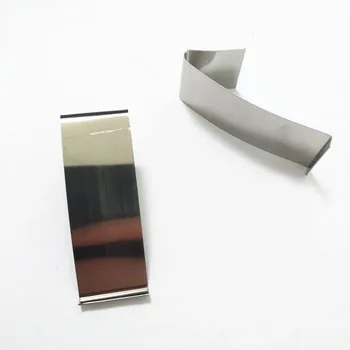
How a coiled strip of stainless delivers the same force over a long stroke, and where that behaviour is worth paying for.
See Flat Springs
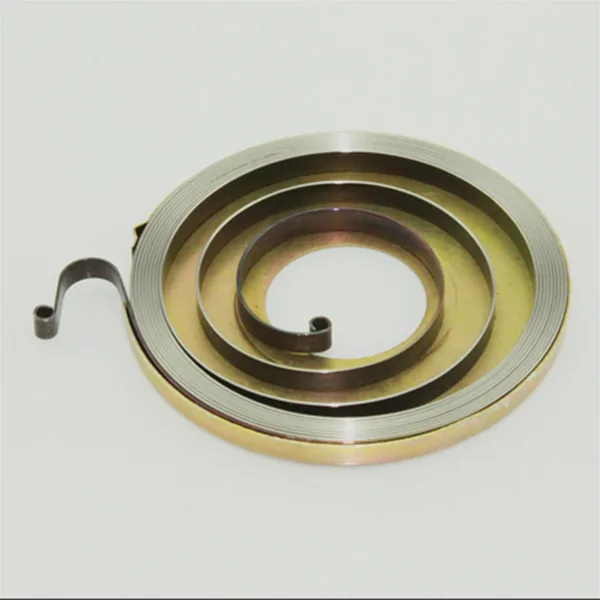
A helical spring gets stronger the further you pull it. A constant force spring, made from a tightly coiled strip of stainless steel, resists unrolling with nearly the same force across its whole stroke. That difference is the entire reason this type exists.
Strip stainless, typically type 301 which work hardens to a high spring temper, is coiled tightly around a drum. Uncoiling it creates a bending stress in the strip that stays essentially constant no matter how much has been drawn out.
Roller blinds are the clearest example: a helical spring would make the blind heavy at full extension and snap shut at the top. Cable retractors, counterbalances, brush feeds in motors and long travel tensioners all rely on the same property.
The force required, the stroke length, the strip width and the drum diameter. Force comes from strip thickness and width; stroke comes from how much strip is on the coil. Give us the force and travel and the geometry follows.
A loose constant force spring is under stored energy and should be handled with that in mind. They are normally supplied coiled and retained, and the retention is removed only after the spring is mounted.
It is the usual choice because of how well it work hardens. Other grades are possible where corrosion or magnetic requirements dominate.
Only where the mounting can accept a coil and a drum. It is a different mechanism, not a drop-in substitute, but for long strokes it is often worth redesigning the mount.
Send the part, the load and the environment. A short email usually settles a specification faster than any guide can.