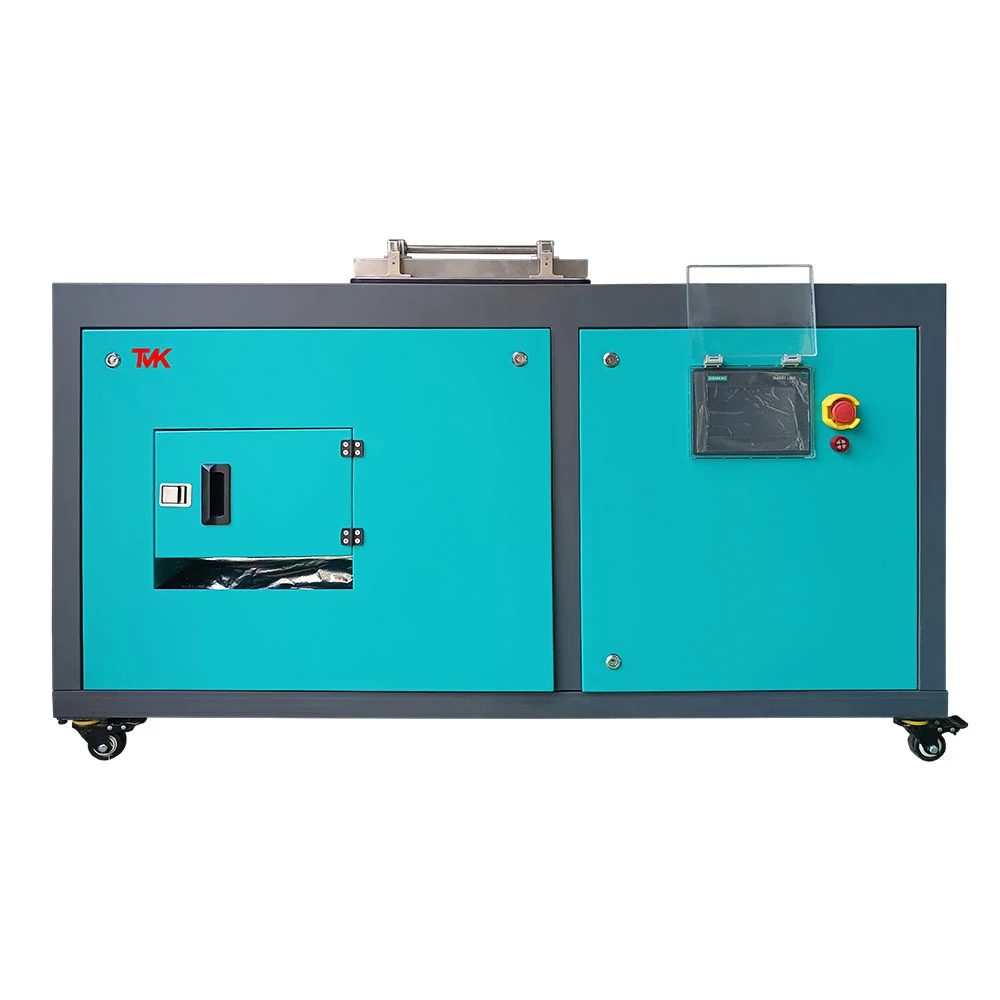
TMK-50 50 kg Per Day Kitchen Composter on Standard Single Phase Power
The TMK-50 uses microbial food waste removal technology, a microbial decomposer, so a kitchen can dispose of food waste on site. It is a new generation of waste disposal machine that is extremely easy to use: s...
What the TMK-50 Composter Does
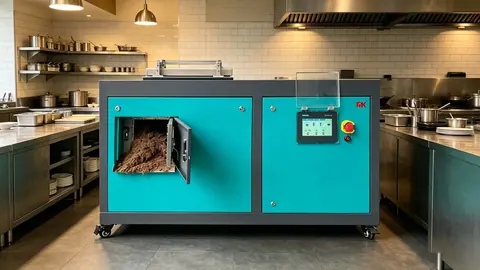
The TMK-50 uses microbial food waste removal technology, a microbial decomposer, so a kitchen can dispose of food waste on site. It is a new generation of waste disposal machine that is extremely easy to use: separate the water from the food waste and add it to the machine at any time. Composting happens on site, which cuts cost and pollution factors, and the discharged product is dried compost usable as fertilizer for agriculture depending on the input.
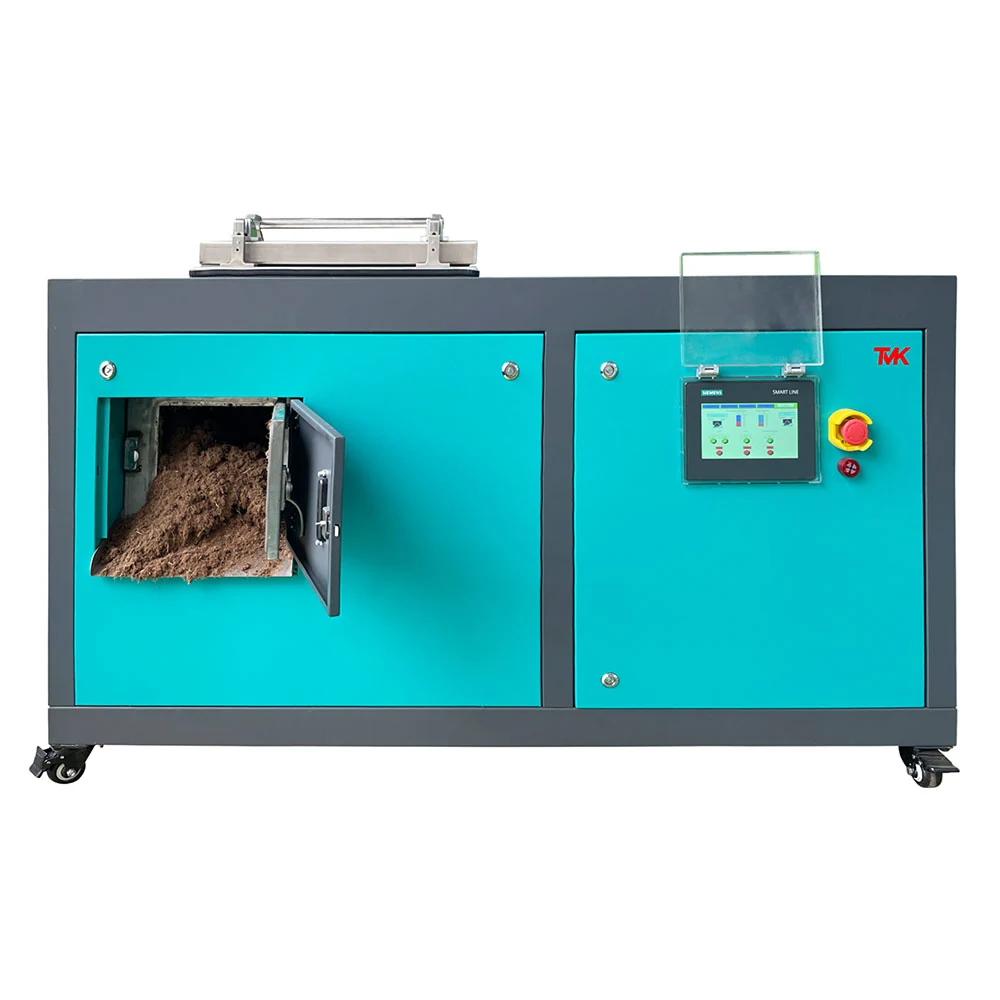
Why This Model and Not the Next One Up
20 tons per year handled on a standard AC220V 50Hz single phase supply
Continuous loading at any time rather than fixed batch windows
Closed-loop recycling where food waste returns to the environment as beneficial material
Smart sensing adapts to different types of organic waste with minimal manual effort
The entire process is natural and biological, odorless and pollution-free
Buyers This Model Suits
- Restaurants, supermarkets, schools and apartment buildings
- Sites without three phase power that still need commercial capacity
- Kitchens producing food waste free of heavy spice and oil content
- Businesses building a circular economy programme at a single site
What It Takes Off Your Plate
- Commercial capacity needed where only single phase power is available
- Odour and pest pressure from food waste held in a shared bin area
- Waste transport cost and the pollution that goes with it
- Kitchen waste that would otherwise be landfilled rather than recovered
Where It Gets Installed
Restaurant kitchen composting daily prep trim and plate waste
Supermarket or local market back of house
School kitchen serving a single sitting
Apartment building or residential block with a shared waste room
How It Is Built
- Microbial food waste removal technology using a microbial decomposer
- Fermentation and deodorization function
- Rapid transformation technology that converts organic waste quickly and cuts volume sharply
- Smart sensing and automation that adapts to different organic waste types
- Runs on AC220V 50Hz at 2.3 KW
- Q235 machine body with spray paint finish
Materials
- Q235 structural steel body with spray paint finish
Process Sequence
Separate water from waste → Load at any time → Microbial decomposition → Deodorization → Discharge dried compost
TMK-50 Composter Specification Table
| Capacity | 50kg/day, 20tons/year |
|---|---|
| Dimensions (L*W*H) | 1,515mm x 760mm x 960mm |
| Machine Weight | 270kgs |
| Machine Material | Q235 + Spray Paint |
| Process Type | Aerobic Composting |
| Process Duration | Within 24 Hours |
| Function | Fermentation & Deodorization |
| Volume Reduction | 85-90% |
| Micro-Organism | Yes (add every 3-6 months) |
| Power Supply | AC220V, 50Hz, 2.3KW |
| Output | Organic Fertilizer |
Figures as published by TMK for this model. Confirm voltage and frequency for your destination country before ordering.
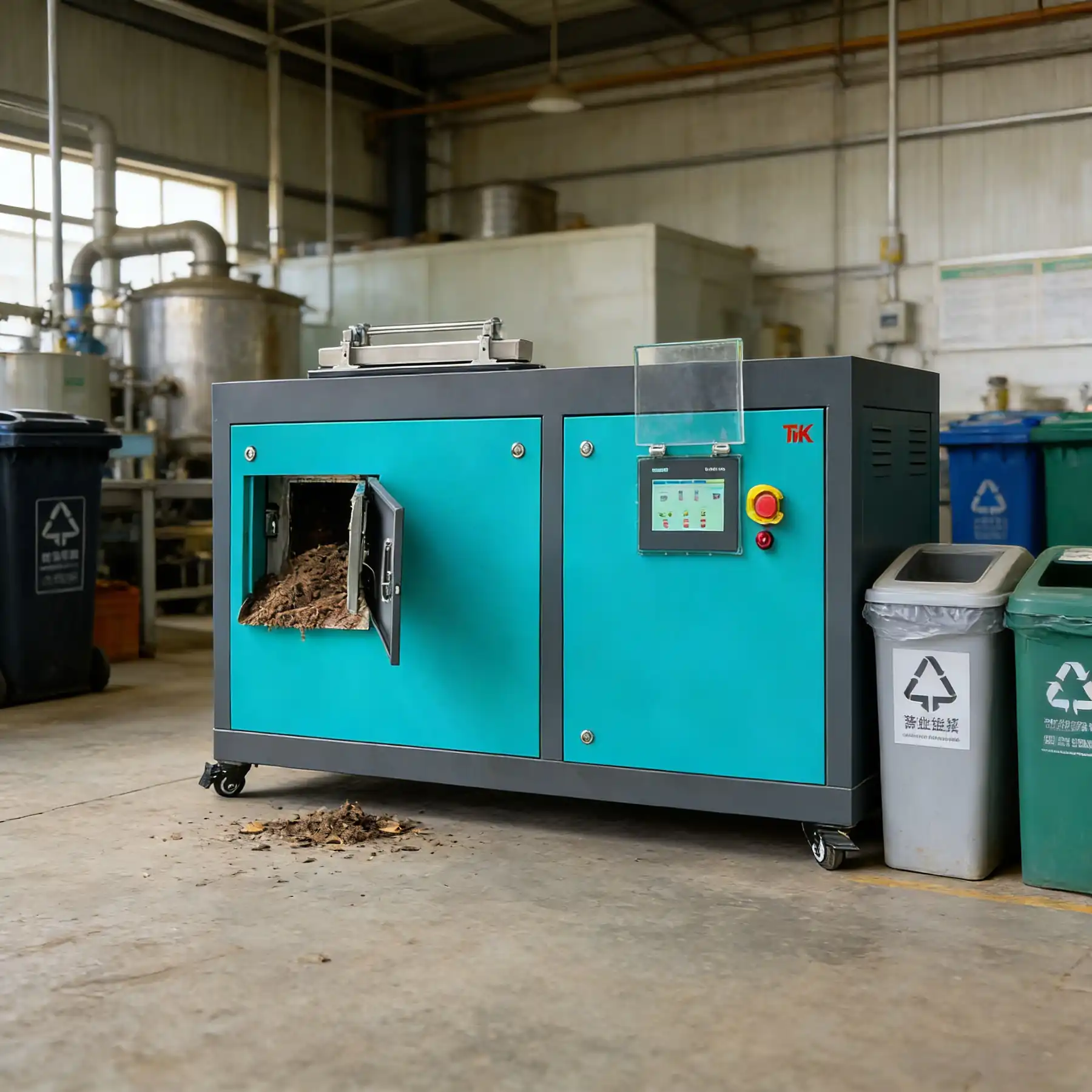
TMK-50 Composter in Detail
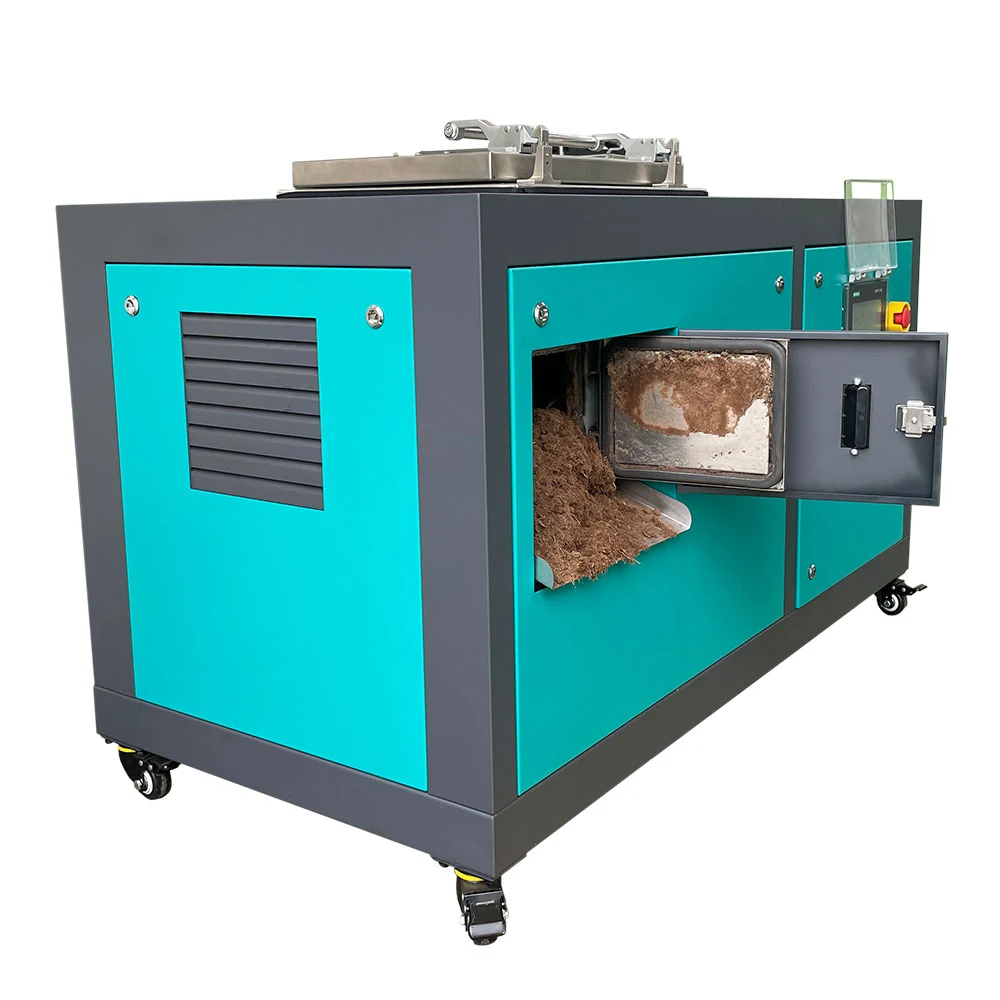
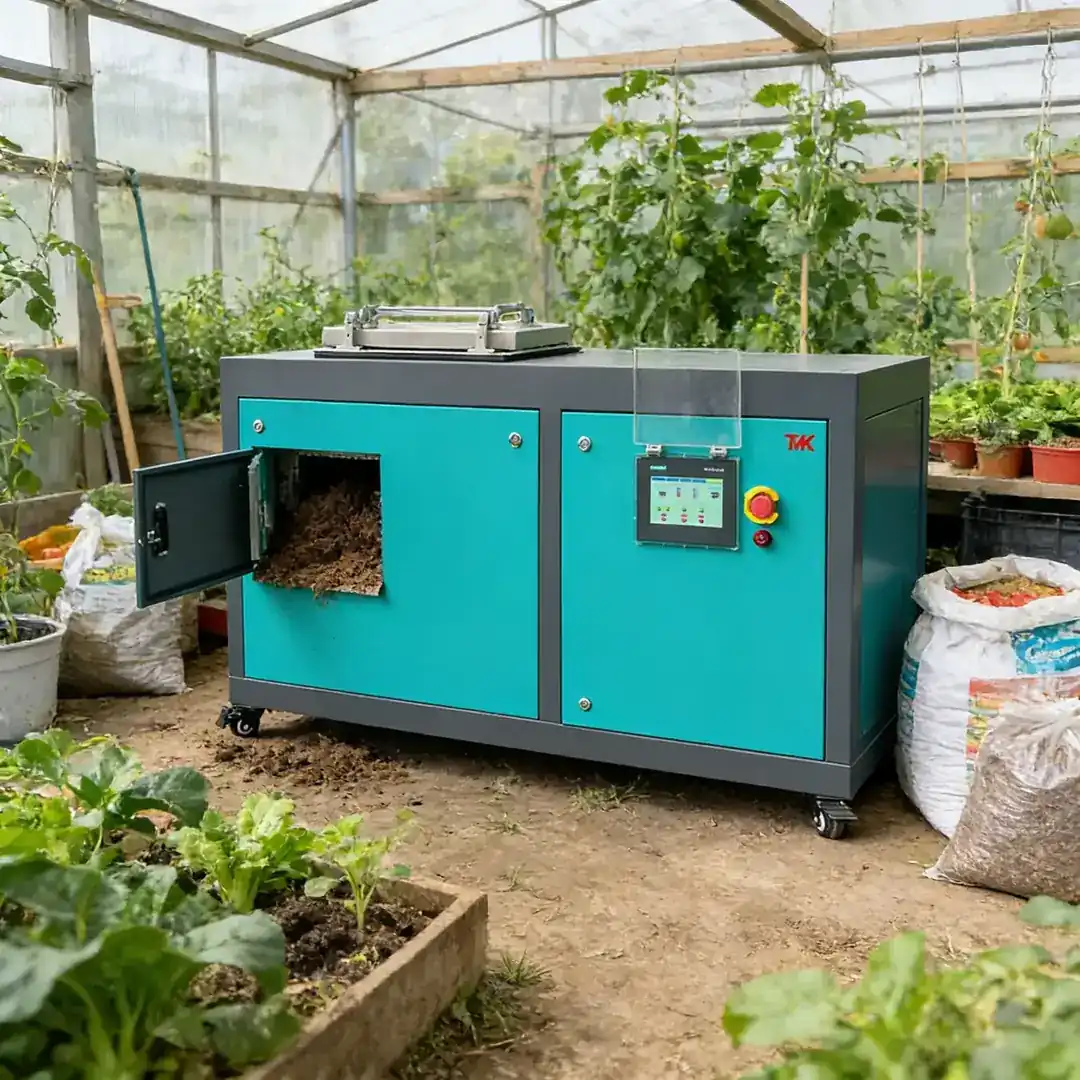
What Is Controlled and Protected
- Smart sensing optimises the decomposition process per waste type
- Natural biological process that is odorless and pollution-free
- Continuous operation designed for minimal downtime
What Can Be Configured
- Power supply confirmed for the destination country
- Placement and ventilation reviewed for the intended room
- Microbe replenishment schedule set against actual loading pattern
How It Compares
Compared with
TMK-100 Composter
The TMK-100 doubles capacity and adds WiFi, touch screen and PLC control, but it requires a three phase AC380V supply.
Compared with
TMK-30 Composter
The TMK-30 covers 30 kg a day at 1.2 KW with a smaller footprint. The TMK-50 adds capacity on the same single phase supply.
Compared with
Waste collection contract
On-site composting cuts collection cost and pollution factors, and the discharged product has agricultural value instead of a disposal fee.
Running the TMK-50 Composter
- Separate water from the food waste before adding it
- Load at any time through the day
- Avoid material heavy in spices or oil, which the source notes as unsuitable for conversion to agricultural nutrients
- Add micro-organism every 3 to 6 months
- Harvest dried compost and use as fertilizer depending on the input
Accepted input: Vegetable leaves, leftovers, vegetable peel, fish, meat, shrimp shells, crab shells, egg shells, small bones, bread, coffee grounds.
Keep out: Plastic products, metals, ceramics, fuel oil, solvents, large wood, large animal bones, cloth, other domestic waste, hazardous waste.
TMK-50 Composter Questions
Does the TMK-50 run on normal single phase power
Yes. AC220V 50Hz at 2.3 KW.
How much can it process per year
20 tons per year at the rated 50 kg per day.
Can waste be added at any time
Yes. Separate the water from the food waste and add it to the machine at any time.
What are the dimensions and weight
1515 mm by 760 mm by 960 mm, weighing 270 kg.
What should not go in
Organic food waste containing materials such as spices or oil is noted as unsuitable. Plastics, metals, ceramics, solvents and hazardous waste must always stay out.
Other Models Worth Comparing
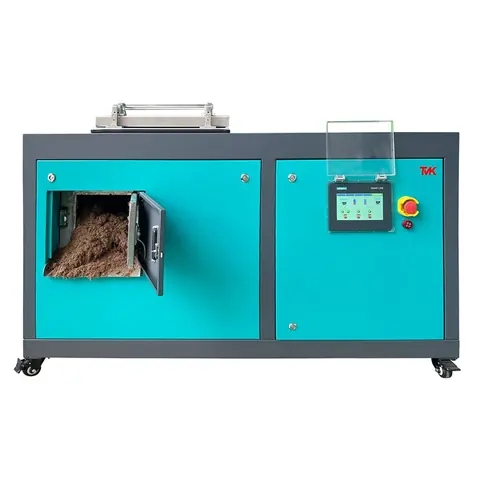
TMK-100 Composter
100 kg Per Day Electric Food Waste Composter
View specifications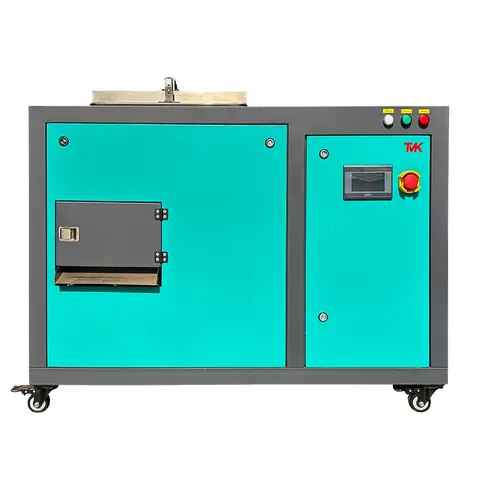
TMK-30 Composter
30 kg Per Day Commercial Food Composter for Small Kitchens
View specifications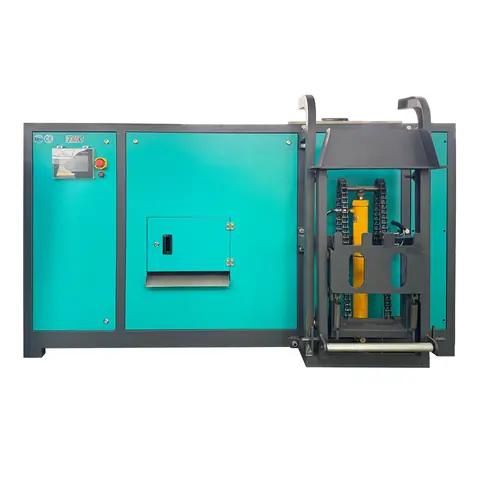
TMK-200 Composter
200 kg Per Day Kitchen Waste Composter for Commercial Kitchens
View specificationsIndustries and Guides Related to This Model
Restaurants and Catering
Over-ordering, spoilage and plate waste are persistent in commercial kitchens, and nearly one third of all food produced...
See the fitSchools and Canteens
A canteen is the easiest case to size, because the volume repeats. Meals are served on a timetable, plate waste lands in...
See the fitSupermarkets and Food Retail
Retail organic waste is different from restaurant waste. It is not plate scrapings, it is trim from the produce departme...
See the fit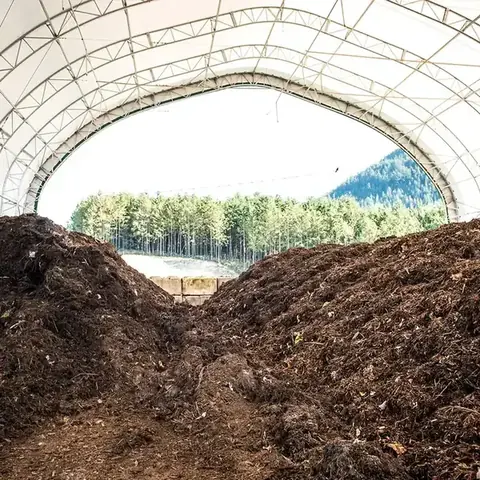
What Is Rapid Composting and Why It Replaces Stacking
Traditional composting needs to be stacked for more than 12 months. Rapid composting takes 21 to 24 hours, which is the ...
Read article
How a TMK Food Composting Machine Works Step by Step
TMK manufactures, supplies and exports composting machines with capacity from 1 kg to 5 tons per day, with in-house expe...
Read articleRequest a Quote for the TMK-50 Composter
Send your daily organic waste weight, your power supply and your destination port. We will confirm price, lead time and what the installation needs.