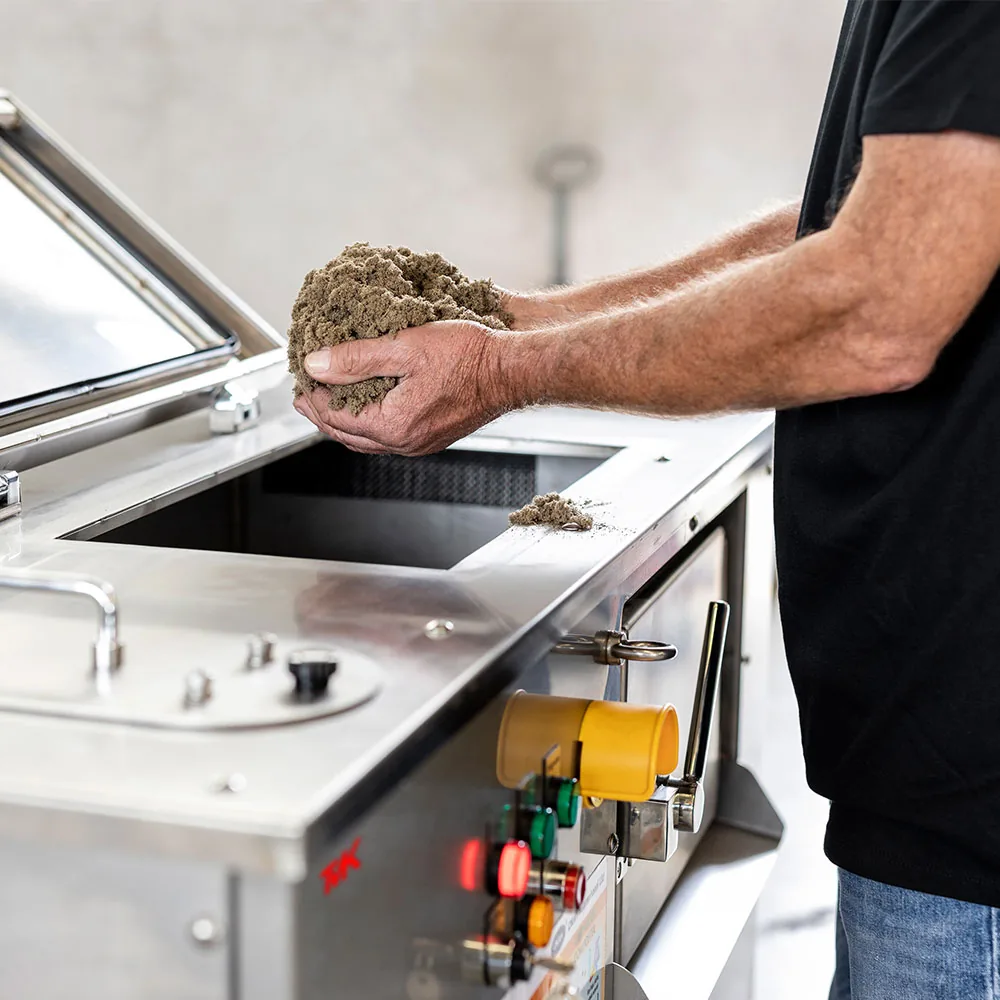
On-Site Aerobic Composting
Composting is a natural process. A composting machine does not replace it, it removes the variables that make it slow. Five things decide how fast organic matter breaks down, and the machine controls all five at once.
The Problem at Each Step and What Handles It
Stage 1 — Temperature Control
Microbial activity slows at low temperature, and pathogens survive. Too hot and activity drops again.
The chamber is heated and held in the band where aerobic microbes work fastest. Higher temperature promotes faster decomposition and pathogen elimination. The TMK-1000 and the household models carry built-in temperature management.
Stage 2 — Moisture Management
Food waste arrives at 70 to 80 percent water. Too wet and the mass goes anaerobic, which is where odour comes from.
A humidity sensor detects moisture and the heater turns on. Water evaporates and leaves as vapour through the exhaust. That stage alone accounts for 70 to 80 percent volume reduction before decomposition finishes the job.
Stage 3 — Aeration
Aerobic composting needs an adequate oxygen supply. Without it the process turns anaerobic and produces odorous gas.
Mechanical agitation inside the chamber keeps the mass turned and oxygenated continuously, rather than relying on someone turning a pile by hand.
Stage 4 — Particle Size
Large pieces have little surface area, so microbes work slowly on the outside of them.
Reducing particle size increases surface area and accelerates decomposition. A shredder accessory brings organic waste down to roughly 8 to 10 mm where the feedstock requires it.
Stage 5 — Mixing and Homogenization
Unevenly mixed material composts unevenly, so part of the batch is finished while part of it is not.
The shaft and mixing blades, made in SS-304, keep the material uniform so compost quality and decomposition rate stay consistent across the batch.
Stage 6 — Deodorization
Any decomposition produces a mixture of odorous gases, and a back of house machine sits near people.
The commercial range carries a fermentation and deodorization function, the larger models have a dedicated deodorization unit, and an exhaust blower with activated carbon filter handles molecular filtration.
The result is a cycle measured in 24 hours rather than the 12 months or more that stacked traditional composting needs, with no wastewater, no toxic output and 85 to 90 percent less volume leaving the site.
Machines That Deliver This
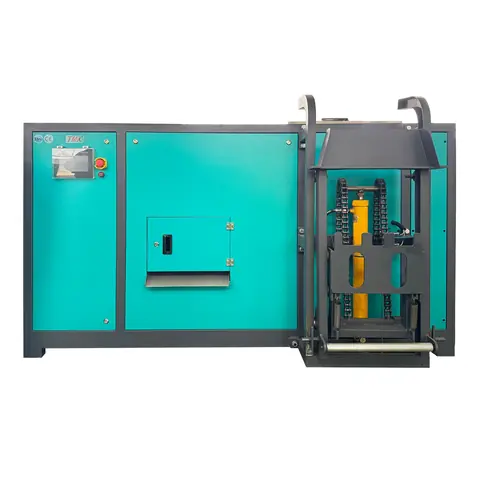
TMK-300 Composter
300 kg Per Day Waste Decomposer Machine for Commercial Sites
View specifications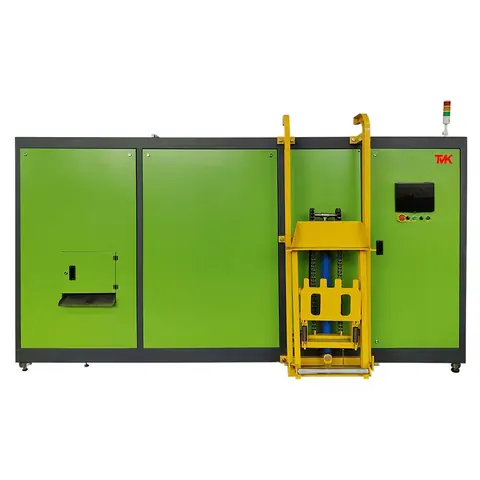
TMK-1000 Composter
1000 kg Per Day Industrial Composting Machine
View specifications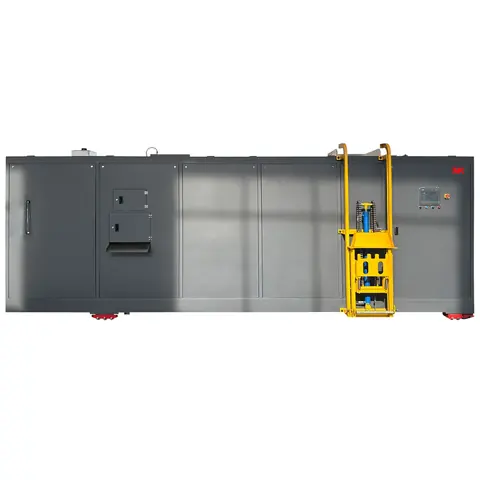
TMK-5000 Composter
5 Ton Per Day Industrial Organic Waste Composter
View specificationsQuestions About On-Site Aerobic Composting
Is this drying or is it composting
Both stages happen. Heat drives the water off, and at the same time TMK microorganisms decompose the solids into compost. A machine that only dries and grinds produces something that has not biologically decomposed and will mould if it gets wet.
Why 24 hours when a pile takes months
A pile leaves temperature, moisture, oxygen, particle size and mixing to chance and weather. The machine holds all five at the values microbes work fastest at, continuously.
Does the process create wastewater
No. The process is described as producing no wastewater, odourless and non-toxic. The water content leaves as vapour through the exhaust.
Is the process noisy
The process is described as completely noiseless because there is no crushing or grinding involved in the main cycle.
Bring Us Your Site Details
Daily organic waste weight, power supply, available floor space and destination port. That is everything we need to come back with a configuration and a lead time.