How a lacquered wooden box is finished, and what that costs you in lead time
Wooden boxes are priced and scheduled differently from card, and the difference is almost entirely in the finishing.
The finish is built up, not applied
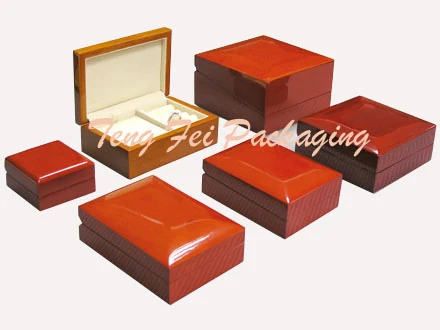
A gloss wooden box is not painted once. The carcass is sealed, sanded, coated and polished in repeated passes, and each pass needs drying time. That is why a wooden box has a longer lead time than a card box of the same size, and why a finish change is a real change rather than a stock option.
Why series exist
Because finishing is the expensive step, wooden boxes are offered as series that share a finish across many sizes. The WB series here each publish their own size table in one finish — that is what lets a jeweller fill a whole counter from one series without paying for several finishing set-ups.
Inlay and two-tone work
A burl band inlaid across a lid, or a contrasting timber panel, adds a separate cutting and fitting operation before finishing begins. It is the most visible upgrade available on a wooden box and the one that most affects schedule.
Matching wood across an order
Timber and lacquer both vary slightly between batches. If you are topping up an existing counter rather than starting one, say so and order against a retained sample, or accept that a small shade difference between batches is normal on a natural material.
Where this shows up in the catalogue
The guidance above is general. If you want to see it applied, the jewellery boxes family is where these decisions bite hardest in this range.