Sizing a watch box around the cushion, not around the watch
The single most common watch packaging failure is a lid that will not close on a case the box was supposed to fit.
Measure three things
Case diameter, case thickness including the crystal, and lug-to-lug length. A box quoted against diameter alone will fail on a domed sapphire or a thick chronograph, because the height that matters is the height above the cushion, not the height of the case in isolation.
The cushion is a component
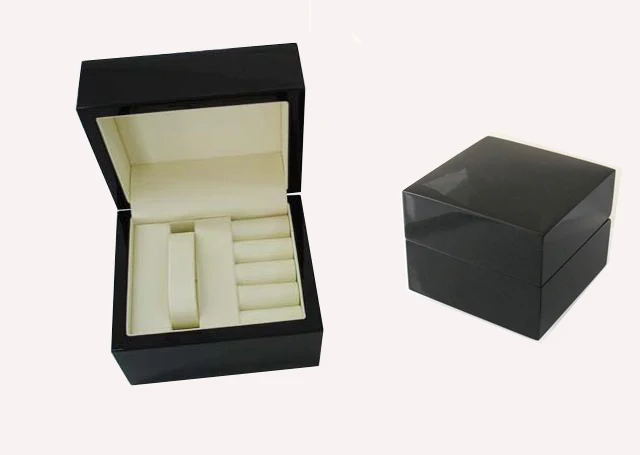
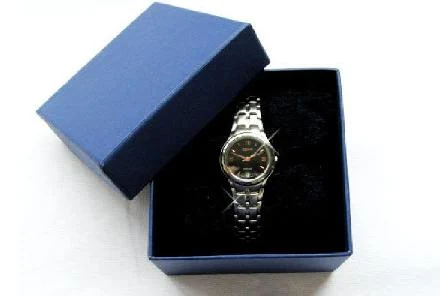
The cushion sets how high the watch sits and how firmly the bracelet is gripped. Too small and the bracelet splays over the edges; too large and the watch will not seat. A deeper base — as on the navy gloss wooden box in this range — exists specifically to give a larger case the clearance it needs.
Paired sets need level cushions
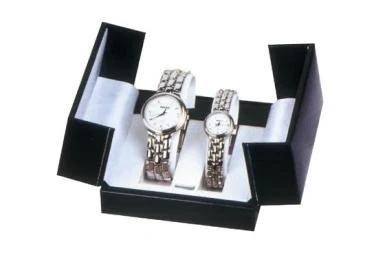
A twin presentation box only looks right if both cushions are the same height. A his-and-hers pair presented at two different levels reads as a mistake even when it is not.
Confirm before tooling
Send the actual watch or a full dimensioned drawing before a box is made. A sample box against a real watch costs a week; a production run that will not close costs the order.
Where this shows up in the catalogue
The guidance above is general. If you want to see it applied, the watch boxes family is where these decisions bite hardest in this range.