
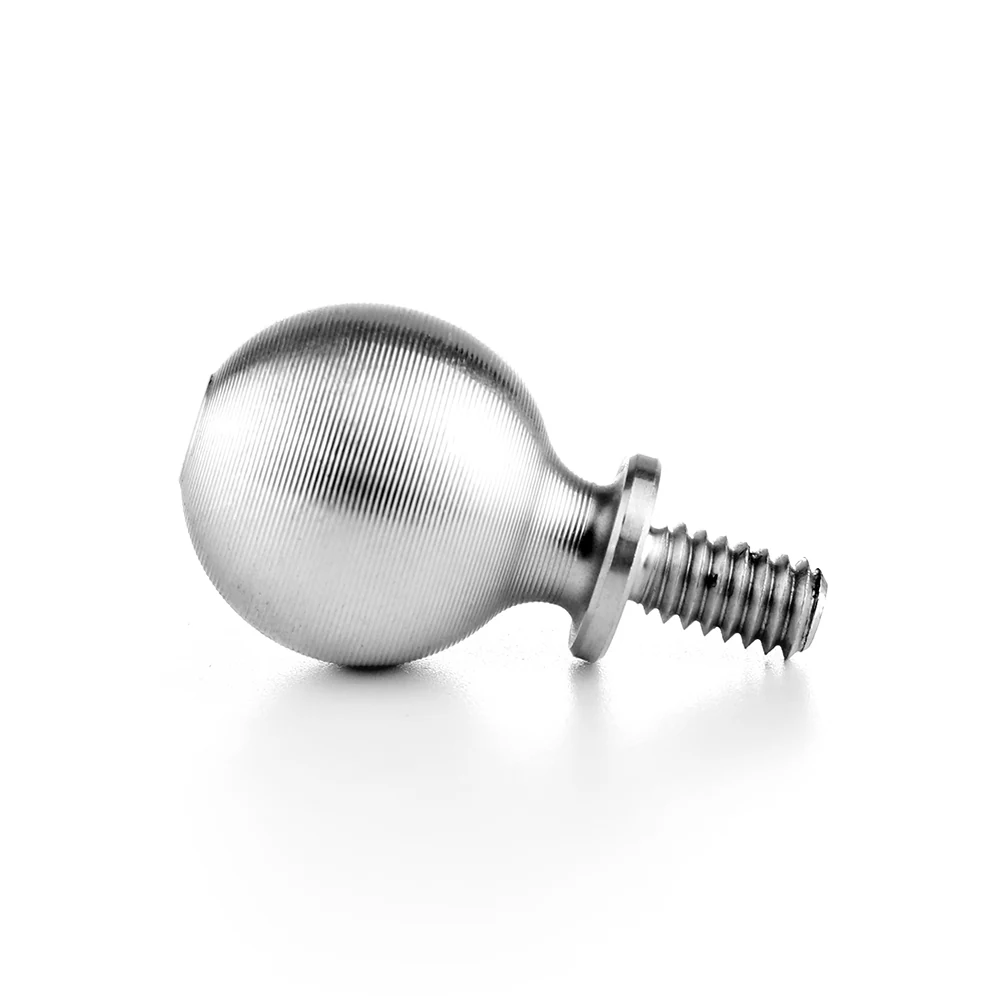
Stainless Steel Ball Stud
A ball stud where the sphere is turned on the same axis as the thread that holds it
The Ball And The Thread Share One Centreline
A ball stud is only as good as the relationship between the sphere and the thread. Both are cut in the same clamping here, so the ball sits on the thread axis and the socket sees the same geometry every time rather than a sphere that wobbles as the stud is tightened.
Studs of this type carry gas struts, ball joints and quick-release sockets on equipment covers, linkages and adjustable supports.
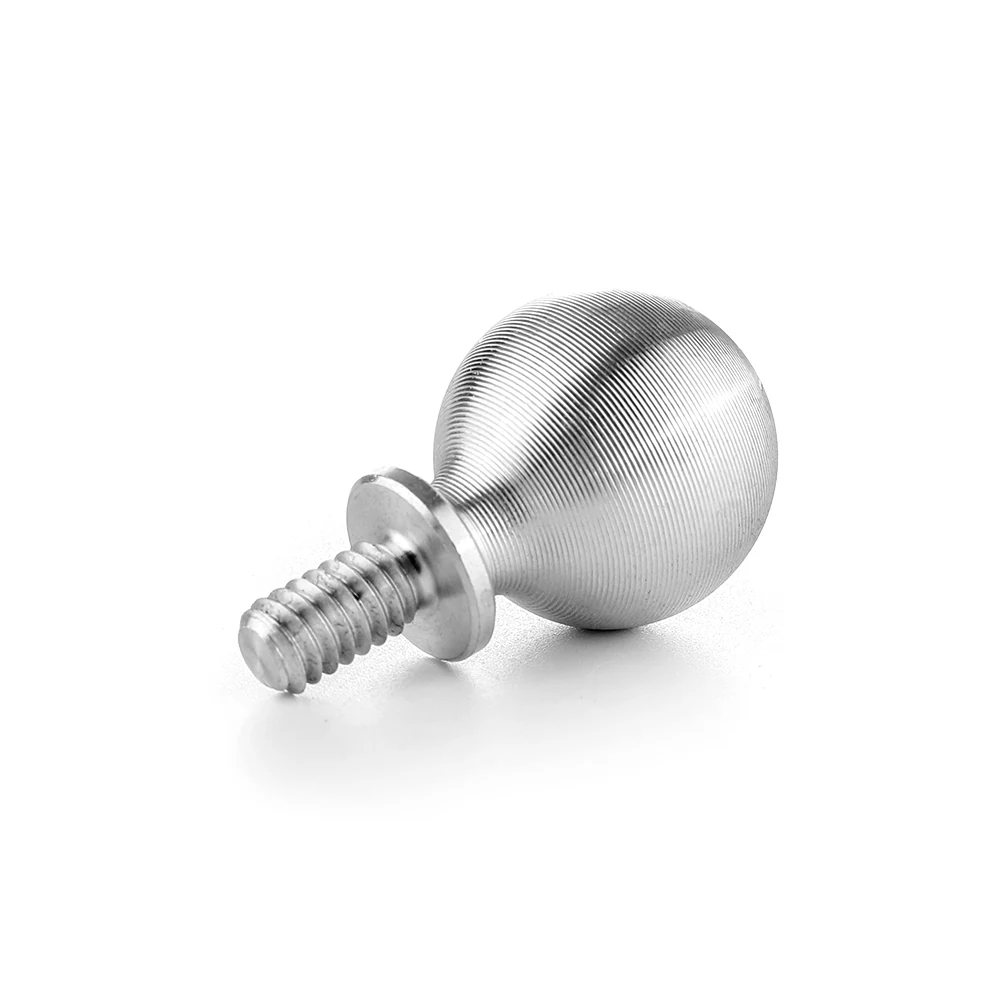
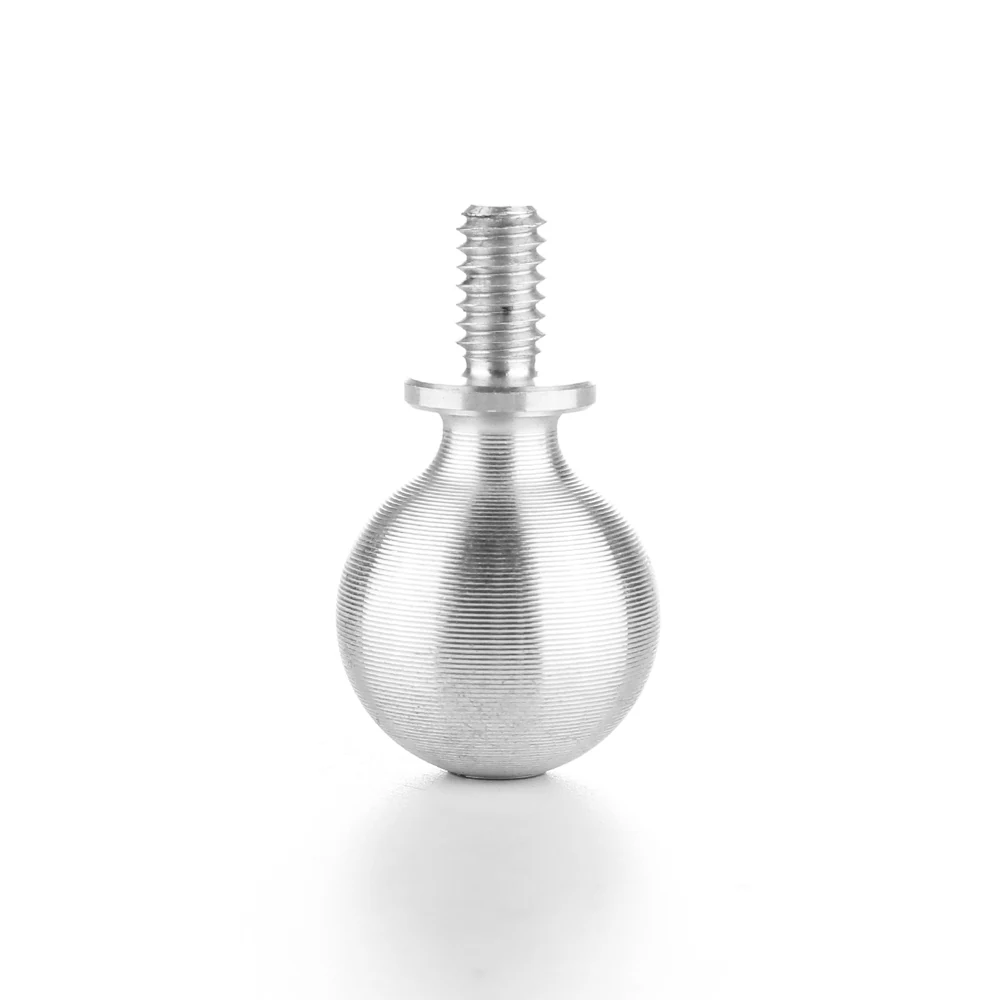
Why Single-Setup Ball Studs Behave Better
Sphere On The Thread Axis
The socket does not have to take up an offset between the ball and the shank.
Consistent Ball Diameter
The sphere is turned to size rather than being a formed head that varies.
Stainless Throughout
Corrosion resistance comes from the base material, so a scratch does not start rust.
Application Scenarios
- Gas strut mountings on covers and lids
- Ball joint linkages in light machinery
- Quick-release socket fittings
- Adjustable support legs and stays
Who It Is For
- Designers using gas struts on equipment covers
- Buyers who need stainless studs rather than plated steel
- Engineers with sockets wearing unevenly in service
- OEMs needing a non-standard shank length
Problems With Formed Ball Studs
- Spheres offset from the thread axis so the socket loads on one side
- Plated studs rusting where the coating is scratched at assembly
- Catalogue studs with the wrong shank length for the bracket
- Ball diameter variation that makes socket fit inconsistent
One Clamping
Sphere, shoulder and thread cut before the part is released.
Gauged Ball
Ball diameter is measured against the socket specification.
Made To Length
Shank length is a drawing value, not a stock step.
Technical Features
- Turned sphere finished to the socket size
- Shoulder between ball and thread for a defined seating height
- Male thread to drawing
- Smooth transition radius at the ball neck
- Clean thread run-out
Specifications
| Part Type | Ball stud |
|---|---|
| Typical Material | Stainless steel |
| Primary Process | CNC turning |
| Ball | Turned to the socket size stated on the drawing |
| Thread | Male, size and class to drawing |
| Tolerance | To customer drawing, confirmed at quotation |
| Finish | As machined or passivated |
| Sample Lead Time | Within 30 days of drawing approval |
Ball and thread dimensions come from your drawing or from the socket you nominate.
Materials We Run
- SUS304 stainless for general outdoor and indoor use
- SUS316L where salt spray is a factor
- Free-cutting steel with plating for dry indoor duty
- Customer-nominated grades for regulated applications
Manufacturing Process
Turn The Sphere
The ball is formed by the tool path, not by pressing.
Cut Shoulder
The seating shoulder is faced square to the axis.
Thread The Shank
The male thread is cut in the same clamping.
Passivate
Stainless parts are cleaned and passivated where specified.
Quality Control
- Ball diameter measured against the socket specification
- Thread gauged go and no-go
- Shoulder height checked on a 2D height gauge
- Surface check on the sphere for tool marks
- ISO 9001 certified quality system since 2009
Customization Options
- Ball diameter to match your socket
- Shank length and thread size
- Shoulder height and form
- Hex or flats for assembly torque
- Passivation or plating
Machined Studs Against Cold-Formed Studs
| Cold-formed ball stud | Cold forming is far cheaper at high volume; machining gives a rounder ball and lets you choose the shank length. |
|---|---|
| Welded ball on a stud | No heat-affected zone at the neck, which is where welded studs usually fail. |
| Plated steel catalogue stud | Solid stainless does not rely on a coating that assembly tools will scratch. |
Choosing The Right Ball Stud
Start With The Socket
The socket or strut end fixes the ball diameter.
Measure The Bracket
Bracket thickness plus the nut sets the shank length.
Check The Swing
Shoulder height decides how far the socket can articulate.
Pick The Grade
Outdoor or washdown duty points to SUS316L.
Stainless Steel Ball Stud — FAQ
Can you match a ball diameter to a gas strut socket I already use?
Yes. Give us the strut or socket part number, or the ball size it is designed for, and we machine and gauge the sphere to that dimension.
Is the ball turned or formed?
Turned. The tool path generates the sphere, which is why the ball stays on the thread axis and the diameter repeats from piece to piece.
Do you supply studs with a hex for tightening?
Hex flats or a pair of spanner flats can be milled below the shoulder in the same cycle. Say which you want on the drawing.
Which stainless grade should I use outdoors?
SUS304 is adequate inland. Near the coast or where de-icing salt is present, SUS316L is the safer choice and the price difference on a part this size is small.
Can you supply matching sockets?
We machine studs; sockets are usually bought as standard components. Tell us which socket you plan to use and we will make the stud match it.
Related Products
Ask For A Ball Stud Quote
Send the socket size, the bracket thickness and the quantity per year. We confirm the ball diameter we will hold and the price.