
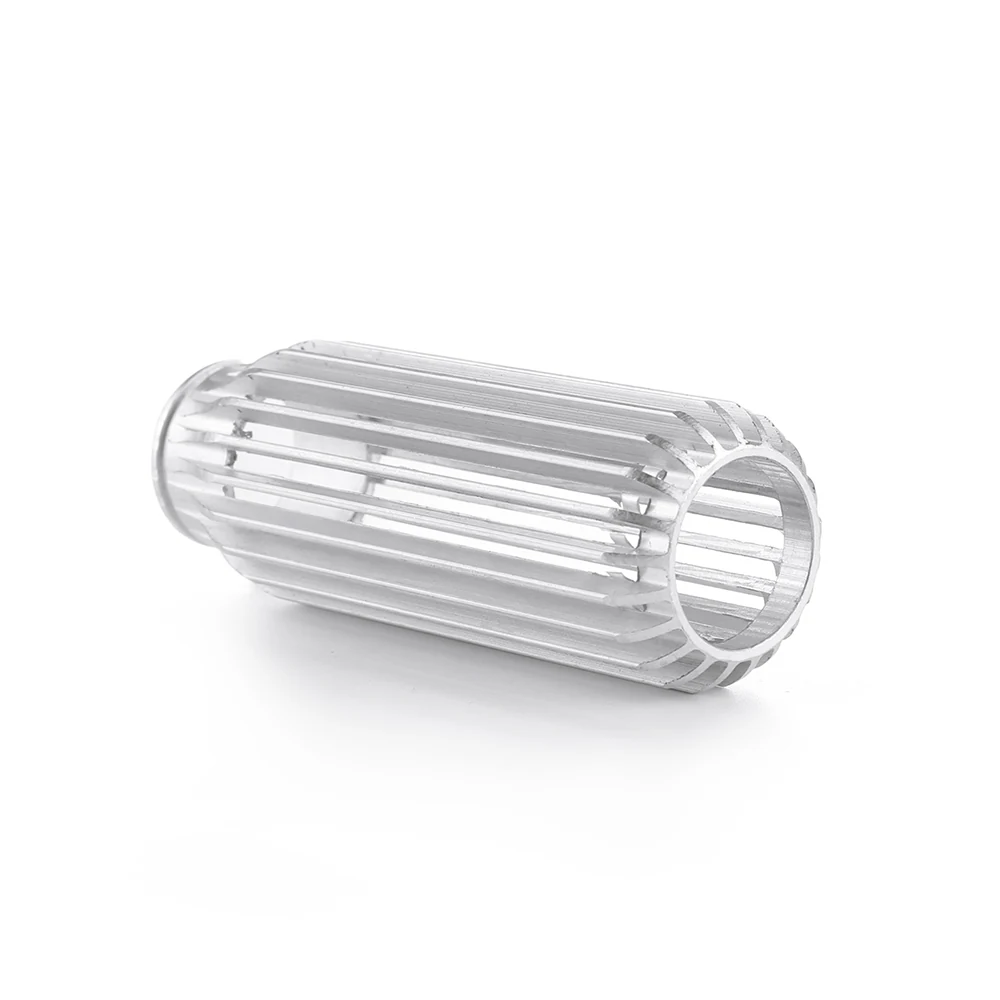
Fluted Aluminium Sleeve
A turned sleeve with longitudinal flutes milled along it, for grip, for airflow or for weight
Flutes Cut After The Sleeve Is Turned True
The body is turned first so the bore and the outside diameter are concentric, then the flutes are milled along it with driven tooling. Doing it in that order means the flute depth is even all the way round, which it never is if the flutes are cut before the part is turned to size.
Sleeves of this shape are used as grips, as light heat-dissipating bodies and as spacers where a plain tube would be too heavy or too slippery to handle.
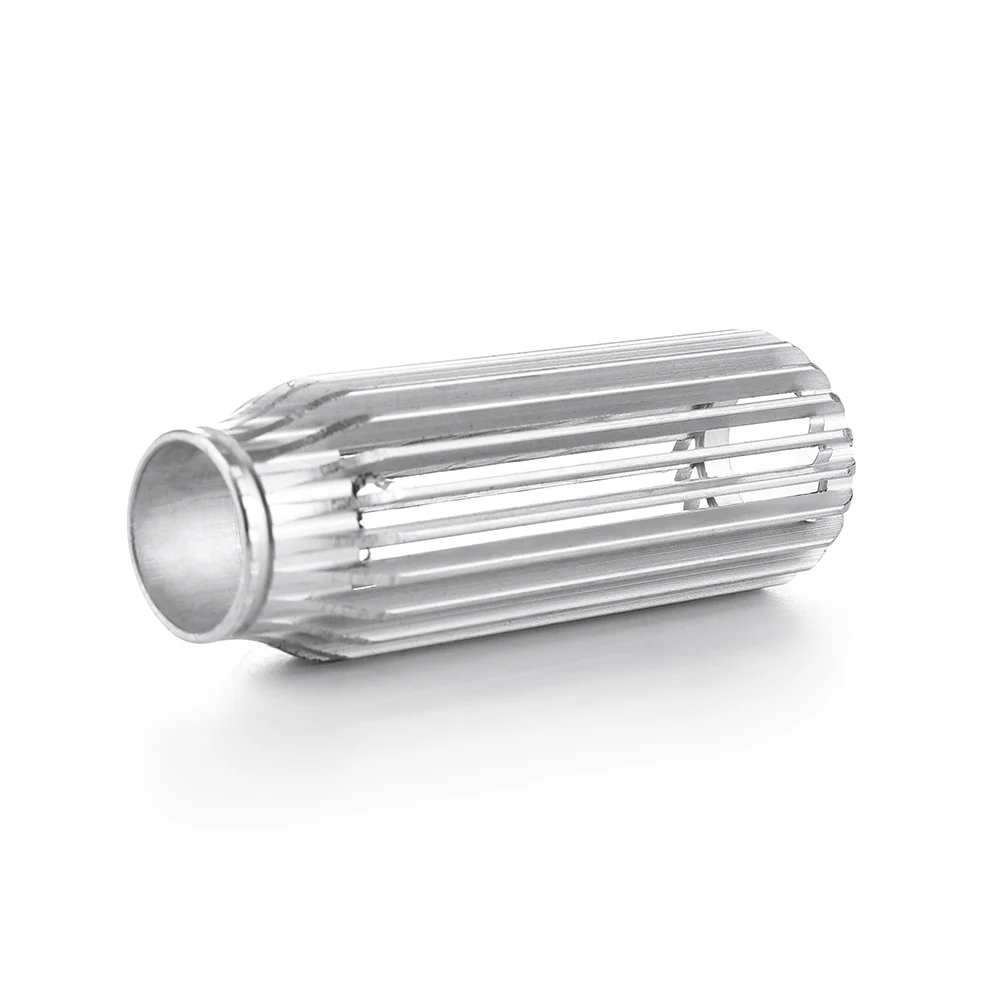
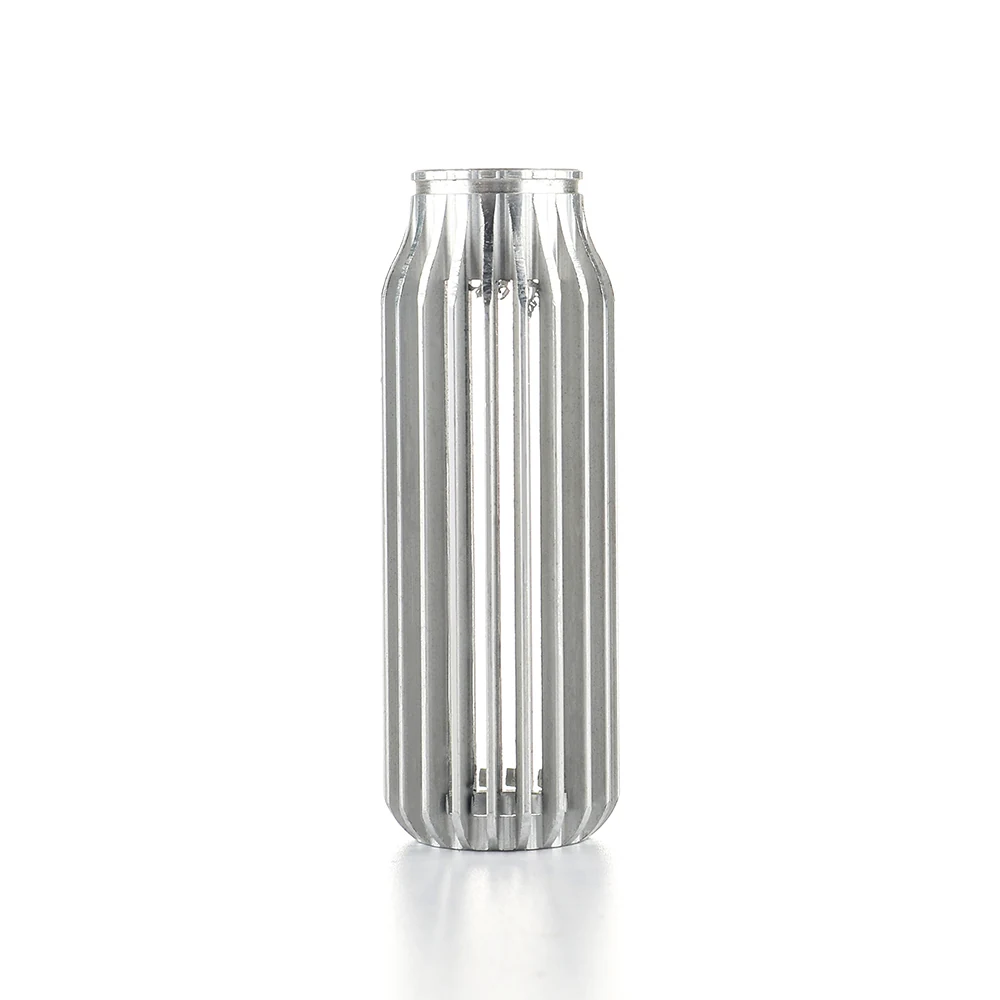
What The Flute Geometry Does
Even Flute Depth
Turning before milling keeps the wall thickness consistent between flutes.
Surface Area Without Mass
Flutes add surface for heat and grip while removing weight from the body.
No Secondary Finishing
The milled surface is the finished surface; nothing is polished or knurled afterwards.
Application Scenarios
- Hand grips on portable equipment
- Light heat-dissipating sleeves around small components
- Spacers where mass has to come out of a rotating assembly
- Decorative and functional bodies on instruments
Who It Is For
- Designers needing grip without a moulded overlay
- Engineers taking mass out of a rotating part
- Buyers replacing an extruded profile cut to length
- Teams that need the bore and outside concentric
Problems With The Usual Alternatives
- Extruded profiles with bores that are not concentric to the outside
- Moulded grips that come loose or degrade with solvents
- Uneven wall thickness where flutes were formed before turning
- Knurled surfaces that are too aggressive for a hand grip
Turn Then Mill
Concentricity is established before any flute is cut.
One Material
No overlay to delaminate or absorb chemicals.
Flute To Drawing
Count, width and depth all follow your design.
Technical Features
- Turned outside diameter and through bore
- Longitudinal flutes milled with driven tooling
- Flute ends run out cleanly rather than breaking through
- Chamfered bore at both ends
- Anodise-ready surface finish
Specifications
| Part Type | Fluted sleeve |
|---|---|
| Typical Material | Aluminium alloy |
| Primary Process | CNC turning plus driven-tool milling |
| Flutes | Count, width and depth to drawing |
| Bore | Through bore concentric with the outside diameter |
| Tolerance | To customer drawing, confirmed at quotation |
| Finish | As machined; anodising available on request |
| Sample Lead Time | Within 30 days of drawing approval |
Flute pattern and sleeve dimensions come from your drawing. Anodising is a subcontracted finish managed by Shipu.
Materials We Run
- Aluminium alloy for light, anodisable sleeves
- Stainless steel where wear or corrosion dominates
- Brass for a heavier, decorative finish
- Free-cutting steel where cost matters more than weight
Manufacturing Process
Turn The Body
Outside diameter and bore are cut concentric from bar.
Mill The Flutes
Driven tooling cuts each flute along the axis.
Deburr
Flute edges are broken so the sleeve is comfortable to hold.
Anodise
Where specified, anodising is subcontracted and managed by us.
Quality Control
- Bore-to-outside concentricity checked on first article
- Flute depth and width measured on a profile projector
- Wall thickness verified between flutes
- Surface check for tool marks before anodising
- ISO 9001 system held since 2009
Customization Options
- Flute count, width, depth and run-out
- Sleeve length and wall thickness
- Bore size and end chamfers
- Anodised colour or bare finish
- End features such as threads or grooves
Machined Sleeve Against Extrusion And Moulding
| Cut extruded profile | Concentric bore and clean flute run-outs, which an extrusion cut to length cannot give you. |
|---|---|
| Moulded plastic grip | Takes heat and solvents, and will not creep under clamping load. |
| Knurled plain sleeve | Flutes give grip with a softer feel and a larger surface area for heat. |
Designing The Sleeve
Set The Wall First
Flute depth is limited by the wall thickness you can accept.
Decide The Run-Out
Flutes can stop short of the ends or run right through.
Choose The Finish
Anodising changes dimensions slightly and is allowed for in the program.
State The Duty
Grip, heat or weight reduction points to a different flute pattern.
Fluted Aluminium Sleeve — FAQ
How deep can the flutes be?
Depth is limited by the wall thickness that remains between the flute and the bore. Tell us the bore and the outside diameter and we will suggest the deepest flute that leaves a sensible wall.
Can the flutes stop before the ends of the sleeve?
Yes, and that is the more common design because it leaves a full-diameter band at each end for clamping or sealing. Blind flute ends are cut with the driven tool lifting out.
Do you anodise these sleeves?
Anodising is subcontracted to a local processor and managed by us. Colour and thickness are agreed before the sample so the finished dimensions are correct.
Can you make the sleeve in stainless instead?
Yes, though cycle time and cost both rise because stainless is slower to mill. Where the sleeve is a grip rather than a heat path, aluminium is usually the better choice.
Is the bore machined or is it a drawn tube?
It is machined from bar, which is what allows us to hold the bore concentric with the outside. A drawn tube would be cheaper but the wall would vary.
Related Products
Related Guides
Send The Sleeve Drawing
Give us the bore, the outside diameter and what the flutes are for. We come back with a flute pattern proposal, a price and a lead time.