
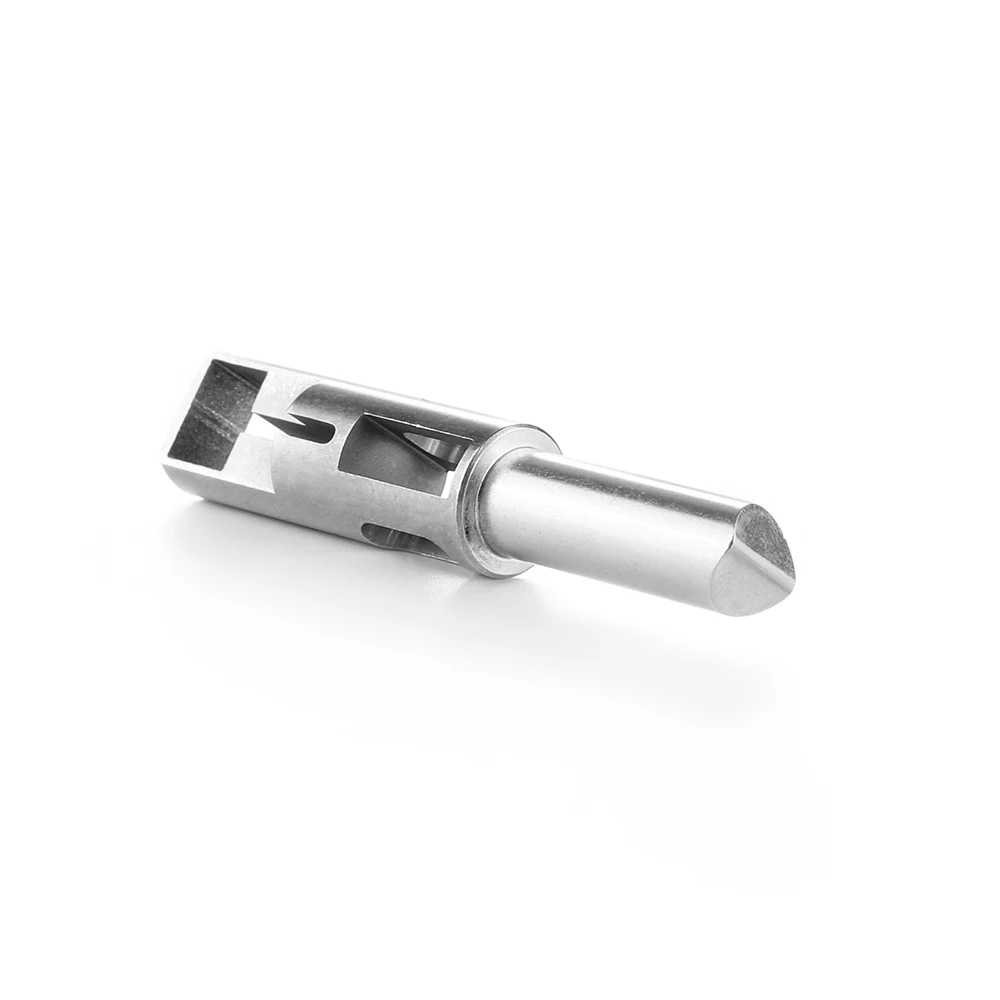
Slotted Connector Pin
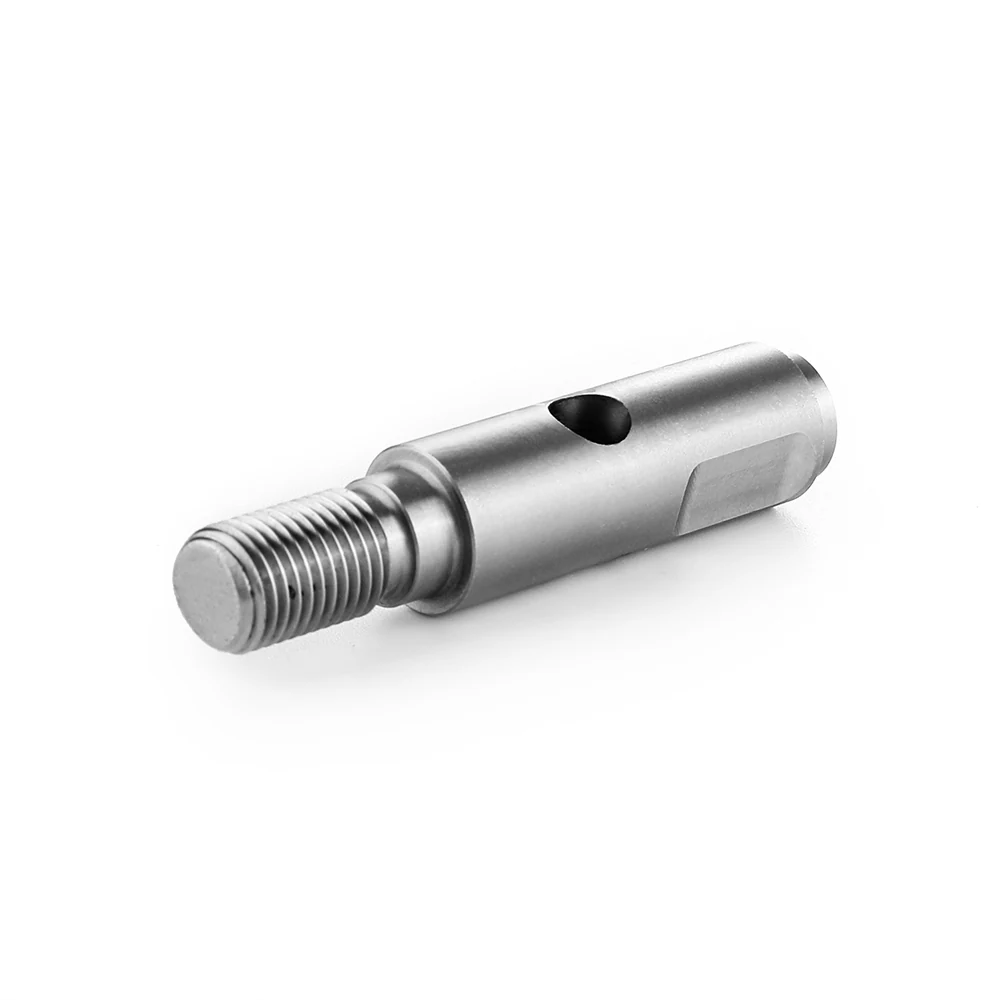
A connector pin with a milled window through the body and a nose shaped to find its hole on the way in
A Pin That Locates Itself And Latches
Two features do the work: the tapered nose, which pulls the pin into a hole that is not quite aligned, and the milled window, which gives a latch, a spring clip or a cross pin something to engage. Both are cut from the turned datum so the window is square to the axis.
Connector pins of this shape appear on quick-release linkages and on modules that have to be pulled for service without tools.
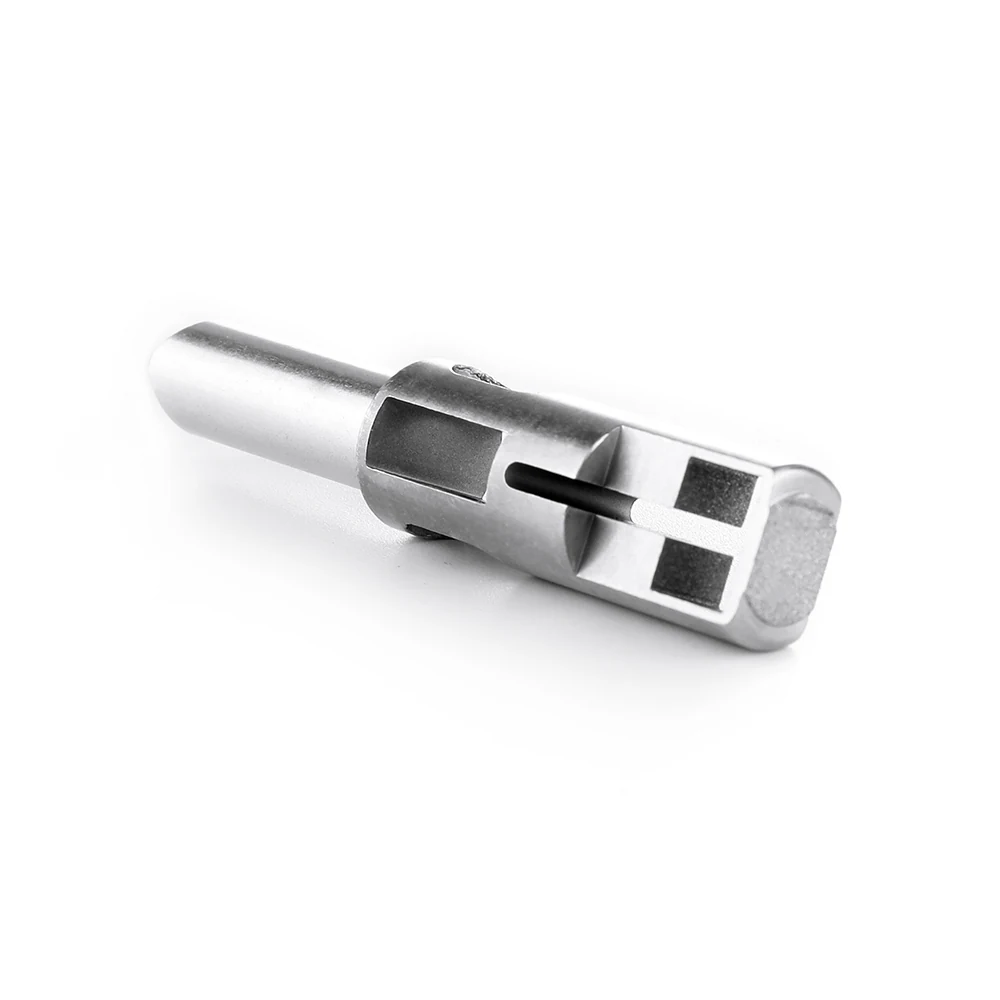
What The Geometry Does In Assembly
Self-Locating Nose
The chamfer corrects small misalignment instead of the operator having to.
Window On Axis
The latch feature is milled from the turned datum, so the clip engages squarely.
Tool-Free Service
The design lets a module be removed by hand rather than unbolted.
Application Scenarios
- Quick-release linkage joints
- Service-access modules on production machines
- Removable guards and covers
- Interchangeable tooling attachments
Who It Is For
- Designers of quick-release mechanisms
- Service engineers who remove modules regularly
- Machine builders reducing the tools needed at changeover
- Buyers replacing an assembled pin and clip
Assembly Problems This Pin Removes
- Pins that jam because the holes are slightly out of line
- Latch windows milled off axis so the clip binds
- Clips that fall out because the window edge is sharp
- Changeovers that need a tool for a joint that should be hand-released
Chamfer Angle
The nose taper is a drawing dimension, chosen for the misalignment you expect.
Milled From Datum
Window position and squareness come from the turning setup.
Rounded Edges
Window edges are broken so the clip is not cut by them.
Technical Features
- Tapered or chamfered nose for self-location
- Milled window through or into the body
- Turned body diameters to the drawing fit
- Relief groove where a clip has to sit
- All edges broken for hand handling
Specifications
| Part Type | Slotted connector or latch pin |
|---|---|
| Typical Material | Stainless steel or free-cutting steel |
| Primary Processes | CNC turning with driven-tool milling |
| Nose | Chamfered or tapered to drawing |
| Window | Milled from the turned datum |
| Tolerance | To customer drawing, confirmed at quotation |
| Finish | As machined, passivated or plated |
| Sample Lead Time | Within 30 days of drawing approval |
Nose angle, window and body fit all come from your drawing and the mating hole data you provide.
Materials We Run
- SUS304 stainless for handled parts that must not rust
- SUS316L where cleaning chemicals are present
- Free-cutting steel, plated, for enclosed mechanisms
- Case-hardening steel where the window edge takes repeated impact
Manufacturing Process
Turn The Body
Diameters, groove and nose taper are cut from bar.
Mill The Window
Driven tooling opens the window from the turned datum.
Deburr
Window edges and the nose are hand-finished so the pin is safe to handle.
Finish
Passivation or plating is applied where the drawing calls for it.
Quality Control
- Body diameters measured against the mating bore requirement
- Window position and width checked on a profile projector
- Nose angle verified on first article
- Handling check for sharp edges on every lot
- ISO 9001 quality system since 2009
Customization Options
- Body diameter and length
- Nose angle and tip form
- Window size, depth and position
- Groove for a retaining clip
- Handle, ring or knob at the head end
Machined Pin Against Standard Hardware
| Standard clevis pin and split pin | One part instead of two, with a latch window placed where your mechanism needs it. |
|---|---|
| Ball-lock quick release pin | Simpler and cheaper, though it needs a separate clip rather than releasing by button. |
| Threaded fastener | Removable by hand in seconds, where a bolt needs a tool and a torque figure. |
Designing The Pin Into Your Mechanism
Estimate The Misalignment
How far out the holes can be decides the nose taper.
Choose The Retention
Clip, cross pin or lever changes the window shape.
Set The Body Fit
A sliding fit in the mating bore keeps it removable by hand.
Consider The Finish
Handled parts benefit from stainless rather than plating that wears.
Slotted Connector Pin — FAQ
How big should the nose chamfer be?
It should cover the worst misalignment your assembly can present. Tell us the hole tolerances and the stack-up and we will suggest an angle and a length.
Can the window be blind rather than through?
Yes. A blind pocket is milled the same way and is often preferred where the pin must not weaken in bending. Show the depth on the drawing.
Which material for a pin that is handled every day?
Stainless, because plating on a handled part wears through at the grip points and then rusts. SUS304 is normally enough.
Do you supply the retaining clip?
Standard clips can be bought locally and shipped with the pins as a separate quoted line, or we can machine a custom retainer if the drawing shows one.
Can you harden just the window edge?
Localised hardening is possible through a subcontractor, but on a part this size through-hardening or a case-hardening steel is usually simpler. We will advise once we see the duty.
Send The Pin And The Mating Hole Data
Tell us the bore, the expected misalignment and how the pin is retained. We reply with a nose and window proposal, plus price and lead time.