
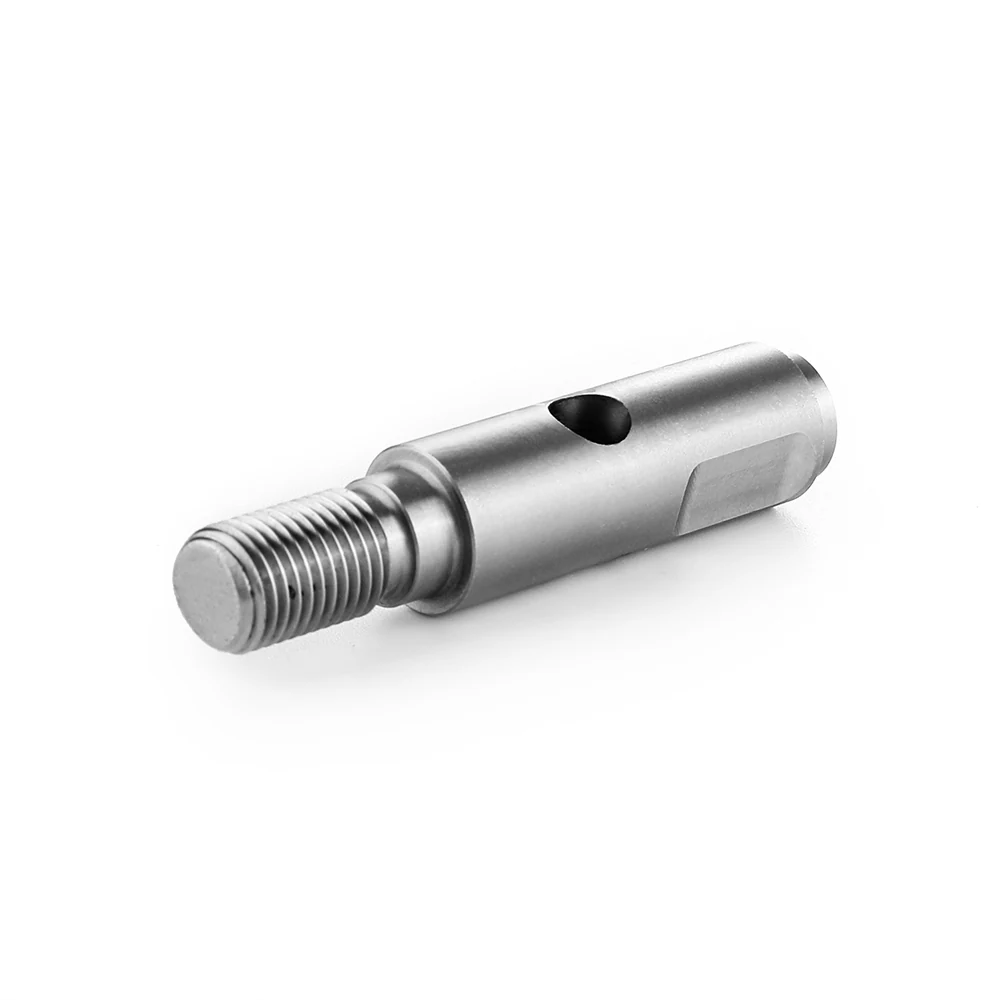
Threaded Drive Shaft With Cross Hole
A short drive shaft that carries a thread at one end and a drilled flat where the drive pin passes through
Thread, Flat And Cross Hole In One Machining Cycle
The shaft steps down through three diameters, takes a thread on one end and has a flat milled on the body with a cross hole drilled through it. All of that is done with driven tooling while the bar is still in the collet, so the cross hole is square to the flat and the flat is square to the shaft axis.
Shafts like this transmit torque in small drive modules; the cross hole takes a roll pin, and the thread pulls the mating part up against a shoulder rather than relying on the pin to take axial load.
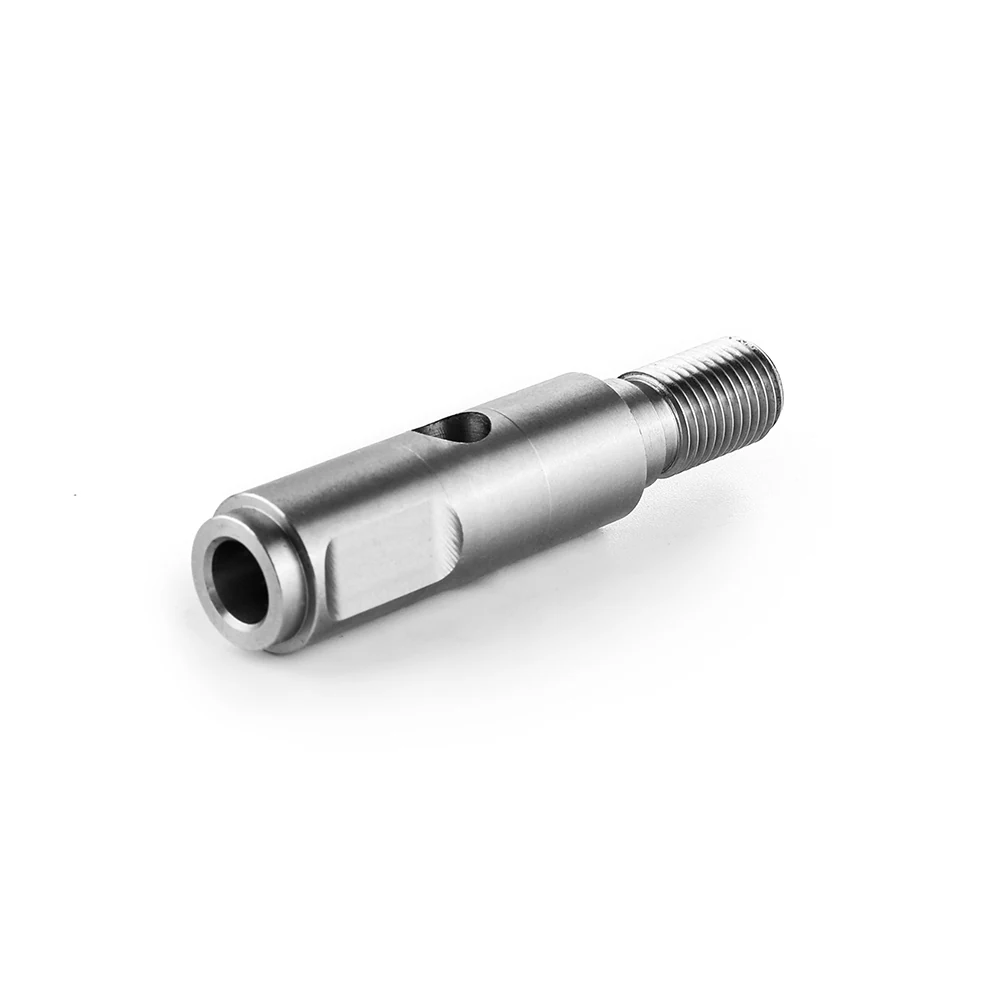
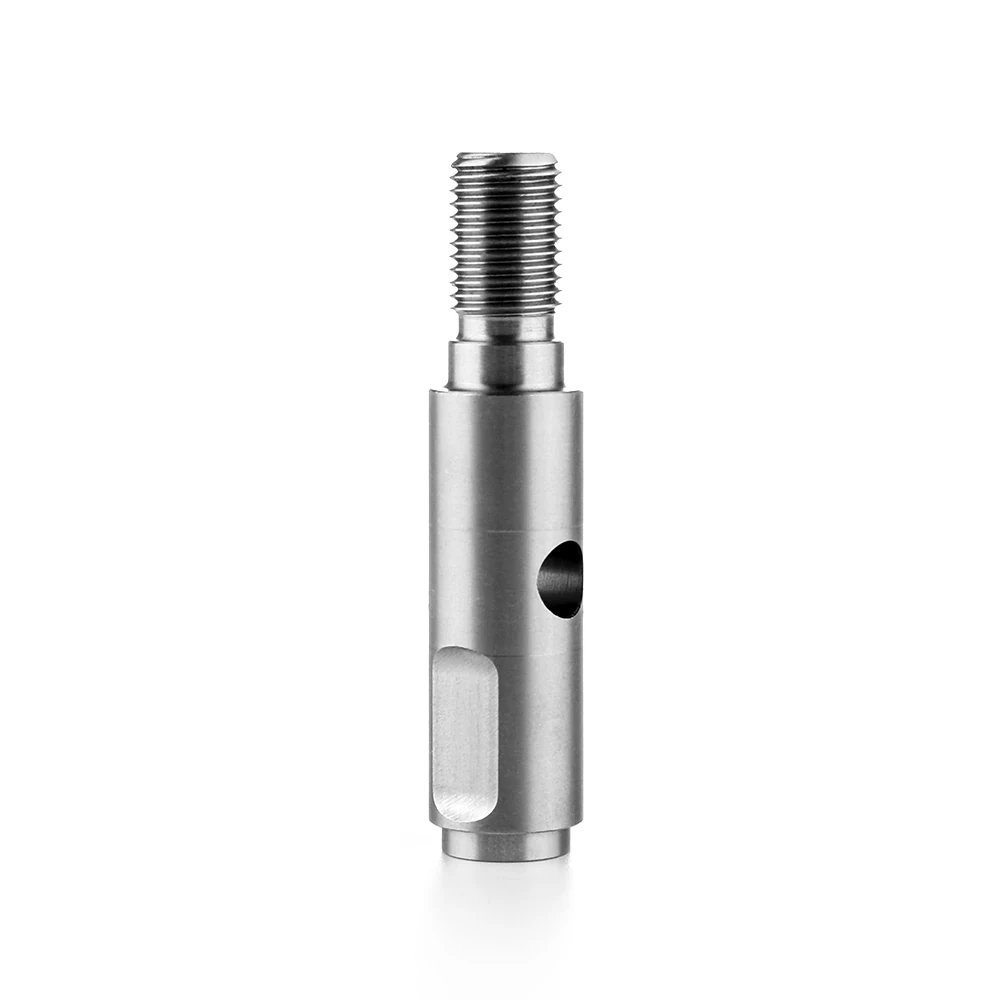
Why This Shaft Is Turned Complete
Pin Hole Square To The Flat
Drilling while the part is still located in the lathe removes the alignment error a separate drilling fixture introduces.
Shoulder Takes The Load
The threaded end clamps the assembly, so the roll pin only carries torque.
One Part Number
Turning, milling and drilling arrive as one finished item rather than three operations to chase.
Application Scenarios
- Small drive modules in office automation equipment
- Hand-tool and power-tool spindle assemblies
- Gear and pulley drives pinned to a shaft
- Test and laboratory rigs needing a pinned drive
Who It Is For
- Designers pinning a gear or pulley to a shaft
- Buyers consolidating turning and drilling suppliers
- Engineers who have seen pins shear because the hole was off square
- Equipment builders ordering repeat batches to one drawing
What The Single-Setup Route Prevents
- Cross holes drilled out of square in a separate fixture
- Roll pins that shear because they are carrying axial load
- Thread damage from handling between operations
- Three suppliers for one finished shaft
Driven Tooling
Milling and drilling happen on the lathe, not on a second machine.
Shoulder Design
We flag drawings where the pin is being asked to do the clamping.
Batch Traceability
Material and program are archived against the drawing revision.
Technical Features
- Three stepped diameters from one bar
- Rolled or cut thread on the drive end
- Milled flat for the cross hole and for spanner access
- Cross hole drilled square to that flat
- Chamfered ends for easy assembly
Specifications
| Part Type | Stepped drive shaft with cross hole |
|---|---|
| Typical Material | Free-cutting steel or stainless steel |
| Primary Process | Swiss-type turning with driven tooling |
| Secondary Features | Milled flat, cross drilling, threading |
| Tolerance | To customer drawing, confirmed at quotation |
| Straightness | Controlled by guide-bushing support during turning |
| Inspection | Profile projector, 2D height gauge, thread gauge |
| Sample Lead Time | Within 30 days of drawing approval |
All dimensions come from your drawing. The process notes describe how we hold them, not a catalogue size.
Materials We Run
- Free-cutting carbon steel, plated as required
- SUS304 stainless where corrosion is a concern
- SUS316L for wet or chemically aggressive duty
- Customer-nominated alloy steel with heat treatment subcontracted
Manufacturing Process
Guide-Bushing Turning
The bar is supported close to the tool so the steps stay concentric.
Thread
The drive-end thread is cut or rolled to the drawing class.
Mill Flat
Driven tooling cuts the flat without releasing the part.
Cross Drill
The pin hole is drilled square to the new flat in the same cycle.
Quality Control
- Step diameters measured on the first article and through the run
- Thread checked with go and no-go gauges
- Cross hole position and squareness verified on a projector
- Burr check at the cross hole break-out on every lot
- ISO 9001 certified quality system since 2009
Customization Options
- Diameters, step lengths and overall length
- Thread size, class and run-out relief
- Flat width, depth and angular position
- Cross hole diameter and position
- Plating, passivation or heat treatment
Compared With Other Ways To Make This Shaft
| Turned shaft plus separate drilling operation | Removes the fixture error at the cross hole and one handling step between plants. |
|---|---|
| Cold-headed blank | Cold heading is cheaper at very high volume but cannot hold the step tolerances this shaft carries. |
| Ground shaft | Grinding is added only where the drawing asks for it; most of these shafts do not need it. |
How To Specify The Shaft
Give The Pin Size
Roll pin or solid pin decides the hole tolerance.
Locate The Flat
State the angular relationship between the flat and any other feature.
Say What Clamps
Tell us whether the thread or the pin carries the axial load.
Note The Finish
Plating thickness has to be allowed for on the running diameters.
Threaded Drive Shaft With Cross Hole — FAQ
Do you drill the cross hole on the lathe or on a separate machine?
On the lathe, using driven tooling, while the part is still located in the guide bushing. That is what keeps the hole square to the milled flat without a drilling jig.
Can you heat treat the shaft?
Heat treatment is subcontracted to a local processor and managed by us, so you still deal with one supplier. Tell us the hardness and the case depth you need at quotation.
Is the thread rolled or cut?
Either, depending on the material and the class on your drawing. Rolling gives a stronger thread on ductile material; cutting suits stainless and short runs.
How straight will the shaft be?
Straightness is controlled by supporting the bar in the guide bushing close to the tool. The figure we can commit to depends on the length-to-diameter ratio on your drawing and is confirmed before the order.
Can you supply the roll pins as well?
We can buy standard pins locally and ship them with the shafts. They are quoted as a separate line so you can see the cost.
Related Products
Related Guides
Send The Shaft Drawing
Include the pin size and the annual quantity. We confirm price, sample lead time and whether any feature would be more robust with a small change.