Forming The Body
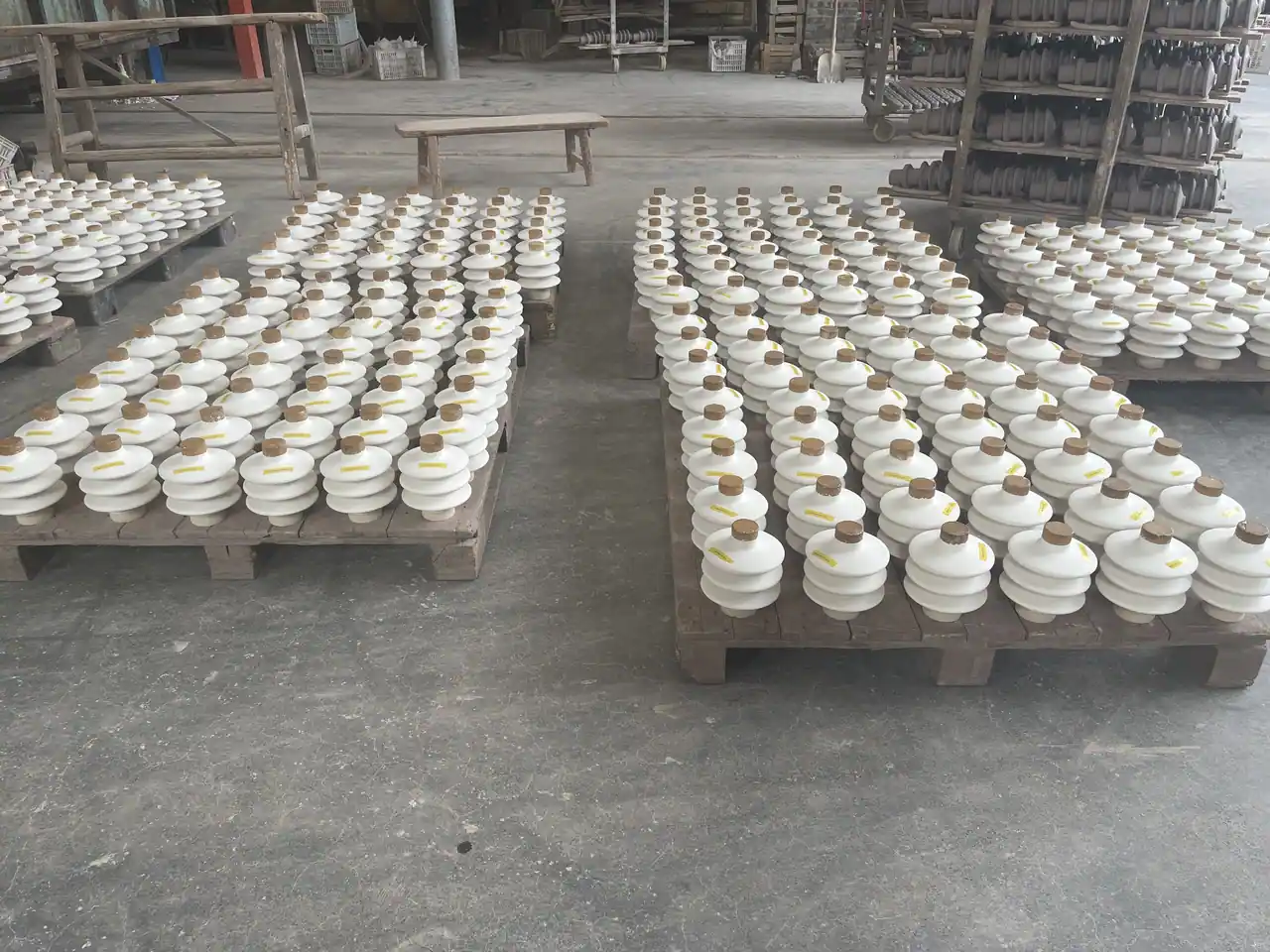
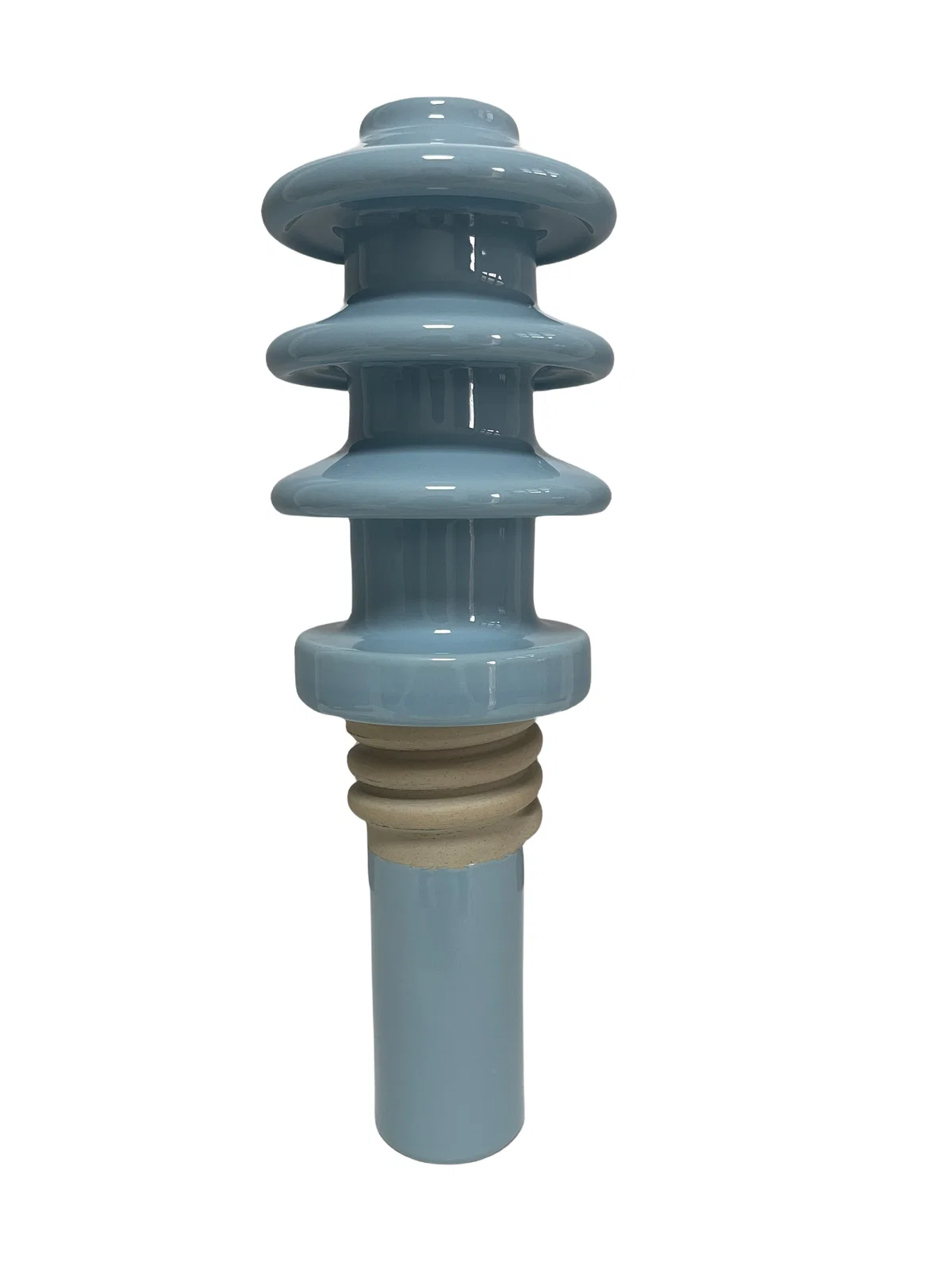
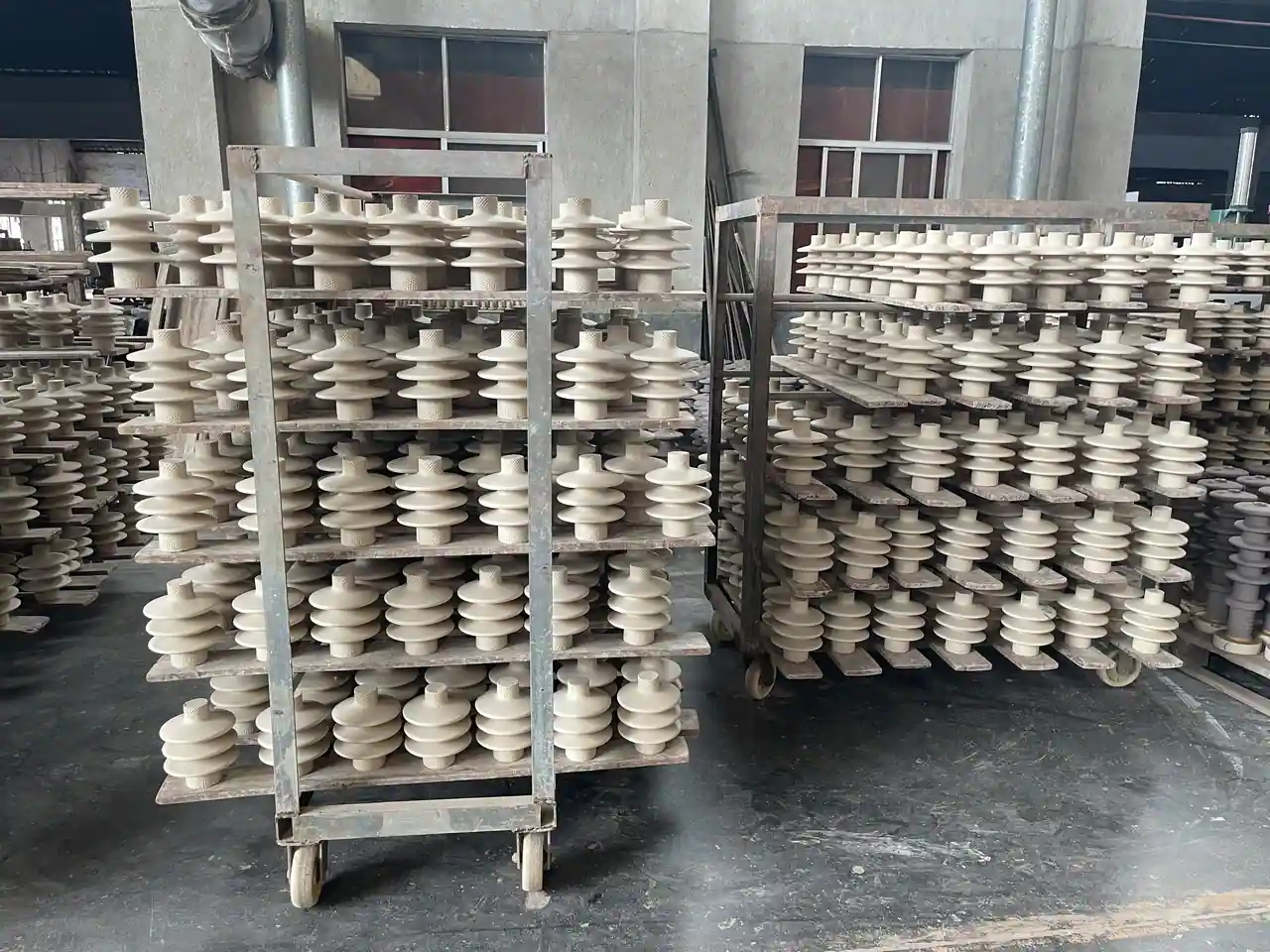
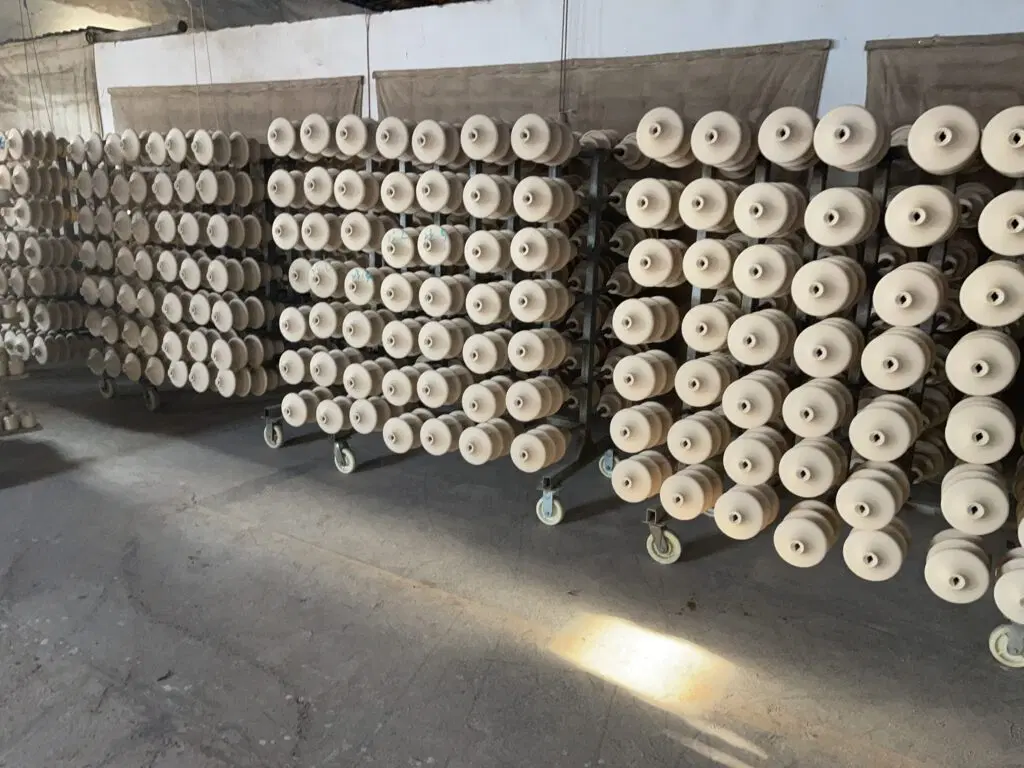
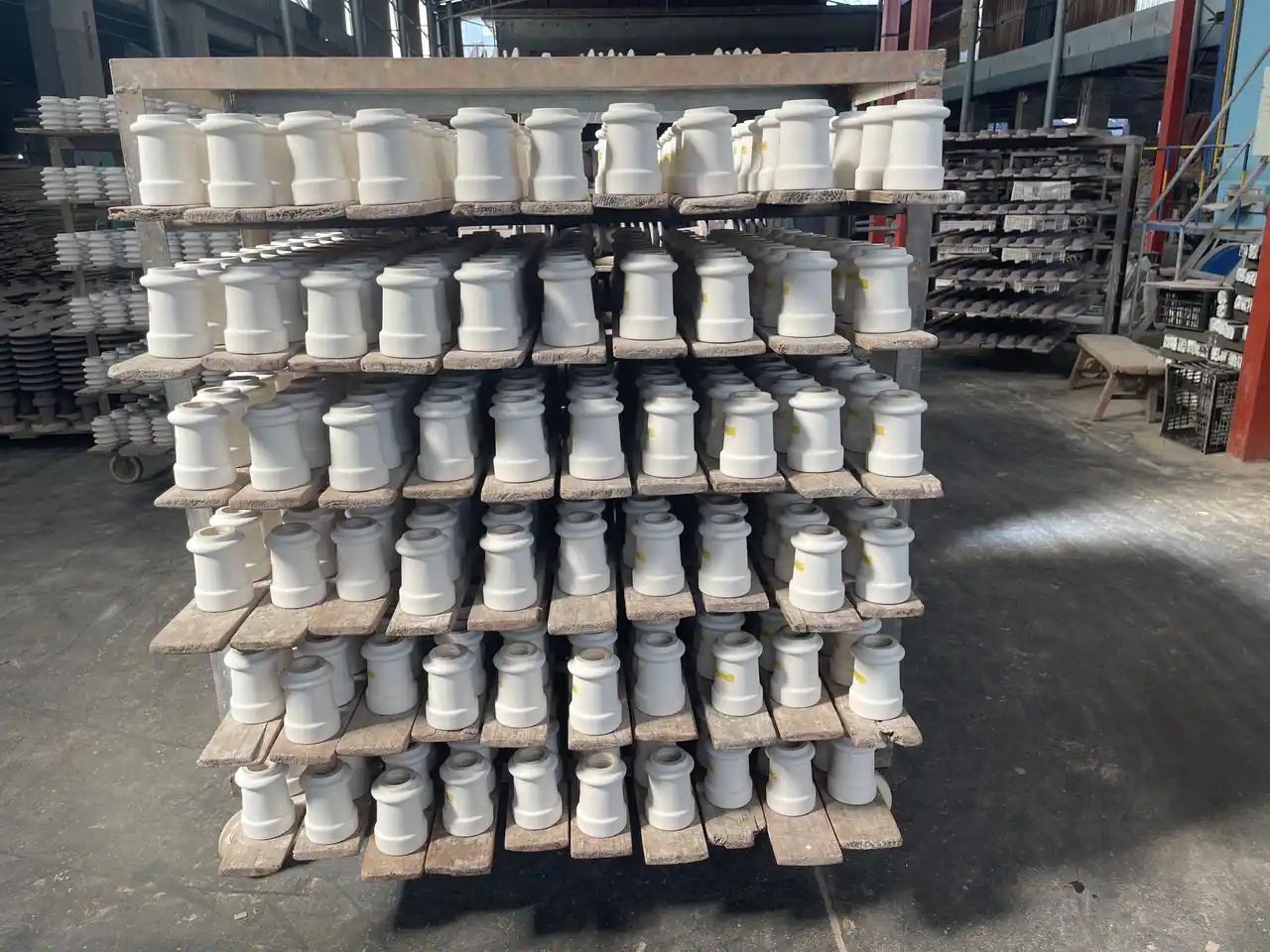
The insulating body is formed from electrotechnical porcelain. For transformer bushings this is typically a high alumina grade such as C110, chosen because alumina and mica ceramics combine good insulation performance with the mechanical strength the part needs at the tank interface. The green body is dried on racks before anything else happens to it.
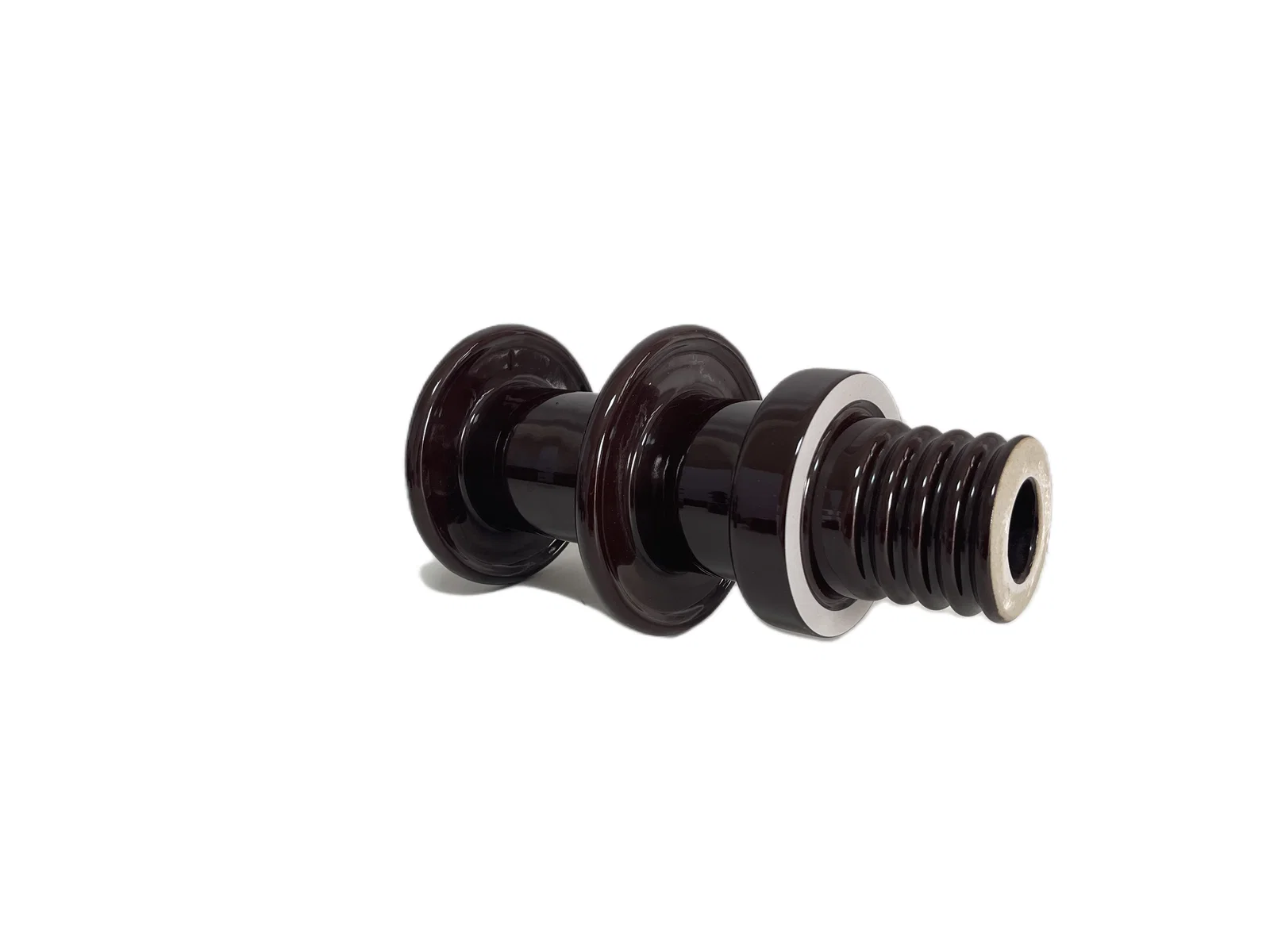
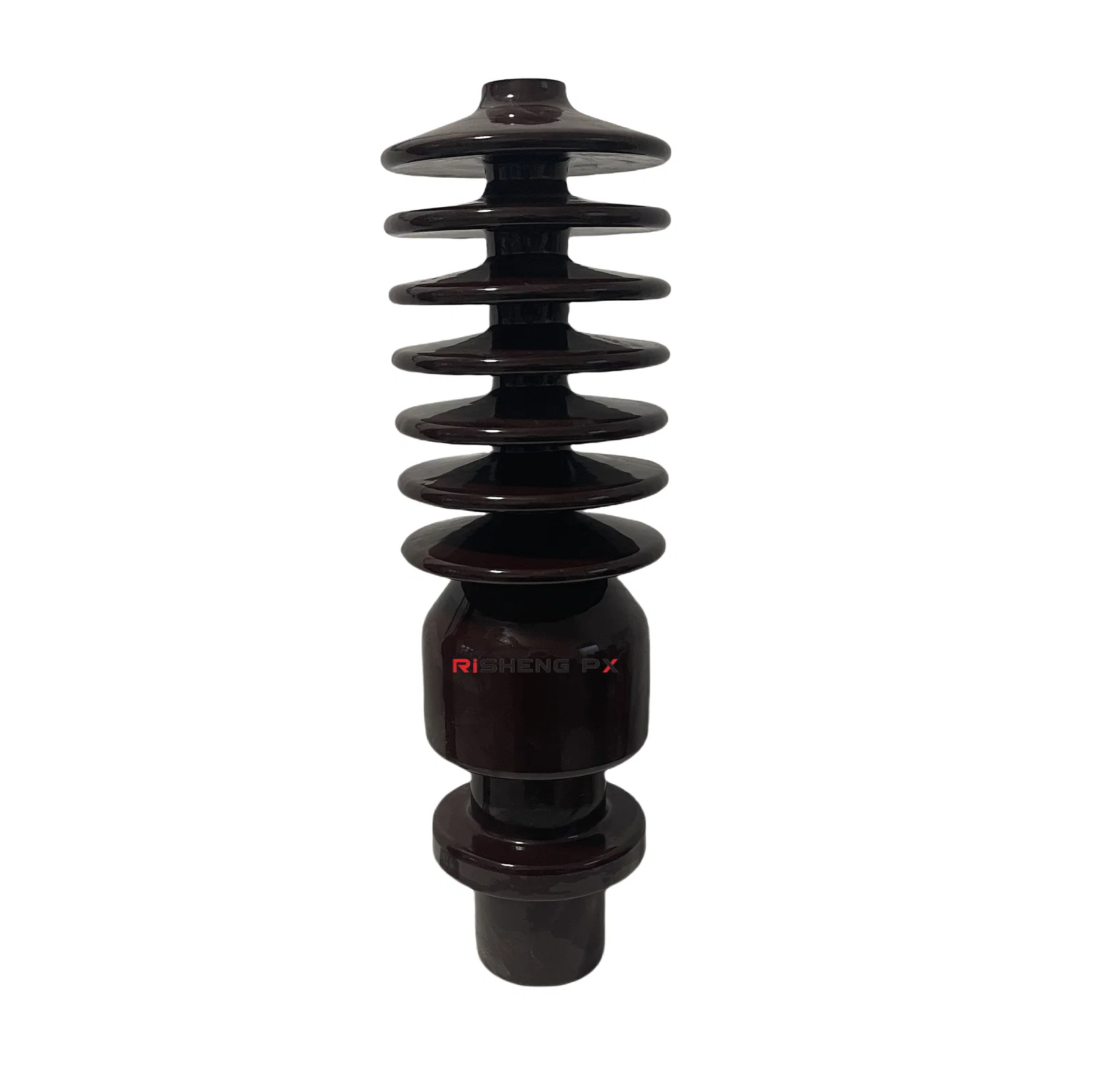
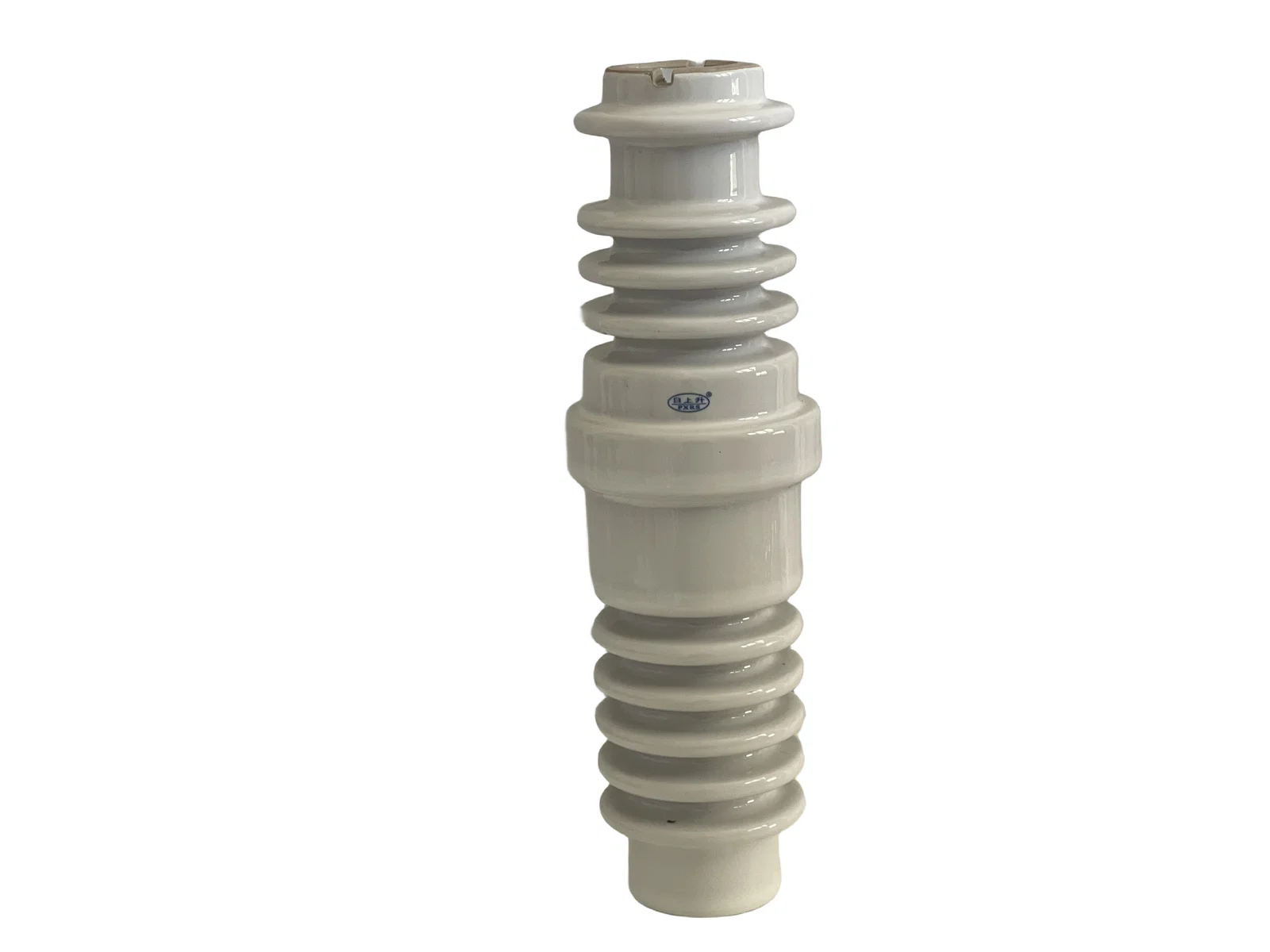
DIN 10NF250A Transformer Bushing For Oil-Immersed Transformers
Glazing
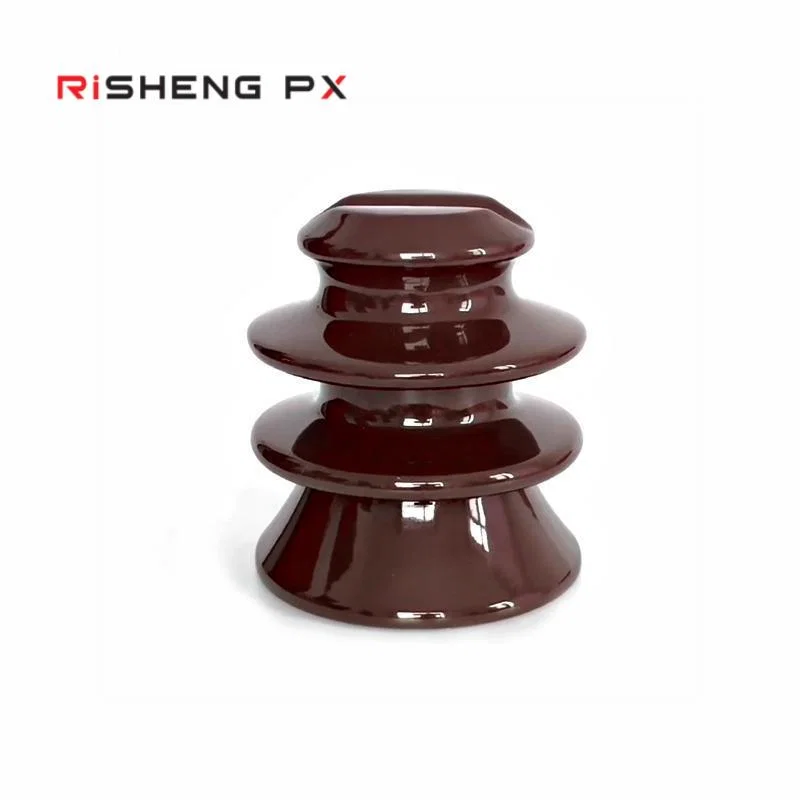
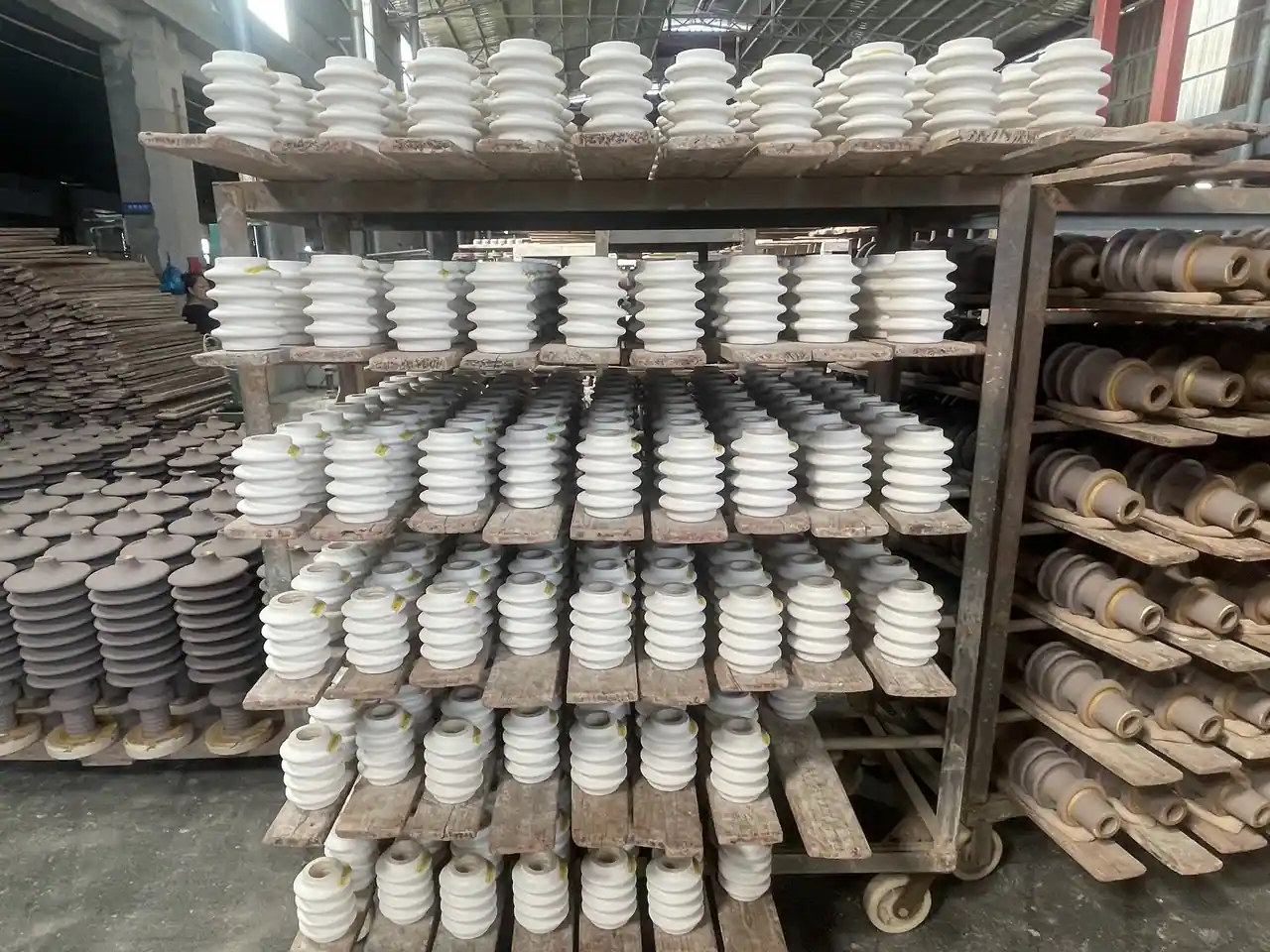
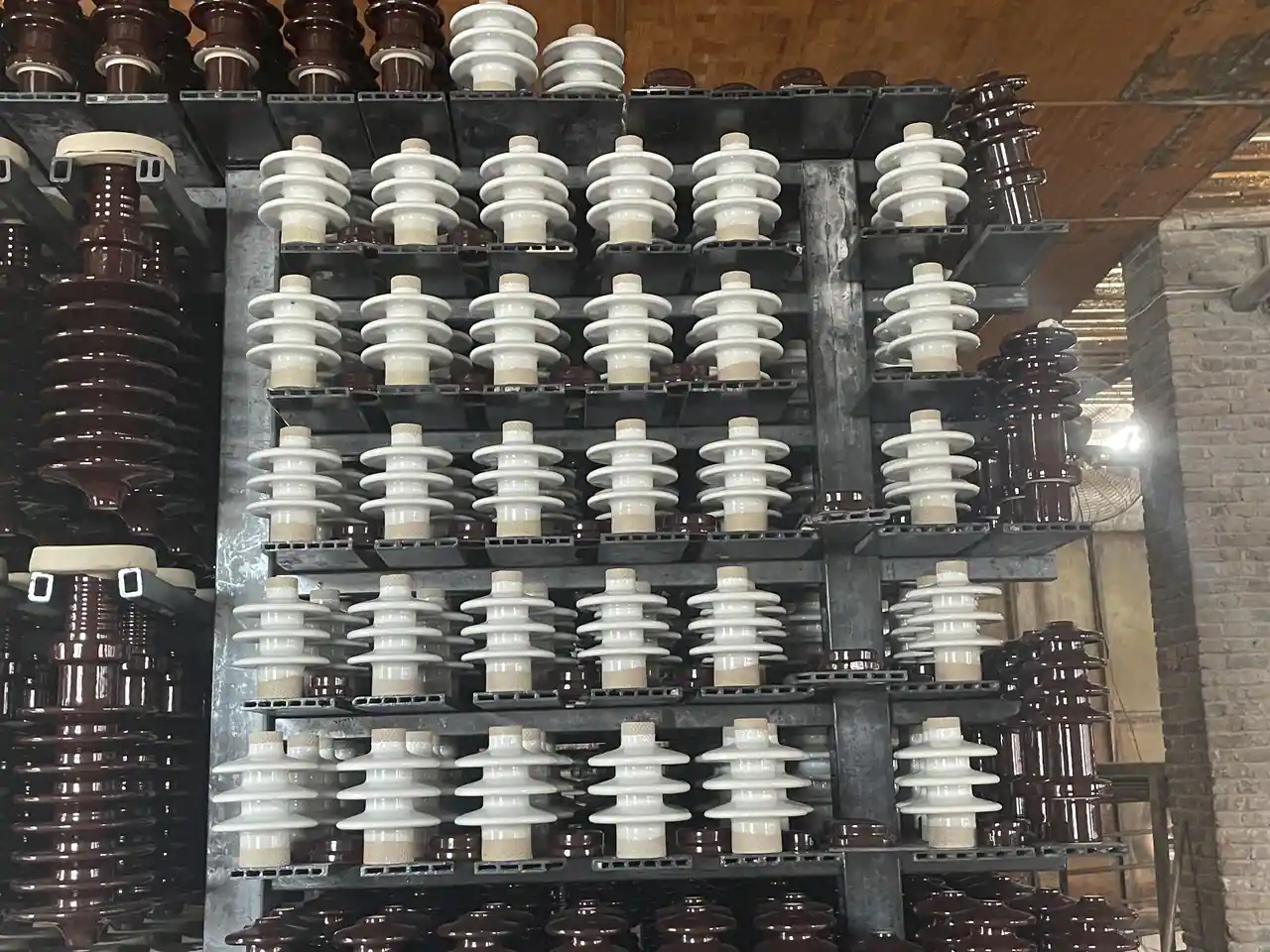
Glaze is applied to the dried body. Colour is a specification item rather than decoration: grey, brown and white are all produced, and utilities often standardise on one so that replacement units match the existing hardware on a line. A white or light grey glaze also makes surface contamination easier to see on an inspection round.
Firing
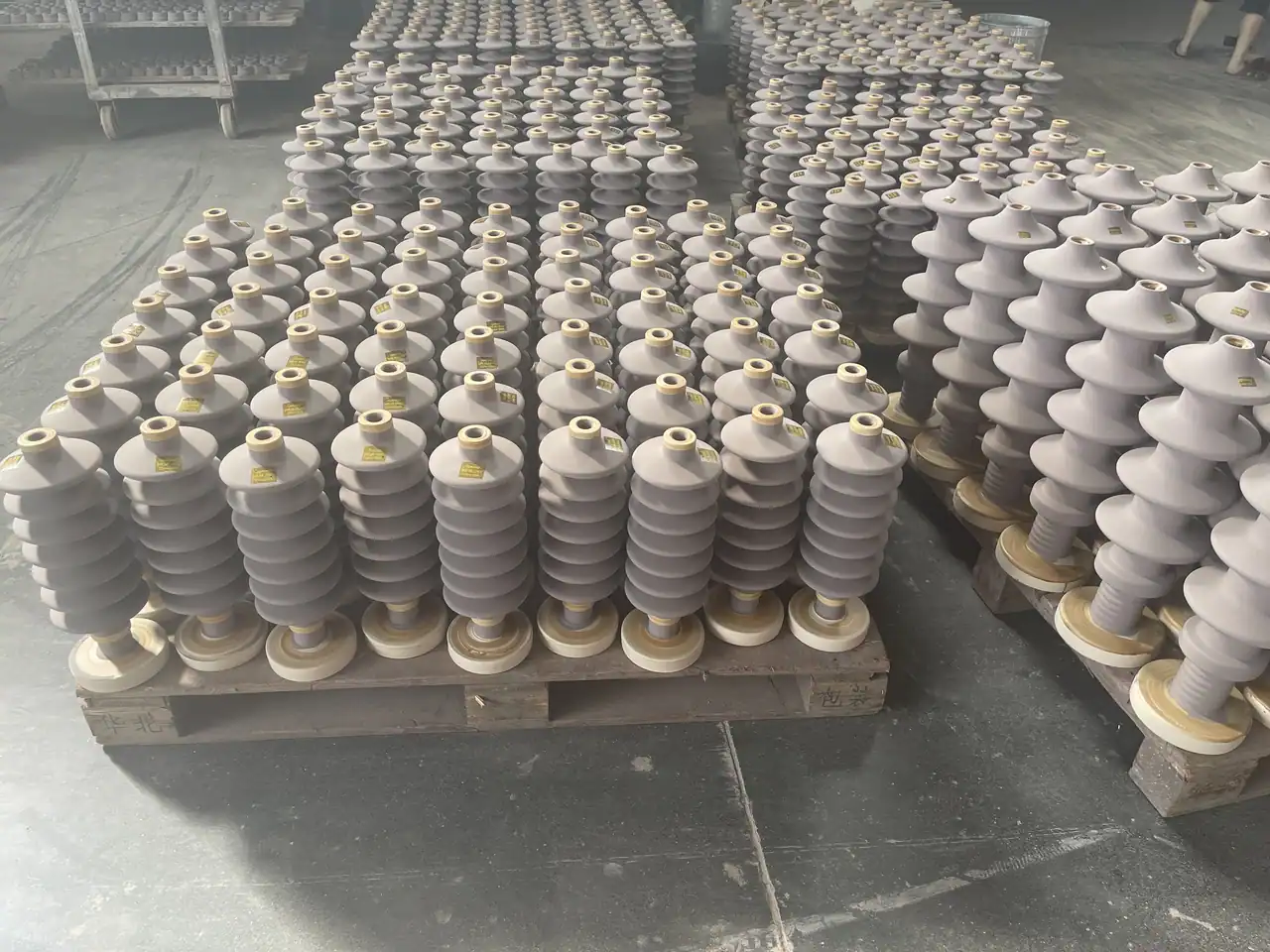
The glazed bodies are fired. This is where the porcelain gains its final electrical and mechanical properties, and where a body that was formed wrong is lost. Bodies are racked and moved through the plant on trolleys, which is what the long rows in our workshop photographs are.
Fitting And Cementing
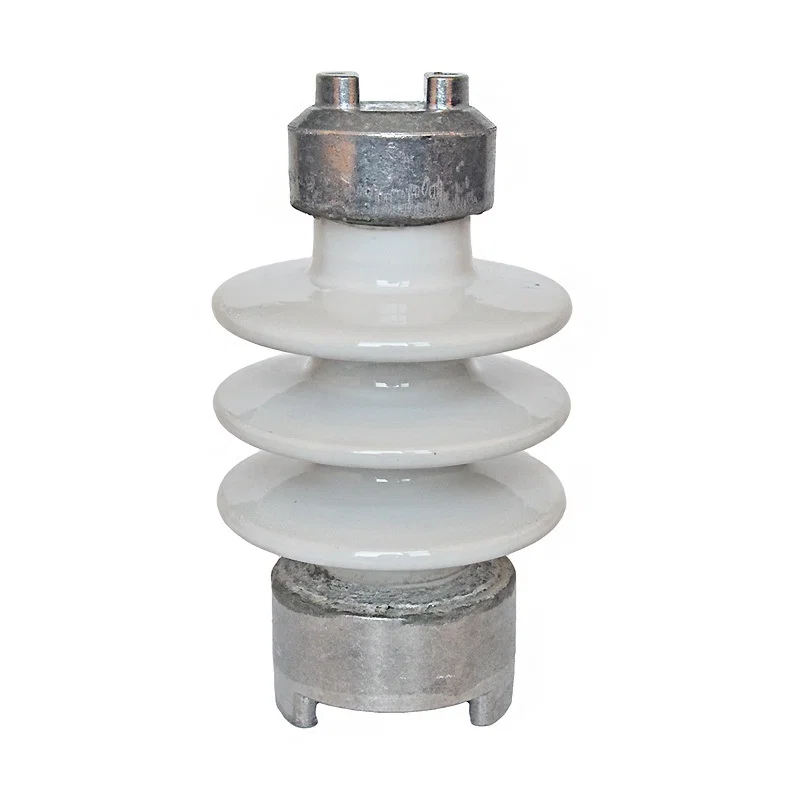
Metal fittings are assembled to the fired body. On GOST post insulators the armature is aluminium alloy or nodular iron bonded with Portland cement and the joints are then protected with silicone sealant. On transformer bushings the conductor is electrolytic copper or aluminium alloy, and the assembly includes gaskets and fasteners specified by material.
C4-80 II 10kV Porcelain Post Insulator GOST
Routine Testing
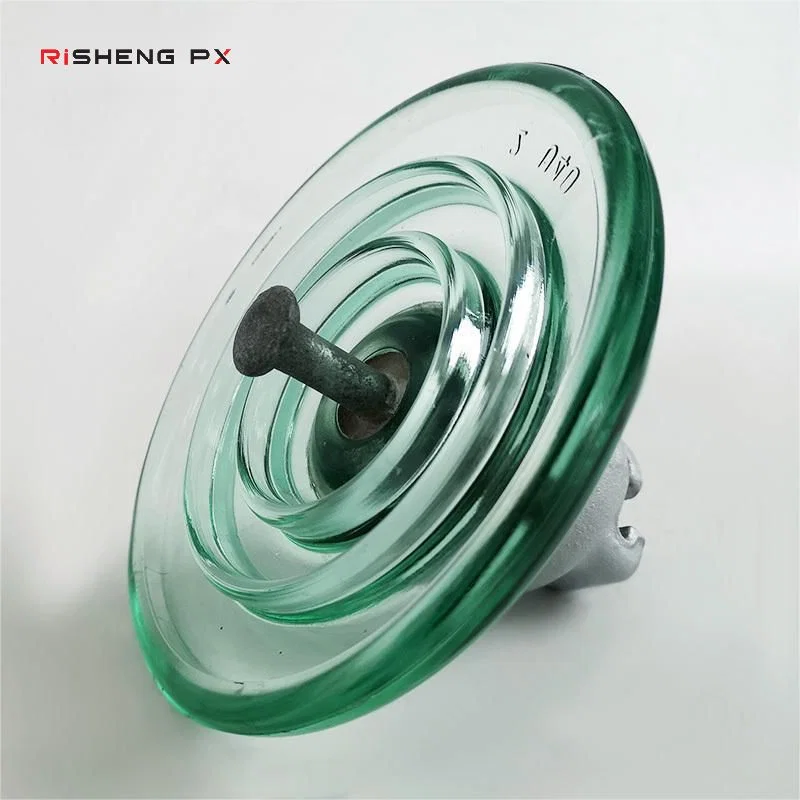
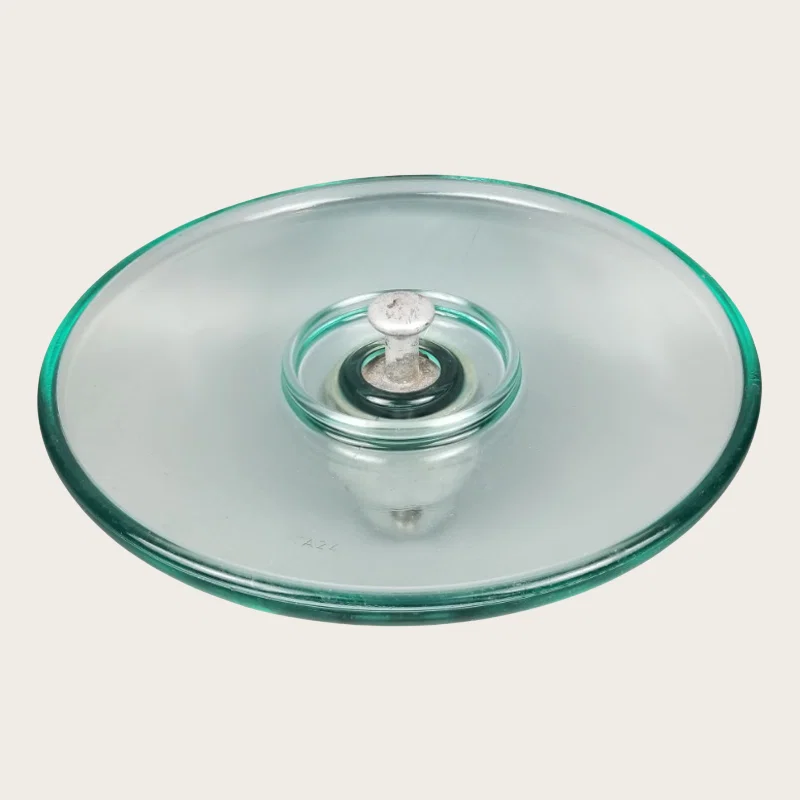
Finished units are tested. Outdoor bushings are manufactured and tested in accordance with IEC 60137. Mechanical proof loading is applied against the published rating, whether that is a 4kN cantilever, a 13kN bending load or a 35kN routine test on a glass suspension disc. Creepage is verified against the drawing figure.
Packing And Despatch
Units are packed in export cartons on wooden pallets, or in packing built to the customer's specification where the consignment is trans-shipped. Porcelain that survives the kiln and breaks in transit has cost the buyer the entire lead time, so this step gets the attention it deserves.