Syringe filters, chromatography vials, SPE and biotechnology products are produced according to the ISO 9001 standard system. [email protected] +86-15306778688
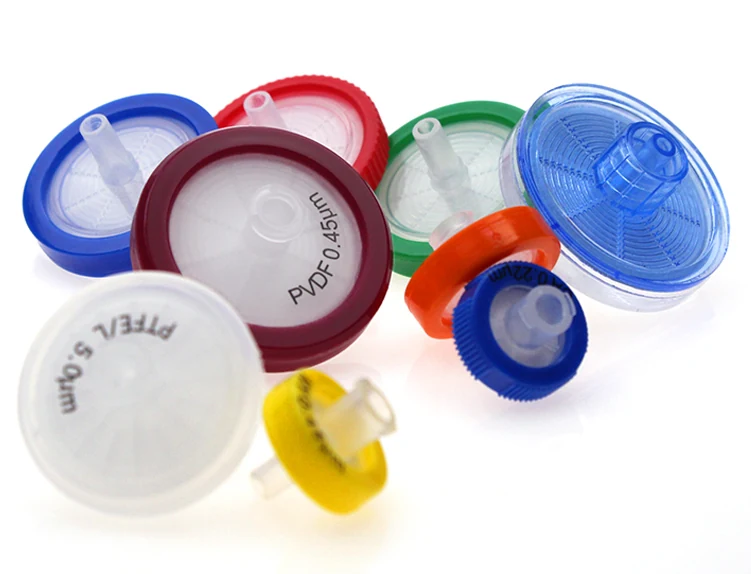
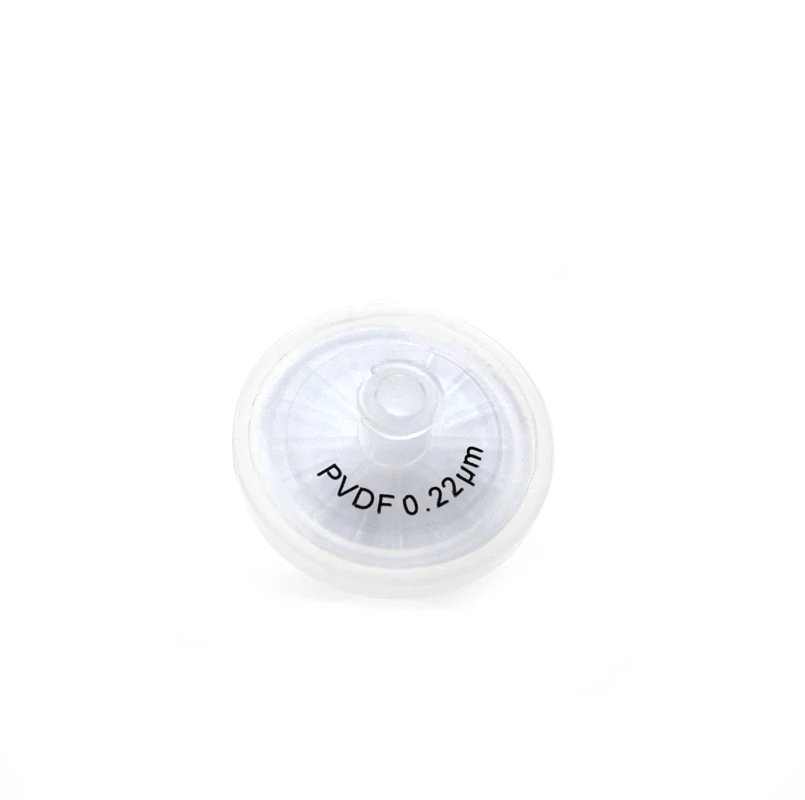
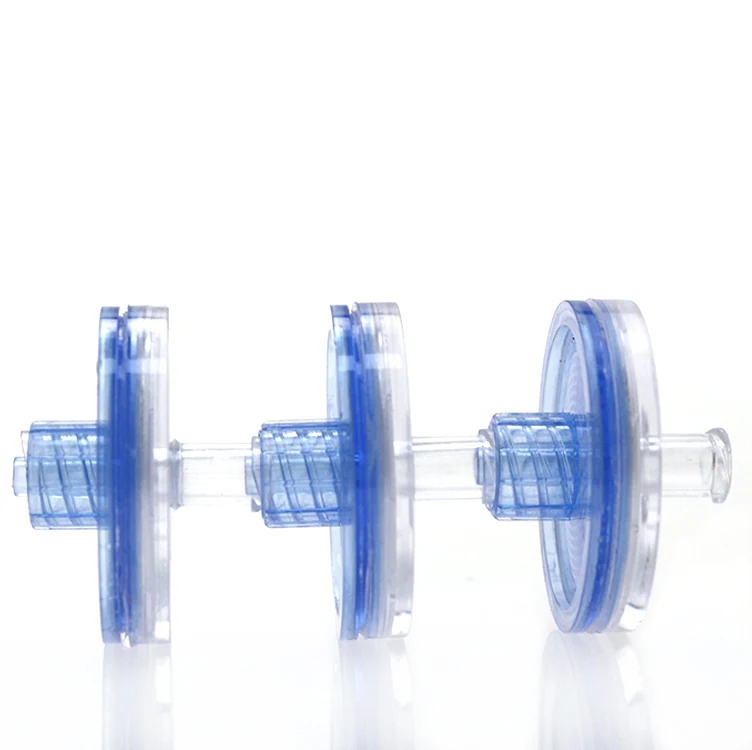
DLLFil Syringe Filter product photo 1
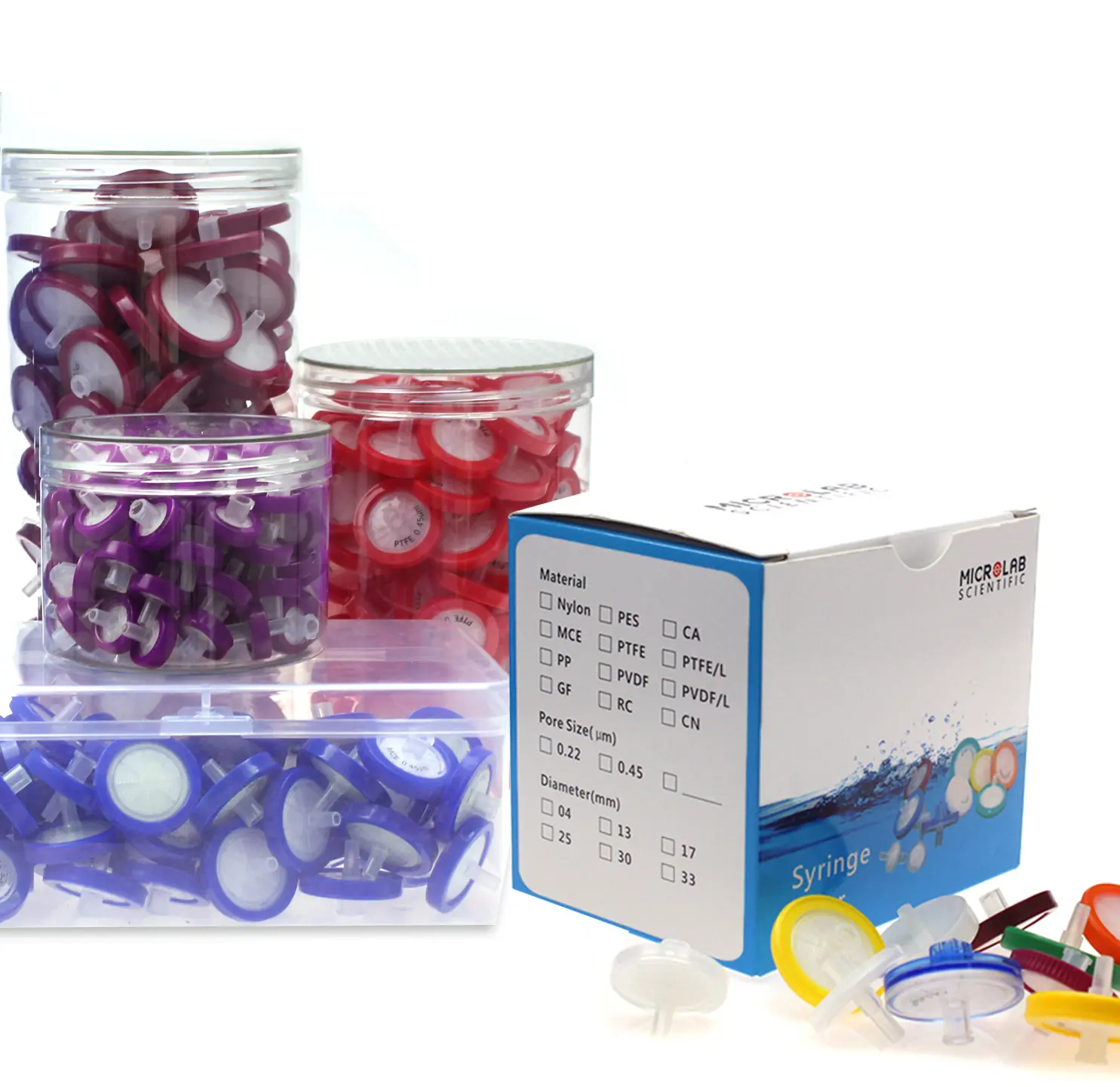
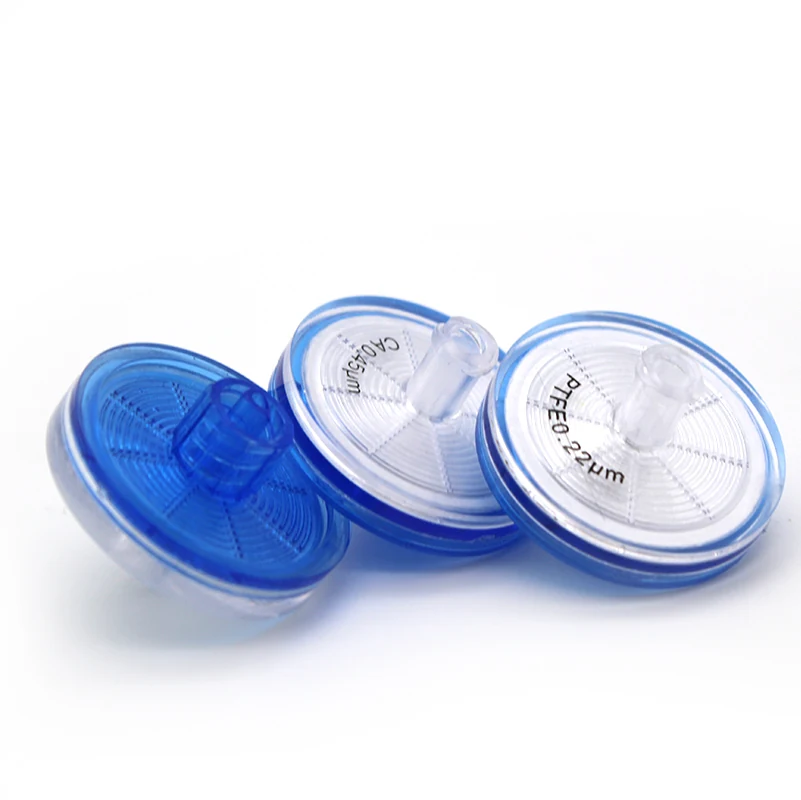
DLLFil Syringe Filter product photo 2DLLFil Syringe Filter product photo 3
Syringe Filter

DLLFil Syringe Filter

DLLFil™ Syringe Filter is designed for high-throughput sample filtration in analytical laboratories. The filter supports a range of common membrane types and is available in 0.22, 0.45, 0.70, and 1.0 micron pore sizes. Its single-layer membrane construction and ultrasonic welding sealing reduce extractables, helping maintain clean HPLC baselines. The design allows for both individual and assembled use, supporting efficient workflow in QC and R&D environments.

  • 28 mm diameter housing provides 5 cm² filtration area, suitable for higher sample volumes and faster filtration rates
  • Double luer lock connections ensure secure attachment and prevent disconnection during high-pressure filtration
  • Ultrasonic welding sealing avoids adhesive contamination and maintains low extractables for sensitive HPLC and GC analysis
  • Available in nine membrane types including PTFE, PES, MCE, CA, PVDF, RC, and GF, covering aqueous, organic, and mixed solvent matrices
Key Benefits

What This Product Gives You

  • 28 mm diameter housing provides 5 cm² filtration area, suitable for higher sample volumes and faster filtration rates
  • Double luer lock connections ensure secure attachment and prevent disconnection during high-pressure filtration
  • Ultrasonic welding sealing avoids adhesive contamination and maintains low extractables for sensitive HPLC and GC analysis
  • Available in nine membrane types including PTFE, PES, MCE, CA, PVDF, RC, and GF, covering aqueous, organic, and mixed solvent matrices
  • Replacement for Sartorius Minisart syringe filters, allowing method continuity without revalidation
  • Double luer lock inlet and outlet for secure, leak-free connections
  • Ultrasonic welding sealing technology for consistent integrity and low extractables
  • Available in 0.22, 0.45, 0.70, and 1.0 micron pore sizes across nine membrane types
  • Single-layer membrane construction reduces material contact and dissolution in the flow path
  • Maximum operating pressure of 6 bar at 23 C, suitable for viscous or particle-laden samples
  • Supports both individual and assembled configurations for flexible integration into workflows
Where It Is Used

Applications And Buyers

Application Scenarios

  • Filtering high-volume samples in pharmaceutical QC where throughput and consistency are critical
  • Preparing environmental and food samples with variable particle loads for chromatographic analysis
  • Handling aggressive solvents in chemical and petrochemical testing with strong chemical compatibility
  • Supporting life-science workflows requiring low extractables and minimal carry-over between samples
  • Using in automated systems where secure, repeatable connections are needed for reliable operation

Who It Is For

  • Pharmaceutical and biotech laboratories requiring high-throughput sample preparation with minimal contamination risk
  • Environmental and food testing labs processing large numbers of samples with diverse matrix types
  • Contract testing organizations standardizing on a single filter platform across multiple clients and instruments
  • Lab distributors sourcing a full membrane range in one consistent housing geometry
  • OEM partners needing a drop-in replacement for Sartorius Minisart filters with customizable branding

Problems It Solves

  • Sample loss or contamination due to loose or leaking connections during syringe filtration
  • Ghost peaks in HPLC runs caused by extractables from solvent-bonded or multi-layer filters
  • Frequent filter failure under pressure due to weak sealing technology
  • Inconsistent performance when switching between different membrane types with mismatched housing geometries
  • Need to source multiple filter types from different suppliers with varying packaging and validation histories
Data

Specifications

Filter MediaNylon, PTFE, Hydrophilic PTFE, MCE, RC, CA, PES, PVDF, Hydrophilic PVDF, GF
HousingPC
Diameter28 mm
Filtration Area5 cm²
Sealing TechnologyUltrasonic welding
Pore Size0.22, 0.45, 0.70, 1.0 micron
Max Operating Pressure6 bar at 23 C
Inlet / OutletFemale luer lock / Male luer lock
Packing100 pcs per pack

Materials

  • Membrane selected per application: Nylon, PTFE, Hydrophilic PTFE, MCE, RC, CA, PES, PVDF, Hydrophilic PVDF, GF

Customization Options

  • Choice of nine membrane types across 0.22 to 1.0 micron pore sizes
  • 28 mm housing diameter with double luer lock connections
  • OEM printing and private-label packing through the Microlab OEM division
  • OEM contract manufacturing and membrane die-cut and packing for filter brands
How It Is Made

Manufacturing And Quality Control

Manufacturing Process

  • Membrane die cutting to precise dimensions
  • Ultrasonic welding of membrane into housing
  • Part number and membrane type printing on housing
  • Packing at 100 pieces per pack

Quality Control

  • Membrane and housing inspected before assembly
  • Sealing integrity tested against the 6 bar at 23 C operating limit
  • Pore size and membrane type verified against the printed part number
  • Visual inspection for defects in housing and weld seam
Comparison

Compared With The Alternatives

Versus Single luer lock syringe filters

Double luer lock connections provide greater stability and prevent disconnection during high-pressure or high-volume filtration, reducing the risk of sample loss or contamination.

Versus Solvent-bonded housings

Ultrasonic welding eliminates adhesive in the flow path, reducing extractables and improving compatibility with sensitive HPLC and GC methods.

Versus Sartorius Minisart syringe filters

DLLFil™ is specified as a direct replacement for Minisart filters, offering the same 28 mm diameter and double luer lock design without requiring method revalidation.

Versus Multi-layer membrane filters

Single-layer construction minimizes material contact and dissolution, which is critical for gradient HPLC and low-level residue analysis.
Use Guide

How To Use It

  • Select membrane based on sample chemistry: PTFE and PVDF for aggressive solvents, PES and MCE for aqueous samples, Nylon and RC for mixed phases
  • Use 0.22 micron for sterile filtration or ultrafine particulate removal, 0.45 micron for routine HPLC clean-up
  • Attach syringe to female luer lock inlet and tubing to male luer lock outlet; ensure both connections are fully seated
  • Apply steady pressure during filtration; if pressure rises rapidly, switch to a coarser pore size or larger diameter filter
  • Discard the first few drops if the method is sensitive to membrane wetting solvent
  • Do not exceed 6 bar at 23 C; use a larger diameter or coarser pore size if flow resistance increases
Photos

Product Gallery

Also In This Category

Related Products

Read Next

Related Industries And Guides

FAQ

Questions Buyers Ask

Which membrane should I use for organic solvent samples?

For organic solvents, use hydrophobic PTFE or hydrophobic PVDF membranes. These offer strong chemical resistance and low extractables.

What is the filtration area of the 28 mm filter?

The effective filtration area is 5 cm², which supports higher throughput and faster filtration compared to smaller diameters.

Can I use this filter with a 33 mm syringe?

The filter is designed for 28 mm syringe filters. It may not fit standard 33 mm syringes without an adapter or modification.

Is this filter compatible with Sartorius Minisart filters?

Yes. DLLFil™ is specified as a direct replacement for Sartorius Minisart syringe filters in the same 28 mm diameter and double luer lock configuration.

What is the maximum pressure rating?

Maximum operating pressure is 6 bar at 23 C. The ultrasonic welding sealing technology ensures integrity at this pressure.

Do you offer private-label packaging?

Yes. The Microlab OEM division provides OEM printing, private-label packing, and contract manufacturing for filter brands.

Get A Quote For DLLFil Syringe Filter

Tell us the membrane, pore size, diameter and quantity you need, or describe the sample and we will specify it.