Syringe filters, chromatography vials, SPE and biotechnology products are produced according to the ISO 9001 standard system. [email protected] +86-15306778688
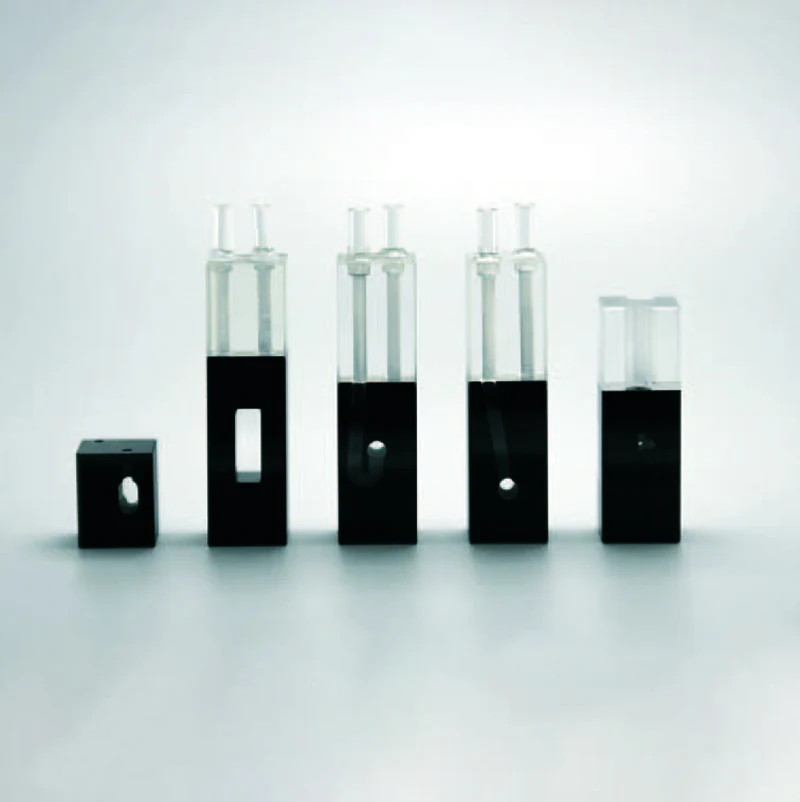
Cuvettes product photo 1
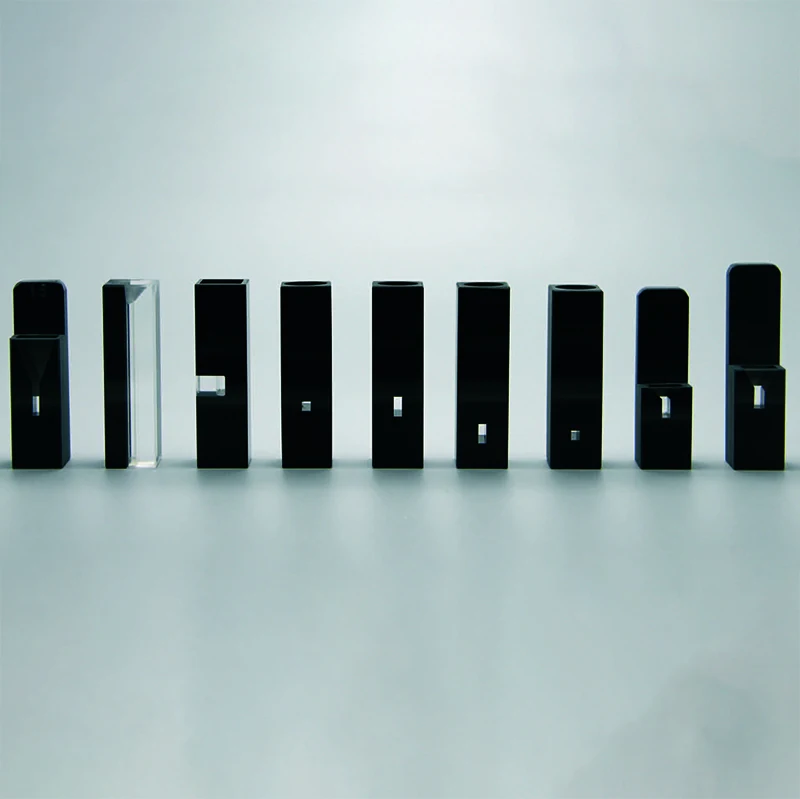
Cuvettes product photo 2Cuvettes product photo 3Cuvettes product photo 4Cuvettes product photo 5
Labware Products

Cuvettes

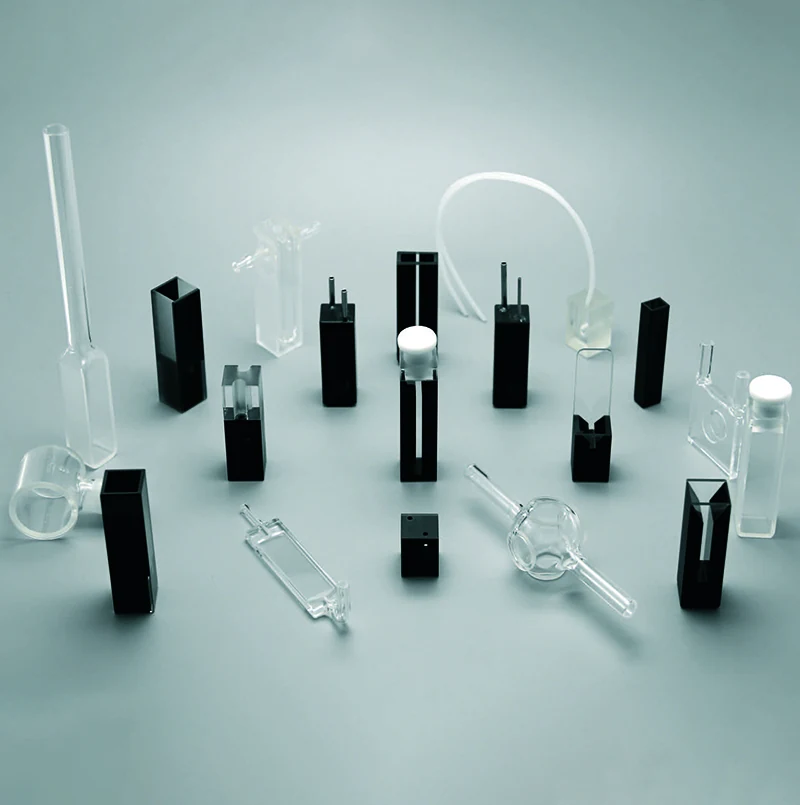
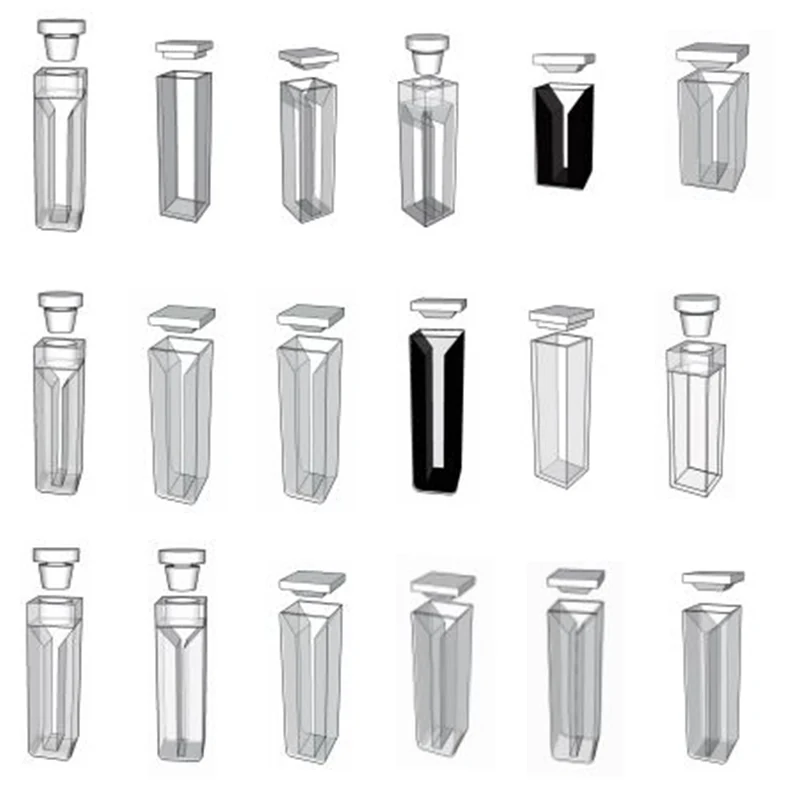
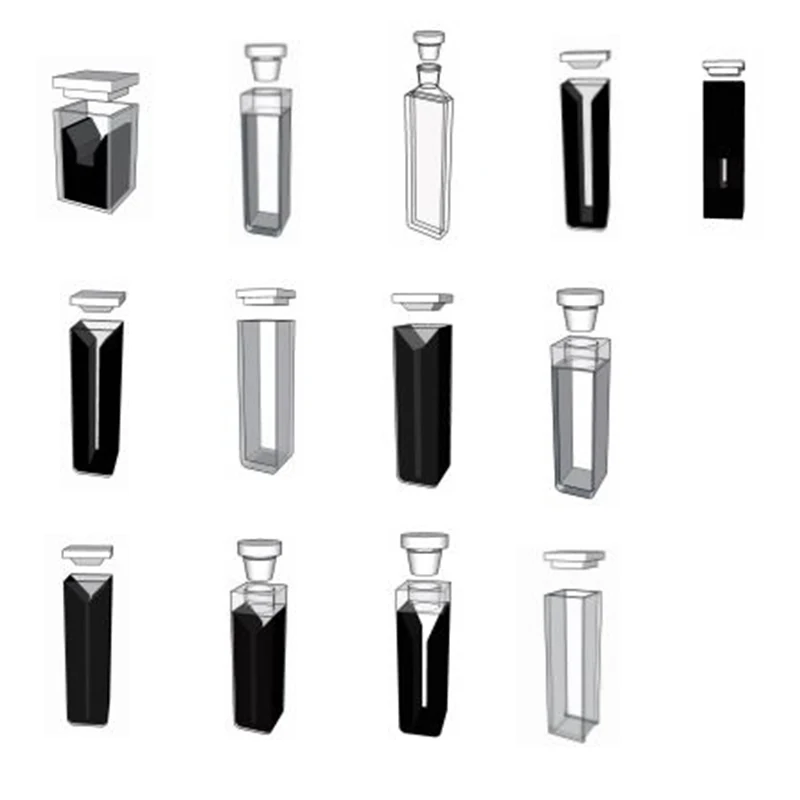
Cuvettes are precision optical cells designed for use in UV, visible, and infrared spectrophotometers. They are available in multiple materials-optical glass, quartz glass, far-ultraviolet quartz glass, and infrared quartz glass-each suited to specific wavelength ranges. The high-precision optical processing ensures consistent transmittance performance with group differences ≤3% and a maximum deviation of 0.5% at specified wavelengths. Cuvettes are offered in various configurations: double-sided or four-sided transparent, with or without plugs or lids, and in standard, half-micro, and micro volume formats to suit different sample volumes and application needs.

  • High mechanical strength and pressure resistance ensure durability during handling and instrument use
  • Precise optical processing delivers consistent transmittance with group difference ≤3% and 0.3% error in optical performance
  • Material-specific transmission values exceed 80% at critical wavelengths: 200nm (far-UV quartz), 220nm (quartz), 340nm (optical glass), and 2730nm (infrared quartz)
  • Multiple configurations-plugs, lids, and varying optical path lengths-allow selection for high-precision, low-volume, or hazardous sample analysis
Key Benefits

What This Product Gives You

  • High mechanical strength and pressure resistance ensure durability during handling and instrument use
  • Precise optical processing delivers consistent transmittance with group difference ≤3% and 0.3% error in optical performance
  • Material-specific transmission values exceed 80% at critical wavelengths: 200nm (far-UV quartz), 220nm (quartz), 340nm (optical glass), and 2730nm (infrared quartz)
  • Multiple configurations-plugs, lids, and varying optical path lengths-allow selection for high-precision, low-volume, or hazardous sample analysis
  • Fully transparent material with no bubbles or stripes ensures accurate spectral data without interference
  • Available in four materials: optical glass, quartz glass, far-ultraviolet quartz glass, and infrared quartz glass
  • Optical path lengths from 1 mm to 100 mm in standard and micro formats
  • Optical path width of 10 mm for standard cuvettes, 4 mm for half-micro, and 2 mm for micro formats
  • Volume capacities from 0.35 ml to 35.0 ml depending on model and configuration
  • Four-sided or double-sided transparent designs for full optical access
  • Configurations include cuvettes with plugs, lids, or both for enhanced containment
  • High-precision optical processing ensures transmittance deviation ≤0.5% at specified wavelengths
Where It Is Used

Applications And Buyers

Application Scenarios

  • Quantitative analysis of pharmaceutical compounds in UV-visible spectrophotometry
  • Environmental testing of trace metals and organic pollutants using UV absorption
  • Life-science research requiring low-volume sample handling in microcuvettes
  • Analysis of hazardous or precious solutions where plug or lid configurations prevent leakage
  • Infrared spectroscopy of polymers and organic materials using infrared quartz cuvettes

Who It Is For

  • Pharmaceutical and biotech R&D labs requiring reproducible spectral data across multiple instruments
  • Environmental and food testing labs analyzing trace contaminants in aqueous and organic matrices
  • Academic and contract research labs using UV-Vis-NIR spectrophotometers for material characterization
  • Laboratory distributors sourcing standardized cuvettes with multiple configurations and material options
  • OEM partners needing custom cuvette designs for integration into automated spectrophotometric systems

Problems It Solves

  • Inconsistent transmittance due to bubbles, stripes, or material defects in low-quality cuvettes
  • Sample loss or contamination from inadequate sealing in open or unlidded cuvettes
  • Incompatibility with specific wavelength ranges due to material limitations (e.g., using optical glass below 340nm)
  • Overfilling or spillage during analysis when no plug or lid is present
  • Inability to handle small sample volumes without wasting reagents or requiring dilution
Data

Specifications

MaterialOptical glass (G), Quartz glass (H), Far-ultraviolet quartz glass (Q), Infrared quartz glass (I)
Transmission at 200nm≥80% (Far-ultraviolet quartz glass)
Transmission at 220nm≥80% (Quartz glass)
Transmission at 340nm≥80% (Optical glass)
Transmission at 2730nm≥80% (Infrared quartz glass)
Optical Path Length1, 2, 5, 10, 20, 30, 40, 50, 100 mm
Optical Path Width10 mm (standard), 4 mm (half-micro), 2 mm (micro)
Volume0.35 ml to 35.0 ml
Transmittance Deviation≤0.5% at specified wavelengths
Group Difference≤3%
Sealing TypeWith plug, with lid, or both
TransparencyDouble-sided or four-sided
Wavelength Range190-2500nm (far-UV quartz), 250-3500nm (infrared quartz), 340-2500nm (optical glass)

Materials

  • Optical glass (G)
  • Quartz glass (H)
  • Far-ultraviolet quartz glass (Q)
  • Infrared quartz glass (I)

Customization Options

  • Choice of material based on required wavelength range
  • Selection of optical path length from 1 mm to 100 mm
  • Option for plugs, lids, or both to prevent overflow
  • Multiple configurations: standard, half-micro, and micro volume formats
  • OEM and private-label packaging available through the Microlab OEM division
How It Is Made

Manufacturing And Quality Control

Manufacturing Process

  • High-precision optical processing of raw glass materials
  • Casting and shaping of cuvettes to exact dimensions
  • Polishing and surface treatment to eliminate bubbles and stripes
  • Inspection of transmittance and optical uniformity
  • Assembly of plugs and lids where applicable
  • Final packaging in protective containers

Quality Control

  • Visual inspection for bubbles, stripes, and surface defects
  • Transmittance testing at specified wavelengths (200nm, 220nm, 340nm, 2730nm)
  • Verification of optical path length and width against design tolerances
  • Group difference testing to ensure ≤3% variation across units
  • Sealing integrity check for cuvettes with plugs or lids
Comparison

Compared With The Alternatives

Versus Low-precision cuvettes with visible bubbles or stripes

These cuvettes show inconsistent transmittance and introduce noise into spectral data, while the Microlab cuvettes have no bubbles or stripes and maintain ≤0.5% deviation

Versus Single-material cuvettes (e.g., only optical glass)

They limit use to visible light only; Microlab offers quartz and far-UV/infrared variants for full spectral range coverage

Versus Cuvettes without lids or plugs

They risk sample spillage and contamination; Microlab's sealed versions prevent overflow and enhance safety

Versus Generic microcuvettes with no volume optimization

They waste reagents or require dilution; Microlab's micro and half-micro formats match sample volume needs precisely
Use Guide

How To Use It

  • Select material based on wavelength: optical glass for visible light, quartz for UV-visible, far-UV quartz for below 200nm, infrared quartz for IR analysis
  • Choose optical path length based on sample concentration: shorter paths for concentrated samples, longer for dilute ones
  • Use cuvettes with plugs or lids when handling hazardous, volatile, or expensive solutions
  • Ensure the cuvette is clean and dry before filling to avoid contamination or inaccurate readings
  • Align the cuvette properly in the spectrophotometer to ensure consistent light path
  • Avoid touching the optical surfaces; use gloves or clean tools to handle the cuvette
  • Discard cuvettes if any visible defects, bubbles, or scratches are present
Photos

Product Gallery

Also In This Category

Related Products

Read Next

Related Industries And Guides

FAQ

Questions Buyers Ask

Which material should I use for UV spectrophotometry below 340nm?

Use far-ultraviolet quartz glass (Q) or standard quartz glass (H), as optical glass transmits poorly below 340nm.

Can I use a cuvette with a lid for volatile solvents?

Yes. Cuvettes with lids prevent evaporation and spillage, making them suitable for volatile or hazardous samples.

What is the difference between standard and microcuvettes?

Standard cuvettes have larger volumes (up to 35 ml) and 10 mm path width; microcuvettes have smaller volumes (0.35-7.0 ml) and 2 mm path width for low-volume analysis.

Do you offer cuvettes with plugs?

Yes. Cuvettes with plugs are available in standard, half-micro, and micro formats for enhanced containment of precious or dangerous solutions.

What is the maximum transmittance at 220nm?

Quartz glass (H) cuvettes have a transmission value of approximately 80% at 220nm, with a maximum deviation of 0.5%.

Can I reuse these cuvettes?

Yes, if cleaned properly after use. However, reuse may affect optical performance if residues remain or surfaces are scratched.

Get A Quote For Cuvettes

Tell us the membrane, pore size, diameter and quantity you need, or describe the sample and we will specify it.