
The Three Metal Detection System Types in Food Processing
Conveyor, gravity-fall and pipeline systems each cover product the others cannot reach. Most plants need more than one.
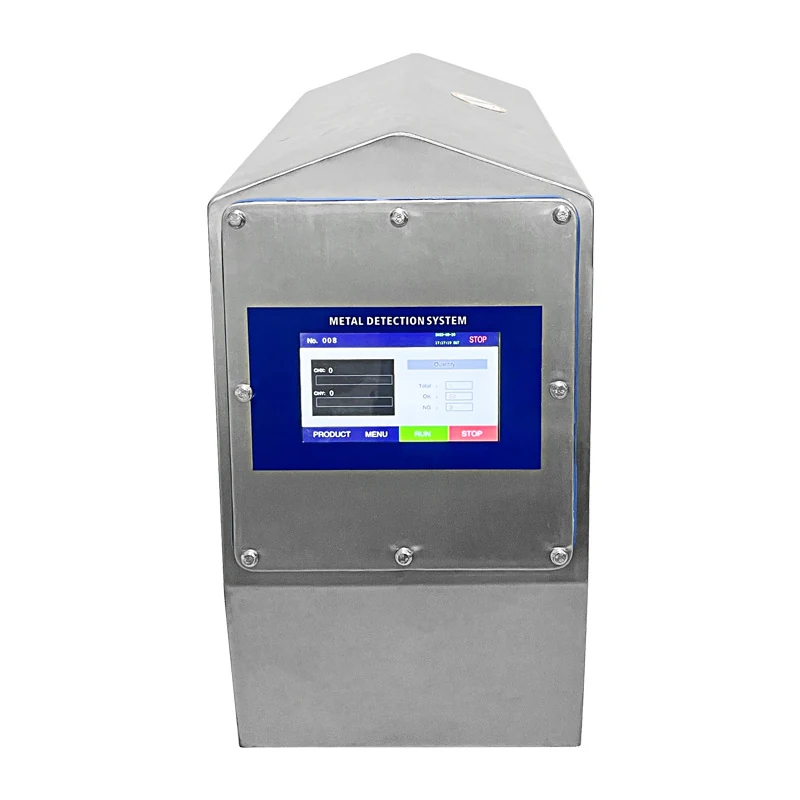
Conveyor systems for packed and solid product
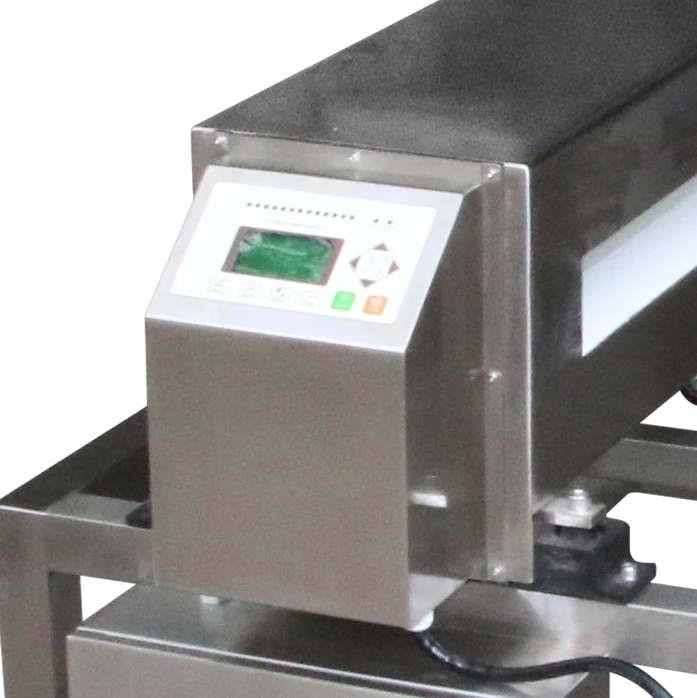
A search head sits over a conveyor belt and product passes through it. Detection rate follows belt speed, and speeds in this range run from 5 to 60 m/min depending on model. This is the most common configuration and it covers packed goods, boxed product and solid items. Search heads such as the VMS-4 and the separable rectangular head can be fitted over an existing belt without cutting it, which matters when the conveyor cannot be taken out of service.
Gravity-fall systems for powder and bulk
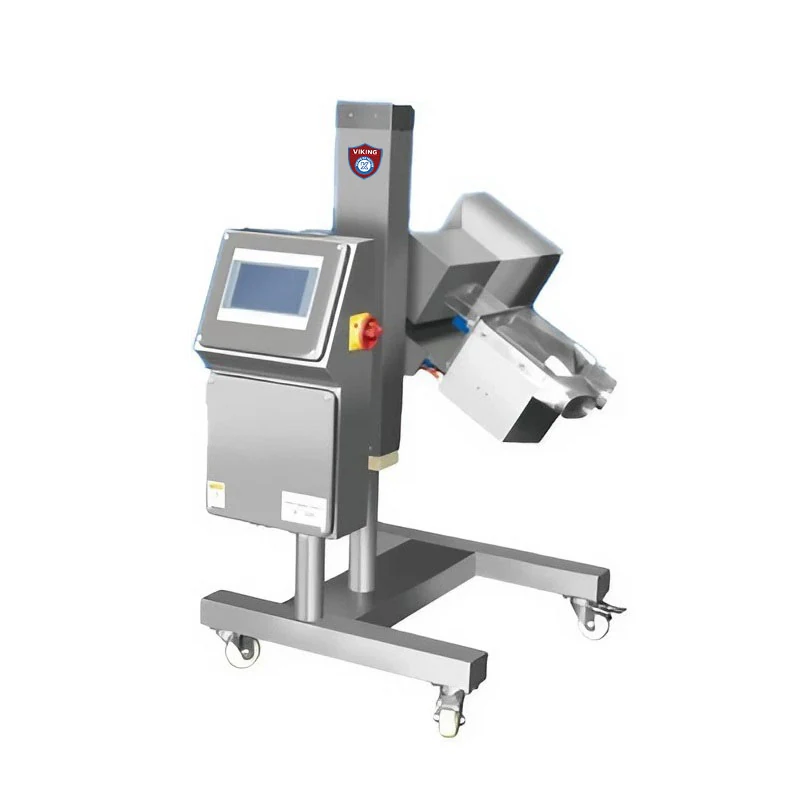
Free-fall detection is designed for bulk and powder product: tea, milk powder, grain, granules and unpacked food, and in pharmaceutical use, tablets and capsules falling from a press or sieve. Capacity depends on flow rate and throat size, and all metal types including ferrous, non-ferrous and stainless can be detected. The IMD series covers this with apertures from 72 x 17 mm up to 137 x 25 mm.
Pipeline systems for pumped liquid
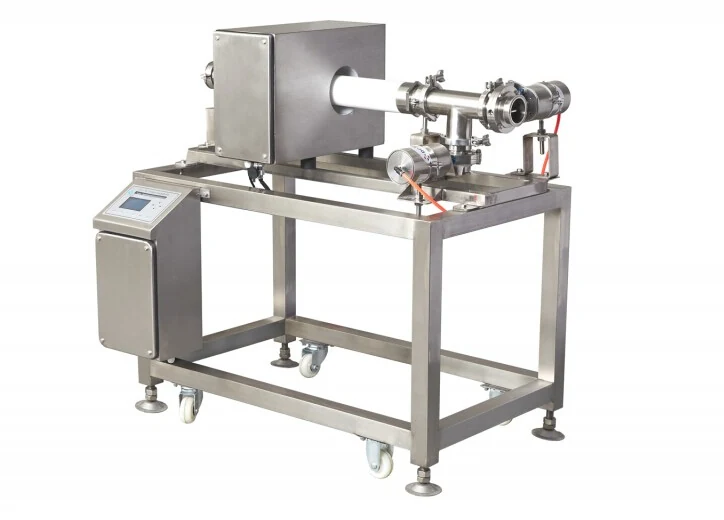
A conveyor detector never sees product that travels through a pipe. Pipeline detectors sit in the pipework itself and cover sauce, juice, liquid food and beverage, catching contamination before it reaches filling. Some are separators rather than just detectors, diverting the contaminated slug automatically with a stated action time of 0.5 s rather than stopping the line.
Where each type sits in the line
Detection placed too early misses contamination introduced downstream. The general rule is to check at the last point at which contamination can still be stopped, which for packed goods is after final packing, for tablets is immediately after the press or sieve, and for pumped product is immediately before filling. Many plants run more than one inspection point: one to protect machinery, one to protect the consumer.
Detection also protects the machinery
It is easy to think of foreign-object control purely as consumer protection, but a detector placed directly in front of a machine stops metal fragments wrecking it. The cost of a crusher or filler failure, plus the downtime, is often larger than the recall risk being managed at the end of the line.
Frequently Asked Questions
Which system type do we need
It follows the product state. Packed or solid, conveyor. Powder or bulk falling, gravity. Pumped liquid, pipeline. Many plants need two.
Can we add detection without replacing our conveyor
Yes. The VMS-4 search head and the separable rectangular head both fit over an existing belt.
Where should the detector be installed
At the last point contamination can still be stopped, and additionally in front of any machine you are protecting.
Does a pipeline detector stop the line
Not necessarily. Several act as separators, diverting the contaminated product with a 0.5 s action time.
What throughput can a conveyor system reach
Belt speeds in this range run from 5 to 60 m/min. The source material cites up to 80 bags per minute on a conveyor system.
Have a specific requirement
Send the dimensions, throughput and conditions. We will answer against your case rather than in general.