
How to Choose a Walk Through Metal Detector
Zone count, sensitivity resolution and throughput decide whether a gate works at your entrance. Here is what each figure actually means.
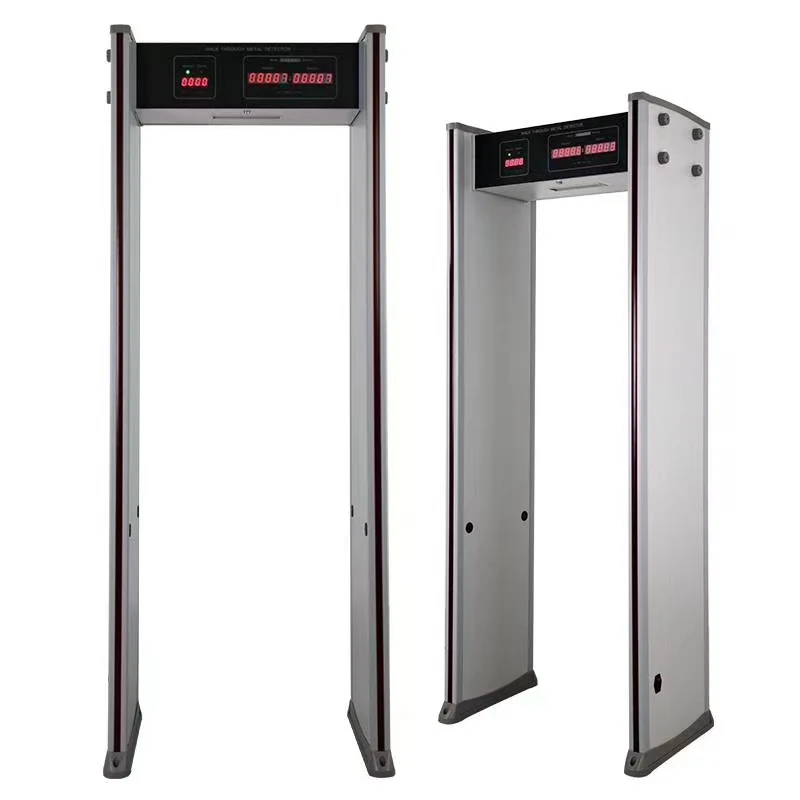
Zone count tells you where, not whether
Every multi-zone gate detects the same metal. What the zone count changes is how precisely the gate tells the operator where that metal is on the body. A 6-zone gate says roughly high or low. An 18 to 33 zone gate separates left, centre and right from head to toe. A 45 or 90 zone system narrows it further. More zones do not detect more; they shorten the secondary check, which is where lane time is actually lost.
Sensitivity resolution decides your false alarm rate
The scale matters as much as the zone count. Gates in this range run from 0 to 99, 0 to 255, 0 to 299, 0 to 355, 0 to 999, 0 to 1000 and 0 to 4095. A coarse scale forces you to choose between alarming on every set of keys and missing what matters. A fine scale lets each zone be set so belt buckles, coins and shoes pass while a knife does not. If your current complaint is constant false alarms, resolution is the figure to look at.
Throughput is a lane figure, not a gate figure
A gate rated for a high passage rate only achieves it if alarms have somewhere to go. The ABX-5010 full-body systems are rated at 1,000 to 1,200 persons per hour, and the 8-zone school gate is adjustable up to 100 persons per minute. None of that survives a checkpoint with no defined secondary position, because the queue simply forms behind the wand instead of the gate.
Environment rules out most of the range immediately
If the gate stands outdoors, the specification narrows fast. IP55 covers rain on the 12-zone all-weather gate and the portable gates. IP67 on the VW-8000P means washable, not merely rain-resistant. The VMP7000 is waterproof at 32 kg net for event use. An indoor-rated gate in an unsheltered doorway is a replacement cost, not a saving.
Interference between gates and nearby equipment
Two gates too close together interfere, and so does an X-ray machine standing beside one. The published spacings in this range are honest and worth reading: up to eight gates at 50 cm on the 33-zone high-throughput gate, 30 cm working spacing on the VM-24, and 20 cm between two VM-45 units. The VM-24 and VM-45 are also specified to work normally next to large metal objects such as an X-ray scanner.
What to send a supplier
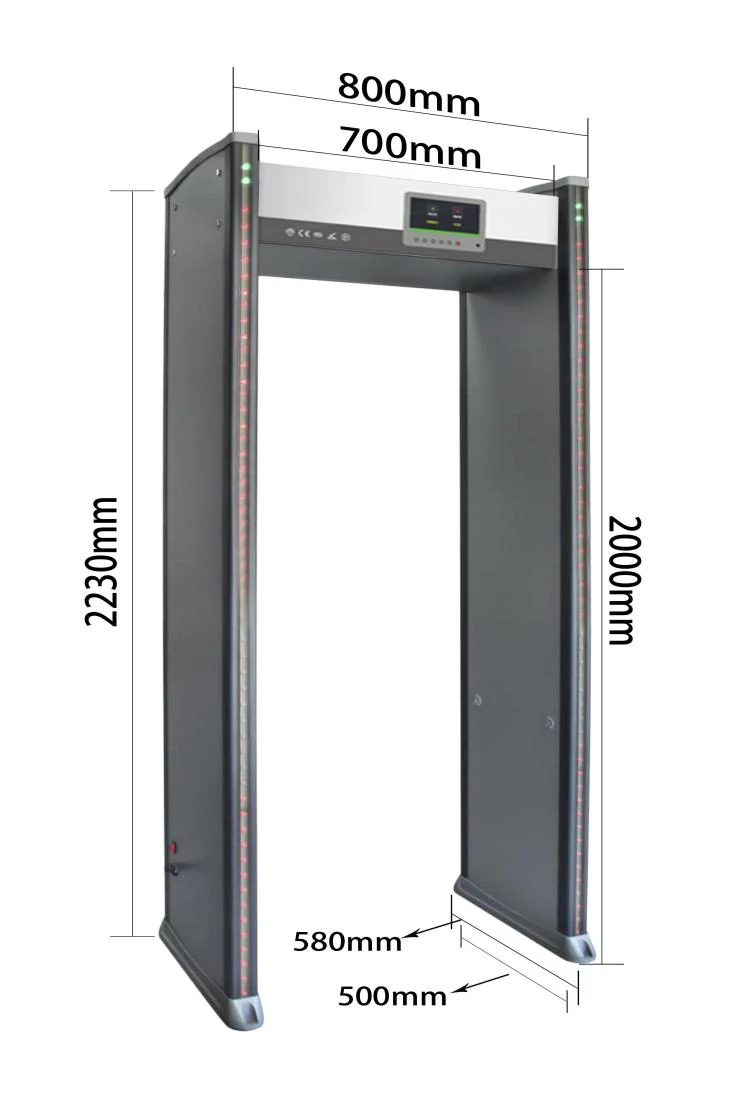
Entrance width and height, arrival rate at peak, what you need the gate to ignore, whether it is indoors or out, and whether it must connect to access control. That is enough to name a model. An enquiry that says only walk-through metal detector will get you a catalogue, not an answer.
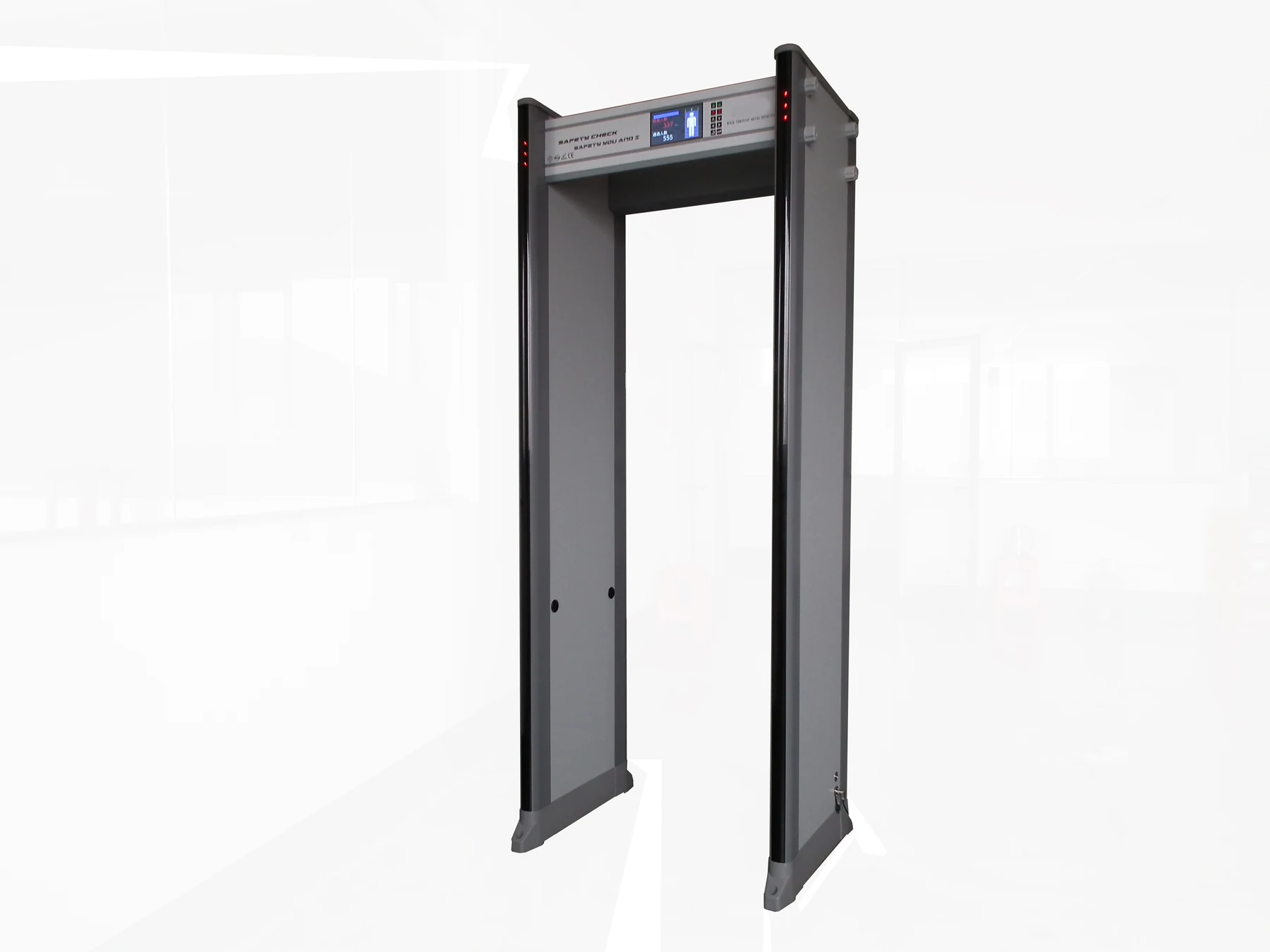
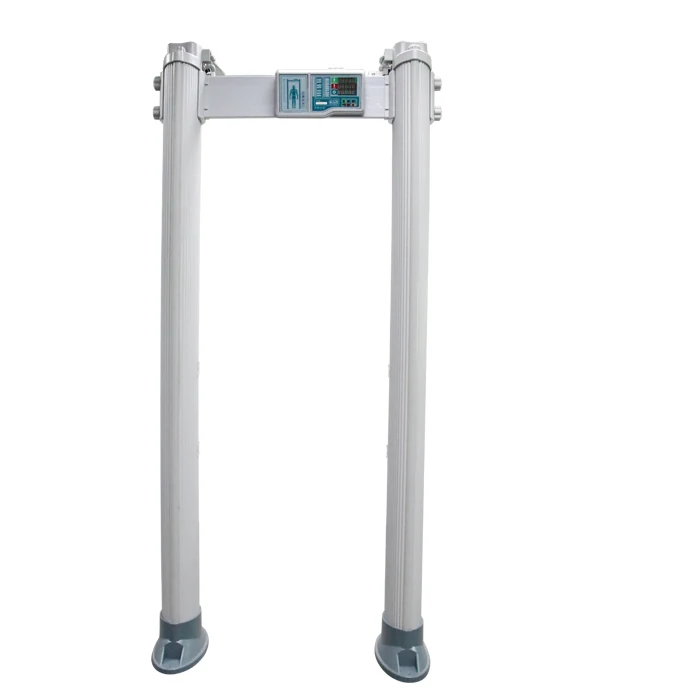
Products referenced in this guide
Frequently Asked Questions
Is a higher zone count always better
No. It gives more precise location, not more detection. If your secondary check is already fast, extra zones buy little.
What zone count do most sites end up with
Six for routine building entrances, 18 to 33 where alarm location matters, and 45 or more for high-security checkpoints.
Can a gate be moved outdoors later
Only if it was rated for it when bought. Ingress protection cannot be added afterwards.
How close can two gates stand
Model dependent. Published figures in this range run from 20 cm to 50 cm. Ask for the figure rather than assuming.
Do these gates affect pacemakers
The source specifications describe them as harmless to pacemaker wearers and pregnant women. Confirm the requirement for your jurisdiction before installing.
Have a specific requirement
Send the dimensions, throughput and conditions. We will answer against your case rather than in general.