
Why Detection Sensitivity Falls as the Aperture Gets Bigger
The single most useful thing to understand before specifying any inline detector, and the reason oversized apertures quietly waste money.
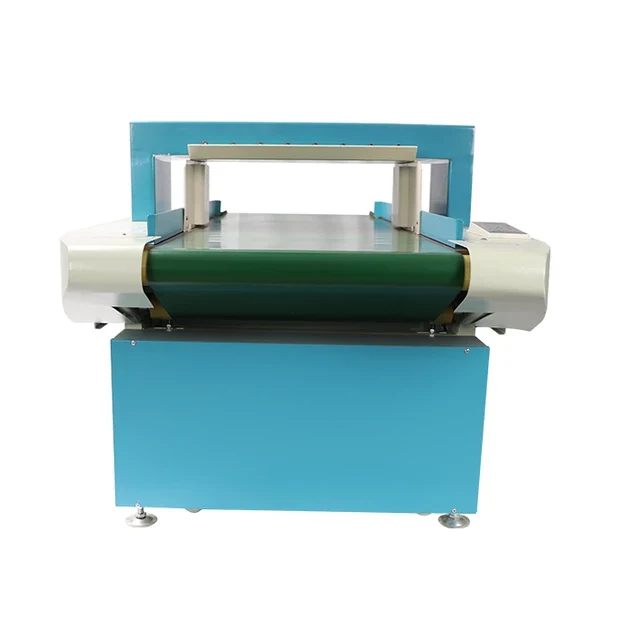
The relationship is physical, not commercial
The further a contaminant sits from the detection coil, the weaker its signal. Open the aperture and the centre of the opening moves further from the coil on every side, so the smallest detectable object gets larger. This is why any honest needle detector publishes a different figure at every working height, and why a supplier who quotes one sensitivity figure regardless of aperture is not telling you the whole story.
A published example
The HKN-800D needle detector states its capability against height directly: Fe 0.8 mm at a 100 mm working height, Fe 0.8 mm at 120 mm, Fe 1.0 mm at 150 mm, Fe 1.2 mm at 200 mm and Fe 1.5 mm at 250 mm. Nearly doubling the height roughly doubles the smallest detectable fragment. Nothing is wrong with the machine; that is what the geometry does.
The practical consequence
Specify the smallest aperture your product will actually pass through with reliable clearance. Every extra centimetre of unused height costs you sensitivity you have already paid for. Buyers frequently over-specify aperture as a safety margin and then discover their detection limit is worse than the datasheet implied.
Product effect compounds it
Published sensitivity figures are measured on an empty machine. Add wet, salty or frozen product and the product's own signal reduces real sensitivity further. Between the aperture and the product effect, the figure you achieve on a loaded line is meaningfully worse than the datasheet number, and that is normal rather than a fault.
What to do about it
Size the aperture to the pack. Ask for the sensitivity figure at your working height, not the best figure in the range. Get test pieces supplied with the machine and verify at commissioning, then at the interval your quality plan sets. A verification that uses the correct test piece at the correct height is the only figure that means anything.
Frequently Asked Questions
Should we buy a larger aperture to be safe
No. Unused aperture height costs sensitivity directly. Size it to the pack with sensible clearance and no more.
Why is our real sensitivity worse than the datasheet
Two reasons: the datasheet figure is empty-machine, and your working height may be greater than the figure was measured at.
Can a supplier guarantee a sensitivity on our product
Only after testing your product. Anyone guaranteeing it from a catalogue is guessing.
How often should we verify
Against your own food safety or quality plan. We supply test pieces so the verification is meaningful.
Does this apply to X-ray as well
Differently. X-ray is affected more by product density and thickness than by aperture geometry, but the principle that real performance is worse than the ideal figure still holds.
Have a specific requirement
Send the dimensions, throughput and conditions. We will answer against your case rather than in general.