Industrial equipment and custom parts sourced from vetted Chinese factories since 2007
[email protected]Mon-Fri 09:00-18:00 GMT+8
Machined components sit inside almost everything an industrial buyer purchases, yet the suppliers that make them rarely appear on a specification sheet. China hosts a large and varied machining base, ranging from workshops that specialise in a single family of parts to contract manufacturers offering turning, milling, stamping, sheet metal and finishing under one roof. For a procurement engineer, the difficulty is that these suppliers look similar in a directory listing and behave very differently once an order is placed. This guide sets out what machining actually involves, what to assess in a supplier, how to control quality across a distance, and how to handle lead times and communication.
Machining is a subtractive manufacturing process in which cutting tools remove material from a workpiece until it reaches the required shape. The family includes turning, milling, drilling and grinding, each suited to different geometries and each with its own accuracy and cost characteristics. Because material is cut away rather than formed, machining produces parts with intricate detail, tight tolerances and complex geometry that other processes cannot achieve directly. That capability comes with a cost profile shaped by cycle time, tooling and material removed. Understanding this is practical rather than academic: a feature that takes a few seconds to form by another process can dominate a machining cycle, so early conversation with the supplier about how a part will be made frequently removes cost without changing function.
Four properties explain why machining remains indispensable. Precision and accuracy allow components to meet stringent specifications and quality standards consistently. Versatility means the same process family handles a wide range of materials and serves industries from automotive and aerospace to medical devices and electronics. Customisation makes machining the default route for tailor-made components where tooling for a formed or moulded process cannot be justified. Economic efficiency arises from advanced machining technologies that reduce waste, shorten production time and improve product quality. For a buyer, the implication is that machining is often the right answer for low to moderate volumes and complex geometry, and the wrong answer for high-volume simple shapes where a formed or cast process carries lower unit cost once tooling is paid for.
China's position in machined components rests on four pillars. Scale of production means the manufacturing base can absorb large orders and meet growing global demand without the capacity constraints smaller markets face. Technological adoption is broad, with manufacturers deploying CNC machining, automation and increasingly artificial intelligence, robotics and connected equipment to improve precision and consistency. Cost structure remains competitive, allowing components to be produced at attractive prices without the quality compromise that lower cost once implied. A skilled workforce underpins delivery of precision work. None of this means every supplier is equivalent. The range of capability between the best and the weakest workshops is wide, which is precisely why supplier assessment rather than country selection is the task that deserves your effort.
Chinese machining suppliers fall into recognisable categories and choosing the wrong one wastes months. Some are custom metal fabricators offering a structured process for design, analysis, pricing and ordering, covering both short runs and long production contracts across machining, milling, turning, stamping and sheet metal. Others focus on high-precision parts in a diverse range of materials and provide design assistance alongside production. Some specialise narrowly, in families such as rivets, shafts or nozzle assemblies, and deliver excellent results within that scope and poor results outside it. Others are prototype and low-volume houses, well suited to development work but not to series supply. Business service companies coordinate production across multiple factories. Identify which model your part actually needs before contacting anyone.
Directory descriptions are marketing; capability is physical. Ask what machines the supplier owns, in what configurations, and how many axes. Ask which operations are performed in-house and which are subcontracted, since heat treatment, plating, anodising and specialised grinding are frequently outsourced and each subcontractor is an unmanaged link in your supply chain. Ask what metrology equipment they have and who is qualified to use it, because a supplier that cannot measure a tolerance cannot hold it. Ask for examples of parts comparable to yours in material, size and tolerance, and request the inspection reports that accompanied them. A supplier confident in its capability will answer these questions directly. Evasive or purely commercial answers are themselves informative.
Quality assurance starts with selecting a manufacturer with a demonstrable track record rather than a claimed one. Before finalising any collaboration, ask specifically about the supplier's quality assurance processes, the certifications they hold, and whether any third-party inspections have been carried out on their production. Request samples and evaluate them against your drawing rather than against a general impression of finish. Where the programme justifies the cost, conduct a factory visit, which reveals housekeeping, machine condition, work in progress control and measurement practice far more reliably than a video call. Established suppliers typically operate documented quality control measures and work to international standards, but the point of the exercise is to verify that for your supplier, not to assume it from the market.
Define inspection at three points rather than one. At first article, verify every dimension on the drawing against the first parts produced, and insist the report is issued before series production starts, not alongside the shipment. During production, agree in-process checks on the critical characteristics you have identified, with recorded results. Before shipment, require a final inspection against an agreed sampling plan, with a report you receive before the goods leave. Identify explicitly which dimensions are critical and which are reference, because a supplier measuring everything equally will measure nothing well. Add material verification for any part where the alloy matters, and surface treatment verification where coating thickness or adhesion is functional, since these are the failures that appear after assembly rather than at goods inwards.
Lead time for Chinese machining suppliers varies with the complexity of the project, the volume of the order and the specific capabilities of the manufacturer, so a single expected figure does not exist across the market. What you can do is make the estimate reliable. Communicate your timeline expectations clearly at the enquiry stage rather than after the order, ask the supplier to break the quoted lead time into material procurement, machining, finishing, inspection and packing, and maintain open communication throughout production rather than checking in only at the promised ship date. Understanding where the time sits also tells you where it can be compressed: material availability and outsourced finishing are frequently longer than the machining itself, and both can often be planned around.
Many Chinese machining suppliers specialise in customised solutions, and some offer design assistance, original equipment manufacturer customisation and prototype development alongside production. Used well, this is genuinely valuable: a supplier that reviews your drawing before quoting will often identify features that add cost without adding function, tolerances that are tighter than the application needs, or a material that is difficult to source locally. To benefit from this, share the functional intent of the part and not only the drawing, and communicate specifications and requirements clearly enough that the supplier can confirm they can meet them. Where you share proprietary design information, put a confidentiality agreement in place first and be explicit about what may and may not be reused.
Addressing language and cultural differences is a practical requirement rather than a courtesy. Many Chinese manufacturers employ English-speaking staff, and translation services or bilingual intermediaries can bridge remaining gaps on technical detail where precision of meaning matters most. Cultural understanding also helps: relationships carry weight, respect for business etiquette is noticed, and suppliers experienced with international clients navigate these differences comfortably. In practical terms, put technical requirements in writing with drawings and numbers rather than relying on conversation, confirm understanding by asking the supplier to restate requirements in their own words, and identify a single technical contact on each side. Ambiguity resolved before production is free; ambiguity discovered at goods inwards is not.
Machining suppliers in other markets, including the United States, offer their own blend of experience, specialisation and technological capability, serving sectors such as aerospace, medical and electromechanical assemblies. The honest comparison is not between countries but between the total cost and risk of two specific suppliers. Chinese suppliers typically offer cost-effectiveness, large-scale production capability and adaptability to customer specifications. Against that, weigh freight and duty, the longer feedback loop when a problem appears, the cost of inspection or travel, and the lead time to correct a rejected batch. For stable, well-defined parts at meaningful volumes the case is usually strong. For parts still changing design, or where a two-day turnaround on a rework is essential, proximity may win.
Several shifts are visible across the Chinese machining sector and they affect what you can expect from suppliers over a multi-year programme. Industry 4.0 technologies are being adopted to improve efficiency and reduce operating cost, which generally means better process data and more consistent output. Sustainability is a growing focus, with eco-friendly materials, energy-efficient processes and waste reduction being implemented, and this increasingly appears in customer requirements as well as supplier marketing. Customisation and diversification are expanding as manufacturers broaden their offerings for specific sectors. International collaboration is growing, with suppliers aligning to international standards and adapting to diverse market demands. When selecting a partner for a long programme, ask where they are investing, not only what they can do today.
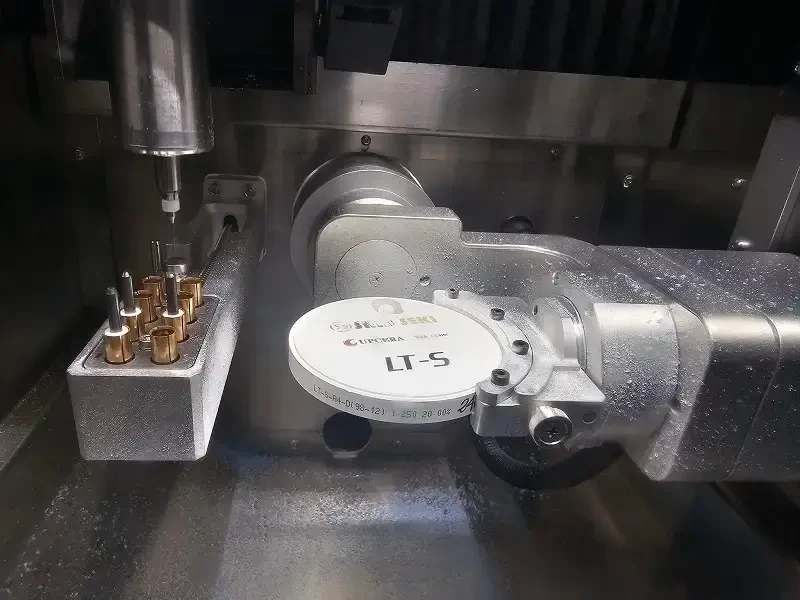
Dental Milling Machine
The DTR-55 is a 5-axis dental milling machine for dental laboratories producing crowns, bridges, implants, den...
View Details →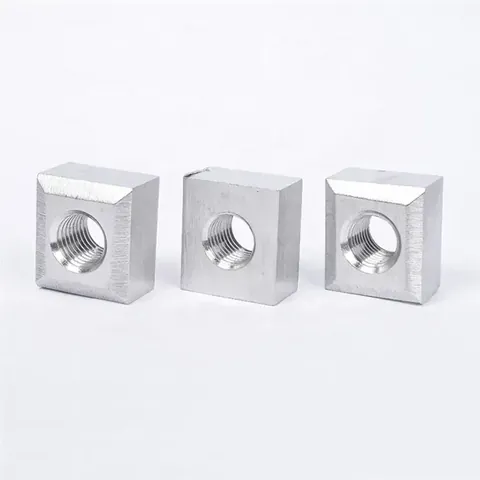
Wire EDM Parts
Custom wire electrical discharge machined parts produced to client specifications rather than from a standard ...
View Details →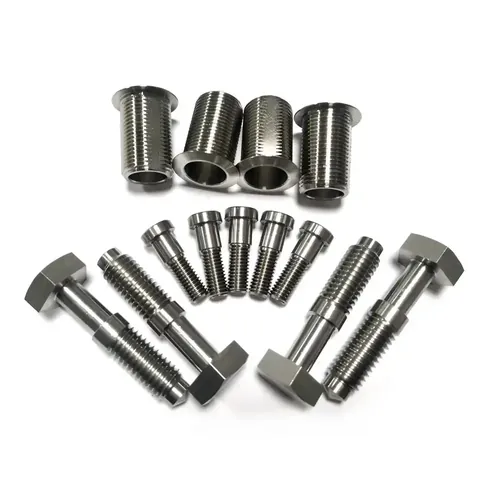
Vertical Mill Parts
Vertical mills depend on their constituent parts to keep running, and those parts are often intricate and wear...
View Details →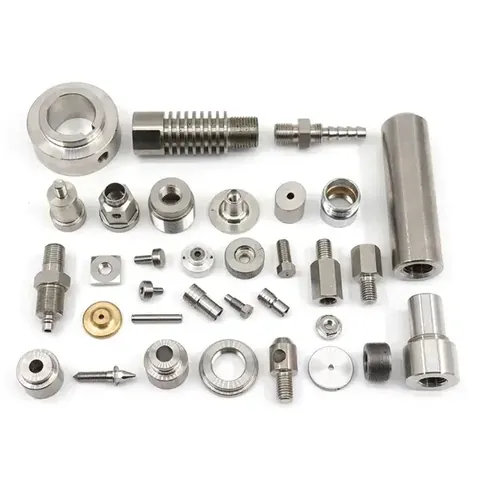
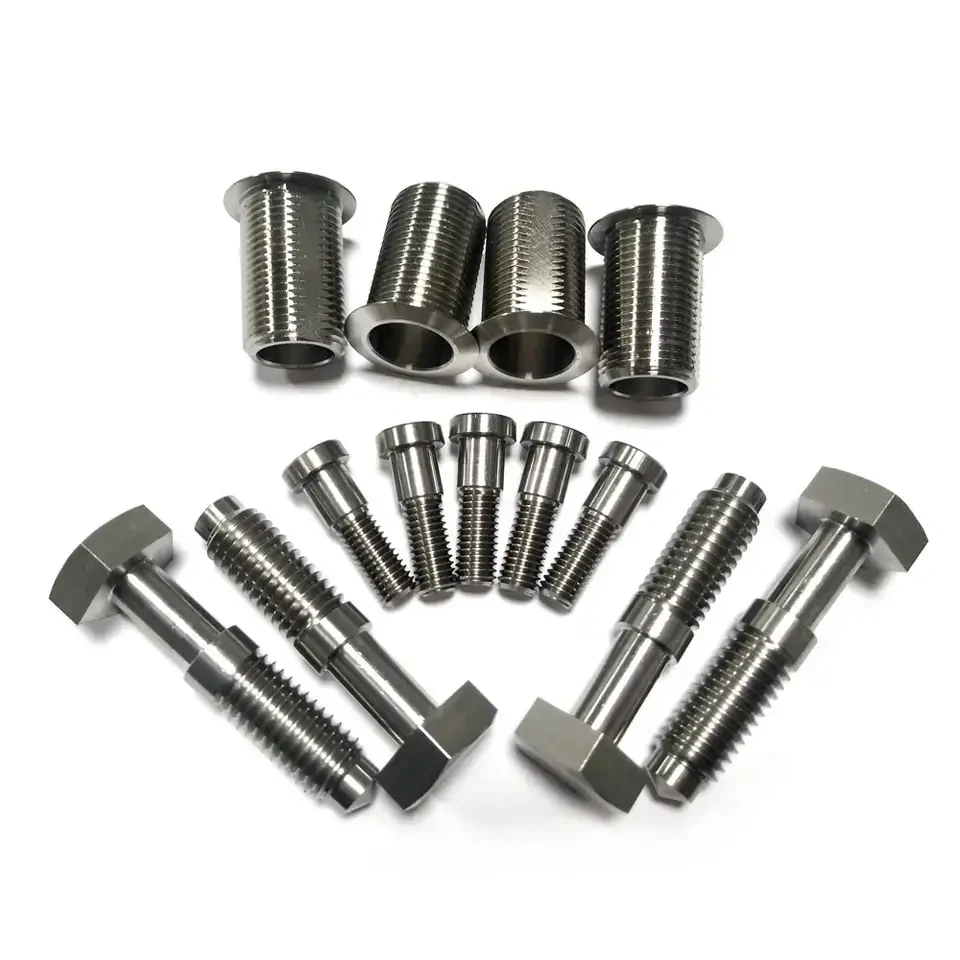
Premium CNC Fasteners & Custom Solutions from China
CNC machined fasteners produced for the application rather than pulled from a standard thread catalogue. Bespo...
View Details →Lead times vary with project complexity, order volume and the individual manufacturer's capabilities, so there is no single figure. Ask the supplier to break the quoted lead time into material procurement, machining, finishing, inspection and packing, state your timeline expectations clearly at the enquiry stage, and keep communication open through production rather than only at the promised ship date.
Research the supplier's track record, ask directly about their quality assurance processes and certifications, and find out whether any third-party inspections have been carried out on their production. Request samples and assess them against your drawing, and where the programme justifies the cost, visit the factory to see machine condition, measurement practice and work in progress control for yourself.
Yes. Many specialise in customised solutions and some provide design assistance, original equipment manufacturer customisation and prototype development. To get value from this, communicate your specifications and functional intent clearly so the supplier can confirm they can meet them, and put a confidentiality agreement in place before sharing proprietary design information.
Many Chinese manufacturers have English-speaking staff, and translation services or bilingual intermediaries help where technical precision matters. Put requirements in writing with drawings and numbers, ask the supplier to restate them in their own words to confirm understanding, and appoint a single technical contact on each side. Suppliers experienced with international clients navigate these differences comfortably.
Machining covers turning, milling, drilling and grinding, and many Chinese suppliers extend into stamping, sheet metal, die casting and forging. Ask which operations are performed in-house and which are subcontracted, since heat treatment, plating and specialised finishing are commonly outsourced and each subcontractor is a link in your supply chain that you do not directly manage.
If this guide covers what you are buying, send the specification and we will quote it from a factory that has built it before.
Email Our Sourcing TeamMore Guides