
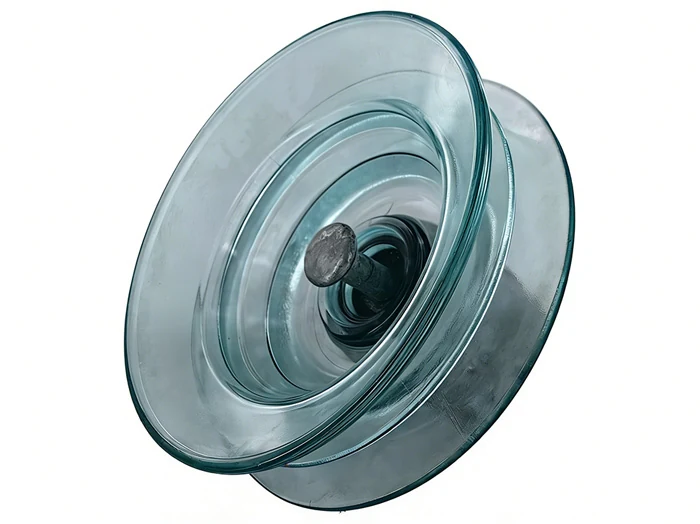
Three-alternating Profile
U160BLT · 160 kN
A 160 kN three-alternating disc with 155 mm spacing, 330 mm diameter and 550 mm creepage, weighing 8.9 kg. The longest creepage…
Creepage 550 mm
Ø 330 mm
Coupling 20
Self-destruction refers to the spontaneous breaking of toughened glass due to internal stress or impurities. It is an inherent characteristic of the material rather than a manufacturing fault, and it is the reason glass insulators are easy to maintain.
Tempering leaves the surface in compression and the core in tension. If an inclusion or a stress concentration sits in the tensile core, that balance can release, and the disc shatters. The steel cap and pin stay in place, so the string continues to carry mechanical load.
A punctured porcelain disc looks identical to a good one and has to be found with live testing. A self-destructed glass disc is visible from the ground during a normal line patrol. You find it with a pair of binoculars instead of an outage window.
Our products have a low and controllable self-destruction rate in line with IEC and national standards. The main control is upstream. Shells are heated to around 300 degrees C and quenched in cold water, a drop of roughly 420 degrees C, and units carrying stress or impurities shatter in the factory. A second thermal shock test to IEC 60383-1 and GB/T 1001.1 screens what the first one missed.
Regular visual inspection, cleaning in heavily polluted areas and timely replacement of broken insulators. No complicated preventive tests are required.
A 160 kN three-alternating disc with 155 mm spacing, 330 mm diameter and 550 mm creepage, weighing 8.9 kg. The longest creepage…
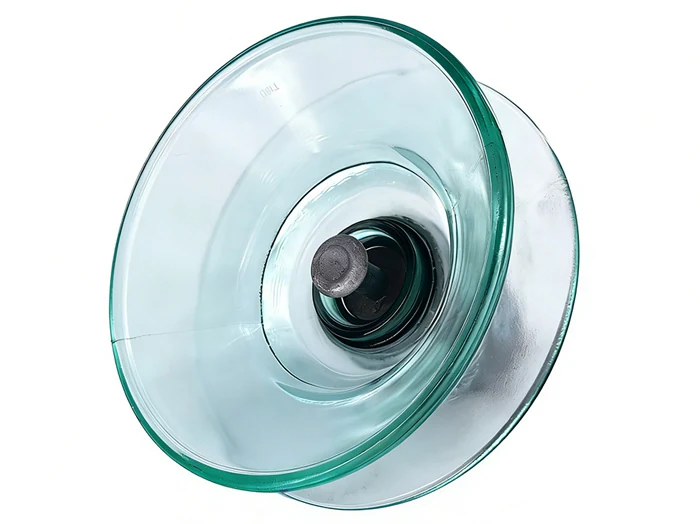
A 160 kN two-alternating disc with 155 mm spacing, 300 mm diameter and 450 mm creepage, weighing 8.4 kg. Alternating shed diameters…
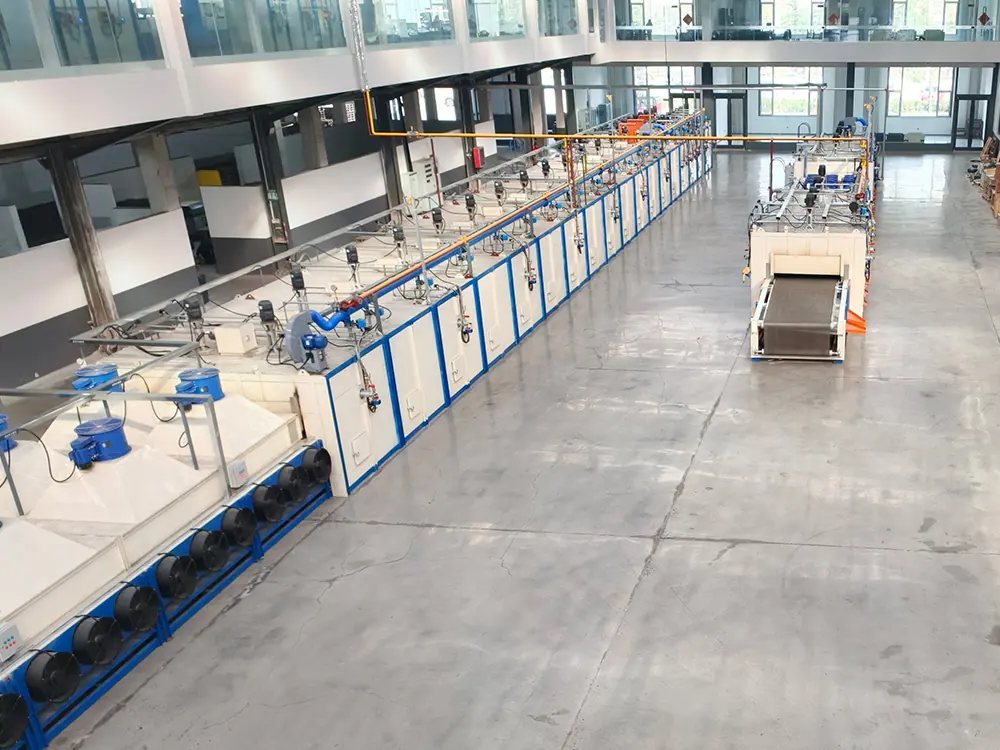
Nine production stages turn quartz sand into a disc that carries 160 kN and shatters visibly when it fails. Here is what happens at each one and why it matters to the buyer.
Standard, anti-fog, aerodynamic or alternating. The right answer depends on whether your deposit is a wet conductive film or a dry adherent powder.
The case for toughened glass comes down to one operational fact. A failed glass disc is visible from the ground and a failed porcelain disc is not.
Under normal operating and maintenance conditions the service life is generally 30 to 50 years.
Regular visual inspection, cleaning in heavily polluted areas, and timely replacement of broken insulators. No complicated preventive tests are required.
Yes. We recommend anti-pollution or anti-fog glass insulators with increased creepage distance, specially designed for coastal, industrial and high-pollution environments.
Yes. We can provide customized products optimized for high-altitude conditions with enhanced insulation performance.
Send us the route conditions and we will translate this into a specific model, creepage figure and string configuration.