
WiFi Versus Bluetooth Versus RF For LED Control
Three control technologies, three different failure modes, and how to choose between them.
In This Guide
Three Technologies Solving Slightly Different Problems
All three put a radio between a person and a light. What differs is what has to be working for that radio link to function, and that difference is what should drive the specification.
RF needs a handset and a receiver. Bluetooth needs a phone within range. WiFi needs a network, a router and usually an internet connection.
RF: Fewest Dependencies
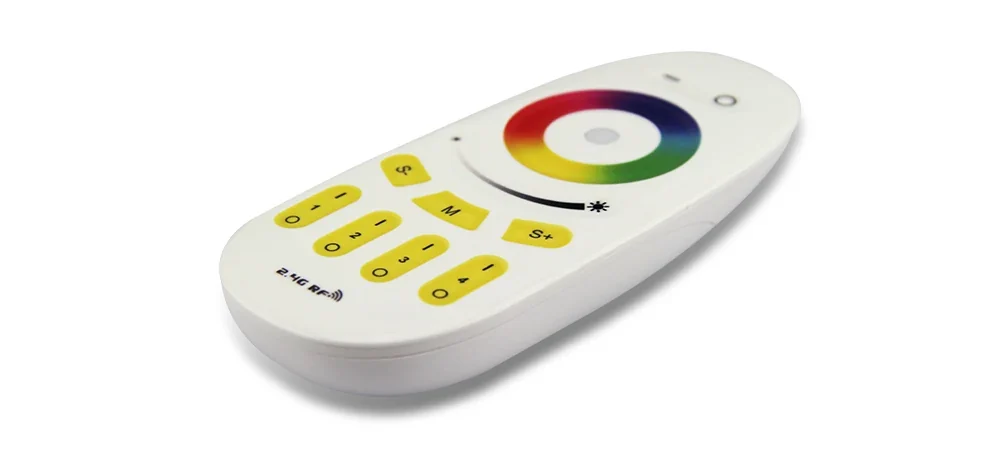
An RF controller and its handset talk directly. Nothing else has to exist. Our RF range publishes a 30 metre receiving range and the 4-zone handsets address four independent groups.
RF does not need line of sight, which is why the receiver can sit above a ceiling or inside a cabinet where an infrared receiver would be useless.
The weakness is that control is tied to a physical object, and physical objects get lost. Order a spare handset with the installation.
Bluetooth: Local And Self Contained
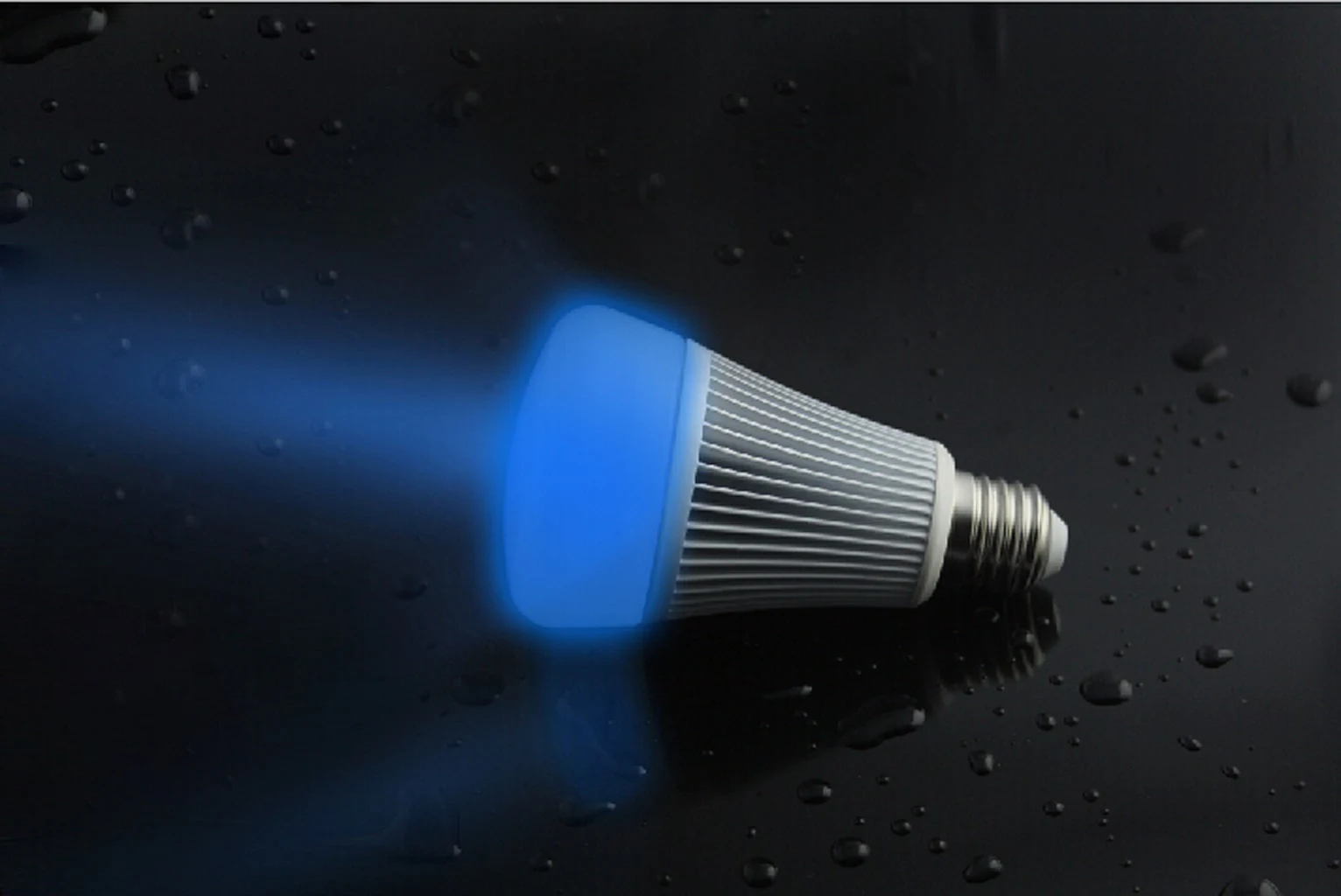
Bluetooth pairs the lamp directly to a phone. There is no router, no account and no internet dependency, which makes it the easiest connected product to demonstrate on a shop floor and the most robust in a building with poor network coverage.
Our Bluetooth bulb range adds music and timing functions and dims from full output down to one per cent in individual steps.
The limitation is range and the fact that control ends at the front door. There is no remote access from outside the building.
WiFi: Most Capable And Most Dependent
WiFi products join the building network and are controlled from an app, which brings scheduling, remote access and integration with other systems.
Our WiFi downlights publish a 20 to 30 metre telecontrol distance on a 2.4GHz radio, and the smart bulb range covers tunable white and RGBW.
The dependency chain is the longest: the lamp, the router, the network, the app and the vendor's cloud service all have to keep working. Over a five year life, app support matters more than the lamp.
Choosing In Practice
Use RF where reliability matters more than features and where a physical handset is acceptable - retail displays, hospitality rooms, signage.
Use Bluetooth where there is no usable network, or where control must be local and simple.
Use WiFi where the client explicitly expects phone control and scheduling, and confirm the app and pairing method with the supplier before committing a large installation.
Product ranges covered in this guide
Questions About This Topic
Which is most reliable?
RF, because it has the fewest dependencies. A handset and a receiver either talk to each other or they do not; there is no network in between.
Can I mix control types in one building?
Yes, but not in one room. Mixing control types within a single space means two handsets and a confused client.
What happens to WiFi lighting if the internet goes down?
It depends on the product. Local network control often survives; anything depending on a cloud service does not. Ask the question before you specify.
Other Guides In The Knowledge Centre
How To Choose The Right LED Lamp Base For Your Market
E27, E26, B22, E14, GU10 and MR16 explained, with the export mistakes that cost importers money.
Buying GuideLumens Not Watts How To Compare LED Bulbs Properly
Why wattage stopped being a measure of brightness, and what to ask a supplier instead.
Buying GuideLED Colour Temperature Explained From 2400K To 6500K
What kelvin values actually mean, where each band belongs, and how to avoid a room full of returns.
Design GuideHave A Specification Question
Send it by email with the application and the quantity. A written answer from someone who knows the range beats an hour of searching.