
How To Power And Cut LED Strip Light Without Killing It
Sizing the driver, understanding voltage drop, and cutting at the right place every time.
In This Guide
Work Out The Load First
Strip is specified in watts per roll or watts per metre. Multiply by the length of the run to get the load, then add headroom - twenty per cent is a reasonable working margin.
A driver run permanently at its rated maximum runs hot and fails early. The headroom is not optional padding; it is what buys the installation its service life.
Voltage Drop Along The Run
A 12V strip loses voltage along its own copper. By the far end of a long run the LEDs are seeing meaningfully less than 12V, and they visibly dim and shift colour.
Two fixes work. Feed the run from both ends so no point is more than half the run length from a supply. Or split the run into sections, each fed separately from the same driver.
The rule of thumb is to avoid single-ended runs beyond about five metres on 12V strip. A 24V strip tolerates longer runs because the same power draws half the current.
Cut Only At The Marks
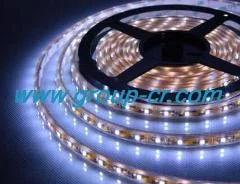
Strip is manufactured in repeating electrical groups, and the cut mark sits at the boundary between them. Our waterproof 5060 strip is cuttable every three lamps, which is stated on the product page.
Cutting anywhere else severs a group mid-circuit and kills the section. That section cannot be recovered - it is not a fault, it is a cut in the wrong place.
Joining And Reconnecting
Soldered joints outperform clip connectors on reliability, particularly in sealed strip where a clip cannot be properly re-sealed.
Observe polarity. RGB strip has four conductors and RGBW has five; a reversed connection produces no light rather than damage, but a crossed colour channel produces a very confusing commissioning session.
Heat And Mounting
Strip mounted directly onto a plasterboard surface has nowhere to put its heat. On any run of significant length, mount into an aluminium channel - it doubles as a heat sink and as a neat finish.
Do not coil unused strip on the reel and power it. Concentrated heat on a wound reel will damage the LEDs within minutes.
Adding Control
The controller sits between the driver and the strip, and must be rated for the current the run draws. Our RF controllers publish their control current per channel.
For runs longer than one controller can carry, use an amplifier or split the run across controllers assigned to the same zone.
Product ranges covered in this guide
Questions About This Topic
Where exactly can I cut the strip?
At the marked intervals stated on the product page. On our waterproof 5060 strip that is every three lamps.
Why is the end of my run dimmer than the start?
Voltage drop. Feed the run from both ends, or split it into shorter sections each fed from the driver.
What size driver do I need?
Total the wattage of the run and add about twenty per cent headroom. Send us the run length and the strip part number and we will specify it.
Other Guides In The Knowledge Centre
How To Choose The Right LED Lamp Base For Your Market
E27, E26, B22, E14, GU10 and MR16 explained, with the export mistakes that cost importers money.
Buying GuideLumens Not Watts How To Compare LED Bulbs Properly
Why wattage stopped being a measure of brightness, and what to ask a supplier instead.
Buying GuideLED Colour Temperature Explained From 2400K To 6500K
What kelvin values actually mean, where each band belongs, and how to avoid a room full of returns.
Design GuideHave A Specification Question
Send it by email with the application and the quantity. A written answer from someone who knows the range beats an hour of searching.