Start from what the part has to survive
The material question is really four questions: how much should it weigh, will its threads be cycled, does it need to resist corrosion, and does it need colour? Answer those and the choice usually makes itself from the materials GRACTS machines — aluminum 6061 and 7075, brass C360 and copper, stainless steel 303, 304 and 316L, carbon steel, and engineering plastics including POM and PEEK.
Aluminum is the default for bodies
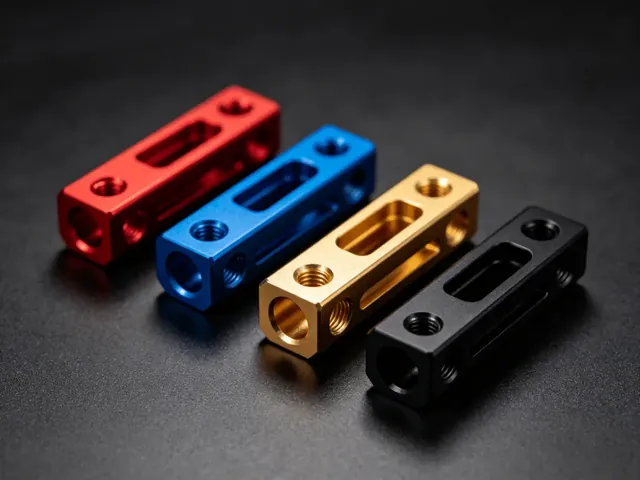
It cuts fast, which keeps small-batch cost down, and it is the only one of these metals that takes anodizing in Type II and Type III. For a hilt body, a chassis plate or a housing, aluminum is usually right. Its weakness is thread wear — aluminum threads that are cycled daily will not last as long as steel ones.
Brass buys weight and detail
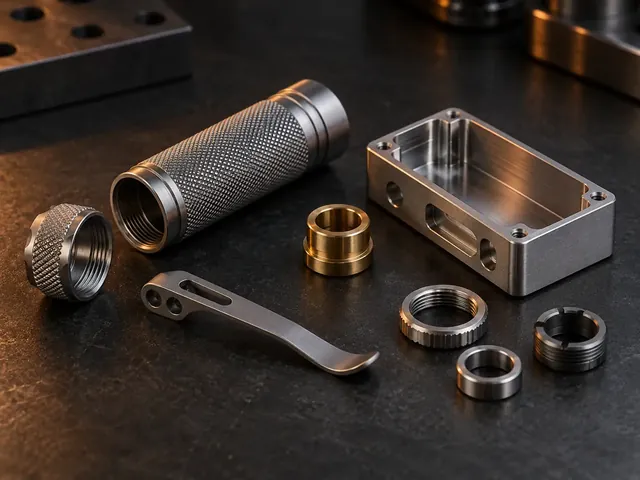
Brass C360 is free-machining, so fine knurls and small detail come out crisp. It also adds noticeable weight, which is the point on a small carried part and a problem on a long one. Bare brass patinas; specify a plated or polished finish if you want it to stay bright.
Stainless is for load and weather
303 machines more freely than 304 and 316L, which are chosen where corrosion resistance matters. All three are heavier and slower to cut than aluminum, so they show in both the weight budget and the quote. Passivation is the standard treatment rather than a coating that can chip off an edge.
Plastics for insulation and friction
POM and PEEK are machined for parts that have to insulate, slide or stay light. They do not anodize or plate, and threads in plastic strip more easily than in metal — if a plastic part will be threaded and cycled, ask about a metal insert while the design is still open.
Say what you do not know
If you are not sure which grade suits the job, send the drawing with a note about how the part is used. A material recommendation against your actual application is more useful than a specification copied from a similar part.