
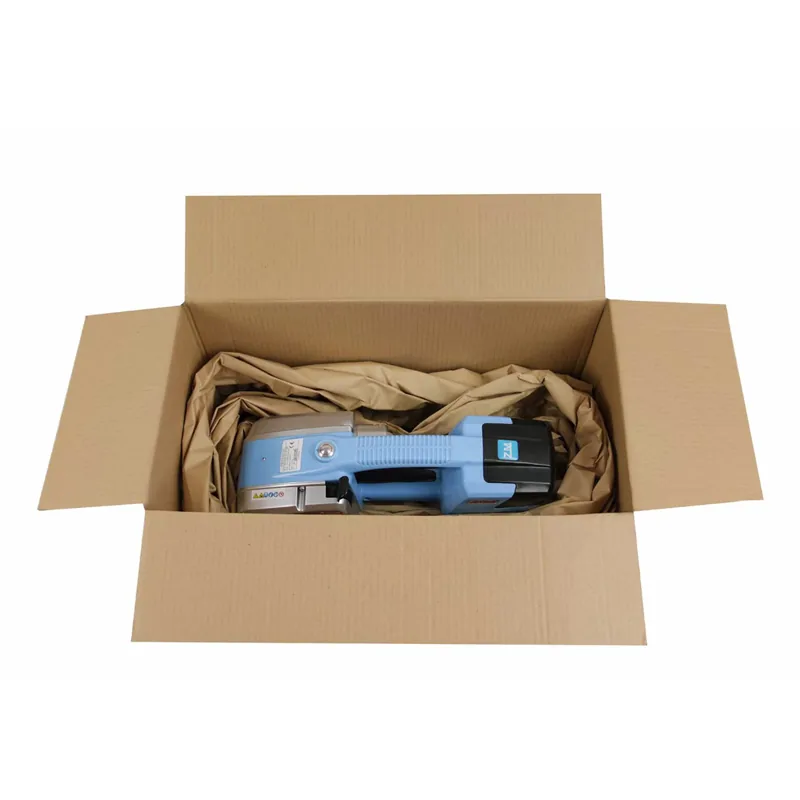
Paper Cushion Production Cell
Cushion paper quality is decided before the cushion machine, in the rewinding. A cell built as a rewinder and a former working in sequence produces a consistent pad. Buying only the former usually does not.
The Route From Requirement To Production
Incoming paper
Folds, wrinkles, holes and grit in the incoming reel end up as defects in the pressed cushion.
The EM-PR800 rewinder exists to remove them, producing paper that is flat and clean before it reaches the former.
One or two ply
Two layer paper supplies a stronger cushion effect than one layer.
The rewinder feeds from two unwinding rolls, so the second ply is laid up in the same pass rather than on another machine.
Hot pressing
Elasticity and flatness decide the finished product rate.
Heat transfer is stable, uniform and moderate, which is what gives good elasticity and high flatness in the pressed material.
Roll quality
A roll with many joints stops the downstream former repeatedly.
Roll ends come off flat with no more than two joints per roll.
Forming the pad
The pad is made at the bench, on demand.
The cushion making machine runs 70 gsm to 80 gsm paper at 760 mm and 25 metres per minute, at 100 kg, so it sits at the packing station.
Layout
The rewinder is 8500 mm long and the former is 1250 mm.
Plan the cell around the rewinder's length, with the former positioned at the packing bench rather than beside it.
What The Line Is Built From
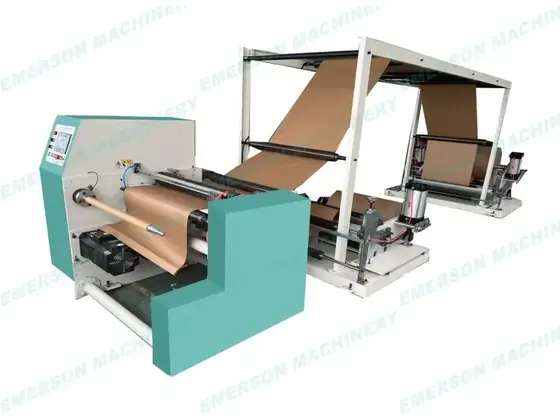
Two roll rewinder that prepares flat clean single or double layer cushion paper
View machine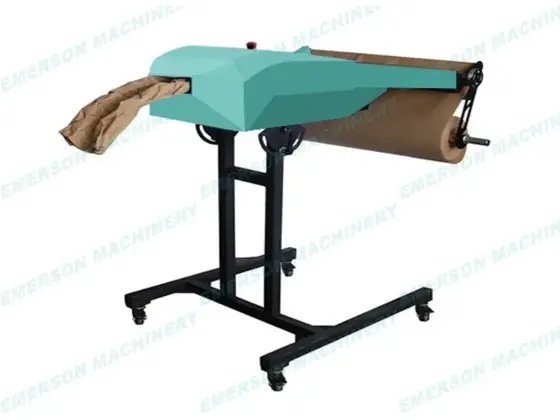
Forms one or two layer kraft into cushion pads at the packing station
View machinePaper Cushion Production Cell Questions
Can we buy the cushion machine on its own?
Yes, if you already have a source of flat, clean, evenly wound paper. If you do not, the pressed cushion quality will follow the paper quality.
What does the rewinder do for the finished cushion?
It removes folds, wrinkles, holes and grit, lays up two layers where needed, and delivers rolls with flat ends and no more than two joints.
What paper weight does the cell run?
70 gsm to 80 gsm at the cushion former, rewound at up to 760 mm wide.
Put This Route Against Your Own Numbers
Send your current packaging spend, the formats you run and your monthly volume. We will tell you which stage is worth doing first.