
Buying Guide
Choosing a Wheel Balancer LED or LCD and What Else Matters
Display type is the visible difference, but automatic rim measurement, shaft diameter and weight placement modes do more for the bay's throughput.
Display Type Is a Working Condition Decision
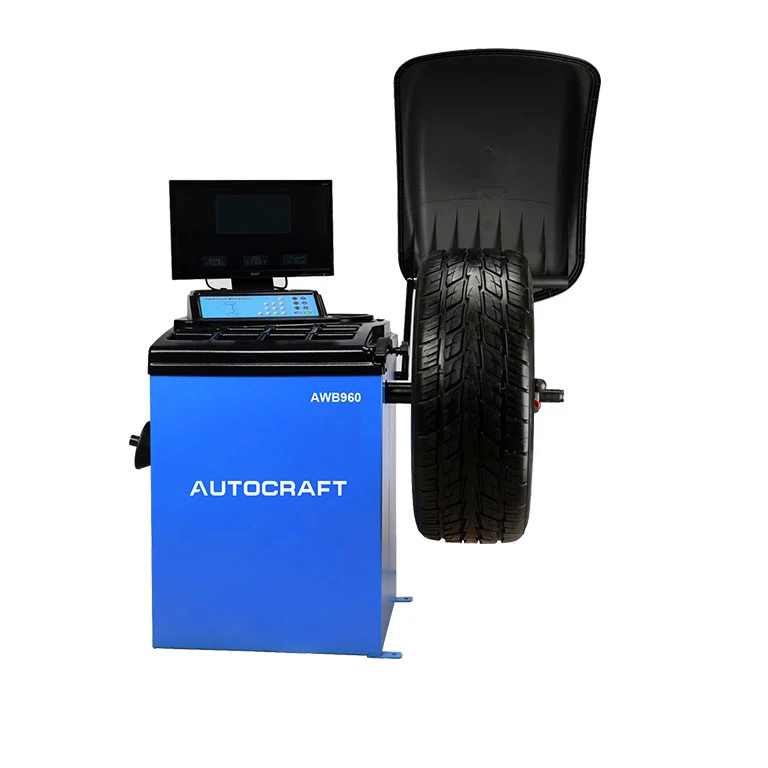
An LED display stays legible regardless of how bright or dim the bay lighting is, which matters in a daylit or outdoor-facing bay. An LCD display carries a graphical interface, and on the AWB960 that means a 20 inch monitor with a 3D animation showing exactly where each weight goes. In a bay where several technicians share the machine, that graphical guidance shortens training and reduces misplaced weights.
Automatic Measurement Saves More Time Than It Looks
Entering rim distance and diameter by hand costs seconds on every wheel and introduces errors that show up as comebacks. Most of the AWB range measures automatically, and some models go further.
- AWB950: measures A and D automatically
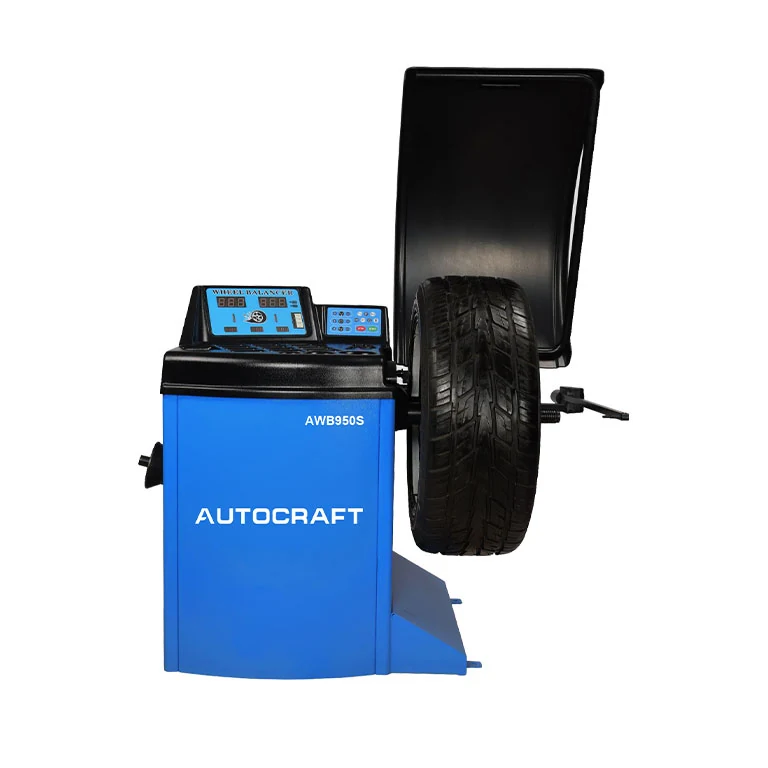
- AWB950D and AWB950S: measure rim diameter, distance and width
- AWB960: automatic distance and diameter measurement with a 20 inch LCD
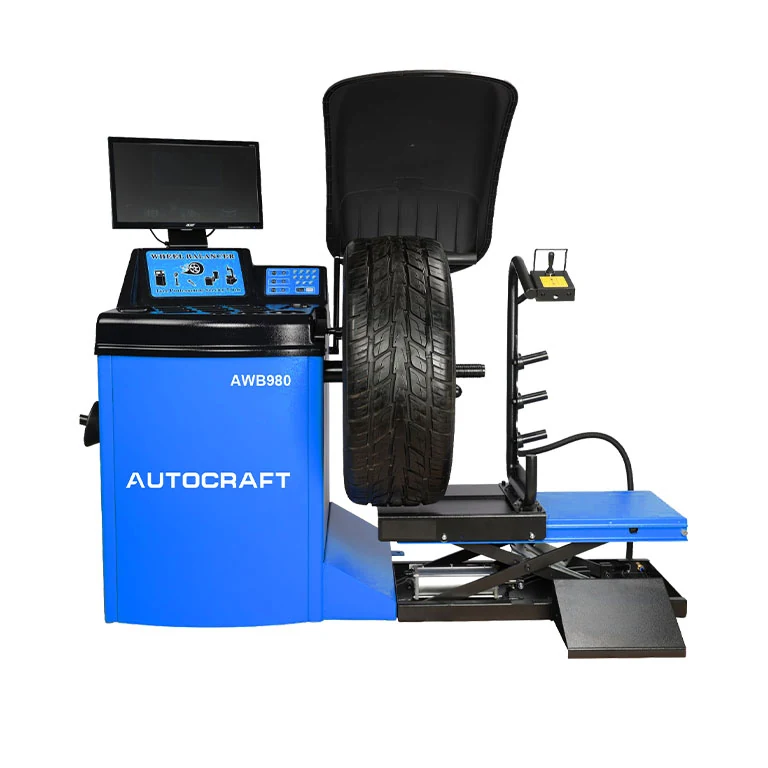
- AWB980: automatic rim diameter and distance, built for bigger and heavier tyres
Shaft Diameter Sets the Wheel Size Ceiling
A light shaft flexes under a large wheel and spoils repeatability. The AWB950 uses a 40 mm main shaft, which is what makes tyres up to 26 inches practical on it. The AWB950S is also rated for large tyres to 26 inches with high accuracy.
Weight Placement Modes Decide What the Customer Sees
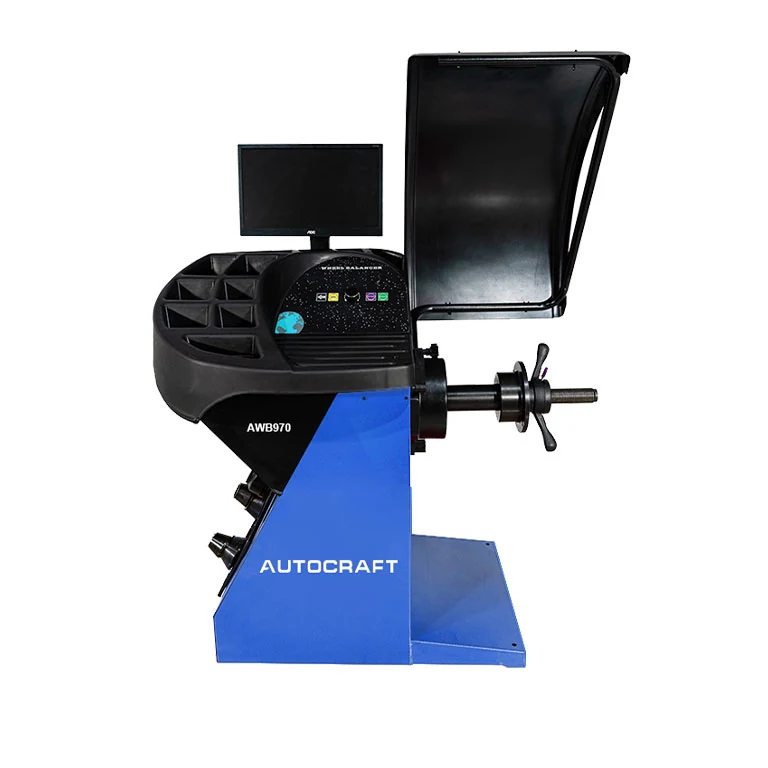
Customers reject visible weights on the face of an alloy wheel. Hidden and decomposed weight functions place the correction behind the spokes. The AWB980 carries both, along with five aluminium alloy rim modes and a static equilibrium mode; the AWB970 covers dynamic, static, ALU1 to ALU5, split and hide, and APS.
Heavy Wheels Need a Lift
If the bay handles van and light truck wheels all day, the optional tyre lift on the AWB980 is what keeps the technician out of the injury statistics. It loads and unloads the wheel onto the balancer so nobody lifts it by hand.
Matching the Balancer to the Changer
Balance to the same wheel size range as the tyre changer. A changer rated to 24 inches paired with a balancer rated to 26 inches leaves headroom; the reverse creates a bottleneck you discover after installation.
Equipment Referenced in This Guide
Frequently Asked Questions
Which models handle tyres up to 26 inches?
The AWB950 with its 40 mm main shaft, and the AWB950S which is designed for large tyres to 26 inches with high accuracy.
Can the machines display ounces instead of grams?
The AWB970 has gram/ounce and millimetre/inch selection built in.
Do they need to be calibrated by an engineer?
The range has self calibration and self diagnosis functions, with the procedure in the supplied manual.
What does the hidden weight function do?
It places the correction weight behind the spokes so it is not visible on the face of the alloy wheel.
Is the tyre lift included on the AWB980?
It is optional. Tell us the wheel weights you handle and we will advise whether to include it.
More From the Knowledge Center
Two Post or Scissor Lift for a General Repair Bay
The choice is usually decided by the building rather than the vehicles. Here is how ceiling height, slab condition and the work you take in point to one or the other.
Clear Floor or Base Floor Two Post Lift
Both carry the same 4 tonnes. The difference is where the connection between the columns runs, and that decides which building each one suits.
R134a and R1234yf What Changes in the Service Bay
Two refrigerants now share the road, and one machine cannot always serve both. Here is what actually differs and how to decide between separate stations and a dual system machine.
Apply This to Your Own Bay
Send your ceiling height, floor condition and vehicle mix and we will tell you which of these models actually fits.