Carbide Saw Blade Selection Guide
How to select carbide saw blades: tooth type, shape, opening mode, coating, body material, and tip grade for metal, wood, and composite cutting.
What a Carbide Saw Blade Actually Is
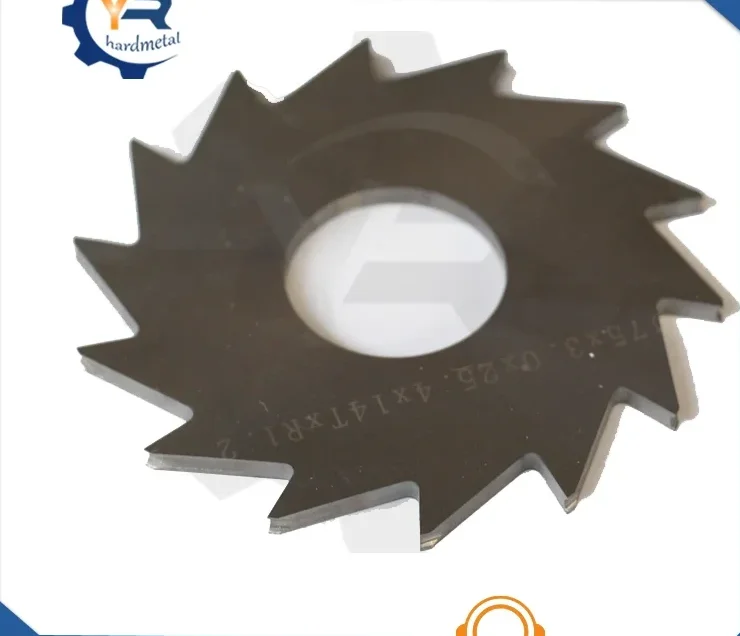
A carbide saw blade is a circular disc with carbide tips brazed or inserted into a steel body. It is used for cutting metal, wood, and composite materials in industrial sawing operations. The blade's performance depends on the tooth geometry, material, and coating. The body material and tip grade must match the workpiece and cutting conditions.
Tooth Type and Tooth Shape
Tooth type determines cutting speed and chip removal. Coarse tooth is for fast cutting of soft materials. Fine tooth is for clean cuts in hard or brittle materials. Toothless blades are used for abrasive or non-metallic materials. Tooth shapes include sharp tooth, circular arc tooth, staggered tooth (left and right, high and low), R-shaped tooth, angle tooth, and opposite tooth. Each shape affects chip control and cutting stability.
Body Material and Tip Grade
The blade body is made from forged high-performance high-speed steel (M42, W18Cr4V, 6542/M2, W9Mo3Cr4V) or hard alloy (tungsten steel K10, K15). K10 and K15 are tungsten carbide grades with 6% and 15% cobalt, respectively. K10 is harder and used for non-ferrous metals. K15 has higher toughness and is used for interrupted cuts or shock-prone applications.
Tooth Opening Mode
Tooth opening mode affects chip clearance and blade rigidity. Milling opening creates a wider gap between teeth and is used for heavy-duty cutting. Grinding opening is more precise and used for fine cuts. Non-grinding opening is for low-cost, high-volume production. Full grinding opening provides the best chip flow and is used in high-precision applications.
Surface Coating and Color
Blades are available in natural color or with various coatings. Coatings improve wear resistance, reduce friction, and extend tool life. The coating type depends on the material being cut and the cutting environment. Natural color blades are used for general-purpose cutting without special surface requirements.
What To Send With an Enquiry
Outer diameter, aperture, thickness, tooth type, tooth shape, opening mode, coating, and the material being cut. If the grade is not known, describe the workpiece material, cutting speed, and feed rate. Stock sizes ship 3-5 days after payment; custom sizes carry a stated lead time in the quotation.
Questions Buyers Ask
What is the difference between K10 and K15 carbide tips?
K10 has 6% cobalt and is harder, used for non-ferrous metals and continuous cutting. K15 has 15% cobalt and higher toughness, used for interrupted cuts or shock-prone applications.
Can you supply blades with different tooth shapes?
Yes. Available tooth shapes include sharp tooth, circular arc tooth, staggered tooth (left and right, high and low), R-shaped tooth, angle tooth, and opposite tooth.
Do you offer coated blades?
Yes. Blades are available in natural color or with various coatings to improve wear resistance and cutting performance.
What body materials do you use?
Forged high-performance high-speed steel (M42, W18Cr4V, 6542/M2, W9Mo3Cr4V) and hard alloy (tungsten steel K10, K15).
How long is the lead time for custom blades?
Custom blades are quoted with a stated lead time. Stock sizes ship 3-5 days after payment is received.
Have A Part In Mind
Send the drawing and the service conditions and you will get a grade recommendation with the quotation.