Tungsten Carbide Rod Buying Guide
How to specify tungsten carbide rod: grade, grain size, coolant hole configuration, h6 ground versus unground blanks, and what to send with an enquiry.
What a Carbide Rod Actually Is
A tungsten carbide rod is a sintered cylindrical blank made from tungsten carbide and cobalt. It is used as the raw material for grinding end mills, drills, reamers, and punches. It is also used directly as a wear-resistant component in applications requiring a hard, durable cylindrical part. The rod's grade determines its performance in the final tool or part.
Grade and Cobalt Content
Cobalt content influences the balance between hardness and toughness. YL10.2 has 10 percent cobalt with a fine 0.6 to 0.8 micron grain and high transverse rupture strength. YG6 has 6 percent cobalt and is harder but more brittle. YG15 has 15 percent cobalt and is more impact-resistant. The grade is selected based on the application's wear and shock requirements.
Ground h6 Rod Versus Unground Blank
Ground h6 rod is supplied to precise diameter and straightness, ready for direct use in fluting or grinding machines. Unground blank is lower in cost per kilo but requires in-house grinding and carries risk of out-of-straightness. For short production runs, ground rod reduces total cost. For large tool runs with internal grinding capacity, unground blank may be more economical.
Coolant Hole Configurations
Rods are available solid, with a single central coolant hole, or with two ducts twisted at 30 degrees. Twisted ducts align with the flute helix in helical tools, ensuring coolant reaches the cutting edge efficiently. Single central holes suit drills and straight-fluted tools. Solid rods are used where external coolant is applied.
What To Send With an Enquiry
Specify diameter, length, whether ground or unground, coolant hole configuration, the required grade or the application, and the quantity. If the grade is unknown, describe the workpiece material and cutting conditions. Stock sizes ship 3-5 days after payment. Custom sizes have a stated lead time in the quotation.
Products Covered In This Guide
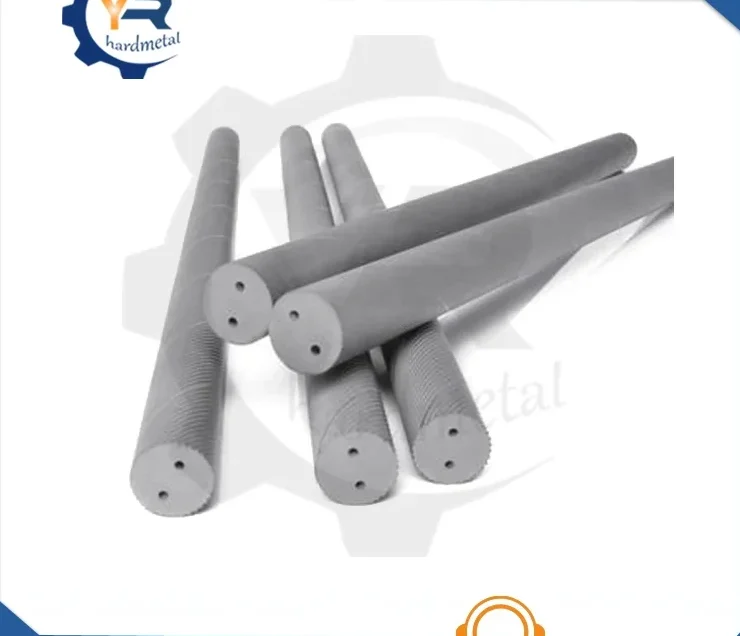
Two 30º Twisted Coolant Ducts Rod
This is a tungsten carbide rod with two 30º twisted coolant ducts, designed for use in cutting…
View Details →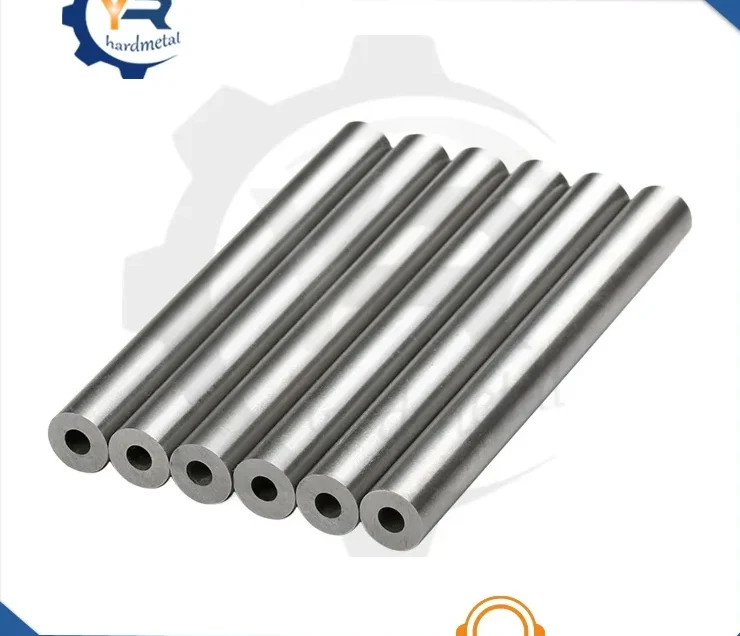
Coolant Single-hole Tungsten Carbide Rod
This is a tungsten carbide rod with a single coolant hole, designed for use in machining and…
View Details →Questions Buyers Ask
What is the difference between YL10.2 and YG10?
Both are 10 percent cobalt, but YL10.2 has a 0.6 to 0.8 micron grain and reaches 92.2 HRA with TRS above 4000 MPa. YG10 has a 1.2 to 2.0 micron grain and is at 85.5 HRA with TRS around 2600 MPa. The finer grain in YL10.2 makes it better for cutting tools.
Can you cut rod to length?
Yes. Rod is cut to the length specified in the enquiry, and chamfered ends are available.
Do you supply rod with coolant holes?
Yes, both single central hole and two ducts twisted at 30 degrees.
Is there a minimum order?
Not published on the source material. confirm with the sales team when you send diameters and quantities.
How is rod checked before it ships?
Physical properties, shape and tolerance are checked before shipping. Inspection photographs are sent to the buyer for confirmation before delivery.
Have A Part In Mind
Send the drawing and the service conditions and you will get a grade recommendation with the quotation.