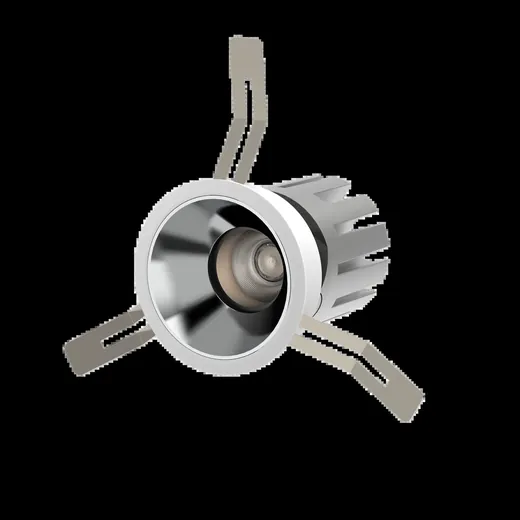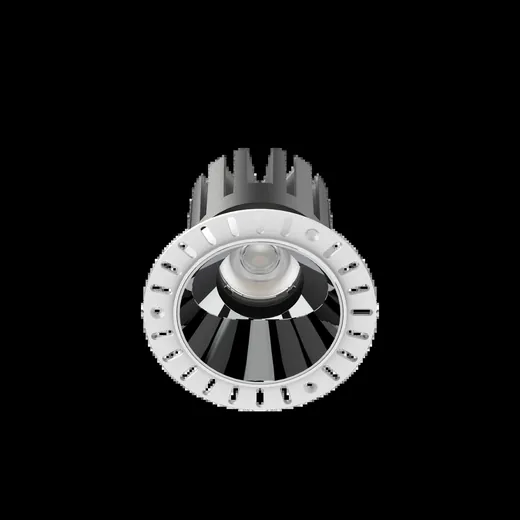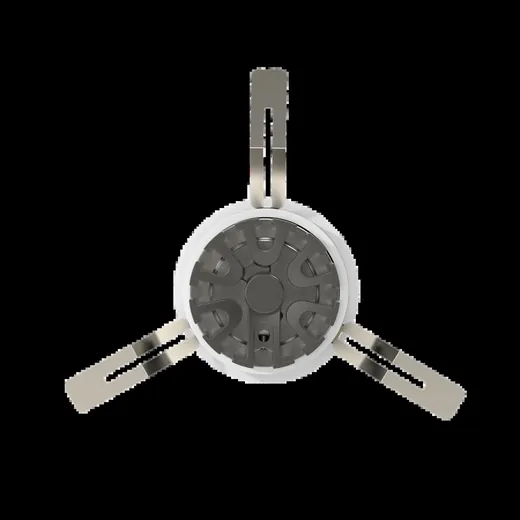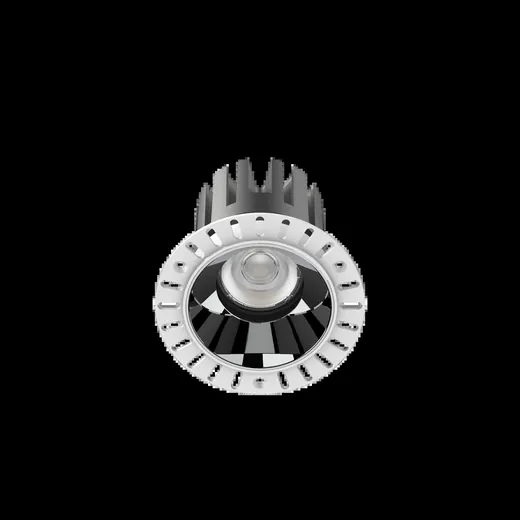

The Core Difference Is Who Can Change It Later
A recessed spotlight is a permanent decision. The hole is cut, the fitting is seated, and moving it means patching the ceiling. A track head is a reversible decision: it clips on, slides along the rail and comes off in seconds.
Everything else follows from that. If the layout is settled, recessed wins on appearance. If the layout will change, track wins on cost of change.
Ceiling Construction Decides For You
Plasterboard and mineral tile ceilings take recessed fittings easily. Concrete soffits, exposed services, listed buildings and rented units often cannot be cut at all.
Track needs only a fixing point and a feed, which is why it dominates in shell-and-core retail units and in galleries with structural ceilings.
Comparing The Catalogue Ranges
The recessed spotlight families run from 3 W mini heads to 30 W display heads, with cutouts from Ø35 mm to Ø95 mm and beam angles from 5° to 60°.
The track range runs 7 W to 40 W with 15° to 50° optics in bodies from Ø40 mm to Ø110 mm. Both use COB platforms and aluminium housings, so the light quality is comparable; what differs is the mounting.
Appearance And The Finished Ceiling
Recessed fittings, especially trimless ones, disappear. The ceiling reads as a plain surface. Track is visible by design - the rail is part of the look, which suits industrial and gallery interiors and looks out of place in a hotel bedroom.
Many projects use both: recessed in the fixed zones, track over the areas that change.
A Decision Checklist
Choose recessed when the ceiling can be cut, the layout is fixed, and the ceiling should look uninterrupted.
Choose track when the ceiling cannot be cut, the displays move, the tenant may change, or the scheme needs to be re-aimed without a contractor.