Why Cheap Downlights Glare
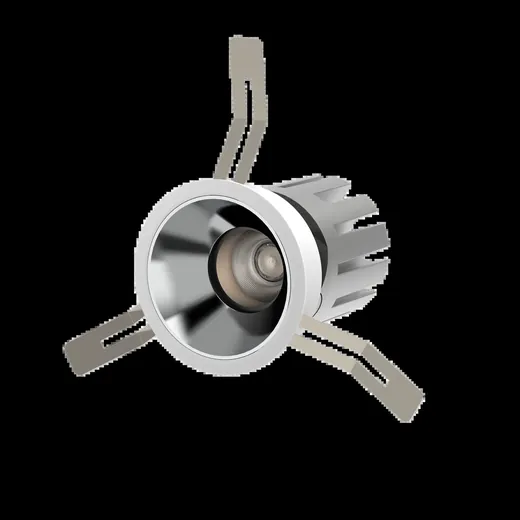
Most uncomfortable fittings share one feature: the light source sits close to the aperture face. From a normal viewing angle you can see the diode or the diffuser directly, and a small very bright surface in the field of view is the textbook definition of discomfort glare.
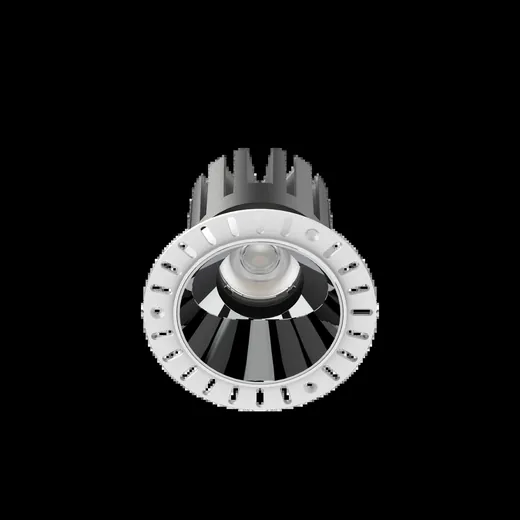
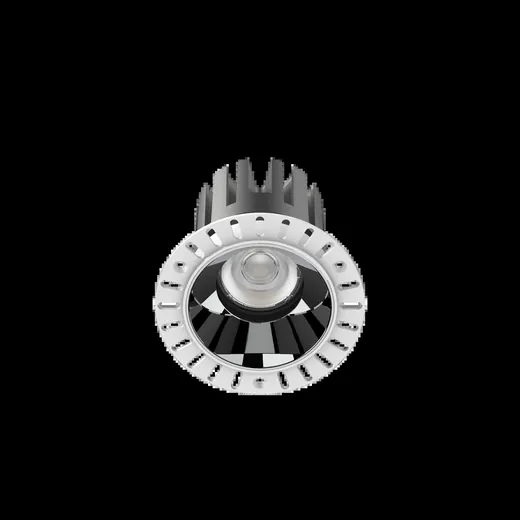
The fix is geometric. Push the source deeper into the body, line the cavity with a finish that absorbs stray light, and the aperture reads dark from any angle except directly underneath.
Source Depth Is The First Check
Hold a sample at arm's length and tilt it. If you can see the emitter at 40 to 50 degrees off vertical, that fitting will glare in a room where people are seated or walking.
This is why body depth matters in the catalogue. A Circular Border spotlight at 116 mm deep is not deep because of the heat sink alone - the depth is what buys the cut-off angle.
Reflector Finish Changes The Result
Four finishes appear across the spotlight families and they behave differently. Gun black and matt black absorb light at the aperture, giving the darkest ceiling and the lowest perceived glare. Matt white is a compromise that keeps the aperture visually quiet against a white ceiling. Bright silver returns the most light but makes the aperture more visible.
For bedrooms, waiting rooms and offices with screens, specify the dark finishes. For storage, plant rooms and back of house, silver is a reasonable trade.
Beam Angle And Spacing
Glare complaints also come from over-lighting. If the ambient level is too high, every fitting has to work harder and every aperture is brighter than it needs to be.
A better approach is to light the task and the vertical surfaces properly and let the general level sit lower. Deep anti-glare fittings make that possible because the contrast does not feel harsh.
What To Ask A Supplier
Ask for the body depth, the reflector finish options, the available beam angles and the cutout. Those four numbers tell you more about comfort than any marketing sentence.
YiYo Lighting publishes all four for every catalogue model, and anti-glare behaviour is one of the items checked in the company's own lighting laboratory before a model is catalogued.