
Two Ways To Package The Same Light
An SMD package carries individual diodes mounted on a board. A COB - chip on board - package puts many bare dies on a single substrate under one phosphor layer, producing one continuous emitting surface.
Neither is better in the abstract. They behave differently, and the right one depends on what the fitting has to do.
COB For Beam Control
A single small emitting surface is much easier to control optically. A reflector can take a COB source and produce a clean 15° or 24° beam with a defined edge and no multiple shadows.
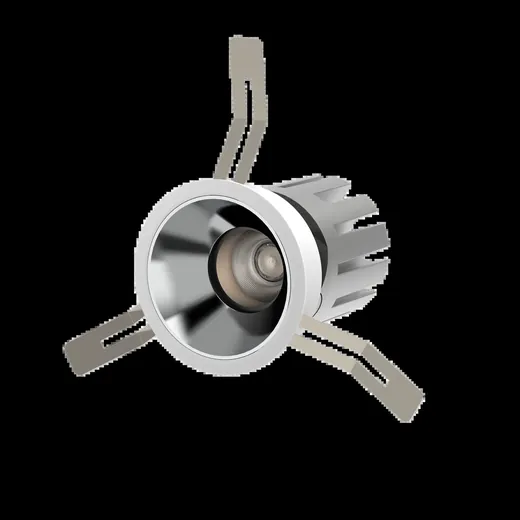
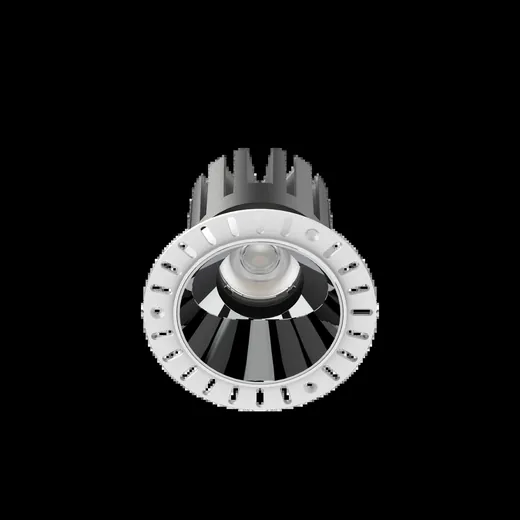
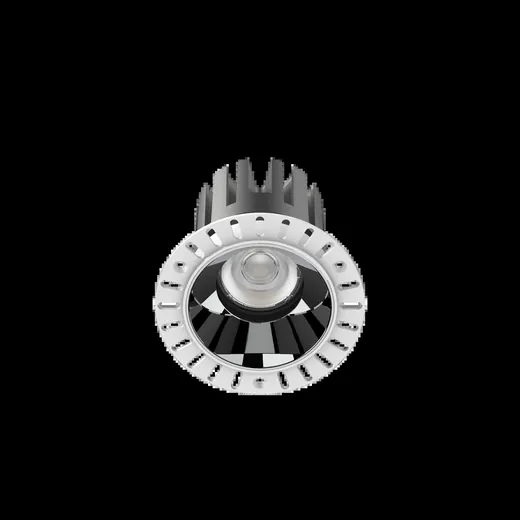
This is why the track heads, the deep anti-glare downlights and the grille modules use COB platforms, listed in the catalogue as 1313-08 and 1616-11 chip holders on the grille and spotlight ranges.
SMD For Even Wash And Compact Bodies
SMD sources spread across a wider area, which suits general downlighting where an even wash matters more than a sharp beam edge. The DL830 series uses SMD 2835 for exactly that reason.
SMD also fits in very shallow bodies, which is how the S1 Series mini heads reach 45 mm body depth on the 3 W versions.
Chip Platforms In The Catalogue
Alongside COB and SMD the model sheets name specific platforms: 1304, 1204, 1507 and 0202 on the S1 Series heads, SMD 2835 on the DL830 downlights, and COB throughout the track and TD downlight ranges.
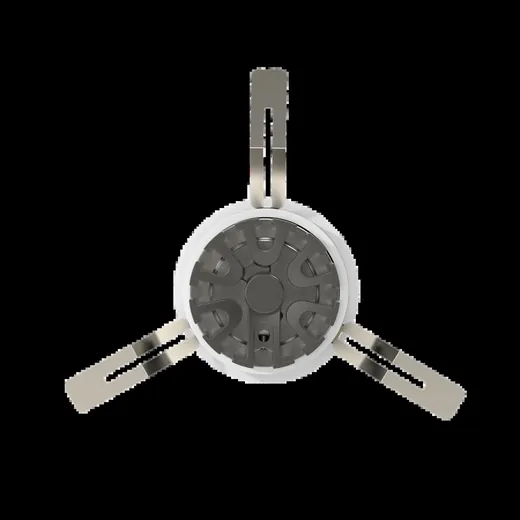
The platform is matched to the body, because the thermal interface between chip holder and die-cast housing is part of the design rather than an afterthought.
What This Means When You Specify
If the job is accent lighting - a shelf, a plinth, a painting, a product - ask for COB. If the job is a flat even level across a corridor or an open-plan floor, SMD is usually the more economical answer and the difference will not be visible.