
Moldflow Simulation
Simulation software for high-end plastic injection moulding, used to reduce manufacturing defects before the tool exists.
Simulation is not a sales exhibit. It is run to answer six specific questions, and the answers change the tool design while changing it is still free.
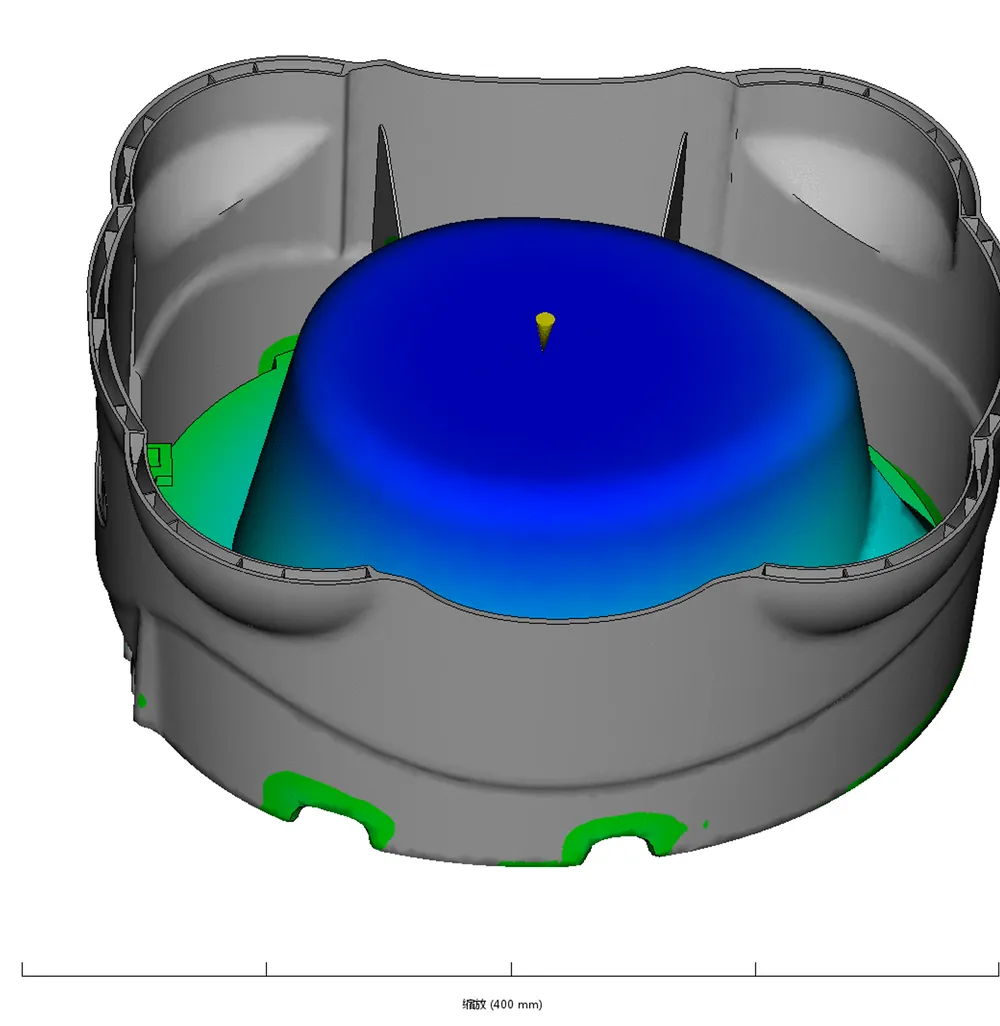
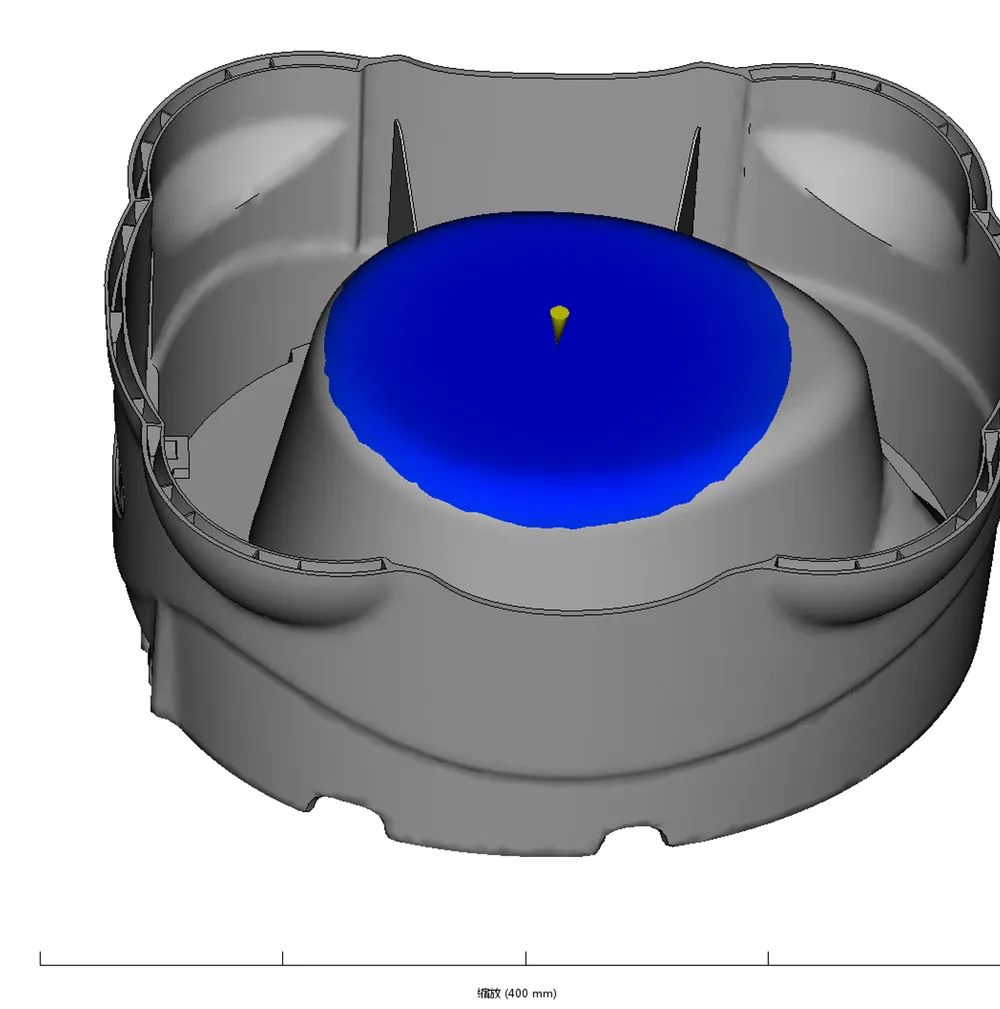
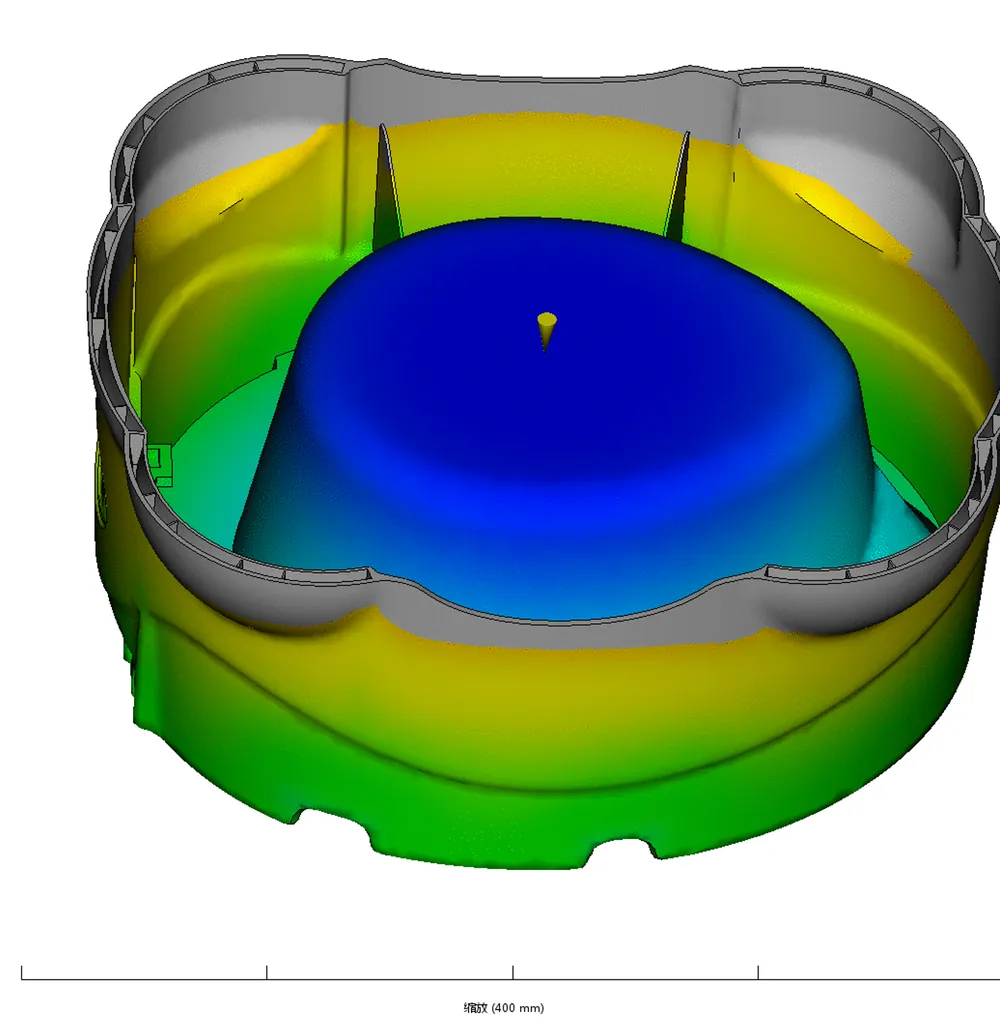
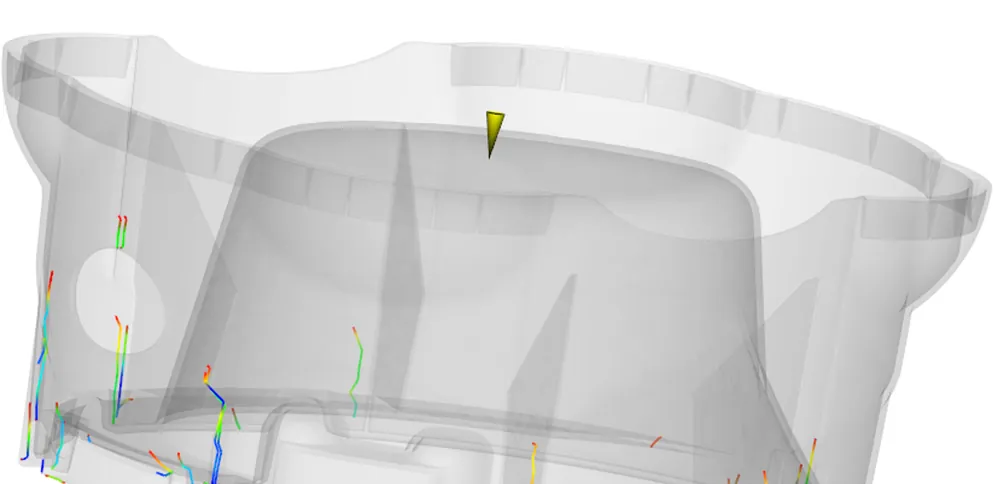
The images on this page are real result views from TJ-Teck projects: the melt front leaving the gate, the fill pattern at mid stage, the last-filled areas at end of fill, and a result view marking weld lines and air trap positions.
Reading a fill result
The coloured band is the melt front at a moment in time. Where two bands meet, you get a weld line. Where a band arrives last and is enclosed, you get an air trap. Both become visible on the screen weeks before they would become visible on a part.
What changes as a result
Usually the gate moves, or a second gate is added, or a wall section is adjusted. Occasionally the answer is that the part needs a vent in a place the mould design had not planned for.
When it is worth running
On transparent parts, on long thin parts, on anything with multiple apertures, and on any part where the cycle time drives the piece price. On a simple straight-pull cover with one gate, it usually is not.
Why it is run
Six questions the simulation is run to answer:
- To verify gating position and filling
- To shorten molding cycle time
- To optimize venting and avoid air traps and sinking marks
- To define clamping force and IMM tonnage
- To check cooling efficiency
- To reduce deformation and distortion
Result views from real TJ-Teck projects
Images taken from project output, not from a software brochure.
Frequently asked questions
Does simulation guarantee a defect-free part?
No. It reduces manufacturing defects by showing where they will form, so the tool design can move them somewhere harmless.
Can you simulate a tool we already own?
Yes, if you can supply the part 3D data and the gate position. The result explains where existing defects are coming from.
Is clamping force calculated too?
Yes. Defining clamping force and IMM tonnage is one of the six things the study is run for.
Moldflow Simulation for your project
Send what you have. If it is not enough to quote accurately, you will be told exactly what is missing.