
Injection tooling for automotive interior & exterior
Interior trim and covers, where grain consistency, draft angle and slide design carry the whole quality argument.
Automotive Interior and Exterior is one of the part groups the TJ-Teck site defines for its plastic parts work. The tooling discipline it demands is different from electronics: larger tools, textured faces almost everywhere, and a customer who measures gap and flush rather than function.
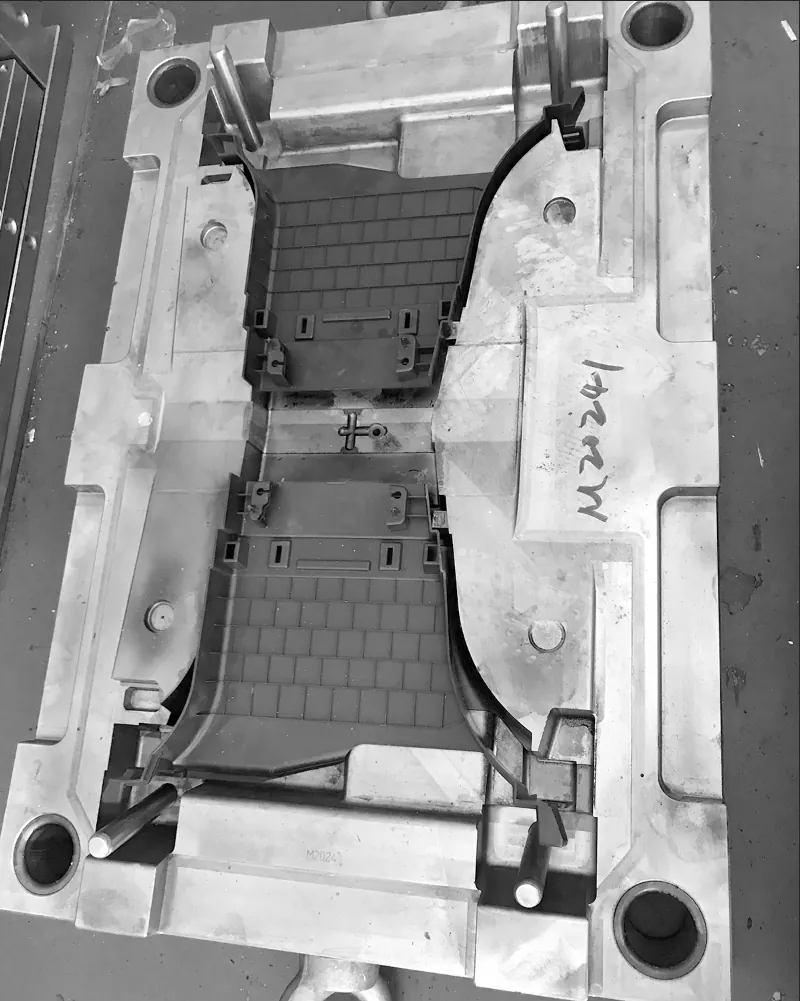
The reference tooling on this site includes large machined cores for deep-draw housings and mould halves with slide pockets and angle pins, which is the construction that trim parts need.
What matters here
Four things this sector gets wrong most often
Draft angle set for the actual grain
Deeper grain needs more draft. The required draft for the specified grain code is written into the DFM report before the cavity is machined, not discovered as drag marks after the first trial.
Slide and lifter steel lines reviewed by name
Slide Design & Steel Line and Lifter Design & Steel Line are two of the fourteen DFM items, because on a trim part the slide face is usually a visible face.
Large cores machined and bench fitted
Deep-draw cores are milled and then fitted on the bench, which is what keeps the shut-off line tight on a part that is too big to correct with clamp pressure.
Built to European and American shop standards
TJ-Teck's management and staff came out of tooling work aimed at European and American markets, and the component standards on the quotations reflect that.
Reference parts
TJ-Teck parts used in this sector
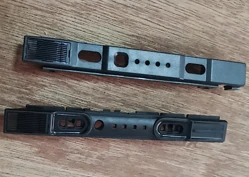
Plastic Cover
A moulded cover with button apertures and a textured face, the kind of part where aperture position and texture consistency decide whether it is accepted.
View part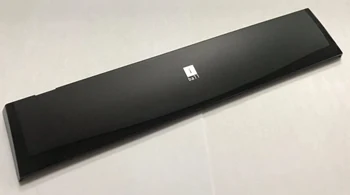
Plastic Cover with Pad Printing
A long, slim appliance fascia cover moulded in one shot and decorated with a pad printed mark, so the panel leaves the tool shop already branded.
View part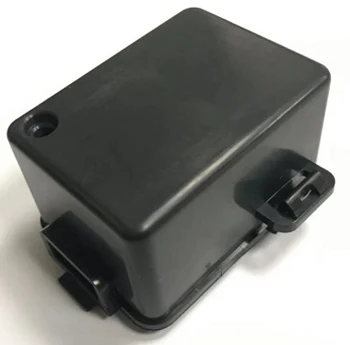
Electronic Box
A moulded enclosure with integrated snap latches, a cable port and a sealing lip, built so the housing closes and seals without added hardware.
View partTooling for automotive interior & exterior
Send the 3D data, the annual volume and the surface requirement. A quotation comes back in 1-3 working days.