
Cap with Threads
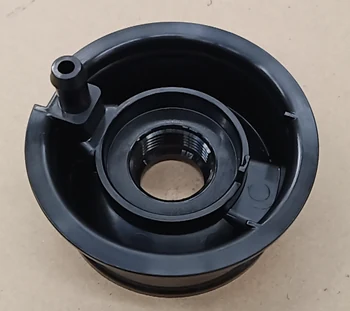
Plastic moulded part with a thread structure: an internally threaded cap with a moulded spout, released by an unscrewing mould rather than a split core.
The problem
A moulded thread can be made two ways.
A moulded thread can be made two ways. The cheap way splits the core and leaves a witness line straight through the thread flank, which leaks and cross-threads. The right way unscrews the core, and it has to be designed in from the start.
TJ-Teck builds unscrewing moulds as a standard mould type, so the thread comes off a single unbroken core and the flank stays clean all the way round.
How this part is tooled
The source description for this part is short and exact: plastic moulded parts, thread structure. What sits behind it is the decision between a split-core thread and an unscrewing thread, and that decision changes the tool, the cycle and the price.
A split core is cheaper to build. It leaves two parting lines running along the thread flank, and on a sealing thread that flash line is where the leak path forms. For anything that has to seal or be repeatedly opened, the unscrewing mould is the honest answer.
The part shown also carries a moulded spout on the outside wall and a captive ring at the base, both of which need their own action in the tool. Those actions have to be timed against the unscrewing stroke, which is exactly the kind of sequencing that gets reviewed in the mould layout before construction starts.
Part and tooling data
| Part type | Internally threaded cap with moulded spout |
|---|---|
| Process | Plastic injection moulding |
| Thread forming | Unscrewing mould, single continuous core |
| Mould action | Unscrewing core plus side action for the spout |
| Surface | Matt as shown |
| Material | Per your drawing or part specification |
| Thread specification | Per your drawing; sample thread gauge welcome |
| Cavitation | Quoted to your annual volume |
Values marked “per your drawing” are set from your data at quotation stage. TJ-Teck does not publish assumed dimensions for a customer part.
Typical applications
- Closures for containers and bottles
- Filter and cartridge housings
- Fluid connectors on equipment
- Threaded covers on agricultural sprayers
Industries
Engineering that applies here
Frequently asked questions
Why is an unscrewing mould more expensive than a split core?
It carries a rack, a gear train or a motor drive plus the sealing between the moving core and the cavity. The benefit is a thread flank with no parting line, so the closure seals and does not cross-thread.
Can you match an existing thread on a part we already buy?
Send a physical sample together with the mating part. The thread is measured and modelled before the DFM report is issued, and the report states what was measured.
What is the lead time for a quotation?
1-3 working days from receiving the 2D and 3D data or a sketch.
Related parts
Thread Clear Part
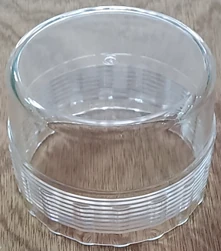
A transparent moulded cup with fine external ribbing and a threaded feature, run in a mirror-polished cavity where every tool mark ends up visible in the wall.
View part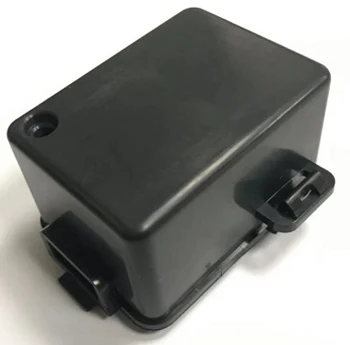
Electronic Box
A moulded enclosure with integrated snap latches, a cable port and a sealing lip, built so the housing closes and seals without added hardware.
View part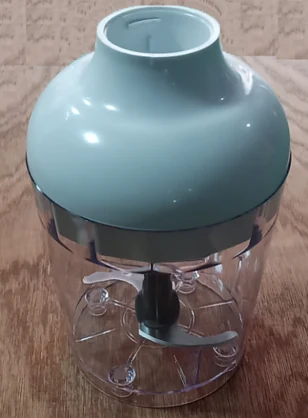
Blender Assembly
A multi-part appliance assembly: a transparent bowl, a coloured lid and a blade carrier, each with its own tool and all of them having to fit each other.
View partQuotation for the cap with threads
Attach 2D and 3D data, tell us the annual volume and the material, and a quotation comes back in 1-3 working days.