
Choosing between the eight injection mould types
Eight mould types appear on every TJ-Teck quotation. Picking the wrong one is the most expensive mistake available in a tooling project, and it is made before anybody looks at a price.
6 min read · TJ-Teck engineering notes
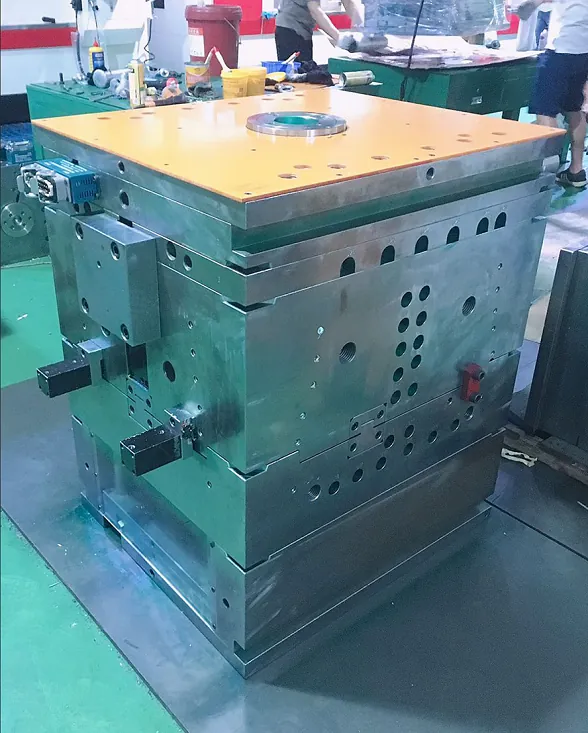
Start with the part, not the budget
Two features decide the mould type before cost enters the discussion: does the part have a moulded thread, and does it have an undercut that a straight pull cannot release. Everything else is a volume question.
The volume question
Cavitation is the only lever that reliably moves piece price. A single-cavity tool is cheap to build and expensive to run; a four-cavity tool is the reverse. The crossover depends on your annual volume, the cycle time and the machine rate, which is why a quotation asks for volume before it quotes cavitation.
Prototype versus production
A prototype mould is built in softer steel with fewer actions, for design verification and small pre-production batches. It is not a cheap production tool, and treating it as one is how a project ends up paying for two tools.
When a hot runner pays for itself
A hot runner removes the runner, which removes regrind and the labour of handling it, and it frees the gate from the part edge. The build cost is higher. On a high-volume part or a part where the gate has to sit in the middle of a face, it pays back quickly.
The two ways to do two materials
A 2K over mould uses two tools with a transfer step between them: lower tooling investment, longer effective cycle. A 2K rotational mould rotates the core between two cavities inside one cycle: higher tooling cost, a finished part every shot. Annual volume decides it.
The eight types side by side
| Standard Mold | The default two-plate tool for a part with no undercut. Lowest build cost and the fastest route to first samples. |
|---|---|
| Prototype Mold | A simplified tool for design verification and small pre-production batches, built in softer steel with fewer actions. |
| Reversed Mold | Cavity and core swapped relative to the usual layout, used where the cosmetic face has to stay on the moving half. |
| Multi-cavity Mold | Two or more identical cavities in one tool. The right answer once annual volume makes the extra build cost cheaper than the extra machine hours. |
| Unscrewing Mold | A rotating core that unwinds a moulded thread, so the thread flank has no parting line and the closure seals. |
| Hot runner Mold | No runner to regrind and a gate position that is not tied to the part edge. Built with HRS, Synventive, Husky, Incoe, Mold Master, YUDO, Mastip, Ewikon, Runipsys or DME systems. |
| 2K Over Mold | A rigid substrate moulded first, then a second material moulded over it. Two tools, a transfer step, lower tooling investment. |
| 2K Rotational Mold | The core rotates between two cavities inside one cycle, so a finished two-material part leaves the machine every shot. Higher build cost, much shorter cycle. |
Frequently asked questions
Can a multi-cavity tool be built as a family mould?
Where the parts are similar in volume and wall section, yes. It is quoted as a mould layout option so you can compare it against separate single tools.
Is a reversed mould more expensive?
Not inherently. It swaps cavity and core relative to the usual layout so the cosmetic face stays on the moving half, and it is priced like the equivalent standard tool.
Related notes
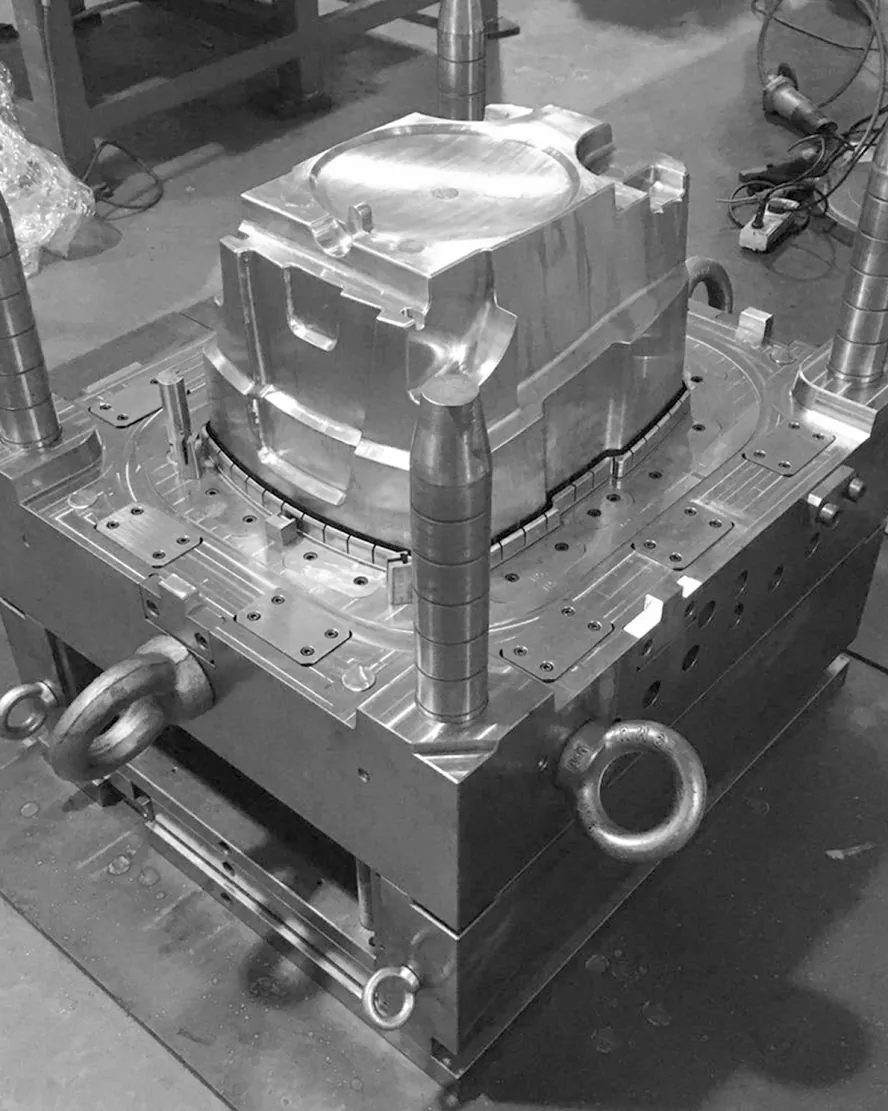
Mould steel grades and standard component brands, and why they appear on the quotation
A reference list of the steel grades, mould base suppliers, component suppliers and hot runner brands TJ-Teck quotes, with notes on when each grade is the right one.
7 min read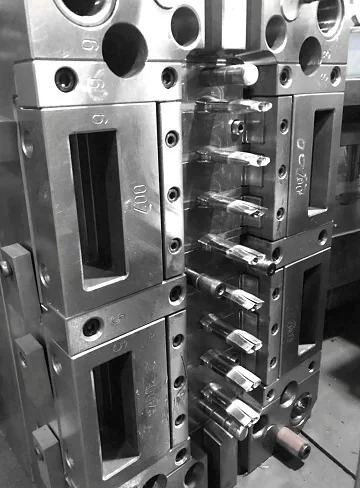
The fourteen DFM checks, and what each one catches
De-molding direction through markings and graining: the fourteen items in a TJ-Teck DFM report and the defect each one exists to prevent.
8 min readApply this to your own part
Send 2D and 3D data with the annual volume and the surface requirement. A quotation comes back in 1-3 working days.