
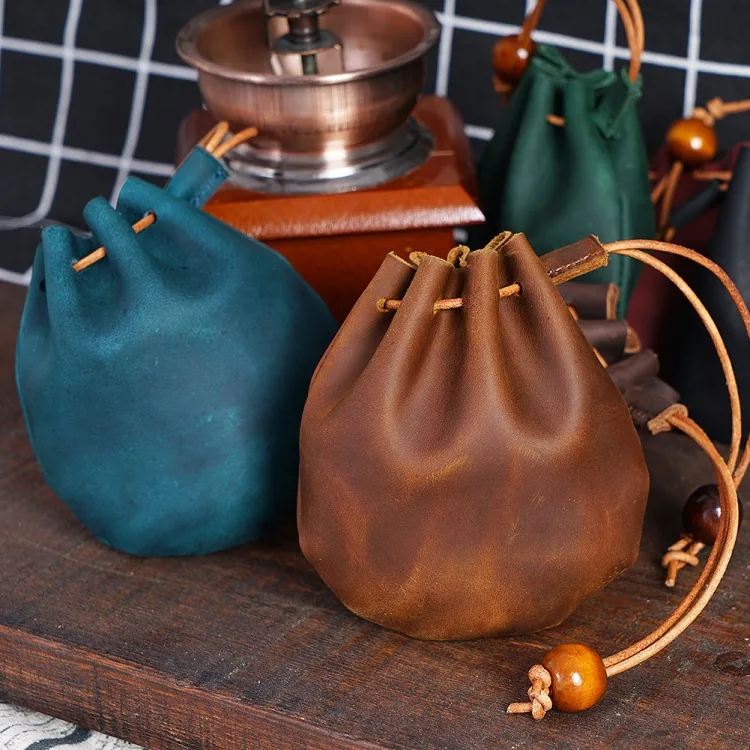
Guide
Full-Grain, Crazy Horse, Time-Tanned or Faux: Choosing Leather for B2B Accessories
Five leather types appear across this range and they are not interchangeable. What each one does under handling, and which products use which.
Full-grain
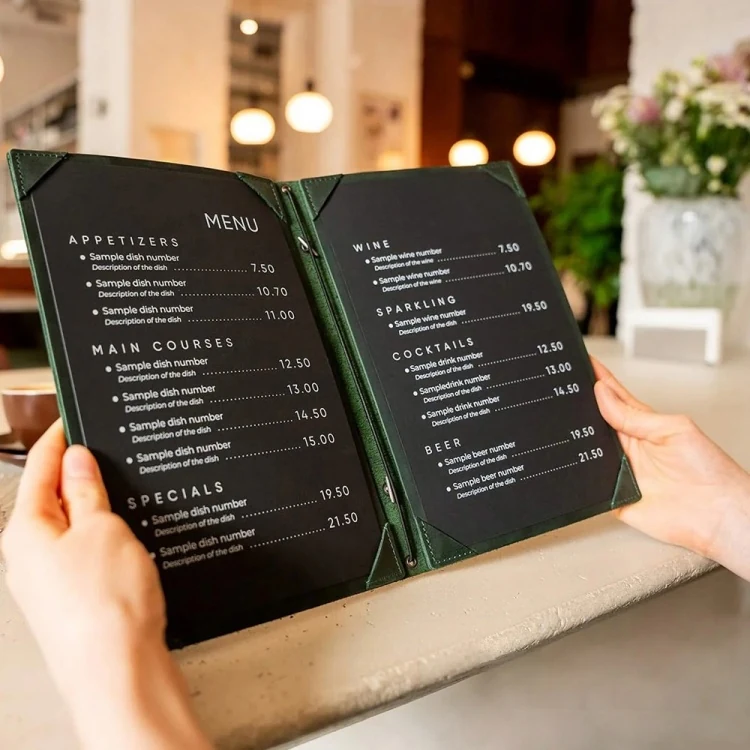
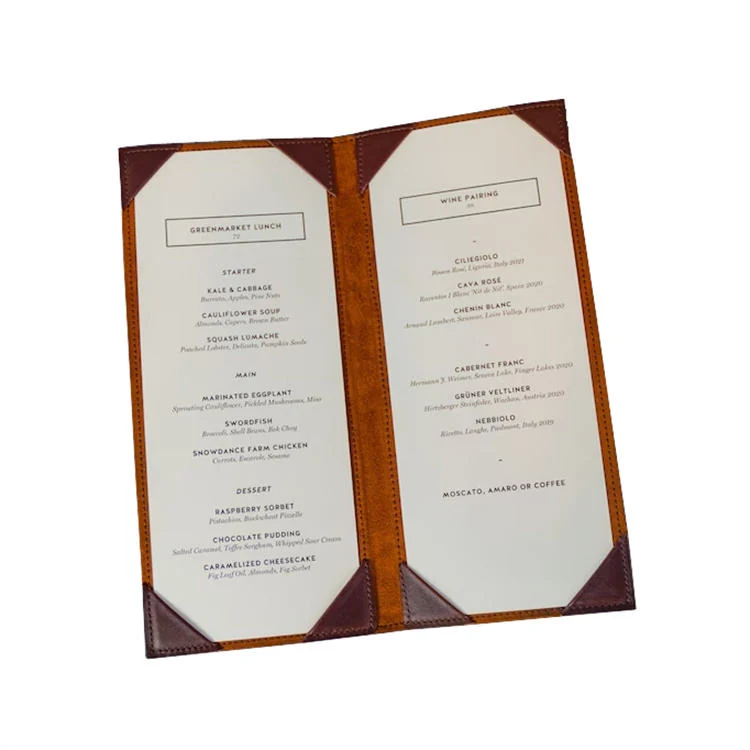
Used on the restaurant service notebook and the A4 menu holder. It is specified where the item is opened hundreds of times a week, because the uncut grain flexes at the fold instead of cracking. It develops patina rather than wearing through, which is why the menu holder is described as extending menu life rather than simply covering it.
Crazy horse
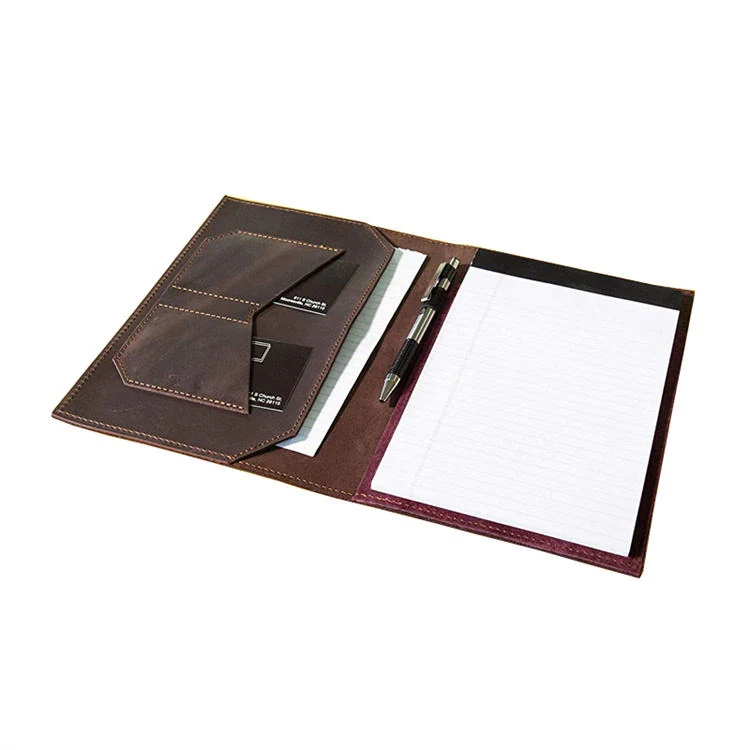
Used on the business notebook holder. The waxed finish scuffs deliberately: handling lightens the surface where it is touched and the mark settles into the finish. First marks appear within a month, a settled character by three. For a corporate gift this is the difference between an item that ages and one that looks damaged.
Time-tanned texture leather
A slow plant-tanning process, used on the X-buckle notebook cover. Behaves like crazy horse in its ageing but takes colour more evenly, and the tanning is what makes each cover read differently after three months of use.
Suede-feel leather
Used on the dark green menu holder. Chosen for hand-feel in a dining room rather than for abrasion resistance, and cleaned with a dry soft brush rather than a cloth.
Faux leather
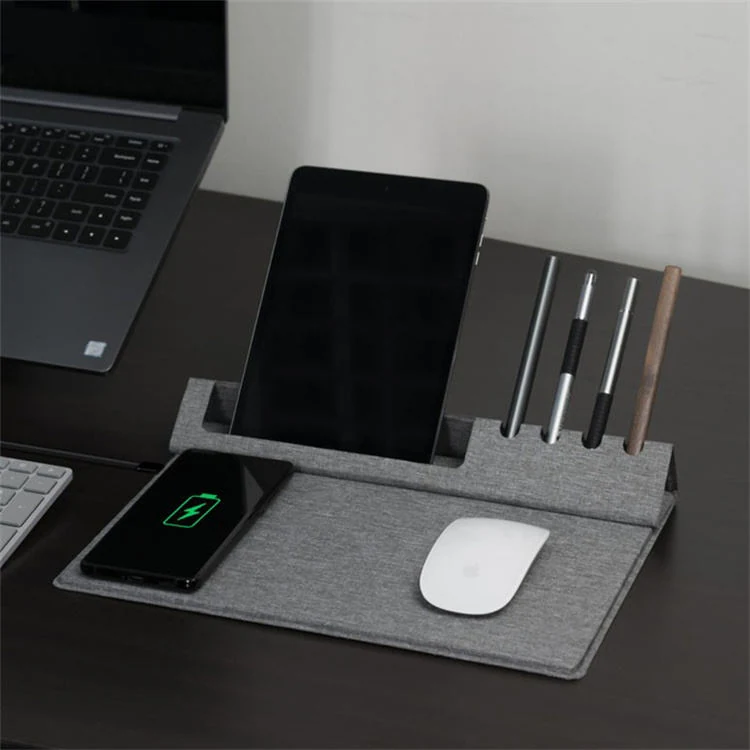
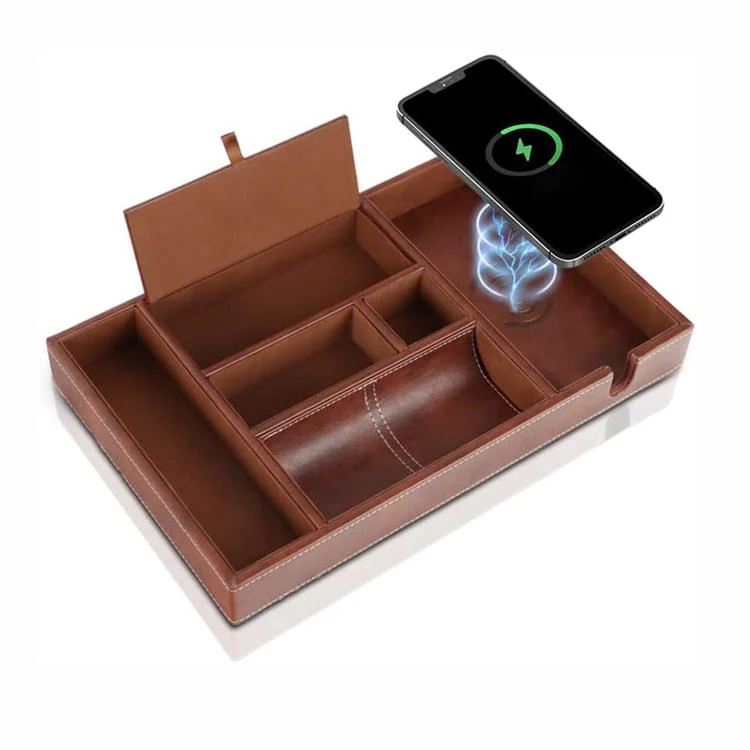
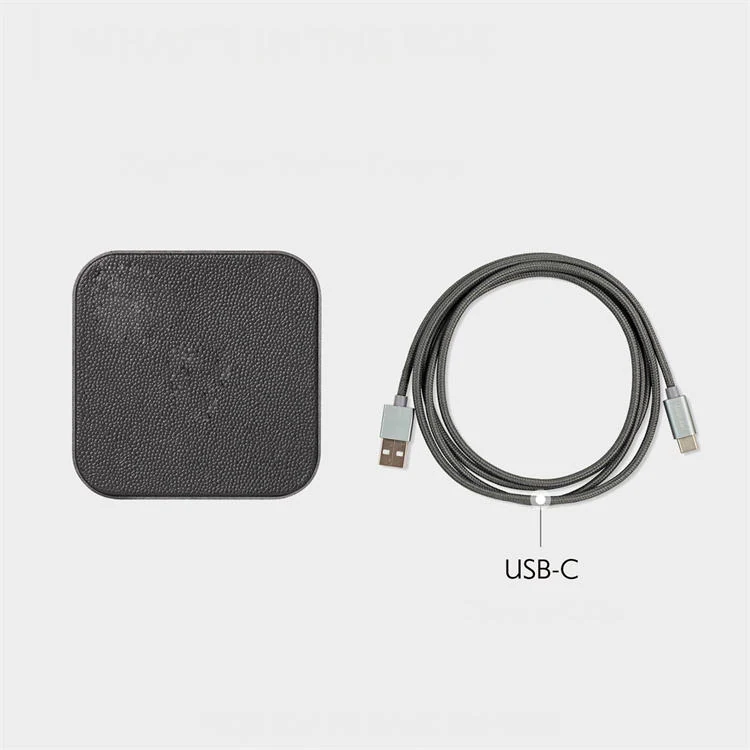
Used on the Qi charger, the charging desk organiser and the leather-textured mouse pads. Specified where the surface has to be uniform over a large area and completely wipe-clean - a charging zone cannot have grain variation under the coil, and a mouse surface has to track consistently.
Choosing
If the item is opened and closed daily, specify full-grain or crazy horse. If it carries electronics or a tracking surface, specify faux leather. If it lives on a table in a dining room, suede-feel. If the buyer wants each unit to look individual, time-tanned or crazy horse.
More guides
Rope, Rivet or Fixed: Which Menu Fastening Fits Your Reprint Cycle
Three fastening systems across four menu products, and the page count each one actually holds.
What 15W Qi Actually Means When You Are Buying 2,000 Desk Mats
Output, sealing, zone placement and device limits - the four specifications that decide whether a charging desk accessory works in the field.
How a Custom Order Runs: Sketch, Sample, Production, Freight
The actual sequence, what each step needs from you, and how long each one takes.
Apply this to your order
Quote the product, the quantity and the market you are importing into, and the relevant documents come back with the quotation.