
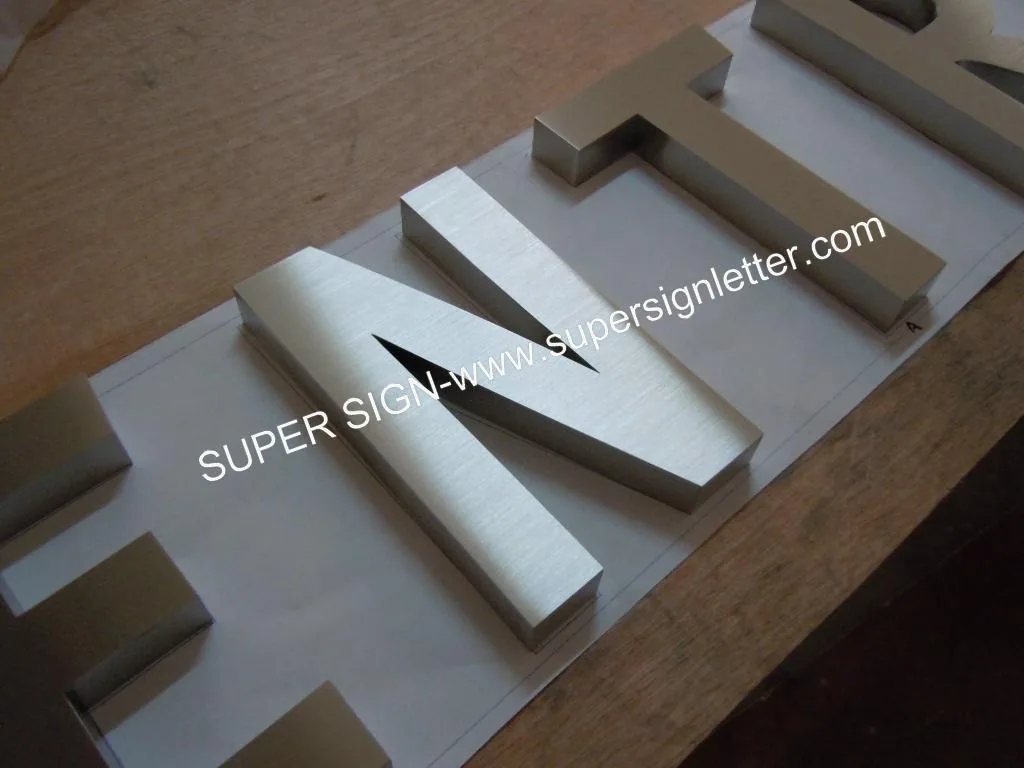
304 or 316 stainless for sign letters?
The grade decision is really a site decision. Here is how to make it without guessing.
Three ways to light the same wordmark, and what each one looks like at noon and at midnight.
A metal return and back with LEDs inside and an acrylic face. Light passes through the face, so after dark the letter reads as a solid block of color. Returns are typically 60mm to 100mm deep. This is the standard retail fascia letter and the brightest of the three by a distance.
A solid metal face over a frosted acrylic back — 30mm thick on the halo builds — pinned off the wall so light spills around the outline. By day the sign is plain metal. By night it is a glowing silhouette. It is the quieter option and the one specified most often for hotel lobbies and corporate receptions.
Light escapes through the side of a thick acrylic back or through the letter edge, giving a fine line of color rather than a lit surface. Listed at 20mm and 30mm thick.
Frontlit, comfortably. If the sign has to be legible from across a car park at night, frontlit is the build. Halo is about atmosphere at close and medium range, not distance legibility.
All three are supplied with a 12V DC CE and RoHS approved transformer and a 1:1 scale mounting template, and all three are specified for outside use.
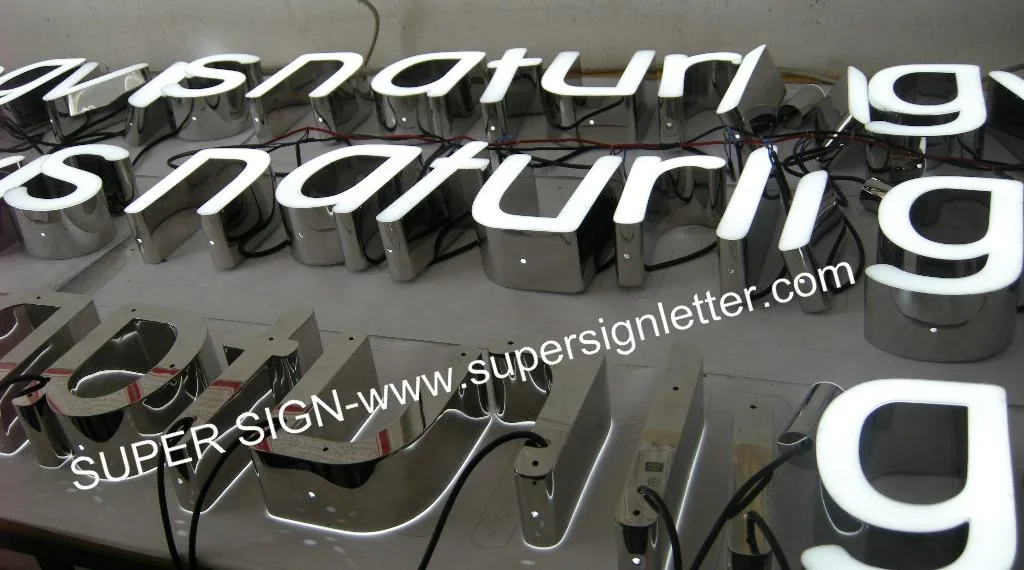
Pictured: Frontlit LED Channel Lettering
Send the artwork and the site details. We will come back with the grade, the thickness or depth, the finish and the fixing method — with the reasons.
The grade decision is really a site decision. Here is how to make it without guessing.
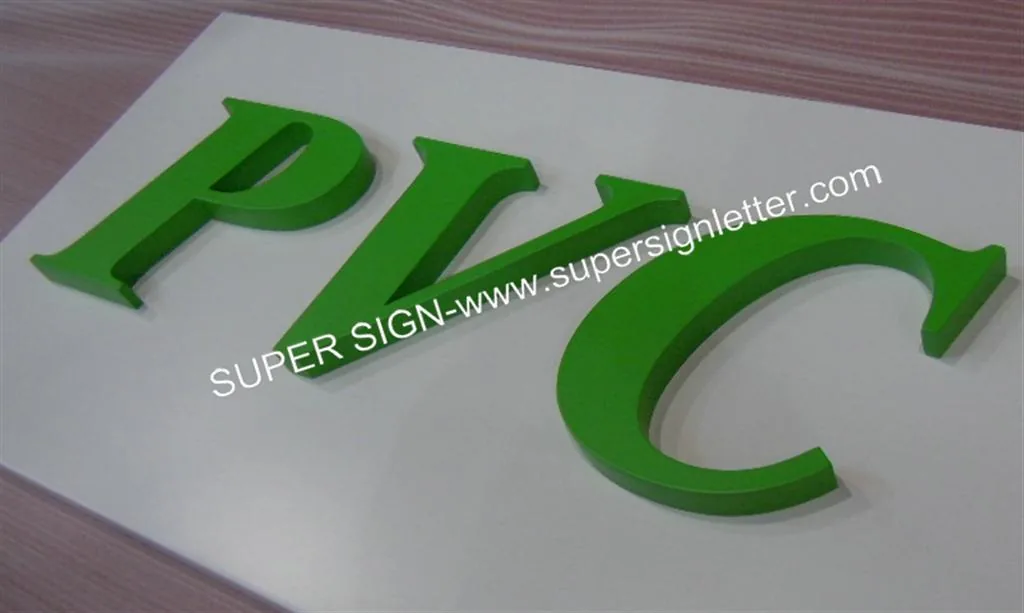
Plate thickness on a flat-cut letter, return depth on a built-up one — and why both are visible from the street.
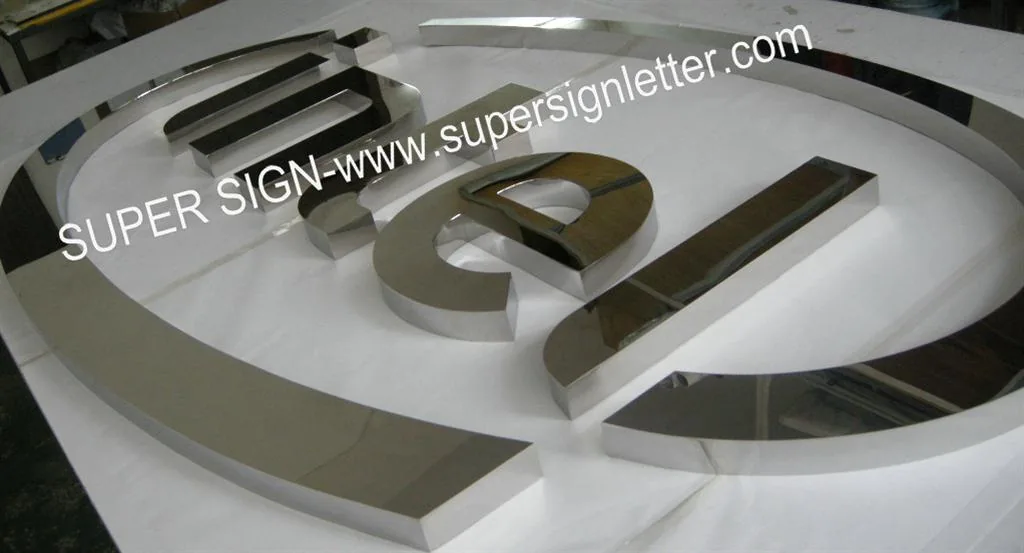
Brushed, satin, polished, mirror, plated, anodized and painted — what each looks like and what it costs you in maintenance.
Artwork, finished letter height and the site. That is enough to price the job properly.